Real generator installation costs for Alamance County homeowners in 2026 — what you'll actually pay, what affects the price, and how to avoid the most common surprises.
Share:
Summary:
You’ve probably already looked up generator prices and walked away more confused than when you started. One site says $5,000. Another says $25,000. Nobody explains why, and every contractor just tells you to call for a quote. That’s frustrating when all you want is a realistic number so you can make a plan.
We built this page to fix that. We’ll walk you through what home generator installation actually costs in Alamance County in 2026, what drives those numbers up or down, and what the process looks like from start to finish — so you can go into any conversation with a contractor knowing exactly what to expect.
For a fully installed whole house backup generator in Alamance County, most homeowners spend somewhere between $7,000 and $15,000. The complete range runs from about $4,500 on the low end to $18,000 or more for larger systems with complex installations. That’s a wide window, and there are real reasons for it — but the national average of around $5,170 that shows up on a lot of websites is misleading for most homeowners here, because it often reflects partial installations or smaller units that won’t power a full home.
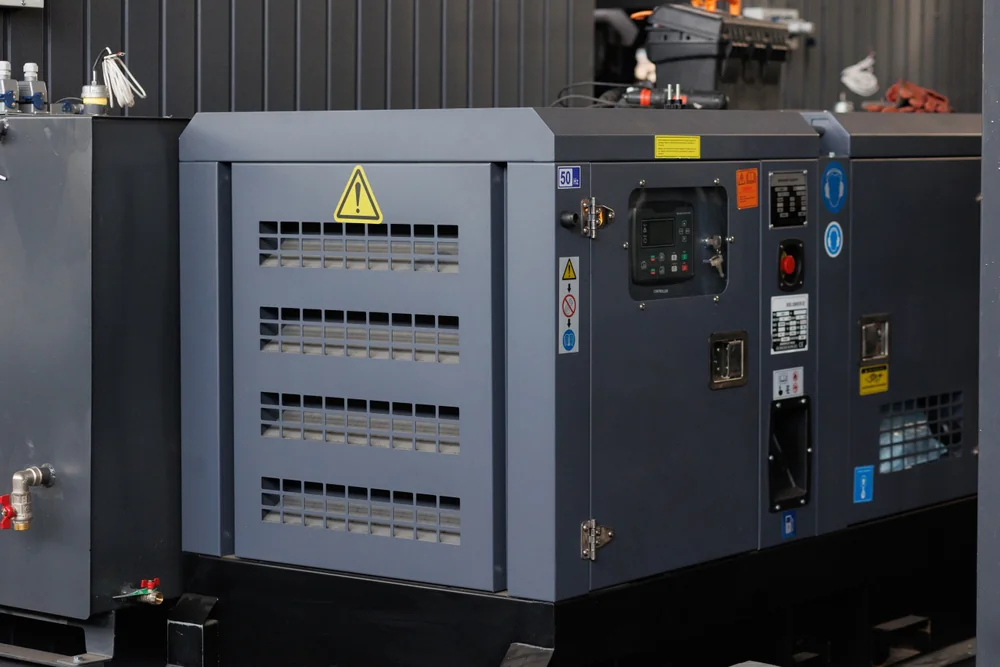
The unit itself is only part of the cost. A Generac Guardian — the most commonly installed residential standby generator — runs from roughly $5,139 for a 14kW model up to $7,899 for a 26kW model at MSRP, before any installation work. By the time you add the automatic transfer switch, a concrete pad, electrical labor, gas line connection, permits, and inspection fees, you’re looking at a meaningfully different number than what’s printed on the generator’s price tag.

This is where a lot of homeowners get caught off guard. They see a generator price online, mentally add a few hundred dollars for installation, and then get a quote that’s twice what they expected. The gap isn’t the contractor padding the bill — it’s all the components that have to be in place before the generator can actually run your home.
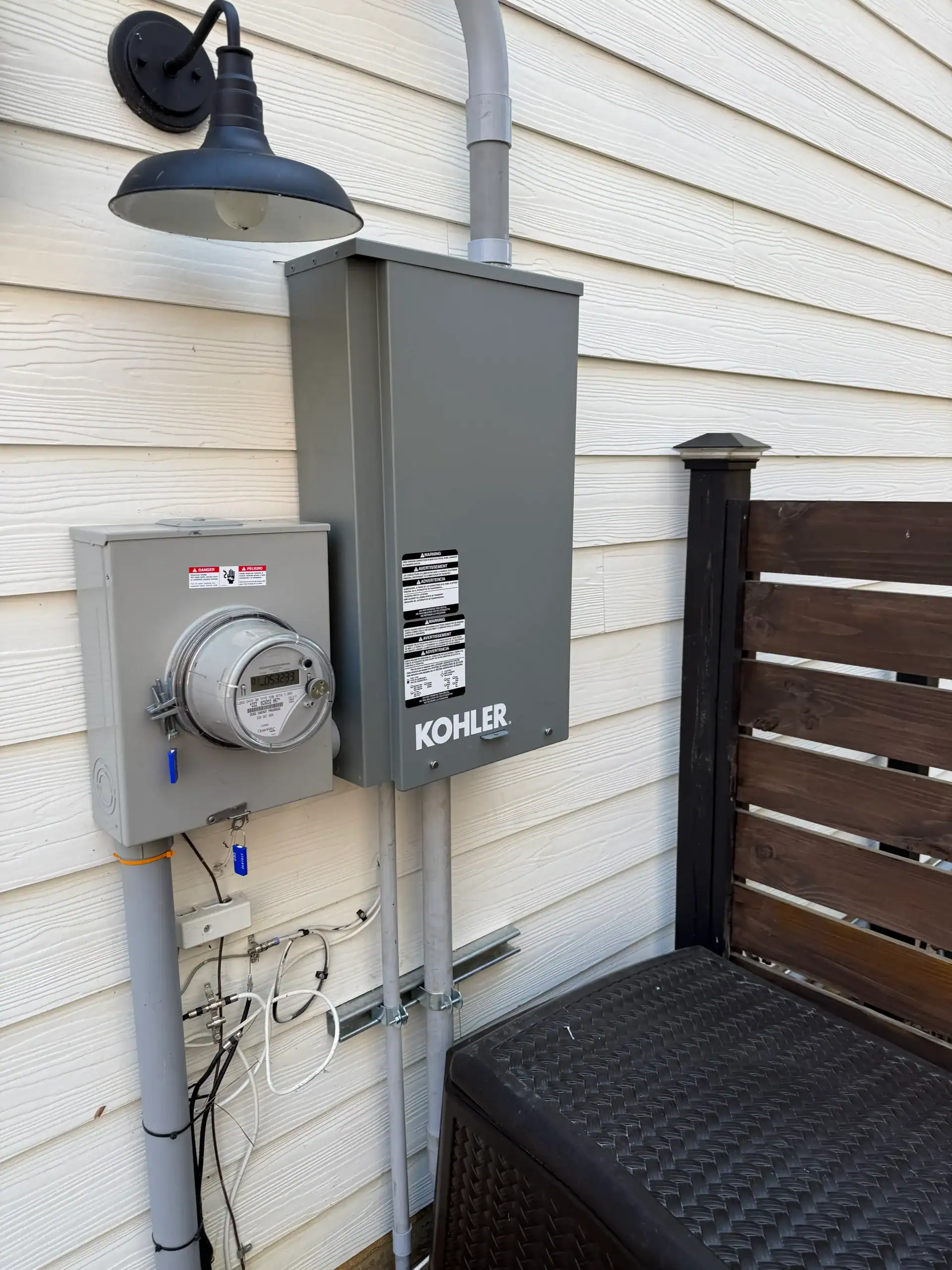
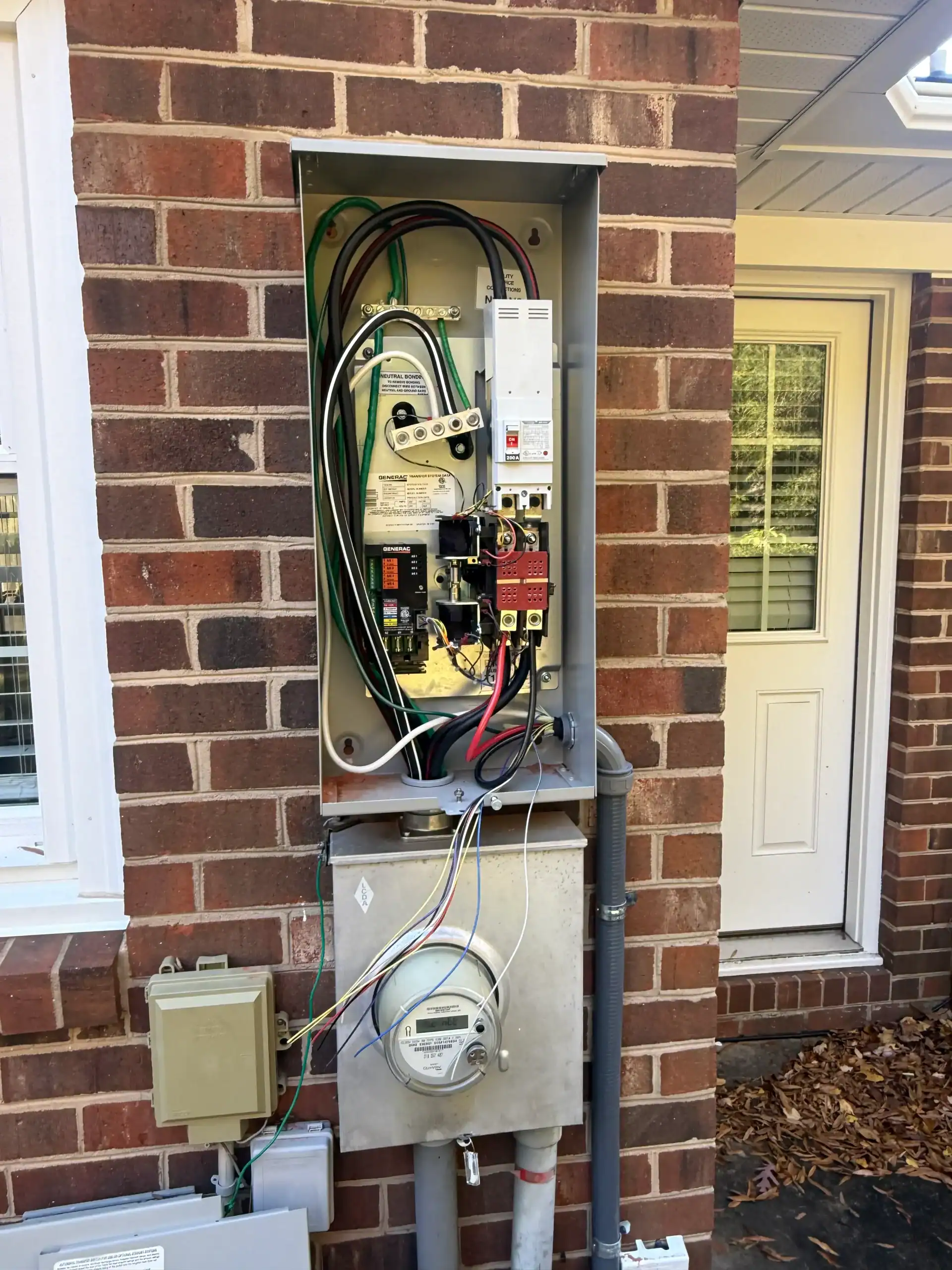
The automatic transfer switch is the piece of equipment that detects a power outage and switches your home from utility power to generator power — automatically, within seconds. It’s not optional. The National Electrical Code requires a transfer switch on any generator connected to your home’s wiring, specifically to prevent electricity from backfeeding into the utility grid, which creates a serious safety hazard for line workers. Depending on the type and capacity, transfer switches range from $500 for a basic manual unit to $2,000 or more for a full automatic switch sized for a whole home.
Standby generators also need a concrete pad. It’s not just a preference — it’s a code requirement in Alamance County and throughout North Carolina. A standard pad runs around $1,000 for a typical residential installation. Installation labor from a certified technician averages $75 to $125 per hour, and the labor portion of the job alone typically runs $1,500 to $5,000 depending on the complexity of the site.
Then there are permits. In North Carolina, a standby generator installation requires both an electrical permit and a mechanical permit for the gas line connection. Both require inspections before the system can be commissioned. Permit fees typically run $50 to $300, but the bigger point is that this work has to be done by a licensed electrical contractor — not a handyman, not a general contractor, and not a homeowner doing it themselves. A failed inspection means delays and re-work. A skipped permit means the installation isn’t legal, may void your generator’s warranty, and creates real liability if something goes wrong.
When you add it all up honestly — unit, transfer switch, pad, labor, permits — the $7,000 to $15,000 range for most Alamance County homes reflects the actual scope of the project, not a markup.
Generator sizing is one of the most common points of confusion, and getting it wrong costs you either money or capability. Too small and the generator can’t handle your home’s load — your HVAC shuts down, your well pump doesn’t run, or you’re constantly tripping the system. Too large and you’ve spent more than necessary on a unit that’s oversized for your actual needs.
For most single-family homes in Alamance County, a 14kW to 22kW standby generator covers the essentials comfortably — HVAC, refrigerator, lights, outlets, water heater, and the devices that matter most. A 14kW Generac Guardian handles a modest home well. A 22kW unit gives you more headroom if you have a larger home, electric appliances, or specific equipment like a home oxygen concentrator or medical devices that can’t tolerate interruption. The 26kW models are typically reserved for larger homes or situations with higher continuous load demands.
The right answer depends on a load calculation — a real assessment of what your home draws, not a guess based on square footage alone. This matters especially in Burlington, Graham, Mebane, Elon, and the older neighborhoods throughout Alamance County where homes from the 1960s through the 1990s may have different electrical configurations than newer construction. An older home with a 100-amp panel, for example, may need an assessment before the generator installation begins. That’s not necessarily a dealbreaker — it’s just part of planning the project correctly from the start.
The fuel source is another decision point. Most standby generators run on natural gas or propane. If your home has natural gas service, that’s typically the simpler path. If you’re in a more rural part of Alamance County — Haw River, Snow Camp, or the eastern edges — where natural gas lines don’t reach, propane is a reliable alternative. We can walk you through which makes sense for your specific address and lot.
Want live answers?
Connect with a Electrical Service Providers expert for fast, friendly support.
Alamance County sits in the NC Piedmont, which means it catches weather from two directions. In summer and early fall, tropical storm remnants track inland from the coast and can knock out power across the county for days at a time. In winter, ice storms are the bigger threat — the kind that coat power lines and tree branches until things start snapping.
Duke Energy Progress serves most of Alamance County, and while they work fast, restoration in rural and semi-rural areas can take significantly longer than in denser neighborhoods. The financial case for a generator is easier to make than most people expect. A few days without power means food loss, potential damage from frozen pipes, lost income for anyone working from home, and real risk for households that depend on medical equipment — refrigerated medications, home oxygen concentrators, CPAP machines.
When you frame it that way, the $7,000 to $15,000 installation cost looks different.
There’s a pattern we see repeatedly in this business. A major storm comes through — or a bad ice event in January — and the phones light up immediately after. Every homeowner who lost power for three days is suddenly ready to act. The problem is that everyone else in the county had the same experience at the same time, which means installer schedules fill up fast and the wait for a new installation can stretch from weeks into months.
The homeowners who get protected before the next event are the ones who made the call during a quiet stretch — not in the middle of storm season, not the week after an outage, but during a window when there’s no urgency driving the timeline. That’s when the process goes smoothly: the site evaluation gets scheduled quickly, the equipment is available, the permits are pulled without a rush, and the installation happens on a normal schedule.
There’s also a practical reality about installation quality. When demand surges after a major storm, some contractors cut corners — skipping permits, rushing inspections, or using crews that aren’t familiar with the specific requirements for North Carolina residential installations. A licensed electrician who pulls the permits, coordinates with the county inspector, and commissions the system properly takes a bit more time than a rushed job. That time is worth it. A generator that fails during the next outage because the installation wasn’t done correctly is worse than not having one at all.
The best whole house generator installation is one that’s done right, on a timeline that allows for it. That means starting the conversation before you desperately need it.
Most homeowners in Alamance County will get two or three quotes before committing to a generator installation. That’s smart. But comparing quotes requires knowing what should be in each one, because a $6,500 quote and a $10,500 quote aren’t necessarily describing the same project.
The first thing to check is whether the quote includes the automatic transfer switch, the concrete pad, and the permit fees — or whether those are listed as “additional” or not listed at all. A quote that leaves those out looks more competitive but isn’t. When you’re comparing quotes, you want to see the full scope of work itemized, not a single number that leaves room for surprises.
Ask whether the contractor will pull the permits. In North Carolina, a licensed electrical contractor is required to pull the electrical permit, and a licensed gas contractor handles the mechanical permit for the gas line. If a contractor suggests you pull the permits yourself, or implies permits aren’t necessary, that’s a red flag. Permits exist to protect you — they require an inspection that confirms the installation is safe and code-compliant before the system goes live.
Ask about their experience specifically with standby generators, not just general electrical work. There’s a difference between an electrician who occasionally installs generators and one who has commissioned dozens of Generac systems, troubleshot controller issues, and coordinated with local inspectors on residential installations across Alamance County and surrounding areas. The questions you ask upfront tell you a lot about who you’re dealing with.
Finally, ask how pricing works. Flat-rate pricing means the number on the quote is the number on the invoice — no hourly billing, no “we ran into something we didn’t expect” additions after the job is done. Hourly billing isn’t necessarily dishonest, but it puts the financial risk on you. When you know the price before the work starts, you can compare quotes accurately and make a decision without worrying about what the final bill will look like.
Generator installation isn’t a small decision, but it doesn’t have to be a confusing one. The cost for most Alamance County homes falls between $7,000 and $15,000 for a fully installed whole house backup generator — and the variation within that range comes down to the size of the unit, your home’s existing electrical setup, your fuel source, and the specific conditions of your property.
What matters most is working with someone who will give you a straight answer, pull the permits, coordinate the inspection, and stand behind the work. That’s what we’ve built ESP Electrical Service Providers around since 2002 — flat-rate pricing so you know the number before we start, a Master Electrician license that’s been active since 1989, and a track record of installations across Burlington, Graham, Mebane, Elon, and the surrounding Alamance County communities that actually pass inspection the first time.
If you’re ready to stop researching and start planning, give us a call. We answer the phone, we’ll give you a real assessment of your home’s needs, and we’ll tell you exactly what it will cost before any work begins.
Article details:
Share:
Continue learning: