Not sure what size generator your home actually needs? Load management changes the math — and the cost. Here's what you need to know before you buy.
Share:
Summary:
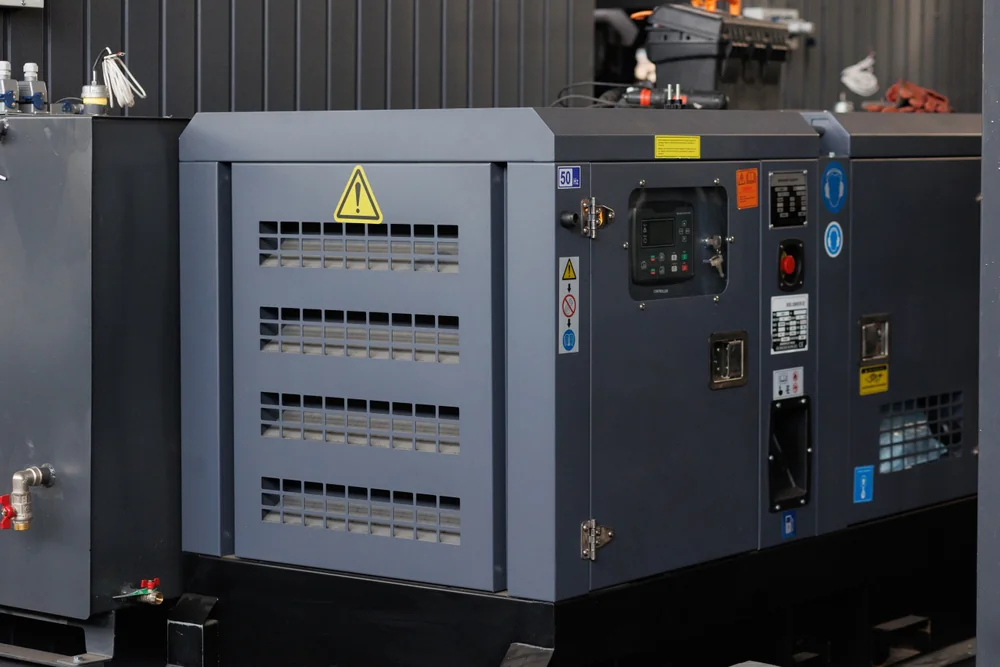
If you’ve ever sat through a two-day outage in Burlington or Mebane — no AC in August, no water if you’re on a well, food spoiling in the fridge — you already know why people look into home generator systems. What most people don’t know going in is how much the sizing decision actually matters. Too small and the generator struggles or fails when you need it most. Too large and you’ve spent thousands more than necessary. Load management is the piece of the puzzle that most guides gloss over, and it’s often the difference between a system that works well and one that doesn’t work at all. Here’s how professional generator installation and proper load management actually work.
Load management is a feature built into certain standby generators — specifically air-cooled models — that allows the system to prioritize circuits and stagger high-demand appliances so they don’t all draw power at the same time. Think of it like a traffic controller for your electrical load. Your refrigerator, lights, and furnace blower run continuously. Your air conditioner, electric water heater, and clothes dryer cycle on and off. Load management coordinates those cycling loads so the generator isn’t asked to power all of them simultaneously.
The practical benefit is significant. With load management, you can often achieve whole-house coverage using a smaller, less expensive generator than you’d otherwise need. Instead of stepping up to a larger liquid-cooled unit to handle every possible simultaneous demand, a well-configured air-cooled system with load management handles your home’s real-world usage patterns — which rarely involve every major appliance running at the exact same moment.
It’s worth knowing that liquid-cooled generators don’t use load management the same way. They’re sized to handle everything at once, which is why they cost more. For most homes in Alamance County, an air-cooled system with load management is the smarter starting point — but only if it’s sized and configured correctly.

Square footage is a starting point, not an answer. A 2,000 sq ft home with gas heat, a gas range, and a gas water heater has a fundamentally different electrical load profile than a 2,000 sq ft all-electric home. The square footage is the same. The generator requirement is not. This is why sizing charts and online calculators are useful for getting a rough sense of scale, but they can’t replace a real load calculation.
A proper sizing process starts by identifying every load in the home — not just the obvious ones like the refrigerator and HVAC, but the well pump if you have one, the sump pump, medical equipment, EV charger, and anything else drawing power on a regular basis. Each appliance has a running wattage and a starting wattage. The starting surge — the extra power required to kick a compressor or motor into motion — is often two to three times the running load. A generator has to handle that surge without tripping or stalling.
After the load inventory, the next step is circuit prioritization. This is where load management becomes a practical tool rather than a technical concept. You decide — with guidance from our electrician — which circuits are essential and always on, which are managed and available when capacity allows, and which can be shed entirely during an outage. A home in Mebane with two central AC units, for example, might configure the system so both units are available but can’t run simultaneously, which keeps the generator within its rated capacity without leaving either floor of the house without cooling.
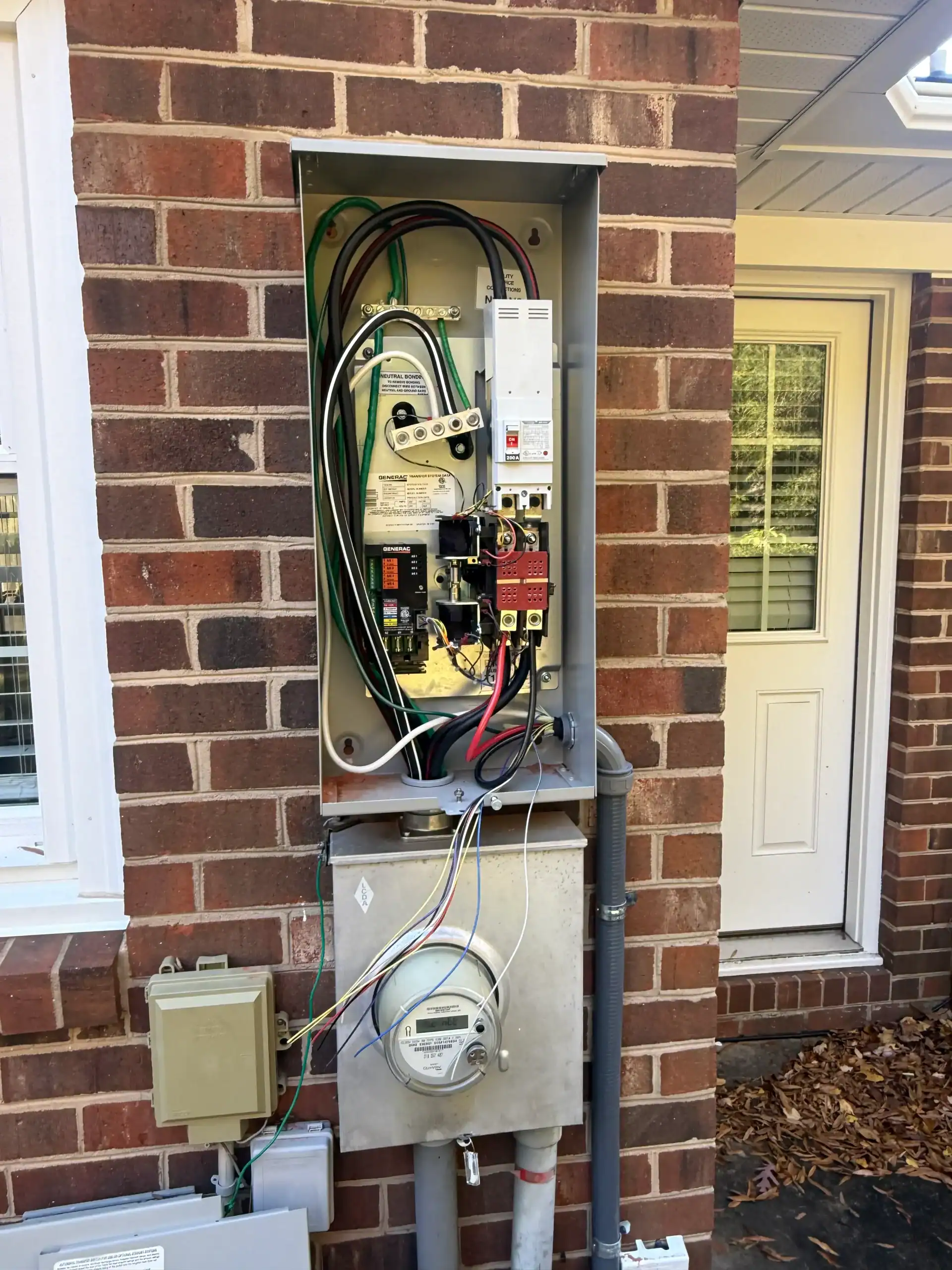
There’s one more step that most online guides skip entirely: the electrical panel assessment. Before any generator connects to your home’s electrical system, the existing panel needs to be evaluated. Older homes in Burlington’s established neighborhoods — many built in the 1970s and earlier — often have 100-amp panels that may need upgrading before they can support a modern standby system. We use thermal imaging as part of our assessment process, which reveals overloaded circuits, failing connections, and hotspots that a standard visual inspection would miss. Connecting a generator to a compromised panel creates risk. Catching those issues beforehand is the difference between a clean installation and a problem that shows up at the worst possible time.
A generator sizing chart gives you wattage ranges for common household appliances — refrigerator, central AC, well pump, lights, microwave, and so on. The idea is to add up the running watts for everything you want to power, then add the highest single starting surge to that total. That combined number is your minimum generator requirement, and most guides recommend adding a 20–25% safety margin on top of that.
Here’s a practical frame of reference for homes in Alamance County. If you want to cover the essentials — refrigerator, some lighting, a furnace blower, and a few outlets — you’re typically looking at 5–7 kW. Add central air conditioning and you’re usually in the 14–20 kW range. Larger homes over 2,500 sq ft, or homes with all-electric systems, often need 20–26 kW or more. These are ranges, not quotes. The actual number depends on your specific appliances, your home’s wiring, and how you want to configure your managed loads.
Where sizing charts fall short is in the details they can’t capture. They don’t know whether your panel is a 100-amp or 200-amp service. They don’t know if your AC unit is a 10-year-old system with a high starting surge or a newer variable-speed unit with a lower one. They don’t account for the fuel supply — whether you’re connecting to natural gas or sizing a propane tank — or the specific code requirements that apply to your county. In Alamance County, generator installations require permits through the county, and the work must be performed by a licensed electrical contractor under NEC Article 702. The chart gets you oriented. The assessment gets you to the right answer.
Want live answers?
Connect with a Electrical Service Providers expert for fast, friendly support.
The Tri-County region saw a significant increase in weather-related power outages in recent years. That’s not a national statistic — that’s Burlington, Graham, Elon, and Gibsonville. Duke Energy’s overhead distribution lines run through some of the most heavily wooded terrain in the NC Piedmont, and when a hurricane remnant or an ice storm moves through, those lines come down. The demand for generator installations spikes after every major outage, and installation appointments fill up weeks out.
Getting a system in place before that happens — and getting it sized correctly the first time — is the whole point. We’ve been doing this work in Alamance County since 2002. We know the county’s permitting process, we know the local code requirements, and we handle every permit application directly so you don’t have to navigate that on your own.
Most electricians do a visual inspection of your panel before connecting a generator. We go further. Thermal imaging lets us see what’s happening inside the panel without opening it up — heat signatures that indicate an overloaded breaker, a loose connection that’s arcing, or a circuit that’s been running at the edge of its capacity for years. These are problems that look fine visually but show up clearly on a thermal scan.
This matters specifically for generator integration because a standby system puts new and consistent demands on your electrical infrastructure. During a grid outage, your generator becomes your sole power source. Any weakness in the panel that was masked by the utility’s steady supply becomes a real problem under generator load. Finding those issues before installation — not after the first outage — is the kind of thing that separates a thorough installation from a rushed one.
Our background in power quality means we’re also looking at how the generator interacts with your home’s existing system beyond just “does it turn on.” Voltage regulation, load balancing, and how the transfer switch coordinates with your panel all affect whether your appliances run cleanly on generator power or experience stress they wouldn’t under normal grid conditions. It’s a level of detail that matters more than most homeowners realize, and it’s something we bring to every assessment.
A complete generator installation isn’t just dropping a unit in the yard and running a wire. There’s a sequence to it, and every step matters. It starts with the load calculation and panel assessment we’ve already covered. From there, we handle the permit application with Alamance County, order the generator and materials, and schedule installation once approvals come through.
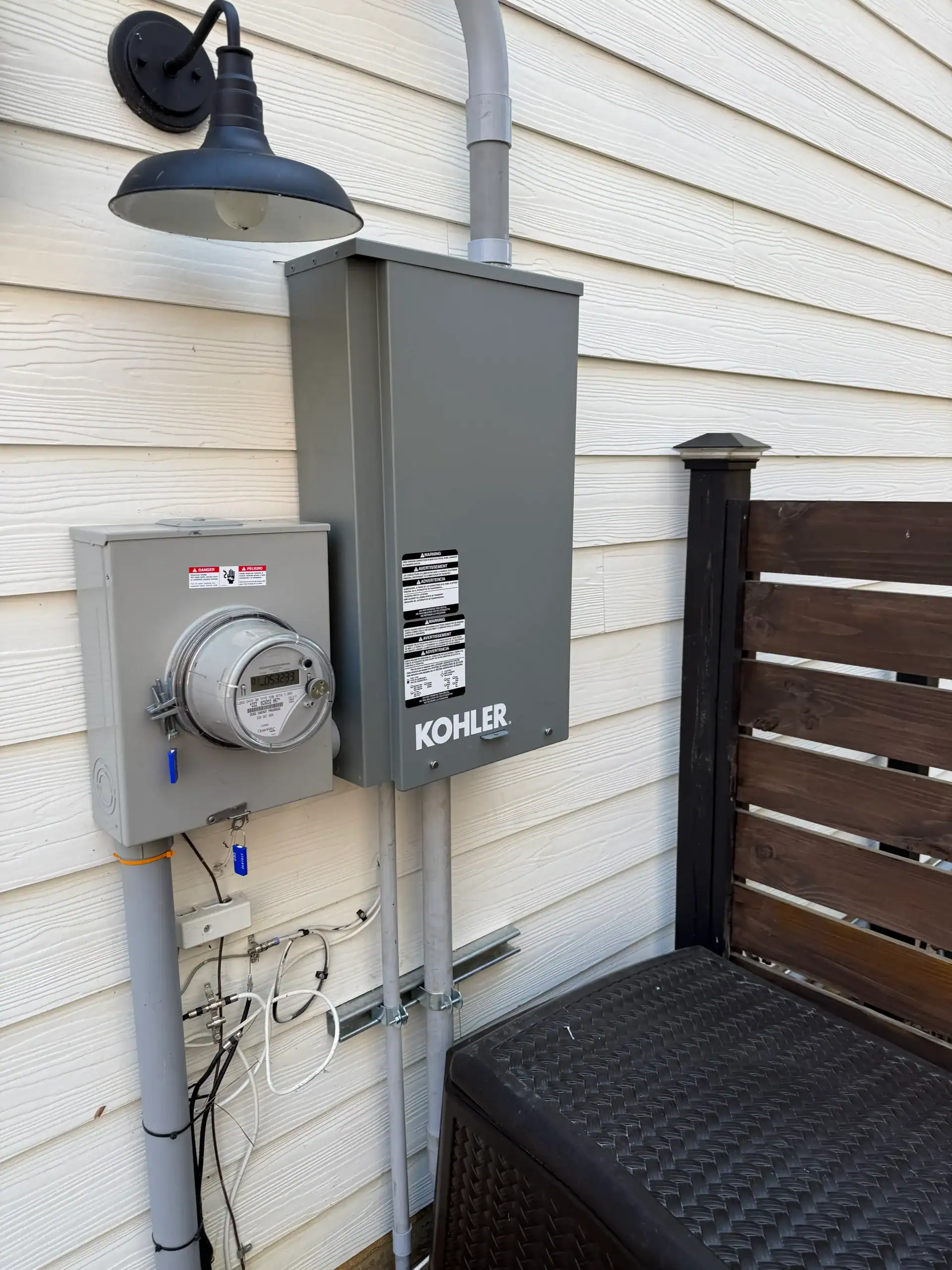
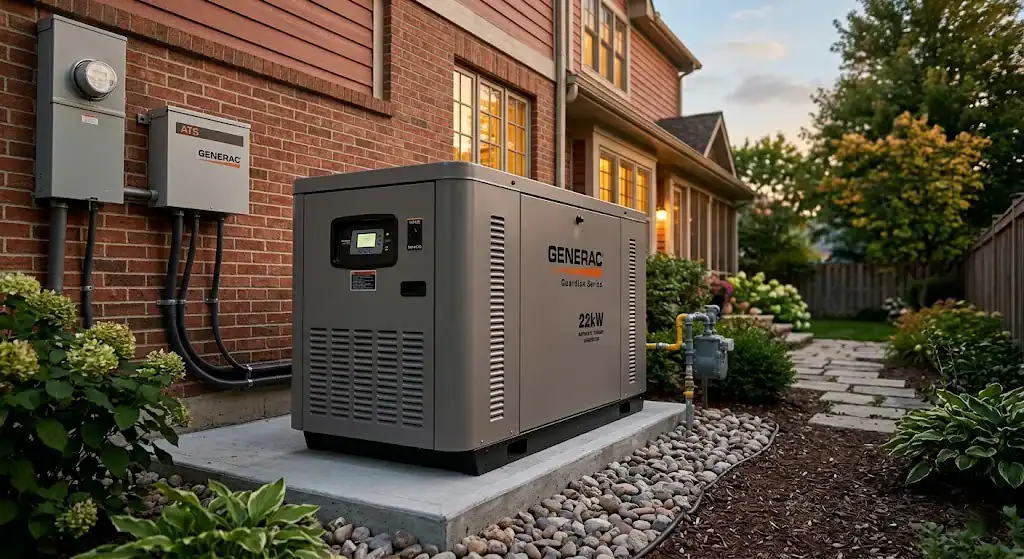
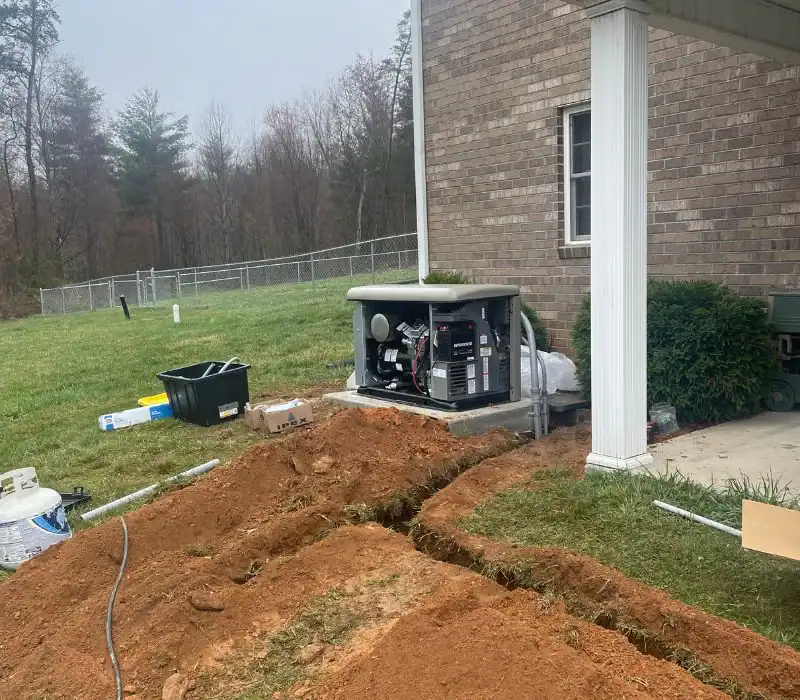
Physical installation includes setting the generator on a concrete pad, connecting the transfer switch, running the fuel line to your natural gas service or propane tank, and integrating everything with your electrical panel. The automatic transfer switch is what makes a standby generator worth having — it detects a grid failure within seconds and switches your home to generator power automatically. You don’t have to be home. You don’t have to do anything. The system handles it.
We’re an authorized Generac dealer and installer, and we’re one of North Carolina’s first Level III certified service providers for Eaton/Cutler-Hammer generators. Those credentials aren’t just credentials — they mean we’ve completed manufacturer-level training on the specific systems we install, and we can support warranty claims and service needs after the installation is done. We offer financing if the upfront cost is a consideration, and we provide maintenance agreements to keep the system ready year after year. A generator that hasn’t been tested or serviced is a generator you can’t count on when hurricane season rolls around — and in Alamance County, that season is very real.
Load management, proper sizing, panel assessment, permits — none of it is complicated once you understand how the pieces fit together. The short version is this: square footage estimates and sizing charts get you in the ballpark, but a professional assessment gets you to the right system for your specific home, your specific loads, and your specific electrical infrastructure.
For homeowners in Burlington, Mebane, Graham, Elon, and the surrounding communities in Alamance County, the risk of extended outages is real and it’s local. Duke Energy’s lines through the NC Piedmont don’t hold up to every ice storm or tropical remnant, and when they go down, the homes with properly sized standby systems are the ones that keep running.
If you’re ready to find out what your home actually needs — not a rough estimate, but a real answer — we’ve been doing this work in Alamance County since 2002. Give us a call at 336-228-3300 and we’ll start with the assessment.
Article details:
Share:
Continue learning: