After a storm knocks out power for days, the question isn't whether a standby generator is useful — it's whether you can afford to keep going without one.
Share:
Summary:
If you’ve ever sat through a multi-day outage in Alamance County — food going warm in the fridge, no water because the well pump is down, kids asking when the power’s coming back — you already know the answer on some level. The question you’re probably wrestling with now is whether a standby generator is the right fix, or whether you’re about to spend a lot of money on something you’ll rarely use. That’s a fair question, and it deserves a real answer. Here’s what you need to know.
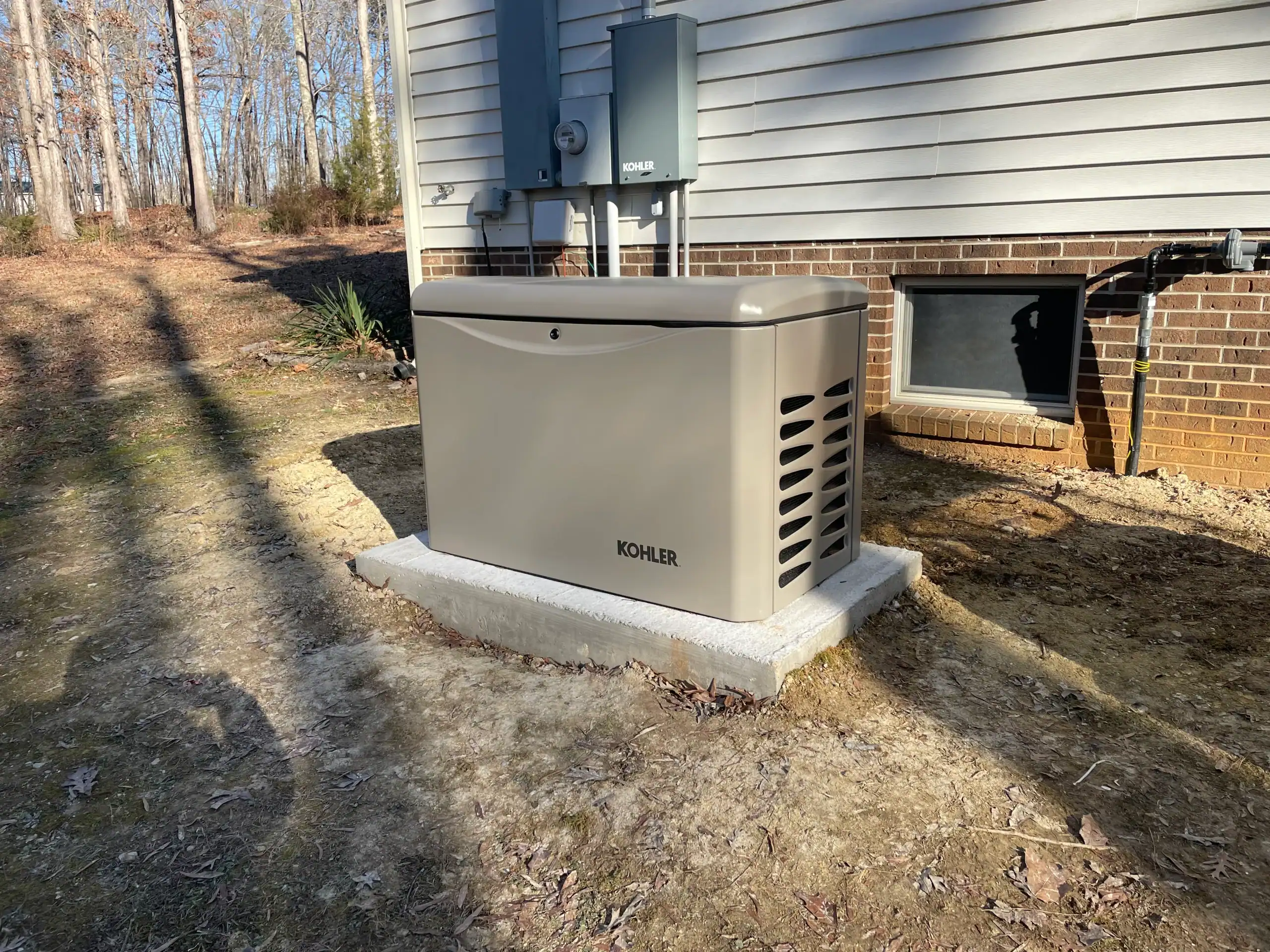
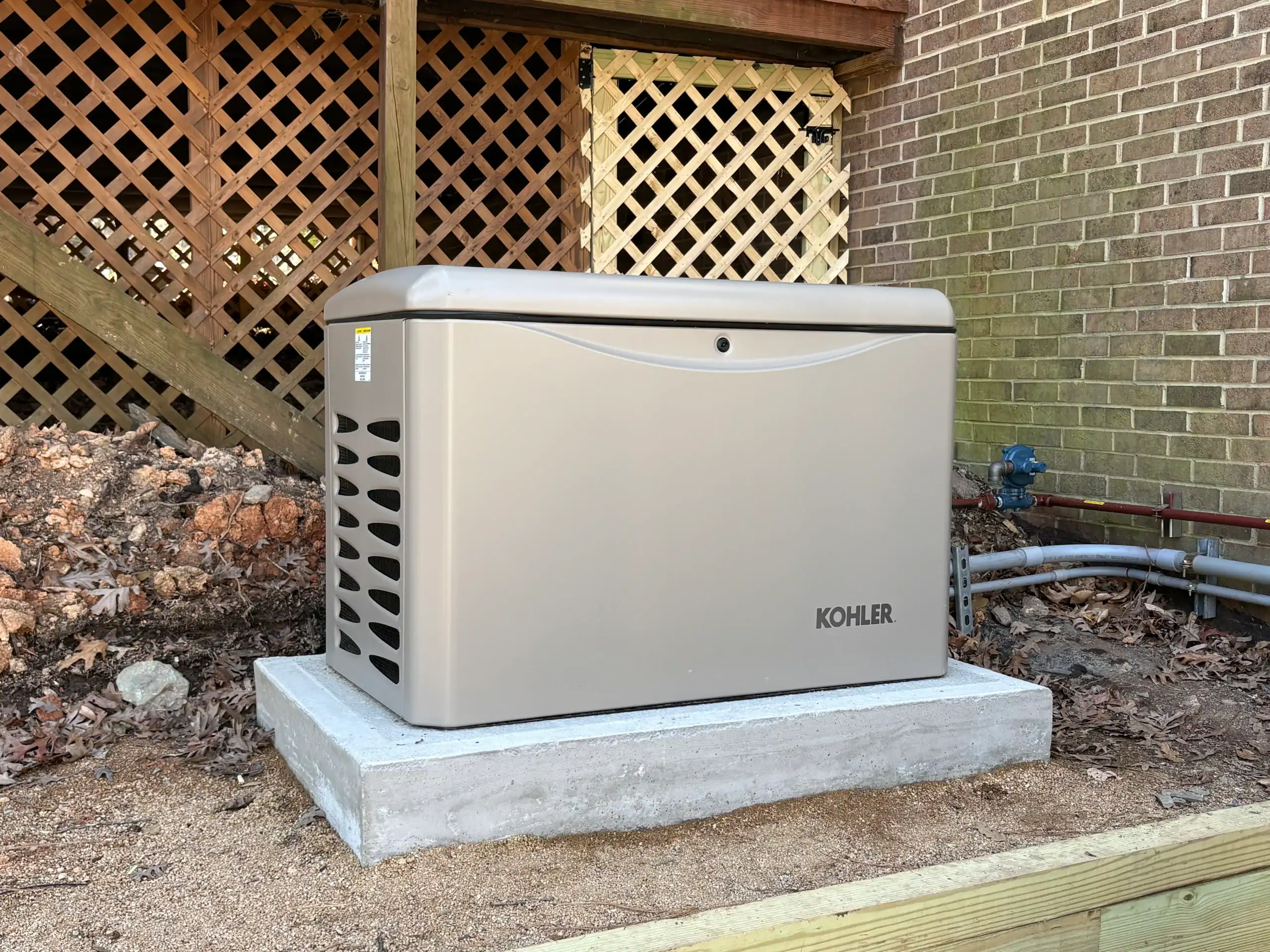
A home standby generator is a permanently installed backup power system connected directly to your home’s electrical panel and fuel supply — either natural gas or propane. It sits outside on a concrete pad, and when utility power drops, it kicks on automatically. You don’t flip a switch, drag anything out of the garage, or make a gas run in the rain.
The system works through an automatic transfer switch (ATS), which monitors your utility connection around the clock. The moment it detects an outage, it signals the generator to start and isolates your home from the grid — that isolation step matters, because it prevents power from backfeeding onto utility lines where restoration crews could be working. Within about 10 seconds, your home has power again. When utility power returns, the transfer switch shifts everything back and the generator shuts itself off.
A lot of homeowners in Alamance County already own a portable generator. They pull it out during storms, run extension cords to the refrigerator and a few lights, refuel it every few hours, and call it covered. It works — until it doesn’t.
The practical limitations add up fast. You have to be home when the power goes out. You have to haul the unit outside in whatever weather is happening at the time. Carbon monoxide risk is real if it’s placed too close to the house. And portable units simply don’t have the capacity to run a whole home — they can’t power a central HVAC system, a hardwired sump pump, or a well pump.
If you’re on a private well in a rural part of Alamance County — out toward Snow Camp, Saxapahaw, or along the Haw River — losing power means losing water entirely. A portable generator won’t change that. A home standby generator solves all of it. It activates automatically whether you’re home or not. It runs on a permanent fuel connection, so there’s no refueling in the middle of a storm. And it’s sized to carry your whole home — HVAC, well pump, sump pump, refrigerator, medical equipment, all of it.
Consumer Reports calls standby generators “the gold standard in backup power,” and the reasoning is straightforward: they work the way backup power is supposed to work, without requiring anything from you in the moment you need them most.
The other thing worth understanding is what happens to a portable generator over time. Most homeowners store them in a garage or shed, run them a handful of times a year, and don’t maintain them consistently. When a major storm hits and the unit hasn’t been serviced in two years, that’s when you find out it won’t start. A properly installed standby generator runs a self-test cycle every week automatically, so you always know it’s ready.
This is the question most homeowners ask first, and it’s the right one to ask. For Alamance County and the surrounding area — including Durham, Orange, and Chatham Counties — most whole-home generator installations run between $6,000 and $15,000 total, including both the equipment and professional installation. Where you land in that range depends on the size of your home, the generator’s kilowatt capacity, your fuel source, and the complexity of the electrical work involved.
That’s a meaningful investment, and it’s worth doing the math honestly. One five-day outage with a full refrigerator and freezer of spoiled food runs $400 to $600. A flooded basement from a failed sump pump — which is exactly what happens when power goes out during a heavy rain event — can cost $3,000 to $10,000 in cleanup and repairs. Add a hotel stay for a family of four during a summer heat event or a winter ice storm, and a single major outage can push past $5,000 in losses without anyone blinking.
Beyond the outage math, there’s the property value side of the equation. Consumer Reports cites up to a 5% home value increase for homes with a professionally installed standby generator. With median home values in Burlington around $238,000, that’s roughly $11,900 in added value. Many insurance companies also offer discounts of approximately 5% on homeowner policies for homes with standby generators, which reduces the annual cost of carrying the investment over time.
The value of a standby generator is directly tied to how long your outages last and what you stand to lose during them. If you live in a densely populated neighborhood in Burlington or Graham where Duke Energy typically restores power within a few hours, the calculus looks different than it does for a rural property on a private well that might wait three to five days for restoration after a major event.
Want live answers?
Connect with a Electrical Service Providers expert for fast, friendly support.
One of the things that makes homeowners hesitant isn’t the cost — it’s the uncertainty about what they’re getting into. How long does installation take? Who handles the permits? What does the finished product look like? These are reasonable questions, and the answers are simpler than most people expect.
A typical whole-home generator installation takes one to two days. The generator is mounted on a concrete pad outside the home, connected to your fuel supply, and wired into your electrical panel through the automatic transfer switch. After installation, the system is load-tested before the job is signed off. A legitimate licensed contractor handles the permit application — you shouldn’t be asked to fill that out yourself.
Yes — and this is one of the clearest ways to tell a qualified installer from one you should avoid. In North Carolina, standby generator installation requires a licensed electrical contractor and a permit pulled with the local county or municipality. The permit process exists to ensure the work is inspected and meets code, which protects you as the homeowner.
A contractor who asks you to pull the permit yourself is shifting liability onto you. If an inspector finds a code violation, you — not the contractor — become the responsible party. A properly licensed contractor pulls the permit, schedules the inspection, and makes sure the work passes. That’s part of what you’re paying for.
In North Carolina, electrical contractor licenses are issued by the NC State Board of Examiners of Electrical Contractors and come in three classifications: Limited (projects up to $10,000), Intermediate (up to $50,000), and Unlimited, which carries no project size cap. When you’re hiring someone to install a whole-home generator, you want a contractor holding an Unlimited license. It’s verifiable through the NCBEEC, and it matters.
Factory certification from Generac or Kohler is a separate but equally important credential. A factory-authorized installer has been trained by the manufacturer, has access to genuine parts, and can service the unit under warranty. Using a non-certified installer for a Generac or Kohler system can void the manufacturer warranty — which is a real cost if something goes wrong in year two or three.
Alamance County doesn’t have to look far for a reason to take backup power seriously. In July 2025, Tropical Storm Chantal dropped over 10 inches of rain on the county in a matter of days. A local state of emergency was declared. I-40/85 through Burlington was closed and had to be reopened by NC DOT. Sixty-five roads across Alamance County remained closed due to flooding — including US Highway 70 near North First Street, NC-119 near Old Hillsborough Road, NC-87 south of Graham, and Alamance Church Road, where downed trees had entangled power lines.
That’s not an anomaly. It’s a pattern. Alamance County sits in a corridor that’s vulnerable to both summer tropical systems and winter ice storms — the kind that bring down trees and power lines across rural routes and keep utility crews busy for days. Duke Energy prioritizes restoration by customer density, which means the further you are from Burlington or Graham, the longer you wait. For homeowners in the more rural stretches of the county — out toward Snow Camp, Swepsonville, or east toward Mebane — that can mean three to five days without power after a significant event.
The other factor worth naming is growth. Eastern Alamance County, particularly around Mebane, has seen substantial population growth from Triangle-area commuters buying homes in the county. Many of these homeowners are remote workers. A lost workday isn’t just inconvenient — it’s a missed deadline, a client problem, or a day of PTO burned because the power went out. For that buyer, a backup generator isn’t a luxury item. It’s infrastructure.
For most Alamance County homeowners — especially those on private wells, those with medical equipment, remote workers, and anyone who has already paid the price of a flooded basement or a week of hotel stays — a standby generator is worth it. The math works out, the property value case is real, and the peace of knowing your home stays functional regardless of what’s happening outside is genuinely hard to put a price on.
If you’re still on the fence, the most useful next step is a real conversation about your specific home, your fuel source, and what you actually need the system to cover. We can give you a straight answer about what makes sense for your situation — no sales pitch required.
We’ve been installing and servicing generators in Alamance County and the surrounding area since 2002. Our pricing is flat-rate, meaning you’ll know exactly what the job costs before any work begins. If you’re ready to get a straight answer, give us a call.
Article details:
Share:
Continue learning: