North Carolina's storm history is worse than most homeowners realize — and the Piedmont is right in the middle of it. Here's what you need to know before the next outage.
Share:
Summary:
Most homeowners in Alamance, Guilford, Durham, Orange, and Chatham Counties don’t think of themselves as living in a high-risk area for power outages. That assumption is worth revisiting. North Carolina ranks fourth in the nation for major weather-related outages — and the Piedmont takes its share of the hit every single year. From tropical remnants pushing up from the coast to the ice storms that snap utility lines across Burlington and Greensboro every winter, the question isn’t really whether the power will go out. It’s how long you’ll be sitting in the dark when it does — and whether you’ll be ready.
There’s a common assumption that power outages are mostly a coastal problem — something for Wilmington or the Outer Banks to worry about. The data tells a different story. Since 2000, North Carolina has experienced more than 111 major weather-related outages, and the trend is moving in the wrong direction. The U.S. has seen roughly twice as many weather-related outages in the last decade as in the early 2000s, and 2024 set a grim milestone — electricity customers averaged 11 hours without power, the highest figure in over a decade.
Hurricane Helene made that real for a lot of Piedmont families in September 2024. Families across North Carolina watched power lines go down and substations fail, and many went days without electricity. That wasn’t a coastal event. It reached deep into the interior of the state, affecting communities that hadn’t expected it.
Most of the conversation around generator season focuses on hurricanes, and understandably so. But homeowners in Greensboro, Burlington, Durham, Chapel Hill, and Pittsboro actually deal with two separate windows of elevated outage risk every year — and the second one catches people off guard more often than the first.
Hurricane season runs June through November and brings the obvious threats: tropical systems, heavy rain, sustained winds, and the kind of widespread outages that fill the Duke Energy outage map. But from December through March, the Piedmont’s ice storms are a different kind of problem entirely. Ice accumulates on lines, trees crack under the weight, and distribution infrastructure that handles wind just fine can fail completely under a quarter-inch of ice. Restoration after an ice storm can take longer than after a wind event because the damage is more scattered and harder to access.
For customers served by Piedmont Electric Cooperative in parts of Durham and Orange Counties, the calculus is even more direct. Cooperative customers at the end of long distribution lines are often the last to be restored — not because the cooperative isn’t working, but because the physics of power restoration means the trunk lines come back first. If you’re at the end of a rural spur in Orange County or out toward the edges of Chatham County, a two-day outage for your neighbors can easily become a four-day outage for you.
The remote-work reality of the Research Triangle corridor adds another layer. Durham and Chapel Hill have a large population of professionals who work from home. When the power goes out, it’s not just an inconvenience — it’s direct income loss, missed deadlines, and the kind of disruption that a backup plan doesn’t solve. A Generac standby generator running on natural gas or propane keeps your home office running exactly the way it would on any other Tuesday.
And then there’s the medical angle. Between UNC Health in Chapel Hill, Duke Health in Durham, and Cone Health in Greensboro, there are tens of thousands of patients and caregivers across this five-county area who depend on equipment that doesn’t negotiate with power outages. CPAP machines, oxygen concentrators, refrigerated medications — these aren’t conveniences. For a lot of households, backup power is a genuine health necessity, not a comfort upgrade.
Here’s something that doesn’t show up in most generator marketing: the worst time to try to get a standby generator installed is right after a major outage. When a significant storm hits — and Helene is the most recent example — homeowners who had been thinking about a generator for months suddenly all call at the same time. Installation slots that were available within a week or two stretch into months. Equipment that was sitting in inventory moves fast.
The families who get protected quickly are the ones who already had the conversation, already had the assessment done, and already had the installation scheduled. The families who waited are the ones calling from the dark, hearing that the next available appointment is eight weeks out.
This isn’t just theory — it’s how demand works in a market like Alamance, Guilford, Durham, Orange, and Chatham Counties when a major weather event hits. The Piedmont is a large, densely populated region, and there are only so many licensed electrical contractors authorized to install Generac systems. When everyone needs one at the same time, the math doesn’t work in the late caller’s favor.
Installing before storm season — whether that means late winter, early spring, or even the quieter stretch of summer before the peak of hurricane season — means you’re not competing with your neighbors for an appointment. It also means your system gets properly commissioned, tested, and familiar to you before you actually need it. A Generac standby generator runs a self-test cycle automatically every week, but there’s real value in having your installer walk you through the system when there’s no active emergency in the background.
The Chatham Park development in Pittsboro is a useful example of this dynamic. Thousands of new homeowners have moved into that community over the past few years, and new homeowners are exactly the population that tends to think about generators early — before the first bad storm reminds them why. Getting ahead of that curve is simply the smarter move.
Want live answers?
Connect with a Electrical Service Providers expert for fast, friendly support.
A lot of homeowners have a vague sense of what a standby generator is, but the specifics of how it gets installed — and what makes it different from a portable unit — aren’t always clear. That gap matters, because the installation process is where the quality of your electrical contractor makes the biggest difference.
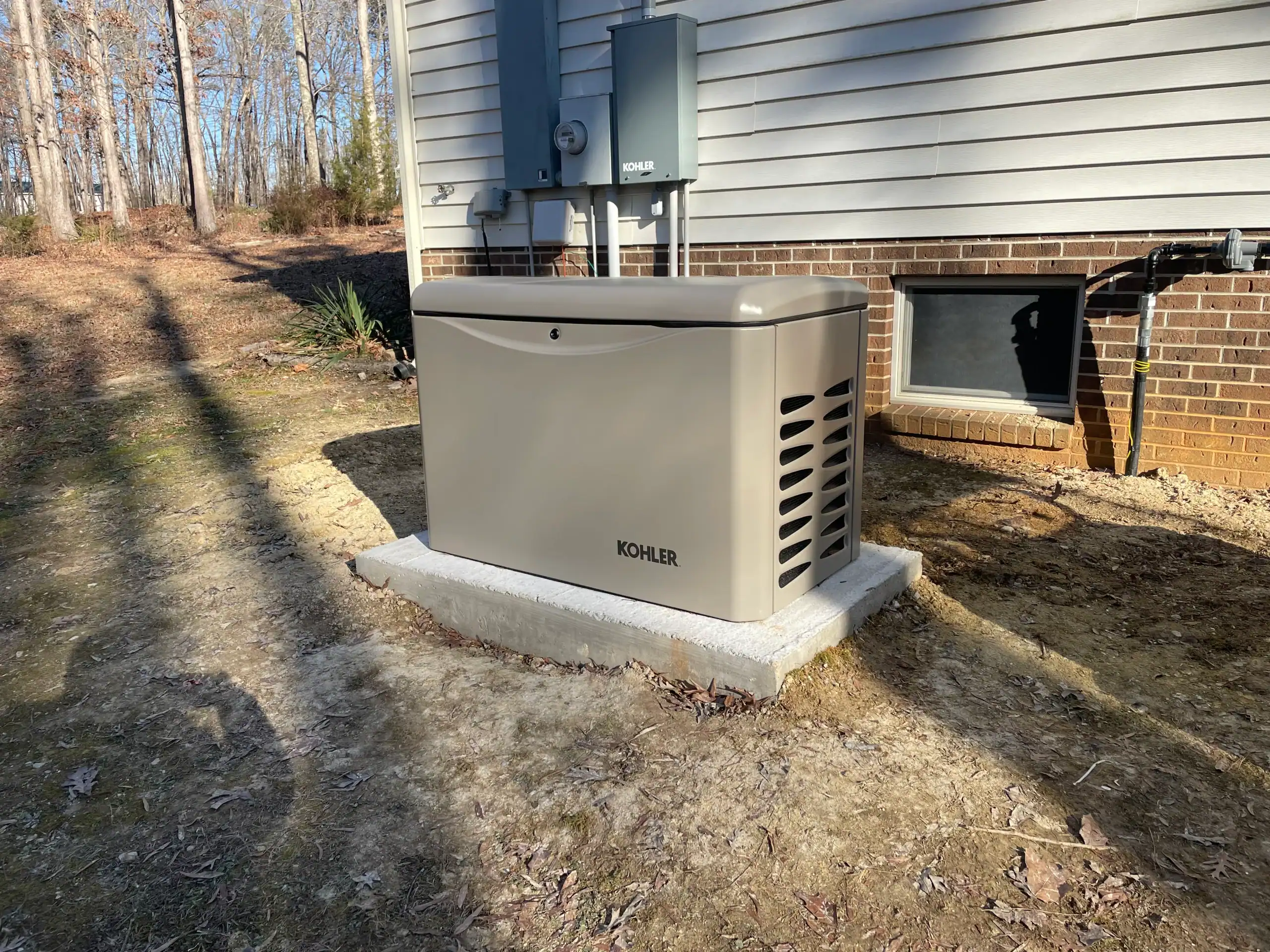
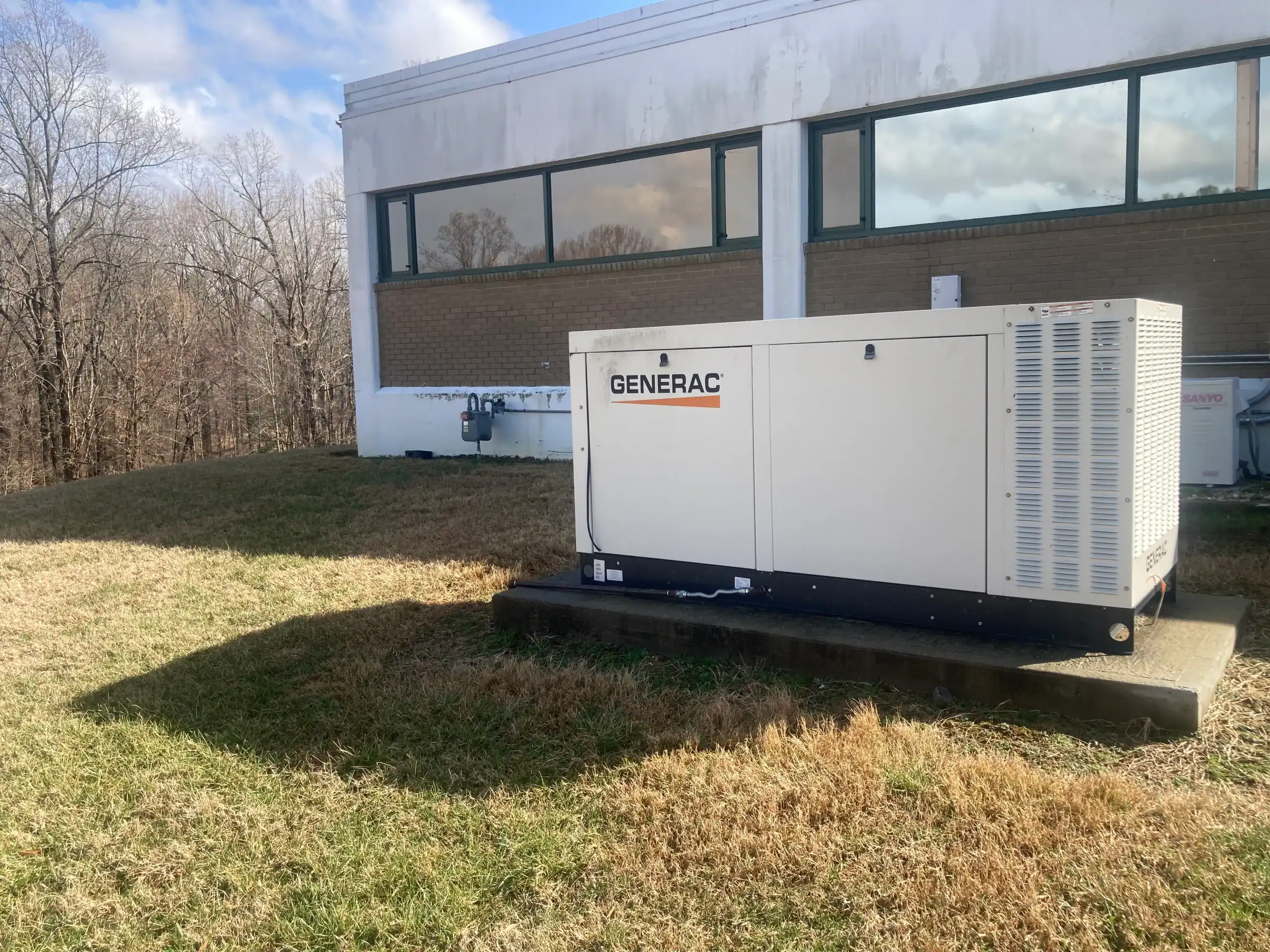
A Generac standby generator is a permanently installed unit, typically placed on a concrete pad outside your home, connected to your home’s electrical panel through an automatic transfer switch and fueled by natural gas or propane already running to your property. When the power goes out, the transfer switch detects the interruption and the generator starts automatically — usually within seconds. You don’t flip a switch, you don’t run extension cords, and you don’t make a trip to the gas station in the middle of a storm.
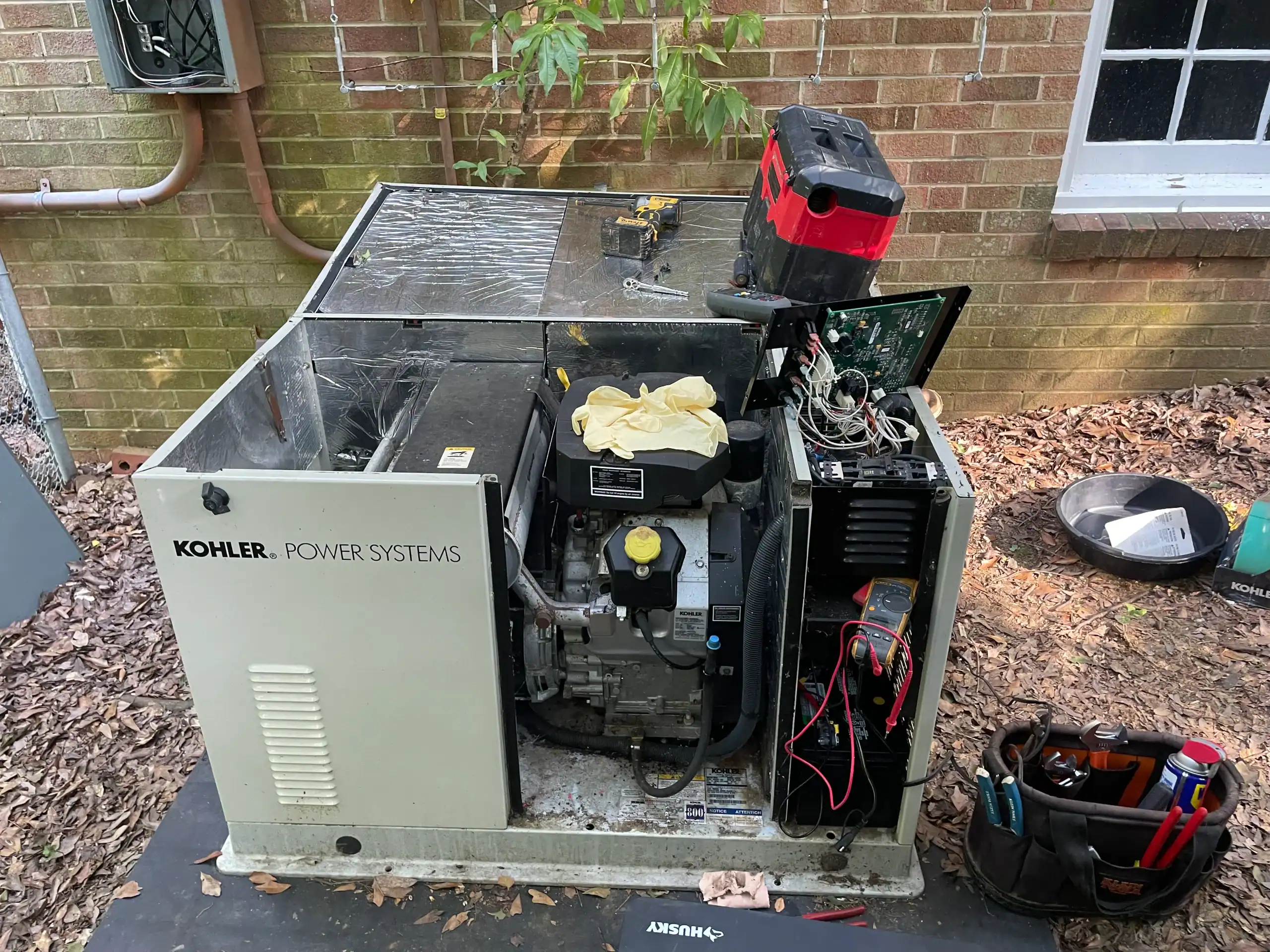
A complete Generac installation covers more than just setting the unit on a pad and connecting a wire. The process starts with a load assessment — figuring out what your home actually needs to run comfortably during an outage, whether that’s your entire house or just the essential circuits. Getting that sizing right matters. An undersized generator won’t handle your load. An oversized one costs more than necessary. An experienced installer does the math before recommending a unit, not after.
From there, the installation involves the generator unit itself, the automatic transfer switch, the electrical connections to your panel, the fuel line connection, site preparation including the concrete pad, and any permits required by your local jurisdiction. North Carolina requires a permit for standby generator installation, and depending on your fuel connection, you may need both an electrical permit and a mechanical or gas permit. Those permits are pulled under the installer’s license — which is one of the practical reasons the licensing level of your electrical contractor matters.
This is also where Generac’s authorized dealer requirement becomes important. Generac’s warranty requires that installation be performed by an authorized dealer. An unlicensed or unauthorized installer can void your manufacturer coverage before the system ever runs its first test cycle. That’s a real consequence that affects your ability to get warranty service if something goes wrong.
We’re factory-authorized to install and service Generac systems, which means the work is backed by the manufacturer and your warranty stays intact. Our operations manager has held a master electrician license since 1989. Our owner, Andy Helton, has held his electrical contractor license since the same year. We pull the permits, we do the inspection, and we walk you through the system before we leave. That’s what a proper installation looks like.
This comes up constantly, and it’s worth addressing directly because the two products are often compared as if they’re just different sizes of the same thing. They’re not.
A portable generator requires you to manually drag it out, connect it with extension cords or a transfer switch you’ve set up yourself, and fuel it — typically with gasoline you’ve stored or have to go buy in the middle of a storm. It can’t safely run inside or in a garage, which means it has to operate in whatever weather is happening outside. It can’t power your HVAC system or whole-home loads. And it requires you to be present and capable of operating it when the outage happens.
Portable generators also carry a documented safety risk that standby units simply don’t. Carbon monoxide poisoning from portable generators kills between 85 and 100 people in the United States every year. That’s a fact worth stating plainly — not as a scare tactic, but as a risk that should factor into how you think about the comparison.
A Generac standby generator does none of the things that make portables difficult. It activates automatically. It runs on the natural gas or propane already connected to your home, so there’s no fuel storage and no refueling run. It can power your entire home, including HVAC, refrigerators, sump pumps, and medical equipment. And it requires nothing from you when the power goes out — it just works.
For households with elderly family members, for caregivers managing medical equipment, for remote workers in Durham or Chapel Hill who can’t afford to lose a workday, and for any homeowner who has ever come home to a flooded basement because the sump pump stopped during a storm, that difference is not marginal. It’s the entire point.
Generac holds roughly 70% of the North American residential standby market. That market share reflects what happens when millions of homeowners make the comparison and decide which product actually solves the problem.
If you’ve been thinking about a standby generator for a while — or if a recent storm finally made the decision feel urgent — the most important next step is talking to a licensed, factory-authorized installer who knows this specific market.
Not every electrical contractor is authorized to install Generac systems, and not every authorized installer has the depth of experience to size, permit, and commission a system correctly. The credentials matter, the authorization matters, and so does working with someone who has been doing this work in the Piedmont long enough to know the local permitting process, the utility infrastructure, and what your home actually needs.
We’ve been serving Alamance, Guilford, Durham, Orange, and Chatham Counties since 2002. When you call ESP Electrical Service Providers, you’ll talk to a person — not an answering machine. If you’re ready to have the conversation, we’re ready to help.
Article details:
Share:
Continue learning: