NC has multiple electrician license levels — and they're not interchangeable. Here's what each one can legally do, and why it matters before you hire.
Share:
Summary:
When something goes wrong with the electrical system in your home — a breaker that won’t stay reset, outlets that stopped working, lights that flicker for no clear reason — the first instinct is to find someone who can fix it fast. That’s completely reasonable. But “licensed electrician” means something specific in North Carolina, and it’s not a one-size-fits-all label. There are distinct levels of licensing, and each one comes with different legal authorities, different scopes of work, and different levels of accountability. Understanding the difference before you hire protects your home, your insurance coverage, and your wallet. Here’s what you actually need to know.
North Carolina doesn’t have a single electrician license — it has a licensing pyramid. At the bottom are apprentices, working under supervision and not yet qualified to do much on their own. Above them are journeyman-level electricians, who can perform a wide range of tasks but operate under the authority of a master electrician. At the top is the master electrician — the highest individual credential — and above that is the licensed electrical contractor, which is the business-level license required to legally perform electrical work for hire in NC.
Each level has real legal meaning. It’s not just a title. The work someone is legally permitted to do, the permits they can pull, and the inspections they’re accountable for all depend on where they sit in this structure. Knowing the difference isn’t just interesting — it directly affects what happens if something goes wrong after the work is done.

A journeyman electrician has completed an apprenticeship — typically 8,000 hours of on-the-job training over roughly four years — and has demonstrated enough competency to work independently on a range of electrical tasks. Installing outlets, replacing fixtures, correcting malfunctions, running circuits: a journeyman can handle a lot.
But here’s the part most homeowners don’t know: in North Carolina, there is no state-level journeyman license. Journeyman licensing in NC is handled at the local municipality level. Individual cities and counties may issue their own journeyman credentials, with varying requirements. That inconsistency matters, because it means the scope of what a “licensed journeyman” can do in Burlington isn’t necessarily the same as what that title implies in another state — or even another county.
More importantly, a journeyman electrician working alone cannot legally operate as an independent electrical contractor in NC. To run a contracting business, a company must have a licensed master electrician serving as the qualifying party and must hold a separate contractor license issued by the NC State Board of Examiners of Electrical Contractors. If you’re hiring someone who describes themselves as a journeyman running their own operation, it’s worth asking how that’s structured — because the answer has legal implications for the work done in your home.
This isn’t a technicality. When work is performed without the proper licensing structure behind it, permits may not be pulled, inspections may not happen, and the homeowner is left holding the liability. If a problem develops later — an electrical fire, damage to appliances, a failed home inspection during a sale — the absence of proper documentation can turn a fixable situation into a very expensive one.
A master electrician has cleared every bar in the licensing pyramid. Getting there requires holding a valid journeyman credential, then completing at least four additional years — another 8,000 hours — of post-journeyman on-the-job experience, followed by passing the Master Electrician Examination. By the time someone holds a master electrician license, they’ve spent well over a decade in the field under increasingly complex and demanding conditions.
What does that credential actually authorize? A master electrician can supervise journeymen and apprentices, take on projects of greater complexity and scope, and — critically — serve as the qualifying party for a licensed electrical contracting business. In practical terms, that means every legitimate electrical contracting company operating in NC must have a master electrician behind it. That’s not optional; it’s a legal requirement.
The master electrician’s knowledge of the National Electrical Code is also expected to be comprehensive. The NEC governs how electrical systems are designed, installed, and maintained, and it updates regularly. Licensed contractors in NC are required to complete four hours of continuing education annually, including at least one hour dedicated specifically to NEC changes. That ongoing requirement exists because the code evolves — and the electrician working in your home needs to know what the current standard actually is, not what it was ten years ago.
For homeowners across Alamance County dealing with older homes — properties built in the 1960s, 70s, or 80s with electrical systems that were installed under earlier code versions — this depth of knowledge is the difference between a contractor who can bring your home into compliance and one who doesn’t fully understand what they’re looking at. Older panels, aluminum wiring, undersized service, and systems that have been modified over the decades require someone who understands both the history of the code and its current requirements. That’s a master electrician’s domain.
Want live answers?
Connect with a Electrical Service Providers expert for fast, friendly support.
Even a master electrician can’t legally operate an electrical contracting business in North Carolina without a separate contractor license from the NC State Board of Examiners of Electrical Contractors — the NCBEEC. This is the business-level credential, and it comes in three classifications: Limited, Intermediate, and Unlimited.
The Limited classification permits work on single projects up to $60,000 and under 600 volts, and requires two years of experience. The Intermediate classification allows projects up to $150,000 and requires four years. The Unlimited classification carries no project value or voltage restrictions — it’s the highest level — and requires seven years of experience, at least five of which must be primary. These aren’t just categories on paper. They define the legal ceiling of what a contractor can take on for any given job.
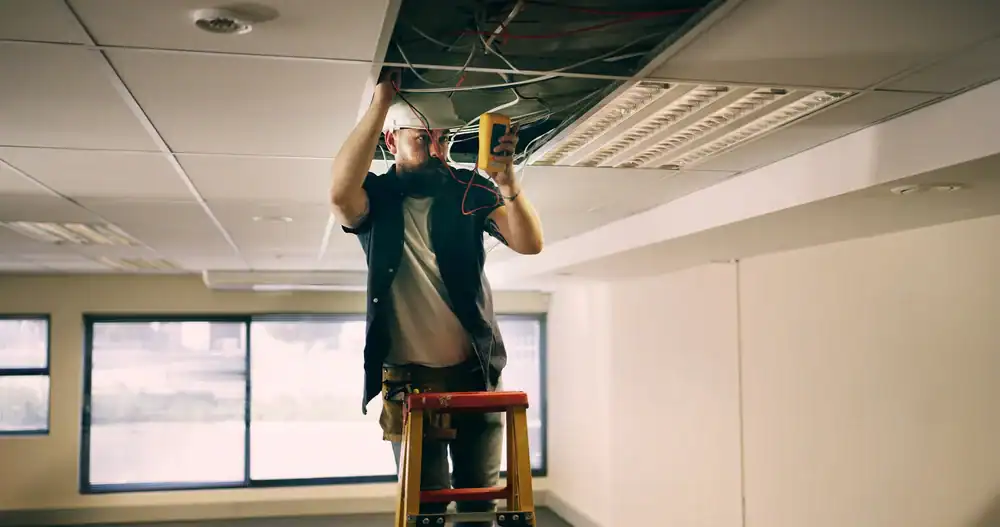
The short answer: the risk lands on you. When electrical work is performed by someone without the proper licensing, permits typically don’t get pulled. Without permits, there are no inspections. Without inspections, there’s no independent verification that the work was done correctly — and no paper trail showing it was done to code.
That matters in several concrete ways. Most standard homeowner’s insurance policies contain language that allows insurers to deny claims resulting from work performed without required permits or by unlicensed contractors. If an electrical fire is traced back to unpermitted or improperly installed wiring, the insurer may not cover the loss — even if you have an active policy and paid your premiums on time. That’s a significant financial exposure that most homeowners don’t think about when they’re comparing quotes.
There’s also the home sale issue. When you sell a home in Alamance County, buyers and their inspectors look at the electrical system. Unpermitted work surfaces during inspections, and it can derail a sale, require expensive remediation, or significantly reduce what buyers are willing to offer. Work that was done without a permit doesn’t just affect the homeowner who ordered it — it follows the property.
And then there’s the safety dimension, which is the most direct concern. Improper wiring by unqualified contractors is a documented cause of residential electrical fires. Approximately 23,700 residential electrical fires occur in the U.S. each year — causing around 500 deaths, 1,100 injuries, and $1.5 billion in property damage annually, according to NFPA data. Substandard materials, missed grounding requirements, and circuits that aren’t properly protected don’t announce themselves as problems right away. They show up later, often at the worst possible time.
The most important first step is verification, not just trust. The NC State Board of Examiners of Electrical Contractors maintains a public license lookup — you can search any electrical contractor’s license status before you hire them. If a company can’t give you a license number or their status doesn’t come back clean, that’s the answer you need.
Beyond verification, the things that actually separate good contractors from the rest are pretty consistent. Does the contractor pull permits for work that requires them? Do they give you a written price before starting — not an estimate that shifts once they’re in the wall? Do they explain what they found and what they’re doing about it, in plain language? Does their work pass inspection the first time?
That last point matters more than it sounds. A contractor whose work consistently passes inspection isn’t cutting corners on materials, skipping steps, or guessing at code requirements. Inspection compliance is the electrical industry’s objective quality standard, and it’s one of the clearest signals that a contractor actually knows what they’re doing.
In Alamance County specifically, the housing stock adds another layer to this. Burlington, Graham, Mebane, Elon, and Haw River all have significant numbers of homes built decades ago, with electrical systems that may have been modified multiple times by different hands over the years. Finding an electrician who specializes in existing properties, rather than one whose primary experience is wiring new construction, makes a real difference on these jobs. Troubleshooting a system with history requires a different skill set than wiring a blank slate. The ability to look at what’s there, understand what was done and when, and figure out what needs to change — that’s the work that matters most for most Alamance County homeowners.
We’ve been doing exactly that kind of work since 2002. Our master electrician, Andy Helton, has been licensed since 1989 — more than 35 years of continuous licensure in North Carolina, with all of it focused on residential and commercial service work on existing properties. When you call us, a real person answers. We give you a flat-rate price in writing before anything starts. And our work passes inspection — not because we say so, but because that’s the standard we hold ourselves to on every job.
A license isn’t just a credential — in North Carolina, it’s a legal framework that determines what an electrician can do, what permits they can pull, and what accountability exists if something goes wrong. Understanding the difference between an apprentice, a journeyman, a master electrician, and a licensed contractor isn’t trivia. It’s the foundation of a smarter hiring decision.
For homeowners in Alamance County, that decision carries real stakes. Older homes, active real estate activity, and a growing population of buyers renovating existing properties all create demand for electrical work that’s done right the first time — permitted, inspected, and backed by someone who knows what they’re looking at.
If you have questions about your home’s electrical system or want to talk through what a job actually requires, reach out to ESP Electrical Service Providers. We’re local, we’re licensed, and we’ll give you a straight answer before we ever ask you to commit to anything.
Article details:
Share:
Continue learning: