When temperatures drop and heating systems kick on, older home wiring faces its biggest test of the year. Here's what that actually means for your home.
Share:
Summary:
Every fall, heating systems kick back on across Alamance County and the circuits in older homes quietly take on more than they were ever designed to handle. Most of the time, nothing dramatic happens — no blown fuse, no obvious warning sign. But the stress is real, and it builds. If your home was built before 1980, the wiring inside your walls has likely never been tested the way a modern heating load tests it. Understanding what’s actually happening — and when it becomes a problem — can make a meaningful difference before the coldest months of the year arrive.
The problem isn’t just that older homes have older wiring. It’s that older wiring was designed for a different electrical world — one without heat pumps running continuously through a cold snap, without space heaters plugged into bedroom outlets, and without the always-on devices that now share every circuit in the house.
When heating demand increases, so does the load on every circuit connected to it. That load generates heat inside the wiring itself. In a newer home with modern copper wiring, AFCI-protected breakers, and circuits sized for today’s demands, that heat dissipates safely. In a home built in the 1950s or 1960s, the margin for error is much smaller — and the consequences of exceeding it are more serious.
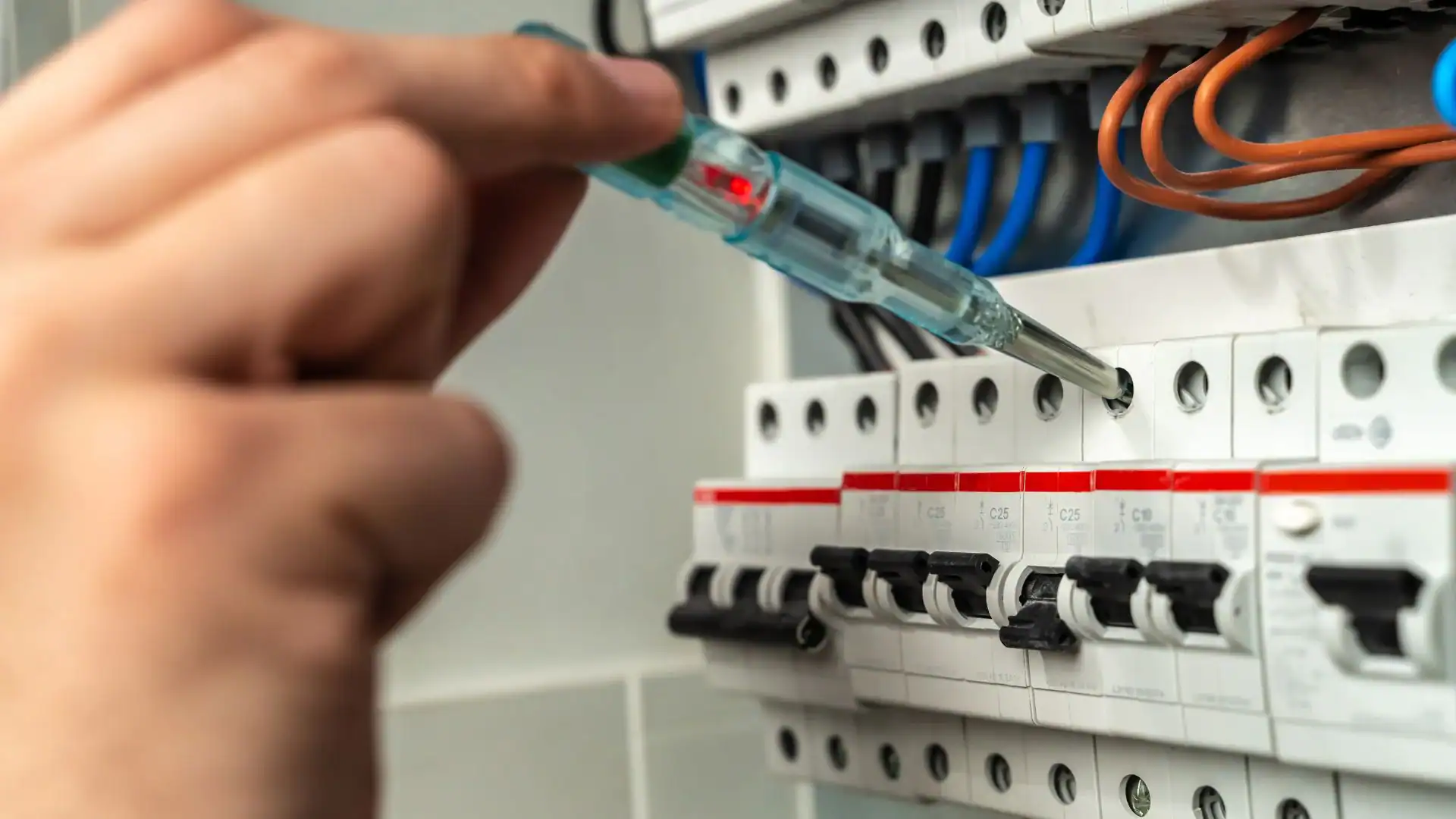
Here’s the thing most homeowners don’t realize: a breaker not tripping doesn’t mean a circuit is safe. Older breaker panels and fuse boxes were built to respond to massive short circuits — the kind of sudden, dramatic overload that draws an enormous spike of current in an instant. What they weren’t built to detect is the slow, sustained heat that builds inside a wall when a circuit is running at 90% of its rated capacity for hours at a time.
Modern electrical code now requires arc-fault circuit interrupter breakers — AFCIs — that can detect the specific electrical signature of a wire getting too hot or arcing inside a wall cavity. Older panels don’t have that sensitivity. They’ll sit quietly while a wire heats up behind drywall, never tripping until the situation has already crossed into dangerous territory.
This is especially relevant for Alamance County homes built during the postwar construction boom of the 1940s through the 1960s. More than 33% of Burlington’s housing stock was built between 1940 and 1969, and nearly 8% was built before 1939. That’s a significant share of the local housing market running on electrical systems that predate modern protective technology by decades.
Adding a space heater to a bedroom — something millions of homeowners do every winter without a second thought — can push an already-loaded circuit into sustained overload. The breaker stays quiet. The wiring gets warm. And the insulation surrounding that wiring, which may already be brittle with age, gets a little more degraded with each heating cycle.
Most people associate electrical hazards with summer — lightning storms, AC overloads, outdoor wiring. Winter feels safer. But cold weather creates a specific mechanical failure mode that’s worth understanding, especially in homes with aluminum wiring.
Between 1965 and 1973, aluminum wiring was widely installed in American homes as a cost-saving alternative to copper. A significant number of Alamance County homes built during that period have aluminum wiring. The problem with aluminum isn’t that it can’t carry electrical current — it can. The problem is that aluminum expands and contracts more than copper does with changes in temperature.
Every time your heating system cycles on and off, every time the temperature outside swings from freezing to mild and back again, the aluminum wiring at your outlets, switches, and breaker connections expands and contracts slightly. Over years and decades, that movement loosens connections. Loose connections create resistance. Resistance generates heat. And that heat — concentrated at a single outlet, a single breaker terminal, or a single junction inside your wall — can ignite surrounding materials without ever triggering a breaker.
The U.S. Consumer Product Safety Commission found that homes with aluminum wiring are 55 times more likely to have fire-hazard conditions at electrical connections than homes with copper wiring. That’s not a marginal difference. It’s a risk that gets worse, not better, with each heating season that passes without an inspection.
Alamance County’s winters add another layer to this problem. The rapid temperature swings — a 60-degree afternoon followed by a hard freeze overnight — create exactly the thermal cycling conditions that stress aluminum connections most. Ice storms, which hit the Burlington area with some regularity, can cause power fluctuations and surges that compound the stress on already-compromised connections.
Want live answers?
Connect with a Electrical Service Providers expert for fast, friendly support.
A lot of homeowners assume their electrical system was checked when they bought their home. And technically, it probably was — by a general home inspector. But a general home inspector is not a licensed electrician. They can’t see inside walls, they’re not trained to identify the specific failure modes of aluminum branch circuits or knob-and-tube wiring, and they’re not required to perform load calculations.
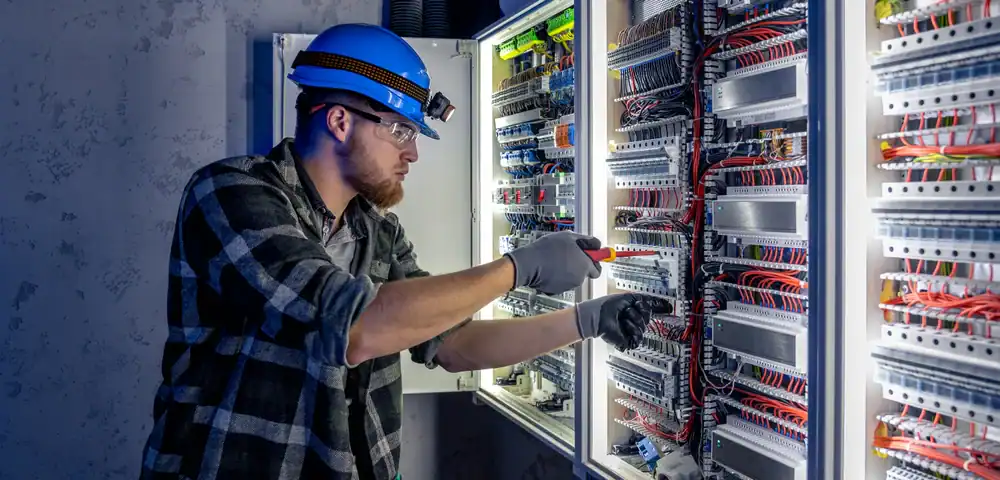
A proper electrical wiring inspection from a licensed electrician is a different exercise entirely. We look at the service panel for double-tapped breakers, damaged wiring, and improper bonding. We identify the type of wiring in the home — whether that’s knob-and-tube, aluminum, cloth-insulated cable, or early NM wire — and assess what condition it’s in. We evaluate whether the existing circuits can actually handle the electrical loads the home is running today, not the loads it was running in 1958.
Some warning signs are obvious. Burning smells near outlets, outlets that feel warm to the touch, lights that flicker when an appliance kicks on — these are things most homeowners know to take seriously. But a lot of the electrical stress that happens during heating season doesn’t announce itself clearly.
Breakers that trip more frequently during winter months are worth paying attention to. That’s not always a sign of a failing breaker — it can be a sign that circuits are running closer to their limits as heating loads increase. Outlets that work intermittently, or that have started to feel slightly loose in the wall, can indicate the kind of connection degradation that gets worse with each thermal cycle.
An older home in Alamance County that’s never had its panel inspected or upgraded is a home where these problems are more likely to be present than not. Many of our older neighborhoods — the mill-worker housing around downtown Burlington, the postwar subdivisions in Graham and Mebane — were built quickly, with the materials and electrical standards of their era. Some of those homes have been renovated multiple times since, with new layers of wiring added over old ones by owners who may or may not have pulled permits or used licensed contractors. The result can be a complicated, layered electrical system that a quick visual scan won’t fully reveal.
Thermal imaging is one of the more useful tools for situations like this. It can detect hot spots at panel connections, inside wall cavities, and at junction boxes without opening up surfaces. During heating season, when wiring stress is at its peak, thermal imaging can surface problems that would otherwise stay hidden until they become something worse.
It’s a question worth asking, and the answer is yes — with some important context about what it does and doesn’t do.
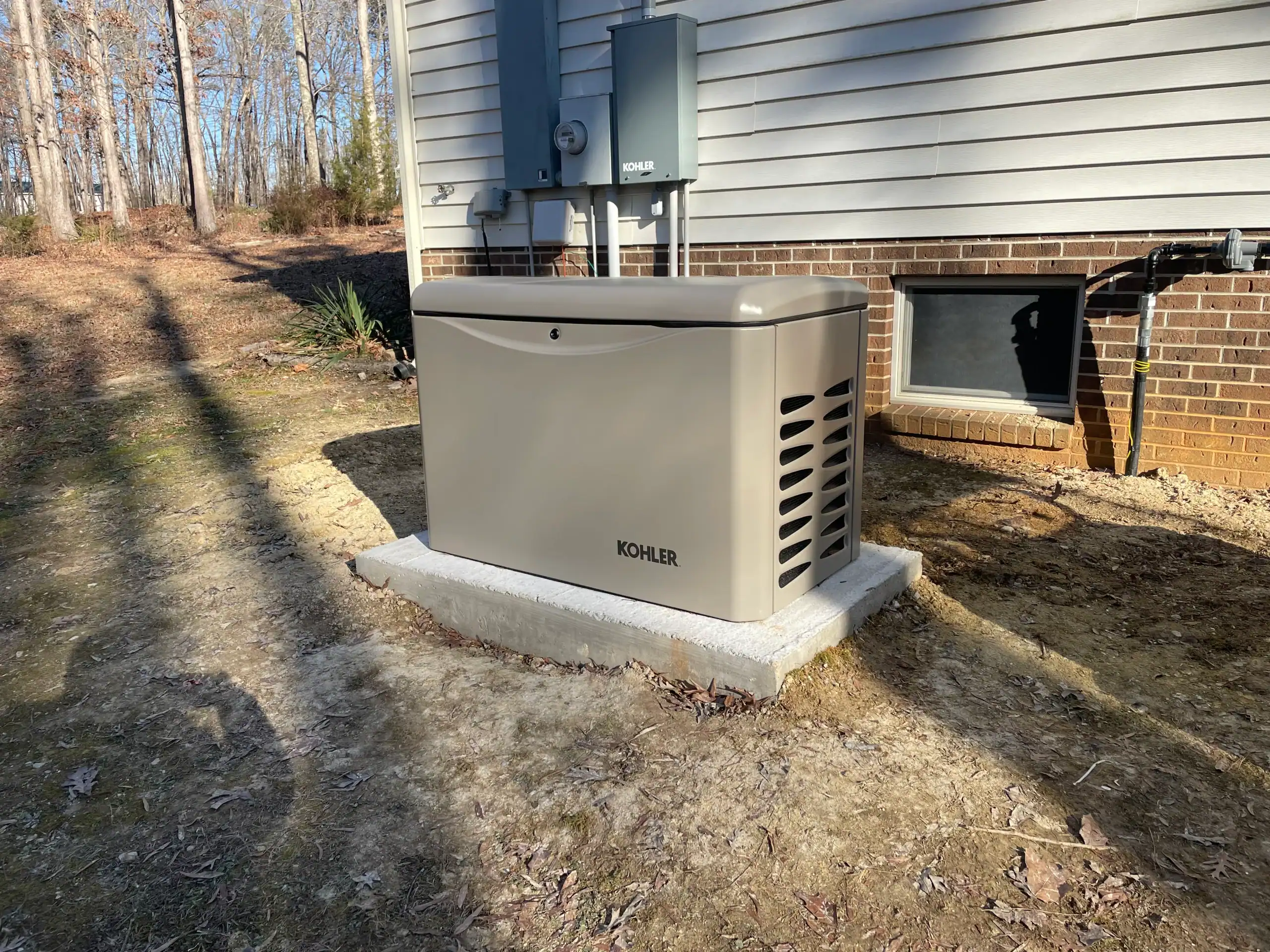
A whole house surge protector is installed at the main electrical panel. Its job is to intercept voltage spikes before they travel through your home’s circuits. Those spikes can come from outside — a utility switching event, a nearby lightning strike, a power line issue during an ice storm. But they can also come from inside the home, from large appliances and HVAC systems cycling on and off throughout the day.
That internal surge source is one that often gets overlooked. Every time your heat pump or furnace kicks on, it draws a significant amount of current. That draw can create small voltage fluctuations that ripple through other circuits. In a newer home with modern wiring, those fluctuations are minor. In an older home where wiring insulation is already degraded and connections are already slightly loose, repeated voltage stress accelerates the degradation further.
A whole house surge protector doesn’t fix aging wiring, but it does reduce one of the ongoing stressors that makes aging wiring worse over time. It also protects every appliance and device in the home — including HVAC systems, refrigerators, and anything else that’s hard-wired or plugged in — from the kind of voltage spike that can cause immediate damage. Individual power strip surge protectors only cover what’s plugged into them. A panel-level device covers everything, all the time, without requiring any action on your part.
For Alamance County homeowners with older homes who aren’t yet ready for a full wiring inspection or upgrade, a whole house surge protector is often a practical first step — a cost-effective layer of protection that can be installed in a single visit and starts working immediately.
If your home was built before 1980 and you haven’t had a licensed electrician look at the wiring, heating season is the right time to change that. Not because something is necessarily wrong, but because this is when the system faces its greatest load — and because the problems that do exist in older wiring tend to get worse, not better, with time and thermal stress.
The most important takeaway here isn’t a list of warning signs to watch for. It’s that older wiring doesn’t announce its condition. It works quietly, degrades quietly, and in the worst cases, fails quietly — inside a wall, at 2 a.m., when no one is watching. An inspection doesn’t have to be a big, disruptive event. It’s a diagnostic step that tells you what you’re actually dealing with, so you can make informed decisions rather than hoping for the best.
We’ve been doing exactly this kind of work in Alamance County since 2002 — not as a sideline to new construction, but as the core of what we do. If you have questions about your home’s wiring or want to schedule an inspection before the coldest months hit, give us a call. Real people answer the phone.
Article details:
Share:
Continue learning: