Your electric meter is easy to read once you know what you're looking at — and knowing how can save you real money and catch problems early.
Share:
Summary:
You got a bill that seemed too high. So you walked outside, looked at the meter, and had no idea what you were looking at. That’s more common than you’d think.
Most homeowners have never actually read their electric meter — not because they’re not paying attention, but because nobody ever showed them how. We’ll walk you through reading any meter type, explain what the numbers mean, and show you how to tell the difference between a high-usage month and a meter box that’s quietly causing bigger problems.
The type of meter on your house determines how you read it. Older homes — and there are plenty of them in Burlington, Graham, Mebane, and throughout Alamance County — often still have analog dial meters. Newer homes and homes where Duke Energy has completed a smart meter rollout will have a digital or smart meter. Each one works a little differently, but reading any of them takes about thirty seconds once you know the method.
The number you’re looking for is your cumulative kilowatt-hour (kWh) reading. Subtract last month’s reading from this month’s reading, and you’ve got your usage for the billing period. That’s the figure on your bill.
If it doesn’t match what you’d expect based on how you’ve been living — same habits, same season, no new appliances — that’s worth investigating. A professional electrical troubleshooting service can help identify electrical issues that may be contributing to unexpected energy usage.
Analog meters have four or five small dials arranged in a row, each with numbers zero through nine and a pointer. At first glance they look complicated. They’re not, but there’s one thing that trips people up: the dials don’t all rotate the same direction.
They alternate — the first goes clockwise, the second counterclockwise, the third clockwise, and so on. You have to pay attention to which way the pointer is moving before you read the number.
The rule is simple: read from right to left, and always record the lower number when the pointer falls between two digits. So if the pointer sits between 4 and 5, write down 4. If it’s between 9 and 0, write down 9. Work your way across all the dials and you’ll have a five-digit number — that’s your reading in kilowatt-hours.
One common mistake is misreading a dial that appears to be on a number when it hasn’t quite reached it yet. The adjacent dial is your check: if the dial to the right hasn’t passed zero, the one you’re reading hasn’t actually landed on the higher number yet. It takes a couple of tries to get comfortable with it, but once you do, it’s fast.
If your home in Alamance County was built before the 1990s and hasn’t had a meter upgrade, there’s a reasonable chance you still have an analog meter. Duke Energy has been rolling out smart meters across their service territory, but older properties — especially in some of the established neighborhoods in Burlington and Graham — may not have been converted yet.
Digital meters are straightforward. There’s an LCD display showing your cumulative kWh reading as a plain number. Read it left to right, ignore any leading zeros, and you’re done.
Some digital meters cycle through multiple screens — total usage, peak demand, time-of-use data — so if the number changes when you’re looking at it, wait for the screen labeled “kWh” or “total” before you record anything.
Smart meters work the same way from a reading standpoint, but they also transmit your usage data automatically to Duke Energy, usually every 15 minutes to an hour. That’s why Duke Energy no longer needs to send someone to your house to read the meter each month. You can often access your own usage data through Duke Energy’s online account portal, which gives you a breakdown by day or even by hour.
That level of detail can be genuinely useful — if your consumption spiked on a Tuesday afternoon when nobody was home, something drew power that shouldn’t have.
Time-of-use (TOU) meters are a variation on the digital meter that records usage differently depending on the time of day, because utilities charge different rates for peak versus off-peak hours. If you’re on a TOU rate plan with Duke Energy, your meter will show multiple readings. Your bill will explain how each one is being applied.
Reading a TOU meter is the same mechanical process — it just produces more numbers. For most Alamance County homeowners, the practical takeaway is this: read your meter the same time each month, write the number down, and subtract the previous reading. If the result is significantly higher than the same month last year and nothing in your household changed, that’s a signal worth paying attention to.
Want live answers?
Connect with a Electrical Service Providers expert for fast, friendly support.
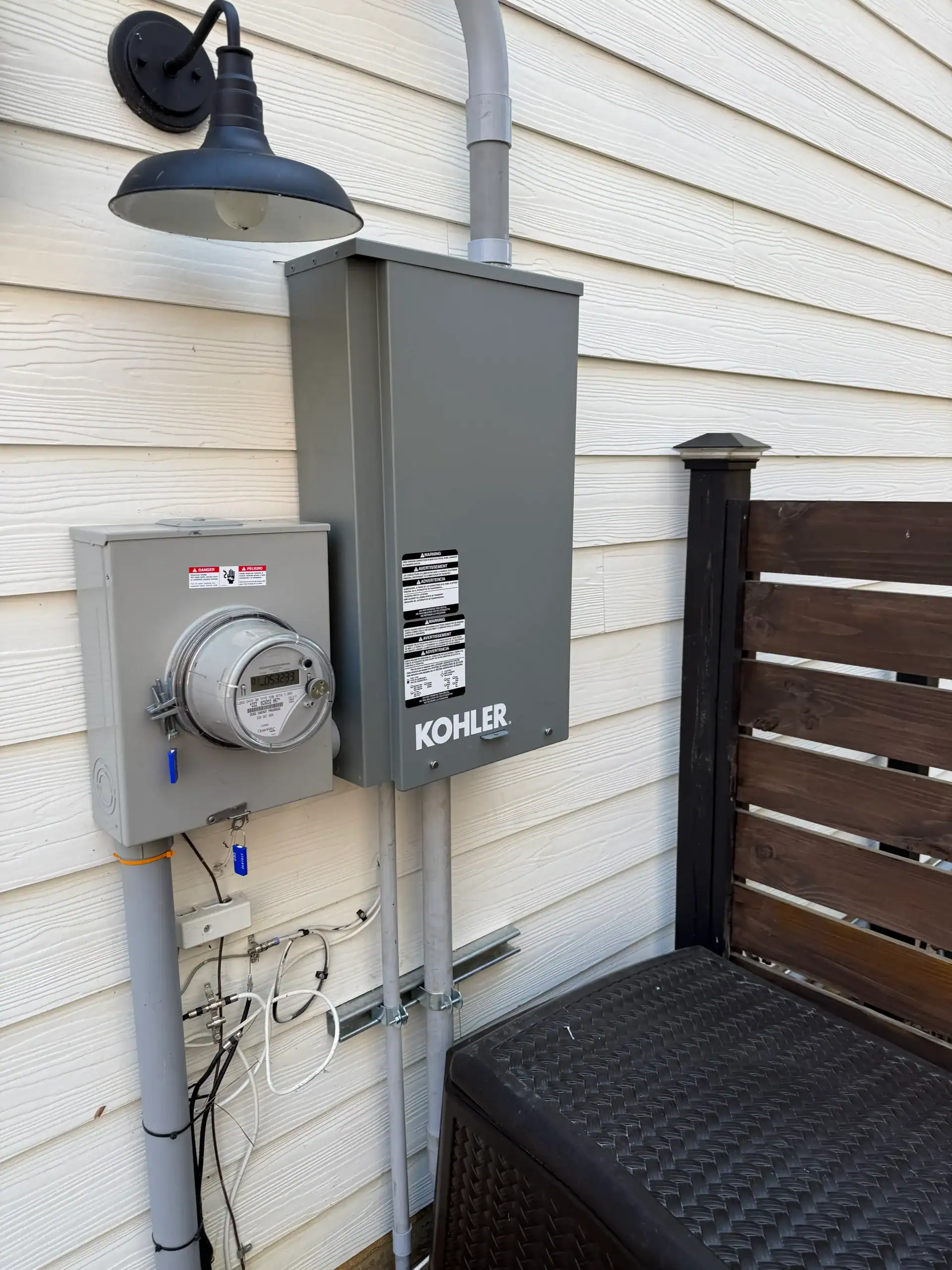
Here’s something most homeowners don’t know, and it matters: Duke Energy owns the meter itself — the device that measures your electricity use. But the enclosure it sits in, the socket it plugs into, and the wiring connected to it? That’s yours. You own it, and you’re responsible for maintaining it.
This distinction catches people off guard. When there’s a visible problem at the meter — rust, burn marks, a damaged cover — many homeowners call Duke Energy, who tells them it’s not their equipment. That’s not Duke Energy being difficult. It’s just how the system works. The meter box is your infrastructure, and when it needs attention, you need a licensed electrician, not the utility.
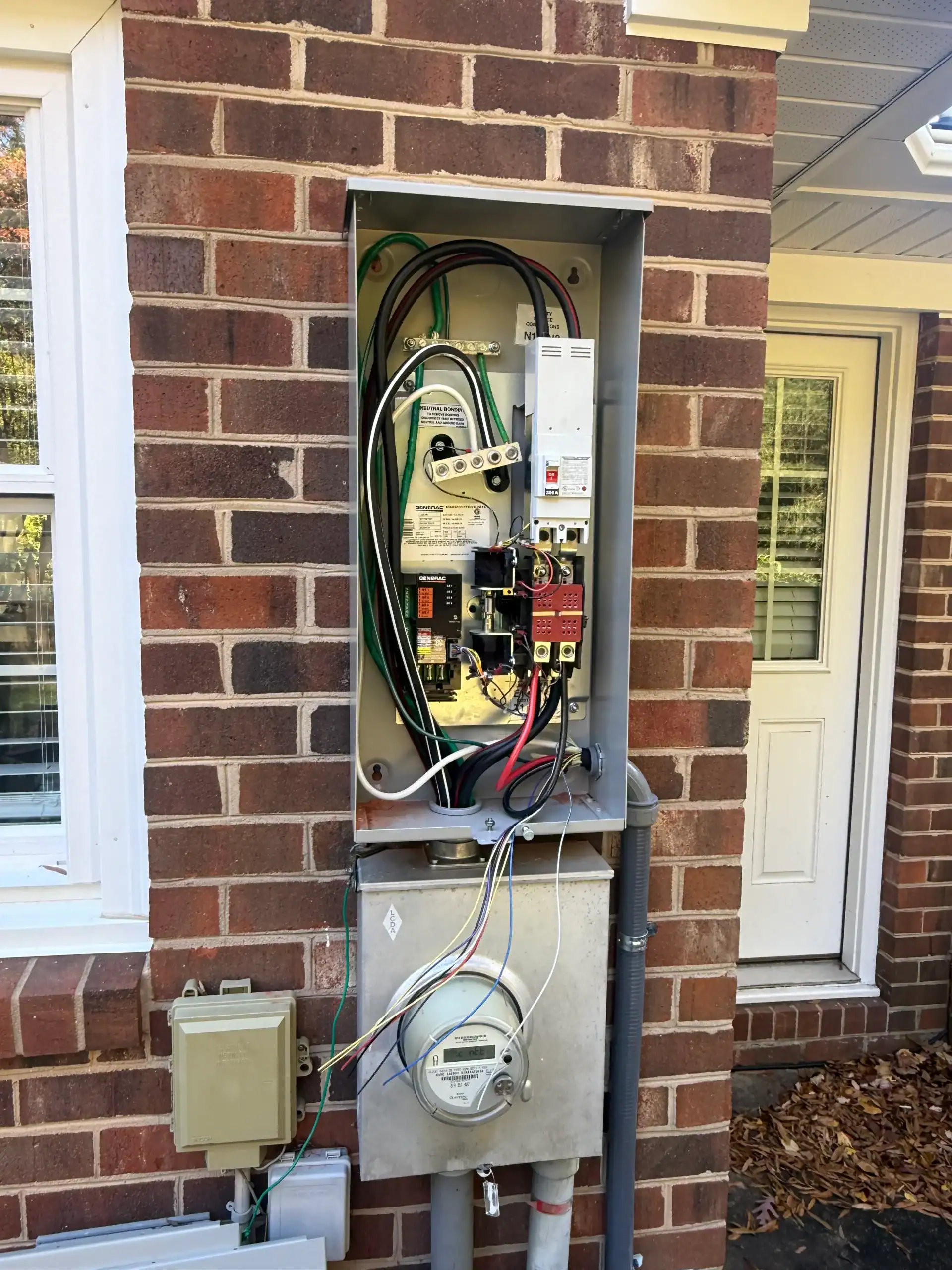
Meter boxes don’t last forever. Industry sources put the typical service life at 20 to 30 years for most residential enclosures. If you live in one of Alamance County’s older neighborhoods — homes built in the 1950s, ’60s, or ’70s during the region’s textile industry era — your meter base may be 40 or 50 years old and has likely never been replaced. That’s well past its intended lifespan, and the signs of wear are worth knowing.
Visible rust or corrosion on the enclosure is one of the clearest indicators. North Carolina’s humid summers accelerate oxidation on outdoor electrical equipment, and a meter box that’s been exposed to decades of Piedmont humidity may look intact from a distance but be compromised at the connections inside. Physical damage — cracks, dents, gaps in the housing — lets moisture in, which creates the conditions for arcing and corrosion at the lugs.
Electrical symptoms are subtler but often more urgent. If your lights flicker when the air conditioning kicks on, or you notice dimming that doesn’t correspond to anything obvious inside the house, the problem may not be your wiring — it may be a loose or degraded connection at the meter base. A burning smell near the meter, or any discoloration around the socket, means stop waiting and call someone today. Those are signs of active heat generation at a connection point, and that’s a fire risk.
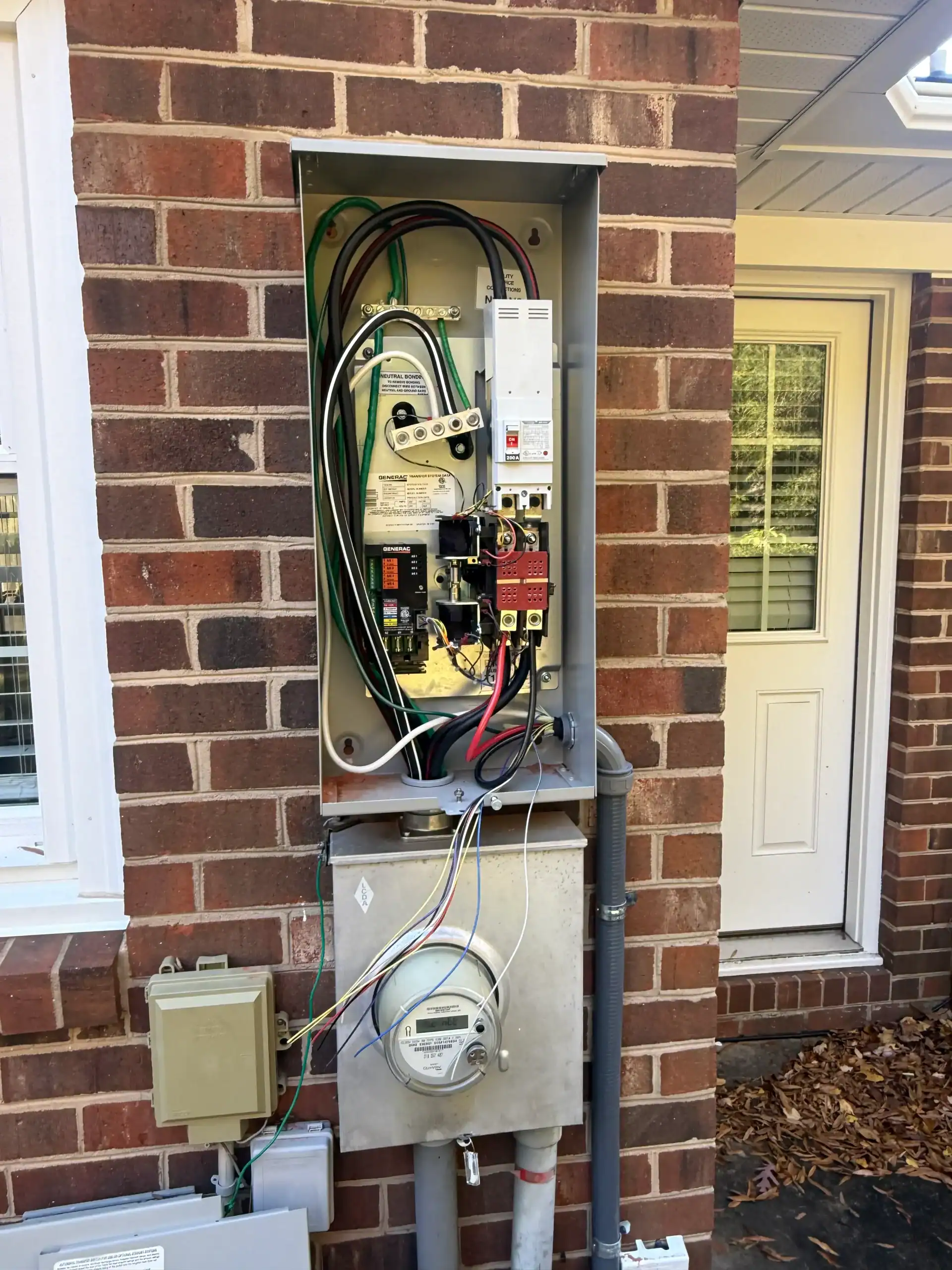
An outdated meter box can also create problems you wouldn’t expect. If you’re planning to sell your home, a home inspector will flag a deteriorated or non-compliant meter base. If you’re adding an EV charger, a subpanel, or a generator, the work may require bringing the service entrance up to current code — which often means the meter base gets replaced as part of the project. And if your meter base doesn’t meet current NEC standards, it can affect your homeowner’s insurance coverage and complicate any permitted electrical work you want to do down the road.
The short answer is no — and it’s not just a matter of skill level. In North Carolina, meter box replacement must be performed by a contractor licensed by the NC State Board of Examiners of Electrical Contractors (NCBEEC). The work requires a permit, and it must pass inspection before the service is restored.
Beyond the legal requirement, the practical reality is that the service entrance carries live utility voltage that you cannot de-energize yourself. Duke Energy has to disconnect the service before the work begins and reconnect it after the inspection is complete. That coordination has to happen through a licensed contractor.
This is one of those jobs where the licensing requirement exists for a real reason. The meter base sits at the highest-voltage point in your home’s electrical system — the point where utility power enters your property. Work done incorrectly at that junction creates risks that don’t stay contained to the meter box. Loose lugs, improper torque on connections, or a base that isn’t rated for your service amperage can cause arcing, overheating, and in serious cases, fire. It can also damage appliances and electronics throughout the house by introducing voltage irregularities downstream.
If you’re in Alamance County and you’re trying to figure out whether your meter box actually needs replacing or whether something less involved will solve the problem, the honest answer is that a visual inspection by a licensed electrician is the right first step. We’ve been doing this work in this county since 2002, and we’ve seen the full range — from boxes that looked rough but just needed a weatherproof seal to boxes that looked fine from the outside but had serious problems at the connections inside. You can’t always tell from the street.
We handle the permit, coordinate the Duke Energy disconnect and reconnect, and make sure the work passes inspection the first time. That’s not a selling point — it’s just how the job is supposed to be done.
Reading your electric meter is a small habit that pays off. It takes thirty seconds, it gives you a real number to compare against your bill, and it puts you in a position to catch problems early — whether that’s a billing error, unusual consumption, or the first sign that something in your home is drawing more power than it should.
But the meter box itself is a different conversation. If you’re seeing rust, physical damage, flickering lights that don’t have an obvious cause, or anything that looks burned or smells like heat near the meter, that’s not a watch-and-wait situation. It’s infrastructure you own, it has a finite lifespan, and in a county with as much older housing stock as Alamance County, it’s worth knowing where yours stands.
If you have questions about your meter box or want someone to take a look, we’re based in Burlington and have been serving Alamance County homeowners since 2002. A real person will answer when you call.
Article details:
Share:
Continue learning: