Your home's electrical system rarely fails without warning. Here's how to recognize the signs before they become serious problems.
Share:

Summary:
Most people don’t think about their home’s wiring until a breaker trips, a light flickers, or something smells faintly like it’s burning. Then they Google it, read a few articles, and talk themselves into waiting a little longer.
The signals your electrical system sends before something goes seriously wrong are real, they’re specific, and they’re worth understanding. This post breaks down what those signals actually mean, what a professional electrical safety check involves, and why homeowners across Alamance County have more reason than most to pay attention.
Electrical problems don’t usually announce themselves all at once. They show up gradually — a light that flickers when the refrigerator kicks on, a breaker that trips every few weeks, an outlet near the bathroom sink that feels slightly warm to the touch.
But these aren’t quirks. They’re the system telling you something is off. A flickering light can mean a loose connection somewhere in the circuit. A warm outlet can mean the wiring behind it is carrying more load than it was designed for. A breaker that trips repeatedly isn’t being oversensitive — it’s doing exactly what it’s supposed to do, which is stop a problem before it gets worse.
The question isn’t whether to take these signs seriously. The question is what to do with them.
Flickering lights are one of the warning signs the U.S. Consumer Product Safety Commission specifically lists as a reason to have your electrical system inspected. When lights flicker, it typically points to one of a few things: a loose connection at the outlet, switch, or panel; an overloaded circuit that’s struggling to keep up with demand; or wiring that’s deteriorated to the point where it can’t maintain a consistent load.
Any of those three causes is worth investigating. The first two are usually fixable without major work. The third one — deteriorated wiring — is where older homes in Alamance County start to get complicated.
Breakers that trip frequently are a similar story. A breaker’s job is to interrupt the circuit when something is wrong. If it’s doing that job often, the circuit is being overloaded, there’s a fault somewhere in the wiring, or the breaker itself is failing. None of those situations improve on their own.
An overloaded circuit that doesn’t trip — because the breaker has worn out and stopped responding correctly — is actually the more dangerous scenario. Warm outlets and switch plates are worth taking seriously too. Outlets aren’t supposed to generate heat. When they do, it usually means the wiring behind them is carrying more current than it should, or there’s a loose connection creating resistance.
Resistance generates heat. Heat, over time, is how electrical fires start inside walls where no one can see them. The Electrical Safety Foundation International estimates that arcing faults are responsible for more than 28,000 home fires in the United States every year. The majority of those fires don’t announce themselves. They start quietly, in places homeowners never look, long after the early warning signs were written off as “just the way the house is.”
Here’s a local detail worth knowing: according to Alamance County GIS data, half of all parcels in the county with a recorded build year were built in 1986 or earlier. That means a statistically average home in Burlington, Graham, Mebane, or Elon is approaching — or past — 40 years old. The CPSC and the Electrical Safety Foundation International both recommend a professional electrical inspection for homes that age.
Burlington’s history as a textile manufacturing center produced a lot of housing quickly, particularly in the mid-20th century. The mill villages and older residential neighborhoods that grew up around those industries contain homes built in the 1940s, 1950s, and 1960s — homes that were wired to the codes and standards of their era, not today’s. Some of that original wiring has been updated over the decades. A lot of it hasn’t been touched.
Homes from that period may still have wiring systems or panel configurations that were perfectly acceptable when they were installed but are now well outside current code. That’s not a criticism of the original work — electrical code requirements have evolved significantly, especially around arc-fault and ground-fault protection. Older homes in Burlington and Graham frequently lack GFCI protection in locations where it’s now required, not because anyone cut corners, but because those requirements didn’t exist when the homes were built.
There’s also the matter of load. A 1960s home was wired for a 1960s household — a few window units, a washer and dryer, maybe a dishwasher. Today, that same home might have central air conditioning, an EV charger in the garage, an induction range in the kitchen, a home office with multiple devices running simultaneously, and a smart home system layered on top of all of it. The wiring in the walls hasn’t changed. The demand on it has changed enormously.
That mismatch — old wires, new loads — is one of the most common things we find when we do a thorough electrical safety check on a pre-1980s home in Alamance County. It’s not always a crisis. But it’s always worth knowing about.
Want live answers?
Connect with a Electrical Service Providers expert for fast, friendly support.
A lot of homeowners assume their electrical system was evaluated when they bought the house. It probably wasn’t — not in any meaningful way. A general home inspector looks at a lot of systems quickly. They’ll note whether the panel looks unusual or whether there are visible issues at outlets.
What they don’t do is test circuits, verify GFCI and AFCI function, check panel connections for signs of overheating, or use thermal imaging to look for problems inside walls and behind panels. That’s the difference between a general walk-through and an electrical safety check performed by a licensed electrician. The depth is categorically different.
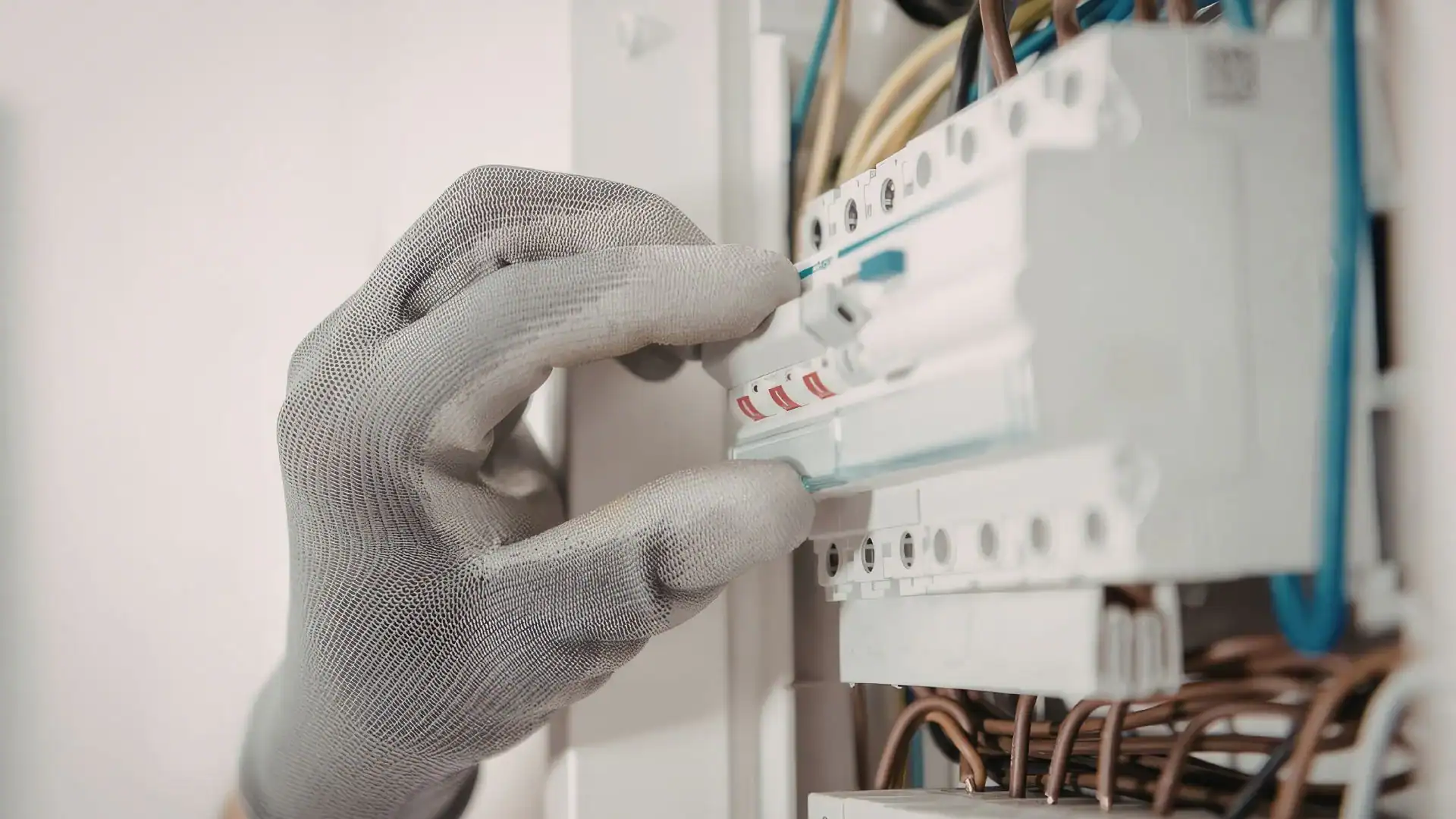
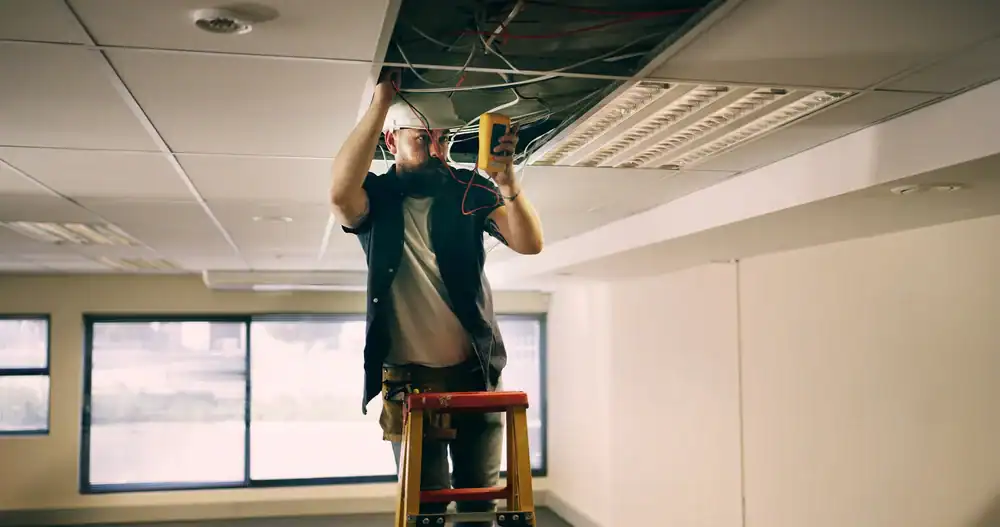
A thorough electrical safety check starts at the service panel — the breaker box. That’s where most of the critical connections live, and it’s where problems like overheating, corrosion, improper wiring, and failing breakers show up first. We inspect the panel for signs of heat damage, check that breakers are the correct size for the circuits they protect, and look for any wiring that doesn’t meet current code standards.
From there, the inspection covers the wiring and outlets throughout your home. That means testing outlets for proper voltage and grounding, checking that GFCI outlets are installed where code requires them (kitchens, bathrooms, garages, outdoor areas, basements), and verifying that AFCI protection is in place on the circuits that need it. Arc-fault circuit interrupters are designed to detect the kind of electrical arcing that causes fires — they’re a code requirement in modern construction and frequently absent in older Alamance County homes.
Outdoor circuits, HVAC wiring, and surge protection are also part of a complete inspection. So are smoke and carbon monoxide detectors, which are often overlooked until there’s a problem.
We also use thermal imaging as part of our inspection process — a tool that detects heat signatures inside walls and panels that are completely invisible to the naked eye. Thermal imaging can identify an overheating connection or a failing component before it causes a fire or a failure. It’s one of the reasons our electrical safety checks go deeper than a standard visual inspection.
When the inspection is done, you get a clear picture of what’s working, what needs attention, and what represents a genuine safety concern. No guesswork, no vague recommendations — just a straight account of what we found.
The CPSC and ESFI recommend a professional electrical inspection for homes 40 years and older, for homes where major appliances or systems have been added, and for homes where the current owner doesn’t know the full history of the electrical work. In Alamance County, given the age profile of the housing stock, a large percentage of homeowners fall into at least one of those categories.
Beyond age, there are specific situations that warrant an inspection regardless of when the last one happened. If you’ve added a high-draw appliance — an EV charger, a hot tub, an induction range, a dedicated home office circuit — you should have the system checked before or shortly after that addition. Those loads are significant, and an older panel that was already running close to capacity may not handle them safely without upgrades.
If you’ve recently purchased a home in Burlington, Graham, Mebane, or anywhere else in Alamance County and the seller’s disclosures were thin on electrical history, an inspection is a reasonable first step. A home inspector’s notation that the panel “appeared functional” is not the same as a licensed electrician’s assessment of whether the system is safe and code-compliant.
If you’ve noticed any of the warning signs mentioned earlier — flickering lights, frequently tripping breakers, warm outlets, a faint burning smell that comes and goes — don’t wait for a scheduled inspection. Those are signals that something is happening now and deserves attention now.
With flat-rate pricing, you’ll know exactly what the inspection costs before we start. The price doesn’t change based on how long the job takes or what we find along the way. If the inspection turns up something that needs to be repaired and we can handle it the same day — which we usually can, because our trucks are fully stocked — you’ll get a clear price for that work before we touch anything.
If you’ve been noticing something — a flicker, a trip, a warm outlet, a smell you can’t quite place — the fact that nothing has gone wrong yet doesn’t mean nothing is wrong. Electrical systems in older homes tend to fail gradually, and the window between “early warning sign” and “serious problem” is exactly when an inspection does the most good.
Alamance County has a lot of older homes with a lot of history behind their walls. Some of that history is fine. Some of it needs attention. The only way to know which situation you’re in is to have someone who actually knows what they’re looking at take a look.
ESP Electrical Service Providers has been doing this work in Burlington and across Alamance County since 2002. If you have questions or want to schedule an electrical safety check, call us — a real person will answer.
Article details:
Share:
Continue learning: