If your home was built before 1960, there's a real chance it still has knob and tube wiring — and a growing chance your insurer already has an opinion about it.
Share:
Summary:
Alamance County has a lot going for it — older neighborhoods with character, homes built to last, a community with real roots. But those same homes, many of them built during the textile mill boom of the 1930s through the 1960s, were wired with a system that made perfect sense at the time and creates real problems now.
If you’ve just had a home inspection come back with a knob and tube flag, or your insurance company sent you a letter you weren’t expecting, you’re in the right place. Here’s what’s actually going on — and what your options look like.
Knob and tube wiring was the standard installation method for American homes from roughly the 1880s through the 1940s, with some installations continuing into the early 1970s. The system gets its name from the ceramic knobs that anchored the wires to framing members and the ceramic tubes that protected wires where they passed through wood. At the time, it was well-engineered and code-compliant.
The issue isn’t that it was poorly built. The issue is that it was built for a world where a household might run a few lights and a radio. Modern homes run dishwashers, HVAC systems, EV chargers, home offices, and refrigerators simultaneously. Knob and tube wiring was designed for roughly 10-amp loads. Today’s standard residential service runs 150 to 200 amps. That gap is where the problems start.
The rubber and cloth insulation used in knob and tube systems doesn’t last forever. Over decades, it dries out, becomes brittle, and cracks — sometimes exposing live conductors inside walls, attics, and crawl spaces. In homes throughout Alamance County, that process has been underway for sixty, seventy, or eighty years.
Alamance County’s climate makes this worse. The Piedmont region runs humid, and crawl spaces here are particularly prone to moisture. Moisture accelerates corrosion at electrical connections and speeds up the breakdown of the insulation that’s supposed to protect those connections. It’s not a theoretical risk — it’s a physical process that’s been underway in a lot of older homes in this area for decades.
There’s another issue that catches homeowners off guard. The National Electrical Code explicitly prohibits covering knob and tube wiring with insulation. Over the years, many Alamance County homeowners have added blown-in or batt insulation to their attics for energy efficiency — which is the right move for energy costs, but if there’s active knob and tube wiring up there, that insulation contact is a code violation and a fire risk. It’s one of the most common problems we find during inspections in older homes across the county.
Knob and tube wiring also has no ground wire. That’s not a minor detail. Without a ground, you have no path for fault current to safely dissipate, no surge protection, and no compatibility with modern three-prong appliances. Every two-prong outlet in an older home is a sign that the circuit behind it likely predates grounded wiring standards.
Pest activity adds another layer. Mice, squirrels, and other animals that find their way into attics and crawl spaces chew through insulation. On modern wiring with plastic sheathing, that’s bad. On century-old cloth and rubber insulation that’s already brittle, it can be catastrophic.
Here’s where things get urgent for a lot of Alamance County homeowners. The safety concerns around knob and tube wiring have been known for years, but it’s the insurance industry’s response to those concerns that’s forcing the issue right now.
Insurers are increasingly treating knob and tube wiring as an unacceptable risk. Some will surcharge your premium. Some will require replacement within a defined window as a condition of keeping your coverage. A growing number won’t write the policy at all. One insurance broker put it plainly: “If we put it on the application, we are going to get declined. I tell people it’s best to be proactive.”
This is the dynamic that’s driving most of the calls we get about knob and tube wiring in Alamance County. It’s not always that the homeowner suddenly became worried about safety — it’s that they received a non-renewal notice, they’re trying to sell a home and the buyer’s insurer won’t cover it, or they’re purchasing an older home and their own agent flagged it before closing.
The real estate angle is significant here. Alamance County is attracting buyers from Durham and Chapel Hill who are priced out of the Triangle market and drawn to the county’s older, more affordable housing stock. Those buyers are getting home inspections, and those inspections are flagging knob and tube wiring in homes built during the mill era. Deals are getting renegotiated or falling apart because of it. Sellers who know what’s in their walls — and have addressed it — are in a much stronger position.
If you’re in any of these situations, the path forward starts with understanding what replacement actually involves and what it’s likely to cost.
Want live answers?
Connect with a Electrical Service Providers expert for fast, friendly support.
A full rewire is a significant project, and it’s worth understanding what it actually entails before you get estimates. The scope covers removing the active knob and tube circuits, running new insulated wiring throughout the affected areas, replacing outlets and fixtures, and — almost always — upgrading the electrical panel to handle modern service demands.
Permits are required for this work in Alamance County. The local jurisdictions enforce the North Carolina Electrical Code, and the work must pass inspection before it’s considered complete. That’s not a bureaucratic formality — it’s the mechanism that confirms the work was done correctly and gives your insurer what they need to reinstate or write coverage.
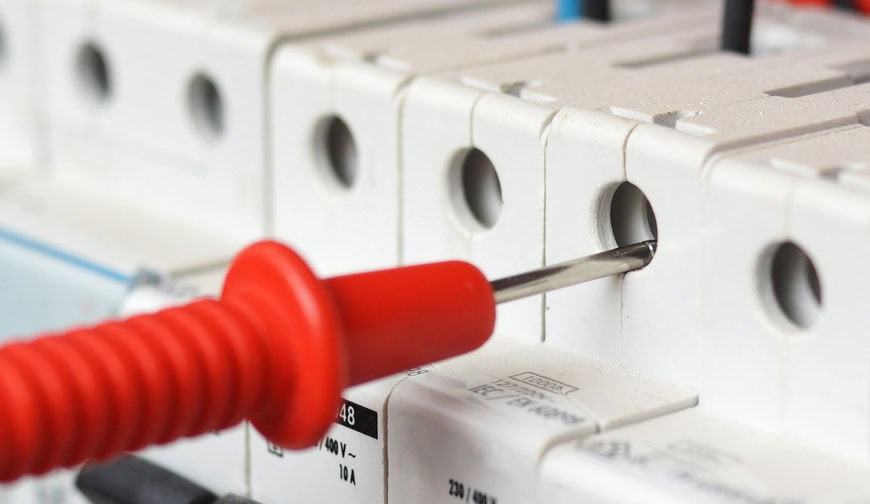
Homes that still have knob and tube wiring almost always have electrical panel boxes that are equally outdated. A fuse box that was installed alongside the original wiring isn’t equipped to handle modern electrical loads, and in many cases it’s already been pushed past its limits by decades of added appliances and circuits.
Replacing the electrical panel is typically part of any complete knob and tube remediation project. The new panel needs to meet current code requirements, which in North Carolina means the 2023 edition of NFPA 70 with state-specific amendments. For most single-family homes, that means a minimum of 200-amp service. Larger homes or properties with significant electrical demand — a workshop, a pool, multiple HVAC systems — may warrant more capacity.
One thing that surprises homeowners: a panel upgrade alone doesn’t fix the knob and tube branch circuits. If you upgrade the panel box but leave the old wiring in place, the pre-existing circuits are not automatically brought into compliance. The panel and the branch wiring are separate scopes, and both need to be addressed.
A 400 amp panel is less common in standard residential applications but comes up for larger homes, properties with significant outbuildings, or situations where a homeowner is planning for substantial future electrical demand. If that’s your situation, it’s worth discussing during the assessment — it’s far easier to size up once than to upgrade again in five years.
There’s also a cost that catches people off guard: wall and ceiling repair. Opening walls to run new wiring is part of the job, and patching drywall or plaster afterward is a separate cost that isn’t always included in the electrical estimate. Ask about it specifically before you sign anything.
A growing number of Alamance County homeowners are discovering their knob and tube wiring problem not because of an insurance notice, but because they called about something else entirely. EV home charger installation is one of the most common triggers.
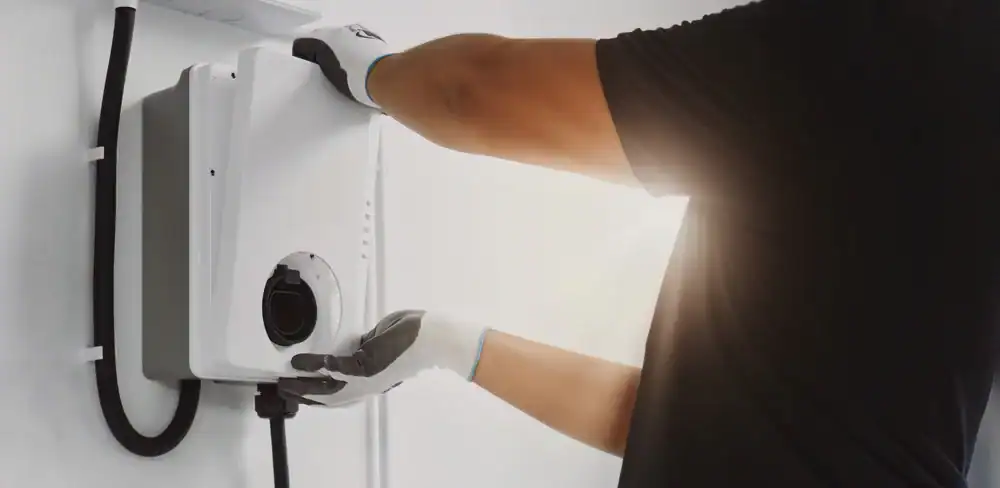
Installing a Level 2 charger at home requires a dedicated 240-volt circuit and, in most cases, a panel that can support the added load. When an electrician walks into a home with a fuse box and active knob and tube circuits, the conversation shifts quickly. You can’t safely run a modern EV charger installation on a system that was designed for a fraction of the electrical demand — and no licensed contractor should attempt it.
The home electric car charger cost for a home with an existing, adequate panel is one number. The home electric car charger cost when the underlying electrical system needs to be addressed first is a different number — because you’re now looking at a bundled project: rewiring, panel replacement, and the charger circuit itself. Understanding that upfront is important, because homeowners who get a quote for just the charger and then discover the scope mid-project are the ones who feel blindsided.
Level 2 charger installation cost varies depending on the distance from the panel to the garage, the condition of the existing wiring, and whether panel work is needed. Tesla Wall Connector installation cost follows the same logic — the charger hardware itself is only part of the picture. Car charger installation cost in an older Alamance County home almost always includes at least a panel assessment, and often panel work.
EV charging point installation is one of the services we handle regularly, and we’re upfront about what the full scope looks like before any work begins. Electric charging point installation in an older home doesn’t have to be a surprise — it just has to be planned correctly from the start.
If you own an older home in Alamance County, the most useful thing you can do right now is get a clear picture of what’s actually in your walls. Not a worst-case scare, not a vague estimate — a real assessment from a licensed electrician who can tell you what you’re dealing with and what it will cost to address it.
We’ve been doing exactly that kind of work since 2002. Our master electrician has been licensed since 1989, we hold an unlimited state electrical license from the NC State Board of Examiners of Electrical Contractors, and we give every customer a flat-rate price in writing before any work begins. That price doesn’t change after we start. For a project this size, knowing your number before you commit matters.
If you’re ready to find out what you’re working with, ESP Electrical Service Providers is a straightforward call away at (336) 228-3300. Real people answer — no voicemail loops, no automated systems. Just a conversation about what’s going on and what your options actually look like.
Article details:
Share:
Continue learning: