Rural properties come with electrical challenges most contractors haven't seen. Here's what to expect — and what to ask before hiring anyone.
Share:
Summary:
Rural property in Alamance County is a different world from a subdivision lot. You might have a barn that was wired in three different decades, a well pump running on a circuit that was sized by whoever drilled the well, and an outbuilding that’s been on an extension cord longer than anyone wants to admit. When something stops working — especially the well pump — it’s not just an inconvenience. It’s no water. Finding an electrician who actually understands rural properties, shows up, and gets it right the first time is harder than it should be. Here’s what you need to know.
Rural electrical service isn’t a single type of job — it’s a category of work that shows up on properties with private wells, outbuildings, long runs of underground wire, and electrical systems that have been added to over the years by different people with varying levels of skill.
The common thread is complexity. A rural property in southern Alamance County might have a main panel that hasn’t been touched since the 1980s, a pump house with wiring that predates the current NEC code cycle, and a detached shop that’s been pulling power through an undersized circuit for years. None of it is necessarily broken — until it is.
What makes rural electrical work different from a standard residential job is that the problems are often layered and undocumented. The solution isn’t just replacing a part. It’s figuring out what you actually have before deciding what needs to change.
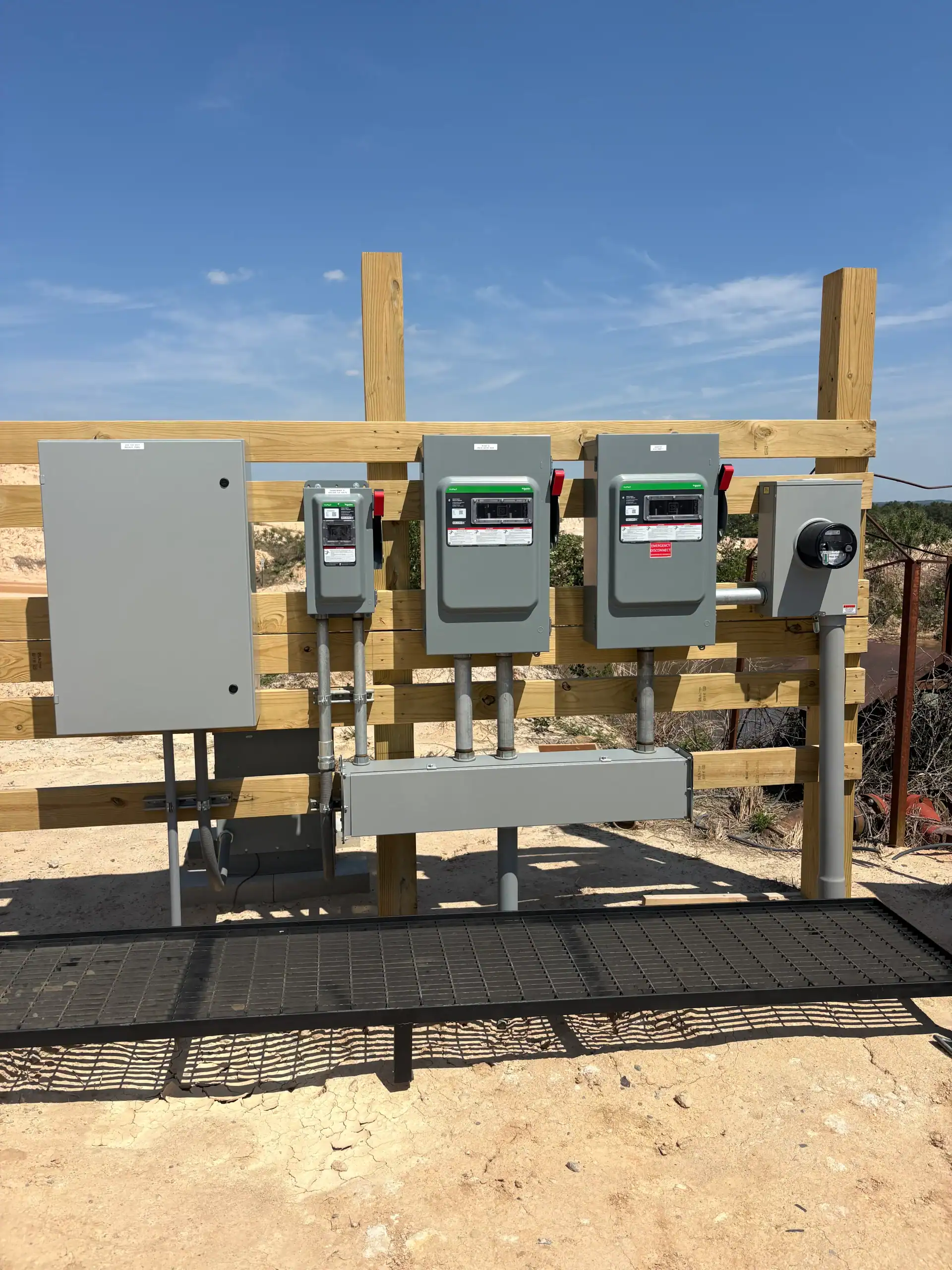
If your property runs on a private well, your water supply depends entirely on one circuit. That’s worth understanding in some detail, because when that circuit fails, the consequences aren’t just a tripped breaker — they’re no running water until someone fixes it.
Well pump circuits are sized to the motor, not to a standard household load. The National Electrical Code requires that wiring for a motor be sized to at least 125% of the motor’s full-load current. A 1-horsepower, 230-volt pump motor draws about 8 amps at full load, which means the conductor feeding it needs to be rated for at least 10 amps — and that’s before accounting for voltage drop over a long run.
On rural properties in Alamance County, the panel is often 150 to 200 feet or more from the wellhead. That distance matters. Undersized wire over a long run doesn’t just risk a tripped breaker — it delivers reduced voltage to the motor, which causes it to draw more current to compensate, run hotter, and wear out faster.
A breaker that keeps tripping on a well pump circuit is telling you something. It might be a failing motor, a stuck impeller, a bad capacitor, or a wiring fault in the underground run between the panel and the pump. It might also be a breaker that’s simply worn out and no longer holding its rated ampacity. What it’s not is a problem that fixes itself or that you want to guess at — because the guess that’s wrong leaves you without water.
One of the most common misconceptions we run into is the assumption that a 20-amp breaker is the right size for any residential well pump. It isn’t. Breaker sizing is motor-specific, calculated from the motor’s full-load current per NEC Table 430.248 and 430.52. Installing a generic 20-amp breaker without referencing those values isn’t just imprecise — it’s a code violation, and it can create a fire risk if the motor draws more than the breaker is rated to interrupt.
If you’ve bought a rural property in Alamance County and you’re not sure how the well pump circuit was originally installed, an inspection is worth scheduling before something fails. It’s a lot easier to address undersized wiring on your terms than in the middle of a summer weekend with no water.
Getting power to a barn, detached garage, or equipment shed is one of the most common rural electrical projects we handle in Alamance County. It sounds straightforward, but there are enough variables involved that it’s worth walking through what actually goes into it.
The starting point is the load calculation — figuring out what you’re actually going to run in the outbuilding. Lighting and a few outlets for hand tools is a very different job from a shop with a welder, a compressor, and a dust collector running simultaneously. The load determines the wire size, the breaker size, and whether a subpanel in the outbuilding makes sense.
For most outbuildings, a subpanel is the right answer once you get past basic lighting and convenience outlets. The feed from the main panel to the outbuilding needs to carry four conductors — two hots, a neutral, and a ground — and the subpanel at the outbuilding end distributes that power to individual circuits. The subpanel also needs to be properly bonded and grounded, which typically means driving a ground rod near the outbuilding. This is a detail that gets skipped on DIY installations, and it’s a code violation that will come up on inspection.
The route from the main panel to the outbuilding is either overhead or underground. Overhead runs are generally less expensive and easier to repair if something goes wrong, but they’re vulnerable to storm and tree damage — a real consideration in rural Alamance County, where a bad ice storm or tropical remnant can drop branches across a line. Underground runs are more protected once they’re in, but they require the right wire type, adequate burial depth, and ideally conduit protection, especially if the run crosses a driveway or an area that gets dug up periodically. Underground wire installed without conduit can degrade over time from soil movement, moisture, and root growth.
One thing worth mentioning for older rural properties: if an outbuilding already has power and you’re not sure how it was installed, don’t assume it was done correctly. We’ve seen plenty of rural properties where the barn or shop was wired by a previous owner using undersized wire, without a proper subpanel, or with a direct burial cable that was never rated for that application. Getting eyes on it before you start adding loads is a reasonable precaution.
Want live answers?
Connect with a Electrical Service Providers expert for fast, friendly support.
Alamance County has seen significant growth over the past decade, and much of that has come from buyers relocating from the Research Triangle who are purchasing rural property for the first time. That’s a specific situation — someone who’s used to a municipal water connection and a relatively modern electrical panel is now the owner of a property on a private well with a 40-year-old panel and a barn that was wired by the previous owner.
Finding a licensed electrician in Alamance County who has real experience with rural properties — not just new construction or standard residential work — takes some due diligence. Here’s what actually matters.
In North Carolina, any electrical contractor bidding or contracting electrical work is required to hold a license issued by the NC State Board of Examiners of Electrical Contractors. That’s not optional, and it’s not satisfied by a general contractor’s license or a handyman registration. It’s a separate credential, and it has real teeth — the exam is 100 questions, requires a minimum score of 75%, and is based on the current National Electrical Code.
There are three license tiers in NC: Limited, Intermediate, and Unlimited. The Unlimited license has no project value cap and no voltage restrictions, and it requires five years of documented experience to qualify for. When you’re hiring someone to work on a well pump circuit, wire a barn subpanel, or upgrade a service panel on a rural property in Alamance County, you want to know which tier they hold — and you can verify it directly through the NCBEEC.
Why does this matter for rural work specifically? Because the properties are complex, the work often involves multiple systems, and the consequences of getting it wrong are higher than on a straightforward suburban job. A failed inspection means re-work, delays, and additional cost. Unpermitted work can surface at resale or, worse, void a homeowner’s insurance claim if something goes wrong.
Hiring a licensed contractor isn’t just a formality — it’s the mechanism that keeps the work accountable. For rural property owners in Alamance County, the license verification step is worth taking before any work begins. The NCBEEC database is publicly searchable. A contractor who won’t give you their license number isn’t a contractor you want on your property.
It’s also worth knowing that NC requires licensed electricians to complete continuing education hours for renewal. That means the code knowledge stays current — which matters when the code itself changes, as it did when North Carolina adopted the 2023 NEC with amendments effective February 2024.
This is the rural electrical reality that doesn’t get talked about enough. When a storm knocks out power to a property in Alamance County, rural customers typically wait longer for restoration than their counterparts in Burlington or Chapel Hill. The utility infrastructure is less dense, the line crews have more ground to cover, and a derecho or ice storm that clips the area can leave rural properties dark for two or three days.
For a property on municipal water, that’s an inconvenience. For a property on a private well, it’s a different problem entirely — because without power, the pump doesn’t run, and without the pump, there’s no water. No water for drinking, no water for livestock, no water for fire suppression if something goes wrong on the property.
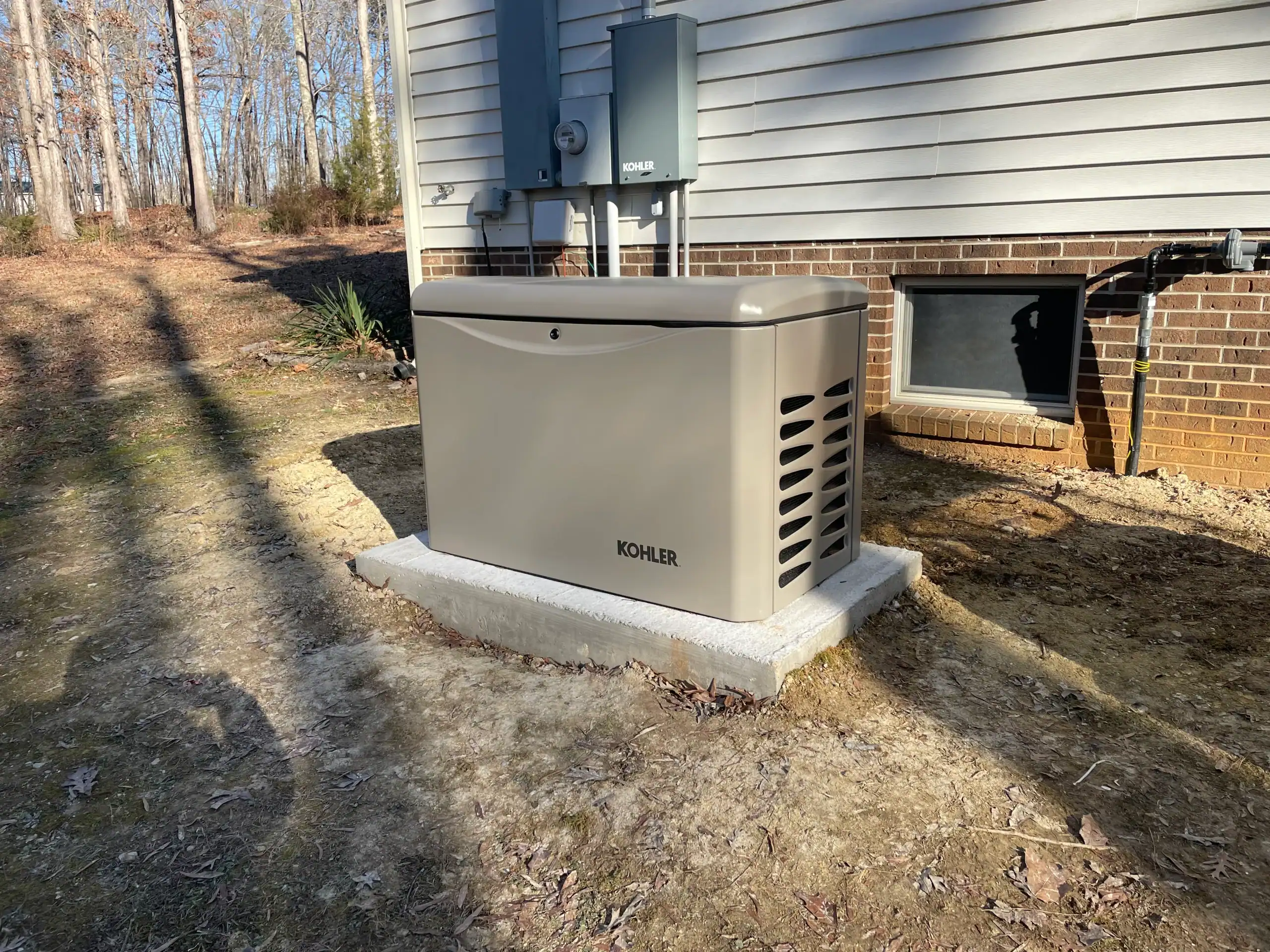
The solution is a generator with a properly installed transfer switch. The transfer switch is what safely isolates your home’s electrical system from the utility grid so that generator power can be routed through your existing wiring to the well pump circuit. Without a transfer switch, you can’t legally or safely backfeed a generator into your home’s wiring — and a generator plugged directly into an outlet with a cord is not powering your well pump.
A manual transfer switch is the more common and less expensive option. An automatic transfer switch detects the outage and starts the generator without any action required from you. Which one makes sense depends on your situation — how often you lose power, whether you’re able to be present when it happens, and what loads you need to cover beyond the well pump.
What we see regularly in Alamance County is homeowners who own a generator but haven’t had a transfer switch installed, so the generator sits in the garage and the well pump stays off during outages. The generator purchase is the easy part. Getting it properly connected to the circuits that matter — including the well pump — is the job that requires a licensed electrician and a permit in NC. It’s not a complicated job, but it has to be done correctly to be safe and legal.
If you’re in a rural area and you’ve experienced a multi-day outage without water, that experience is usually enough motivation. If you haven’t had that experience yet, consider it a question worth answering before the next storm season.
Rural properties have electrical systems that reflect their history — additions made over decades, circuits installed by different people, and infrastructure that worked until it didn’t. The well pump circuit that was sized for a 1970s pump motor may not be right for what’s running today. The barn wiring that passed muster twenty years ago may not meet current code. These aren’t reasons to panic, but they are reasons to work with someone who knows what they’re looking at.
We’ve been doing this work in Alamance County since 2002, and Andy Helton has been a licensed Master Electrician since 1989. That’s not a credential we lead with to impress you — it’s relevant because rural electrical work rewards experience. The properties are complex, the systems are layered, and the problems don’t always announce themselves clearly.
If you have questions about your well pump circuit, an outbuilding that needs power, a generator that isn’t properly connected, or an electrical system you inherited when you bought the property, ESP Electrical Service Providers is worth a call. Real people answer, flat-rate pricing means you’ll know the cost before work begins, and our trucks are stocked to handle most jobs the same day.
Article details:
Share:
Continue learning: