Not sure whether a standby or portable generator makes sense for your home? Here's a straight answer — no sales pitch attached.
Share:
Summary:
Here’s something most generator companies won’t say out loud: for some homeowners, a portable generator is the right answer. Not everyone needs a $10,000 standby system, and we’re not going to pretend otherwise.
What we will tell you is how to figure out which side of that line you’re on. Because the decision isn’t really about which type of generator is “better” — it’s about your home, your situation, and what you actually need when the lights go out in Alamance County. That answer looks different for a rural property off NC-87 than it does for a newer home in the Mebane growth corridor. Let’s work through it.
The price gap between portable and standby is real, and it’s worth looking at honestly. A portable generator runs $500 to $2,500 for the unit itself. If you want to connect it safely to your home’s panel — which you should — add $400 to $1,300 for a transfer switch. That’s a manageable number for a lot of households.
A whole-house standby system is a different conversation. Equipment and installation together typically run $6,000 to $11,000 on average for a standard residential setup. If your property doesn’t have a natural gas line and you need a propane tank added, that can push the total higher. The numbers are real, and we’re not going to minimize them.
What that comparison misses, though, is the cost of doing nothing. Spoiled refrigerators, hotel stays, rented generators at peak-demand pricing — those add up faster than most people expect. The math shifts when you factor in what outages actually cost you.
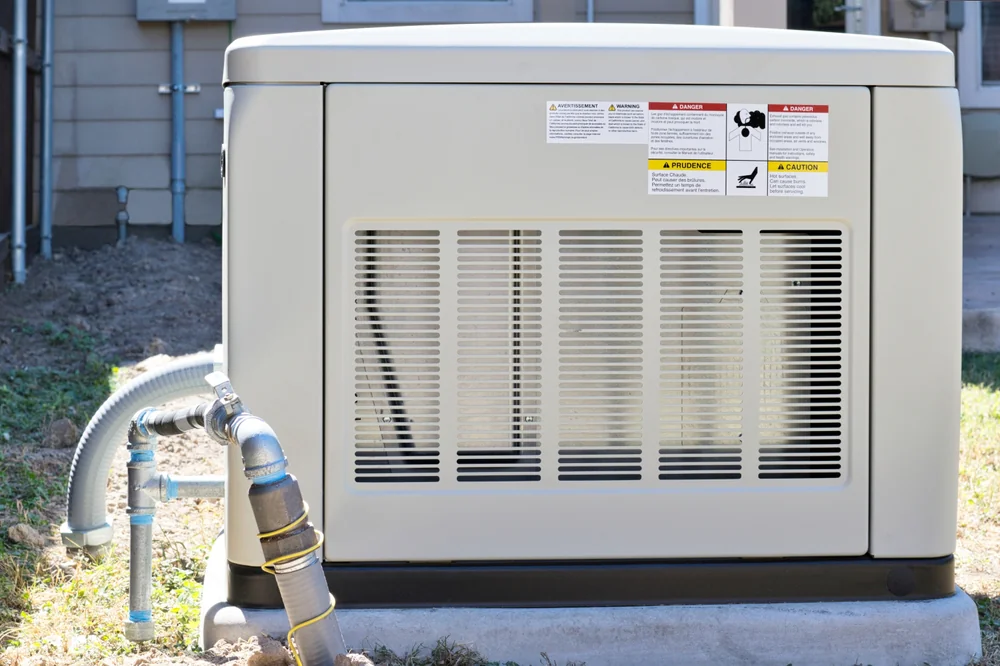
A standby generator is permanently installed outside your home — similar in footprint to a central air conditioning unit — and connected directly to your electrical system and fuel supply. The component that makes it “automatic” is the transfer switch, which monitors your incoming utility power around the clock.
When Duke Energy’s line goes down, the transfer switch detects it within seconds, disconnects your home from the grid, and signals the generator to start. The whole process takes about 10 seconds. Most homeowners notice a brief flicker — and then everything comes back on. The HVAC keeps running. The sump pump keeps running. The food in the refrigerator stays cold. You don’t have to do anything.
That last part matters more than people initially realize. A lot of the worst-case scenarios with power outages happen when nobody’s home. A sump pump that fails during a rainstorm while you’re at work. A chest freezer full of meat that sat warm for two days while you were visiting family. An elderly parent at home alone who can’t manage a portable unit in the rain. Standby generators solve those problems specifically because they don’t require anyone to be present or prepared.
The generator also runs a brief self-test cycle each week to keep the engine conditioned — so when a storm actually hits, you’re not discovering for the first time that something’s wrong. That weekly cycle is automatic too. Annual professional maintenance is still recommended, but the day-to-day operation requires nothing from you.
In North Carolina, connecting a generator to your home’s electrical system requires a licensed electrical contractor and a permit. It’s not optional, and it’s not a formality. An installation done without proper licensing can fail inspection, void your manufacturer’s warranty, and create genuine safety hazards. This applies to standby systems specifically — portable generators used with extension cords or basic manual setups typically don’t trigger the same requirements, but any direct panel connection does.
A portable generator makes sense in specific situations, and there’s no reason to pretend otherwise. If you experience short, infrequent outages — a few hours a couple of times a year — and you’re usually home when they happen, a portable unit can handle the essentials without a major investment. Running a refrigerator, a few lights, a window AC unit, and charging devices is well within what a quality portable generator can do.
The tradeoffs are real, though, and they tend to get glossed over. Portable generators run on gasoline, which means you need to store it safely, treat it with fuel stabilizer for long-term storage, and have enough on hand when a storm hits. After a significant weather event in Alamance County, gas stations run out. That’s not a hypothetical — it’s happened after every major storm system that’s tracked through the Piedmont in recent years. If you’re counting on filling up the day the power goes out, that plan has a gap in it.
There’s also the carbon monoxide issue, and it deserves a direct statement: portable generators cannot be run inside a garage, even with the door open. CO accumulates faster than most people expect, and the consequences are severe. The unit needs to be placed at least 10 feet from the home, away from windows and vents. That means setting it up outside in the rain, in the dark, during the same storm that knocked your power out. For a lot of people, that’s fine. For others — households with older adults, young children, or anyone with mobility limitations — it’s a real barrier.
Portable generators also can’t power a whole house. Most max out well below what’s needed to run central HVAC, which in a Alamance County summer or a Piedmont ice storm is not a minor inconvenience. You’re managing extension cords, prioritizing what gets power, and making trade-offs for the duration of the outage. For some households, that’s a workable solution. The honest answer is knowing which category you fall into before you decide.
Want live answers?
Connect with a Electrical Service Providers expert for fast, friendly support.
Natural gas lines don’t reach every corner of Alamance County. If you’re in a rural part of the county — out toward Haw River, Swepsonville, or the unincorporated areas west of Graham — there’s a good chance you don’t have access to a gas line, which is the most common fuel source for standby generators.
That doesn’t mean a standby system is off the table. Propane standby generators are a well-established option, and for many Alamance County homeowners, they’re actually the primary path to automatic backup power. The generator connects to a propane tank on your property, and the fuel supply is entirely independent of the utility grid.
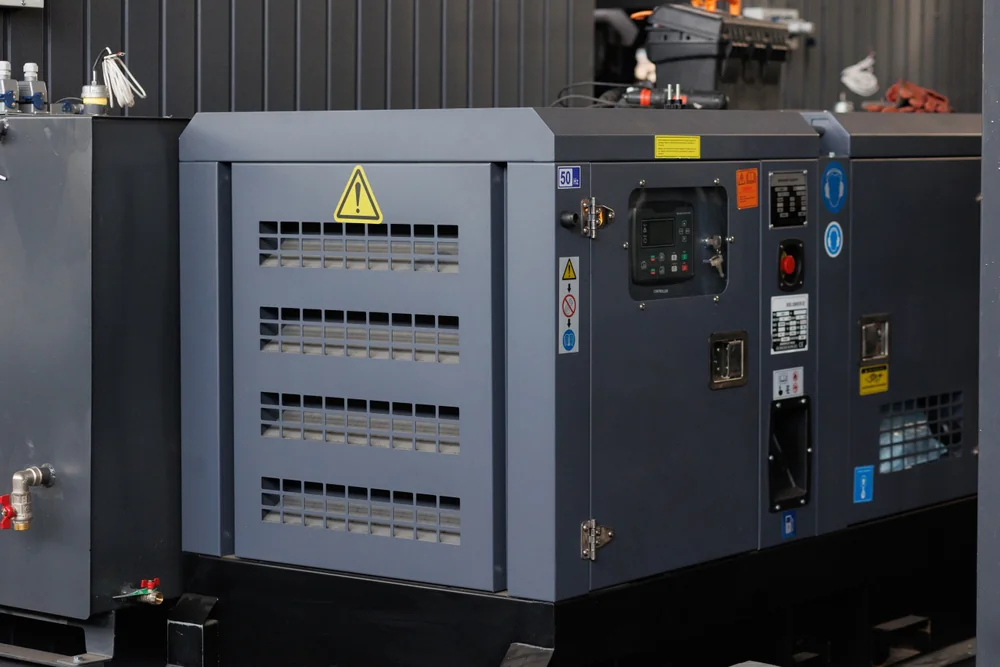
A propane standby generator functions the same way a natural gas unit does — automatic transfer switch, permanent installation, 10-second switchover — the only difference is the fuel source. Instead of drawing from a gas utility line, it draws from a propane tank installed on your property.
Tank sizing matters. A generator running through an extended outage will consume propane at a meaningful rate, and you want enough stored capacity to get through several days without a refill. Your propane supplier can help calculate the right tank size based on your generator’s output and your household’s load, but it’s worth having that conversation before installation rather than after. A 250-gallon tank that works fine for heating a home may not be sized appropriately for a generator running continuously through a multi-day outage.
The other thing to know is that propane is a clean-burning fuel — comparable to natural gas in that respect — and it stores indefinitely without the degradation issues that gasoline presents. A propane tank sitting on your property for six months is just as usable as it was the day it was filled. That’s a meaningful advantage over portable generators that depend on stored gasoline.
If your property doesn’t currently have a propane tank, adding one is part of the total project cost. It’s a real number to factor into your budget, and we’ll be upfront about it when we assess your property. The goal is for you to understand the full picture before you commit to anything — not to discover costs partway through a project.
For rural Alamance County homeowners specifically, propane delivery logistics and tank placement requirements vary depending on your lot size, setbacks, and access. These are solvable problems in almost every case, but they’re worth discussing early in the planning process rather than treating as afterthoughts.
The questions we hear most often aren’t about brand names or wattage ratings. They’re practical. People want to know what the process actually looks like, whether they’ll need a permit, and whether the contractor they’re talking to is going to tell them what they need or just sell them the most expensive option.
On permits: yes, standby generator installation in North Carolina requires a permit, and the permit process in Alamance County involves a licensed electrical contractor pulling the permit and the work passing inspection before the system is commissioned. We handle that process. Our work passes inspection the first time — that’s not a marketing line, it’s just what happens when the installation is done correctly by someone who’s been doing this since 2002.
On timing: if you’re thinking about a standby generator, the window between December and April tends to offer better contractor availability and faster permit processing than the peak summer and early fall months. That said, if you’re reading this in August after a storm just reminded you that your current setup isn’t cutting it, the right time to start the conversation is now — not next spring.
On the “do I really need to upgrade from my portable” question: that depends entirely on your situation. If you have a sump pump, medical equipment that requires continuous power, or anyone at home alone who can’t safely operate a portable unit, the answer is probably yes. If you’re a single person in a newer Mebane townhome with no critical loads and outages in your area tend to clear within a few hours, your portable may genuinely be sufficient. We’ll tell you which category you’re in — and if the honest answer is that you don’t need what we install, we’ll say that too.
We’re a licensed electrical contractor, not an HVAC company that also does generators. Our Operations Manager has held a Master Electrician license since 1989. We’re factory-trained on Generac and Briggs & Stratton, and we were one of the first Level III service providers for Eaton/Cutler-Hammer generators in North Carolina. When you call us, a real person picks up — not a call center, not a voicemail system. And our pricing is flat-rate, meaning you know the full cost before we start.
The honest answer is that it depends on your household, your property, and how much the next outage is going to cost you if you’re not prepared. A portable generator is a legitimate solution for some homeowners. A standby system is the right answer for others — particularly anyone with critical loads, anyone who travels, or anyone living in a part of Alamance County where extended outages are a real pattern rather than an occasional inconvenience.
What we’d encourage you to avoid is making this decision based on the last storm while the adrenaline is still running — or putting it off indefinitely because the upfront cost feels like a reason to wait. Neither approach tends to end well.
If you want a straight conversation about what your home actually needs, ESP Electrical Service Providers has been having that conversation with Alamance County homeowners since 2002. Reach out and we’ll give you a real answer.
Article details:
Share:
Continue learning: