Power surges damage more than you think. From smart home devices to gaming systems, discover which high-tech gadgets are at risk without proper whole-home surge protection.
Share:
Summary:
You’ve invested thousands in smart home technology, entertainment systems, and appliances that make life easier. But every time the power flickers—or even when your AC kicks on—those devices take a hit. Most people don’t realize that power surges happen constantly, not just during thunderstorms. And those small, repeated jolts are quietly shortening the life of everything plugged into your walls.
Strip surge protectors can’t guard your hardwired HVAC system. They won’t save your smart refrigerator. And they definitely won’t protect the dozens of devices scattered throughout your home. If you’re serious about protecting what you’ve paid for, you need to understand what’s actually at risk—and what whole-home surge protection can do about it.
A power surge is a spike in voltage that exceeds the normal 120 volts flowing through your outlets. These spikes last only fractions of a second, but that’s all it takes to damage sensitive electronics. The excess voltage creates an arc of electrical current inside your devices, generating heat that degrades circuit boards and other components.
Here’s what most people miss: about 80% of power surges originate inside your home. When your refrigerator compressor cycles on, when your HVAC system kicks in, or when you flip on a high-draw appliance, it sends a mini-surge through your electrical system. These internal surges happen dozens—sometimes hundreds—of times every day.
The damage isn’t always instant. Think of it as “electronic rust.” Each small surge chips away at the integrity of your devices until one day, your two-year-old TV just stops working. Or your computer randomly reboots. Or your smart thermostat goes offline for no apparent reason. That’s cumulative surge damage, and it’s costing you more than you realize.
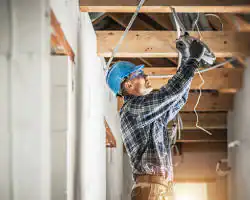
Internal power surges are the silent killers in your electrical system, and they’re far more common than external events like lightning strikes. Every time a large appliance with a motor turns on or off, it interrupts the steady flow of electricity. That interruption sends excess voltage coursing back through your circuits, affecting every device connected to that same circuit—and sometimes beyond.
Your air conditioner is one of the biggest culprits. When the compressor starts, it draws a massive amount of power in an instant. When it shuts off, that energy has to go somewhere, creating a surge that ripples through your home’s wiring. The same thing happens with refrigerators, washing machines, dryers, and even some power tools.
Modern appliances make this problem worse, not better. Today’s refrigerators come equipped with touchscreens, internet connectivity, and smart features. Washing machines have electronic control panels. Dishwashers run on circuit boards. Microwaves pack advanced electronics. All of these components are designed to operate at precise voltage levels, and they’re incredibly vulnerable to the fluctuations caused by other appliances in your home.
What makes internal surges particularly dangerous is their frequency. External surges from lightning or utility grid issues are relatively rare. But internal surges? They’re happening constantly. You might not notice the lights dimming when your AC starts up, but your electronics definitely feel it. Over time, these repeated stresses add up. The materials used in integrated circuits can only withstand a certain number of energy-level surges before they start to fail.
And here’s the kicker: traditional plug-in surge protectors can’t stop internal surges from affecting hardwired appliances. Your HVAC system, electric stove, water heater, and other major appliances are directly wired to your electrical panel. A power strip won’t help them. The only way to protect these expensive systems—which can easily cost five figures to replace—is with whole-home surge protection installed at your main electrical panel.
Homeowners across Alamance County, Durham County, and the surrounding North Carolina region face an additional challenge. The area experiences frequent thunderstorms, especially during spring and summer months. Coastal weather patterns and proximity to water increase lightning exposure. When you combine external threats from storms with the constant internal surges from everyday appliance use, your electronics are under siege from multiple directions. Whole-home surge protection addresses both threats at once, creating a shield at the source before surges can reach any device in your home.
The smart home revolution has filled our houses with connected gadgets that make life more convenient—and exponentially more vulnerable to power surges. Smart thermostats, video doorbells, security cameras, voice assistants, smart light switches, connected appliances, and smart locks are everywhere. They’re cool, convenient, and extremely susceptible to voltage spikes.
There are three main reasons why smart home devices are more vulnerable than traditional electronics. First, they’re always on. Unlike a TV you turn off at night, your smart doorbell is constantly drawing power, monitoring for motion, streaming video, and staying connected to your Wi-Fi network. That continuous connection means continuous exposure to every surge that passes through your electrical system.
Second, smart devices are packed with sensitive integrated circuits that operate at very precise voltage tolerances. These aren’t the simple switches and motors of older appliances. Modern smart devices contain tiny electronic components—processors, memory chips, wireless radios—that can be damaged by even minor voltage fluctuations. A surge that wouldn’t faze a traditional light bulb can fry the circuit board in a smart light switch.
Third, many smart home devices are interconnected. When one device on your network takes a hit from a surge, the damage can cascade through your entire smart home ecosystem. Your video doorbell connects to your hub, which connects to your smartphone app, which links to your smart locks and security cameras. A surge traveling through one connection point can potentially affect multiple devices in the chain.
Here’s what this means in practical terms: that $250 smart thermostat controlling your HVAC system is at risk every single time your air conditioner cycles on. Your $400 video doorbell system is vulnerable during every thunderstorm. Your whole-home smart speaker setup, which might represent $500 or more in hardware, could be damaged by a surge you never even noticed.
The electronics industry has responded to the surge in smart home adoption—the global surge protection device market was valued at $3.6 billion in 2024 and is growing at over 6% annually. But most homeowners are still relying on inadequate protection. Plug-in power strips can’t protect hardwired smart devices like thermostats or ceiling-mounted smart light fixtures. And even for devices that do plug in, a single power strip in one room doesn’t protect the smart gadgets scattered throughout your entire home.
Wi-Fi routers and modems deserve special attention. These devices are the backbone of your smart home, and they’re particularly vulnerable because they’re connected to both your electrical system and your internet service line. Surges can enter through either pathway. When your router goes down, your entire smart home ecosystem goes dark with it. You lose access to security cameras, smart locks, thermostats, and every other connected device that depends on your network.
The cost of replacing smart home devices adds up fast. A comprehensive smart home setup—including a hub, smart thermostat, video doorbell, several smart speakers, smart light switches throughout the house, and security cameras—can easily exceed $2,000 to $3,000. When you factor in smart appliances like refrigerators with touchscreens or washing machines with app connectivity, you’re looking at tens of thousands of dollars in vulnerable technology. Whole-home surge protection, which typically costs between $500 and $700 to install, suddenly looks like a smart investment when you consider what’s at stake.
Want live answers?
Connect with a Electrical Service Providers expert for fast, friendly support.
Not all electronics are equally vulnerable to power surges, but the devices you rely on most are often the ones at greatest risk. Modern homes contain an average of 25 connected devices, each one representing an investment you’d rather not replace prematurely. Understanding which gadgets are most susceptible helps you grasp why whole-home protection makes financial sense.
The devices at highest risk share common characteristics: they contain delicate circuit boards, they’re frequently or constantly powered on, and they operate at precise voltage levels. When surge protection fails or doesn’t exist, these are the first casualties. And in many cases, the damage isn’t covered by standard warranties, leaving you to foot the replacement bill.
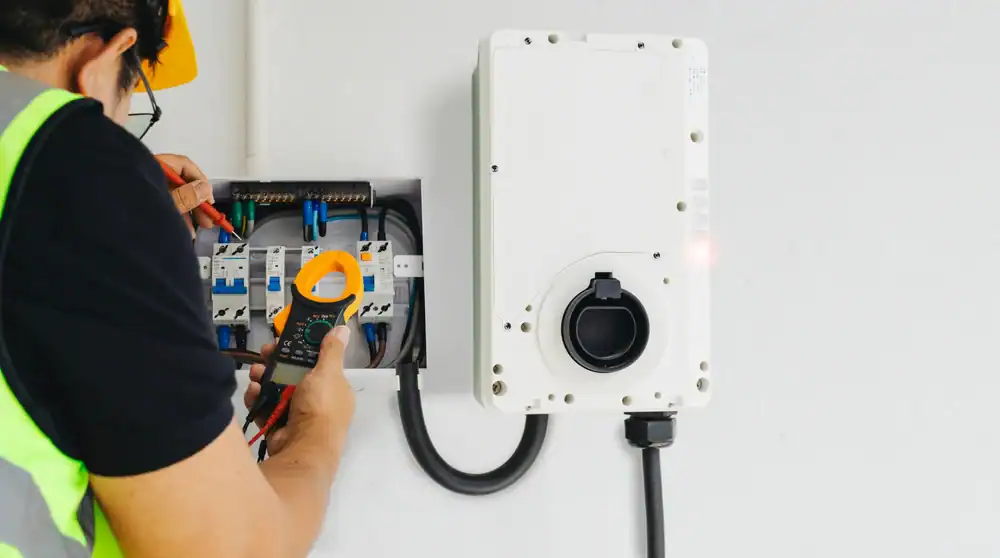
Your computer is probably the most vulnerable—and valuable—device in your home. Whether it’s a desktop tower or a laptop that houses your entire workday, computers are made up of extremely delicate electronic components working in precise harmony. Inside that case, a motherboard connects your processor, memory chips, hard drive or SSD, graphics card, and other components. All of these parts function at extremely precise voltage levels.
When a power surge hits a computer, it doesn’t just risk hardware damage. Consider everything stored on that machine: family photos spanning years, important work documents, tax returns, that novel you’ve been writing, or your small business records. A single surge can corrupt files, fry your hard drive, or destroy the power supply and motherboard in one shot. Data recovery services can cost thousands, and that’s assuming your data is even recoverable.
Gaming consoles represent another major investment at risk. Modern systems like PlayStation 5, Xbox Series X, and high-end gaming PCs can easily cost $500 to $2,000 or more. These devices are packed with sophisticated processors, graphics cards, and memory—all vulnerable to voltage spikes. Even streaming devices and cable boxes, which many people lease from their providers, can be damaged by surges, leading to annoying support calls and potentially expensive replacement fees.
Your home entertainment system faces a unique vulnerability: interconnected damage. When you have multiple devices linked together—a TV, soundbar, game console, streaming device, and Blu-ray player—a surge can travel through the connections and harm the entire chain. HDMI cables can conduct surges. So can coaxial cable lines from your satellite or cable provider, ethernet wires, and audio cables. This means you can’t just protect the devices themselves; you need to think about all the connection points too.
Smart TVs deserve special mention. These aren’t the simple televisions of a decade ago. Today’s smart TVs are essentially large computers with built-in streaming apps, internet connectivity, voice control, and sophisticated image processing. A 65-inch 4K smart TV can easily cost $1,500 to $3,000 or more. When a surge hits, you’re not just replacing a screen—you’re replacing an entire computing system. And because smart TVs are typically always plugged in (even when “off,” they’re in standby mode waiting for your voice command or remote signal), they’re constantly exposed to surge risk.
The cumulative value of a typical home entertainment and computing setup is staggering. One 4K TV, a soundbar, a gaming console, a streaming device, a desktop computer, and a laptop can easily total $5,000 to $8,000. Add in peripherals like monitors, keyboards, webcams, and external hard drives, and you’re looking at a significant investment that most people assume is safe because they plugged everything into a power strip.
But here’s the reality: power strips have limitations. They can absorb only a finite amount of surge energy before they fail, and most people never replace them even after they’ve stopped providing protection. Many power strips have indicator lights that show when protection is no longer active, but these lights are often ignored or go unnoticed. Worse, some people use basic power strips that provide no surge protection at all—they’re just extension cords with multiple outlets.
For North Carolina homeowners, the risk is amplified by the state’s weather patterns. The region experiences hundreds of thousands of cloud-to-ground lightning strikes annually. Coastal areas face increased exposure due to warm, humid air interacting with Atlantic storm systems. When lightning strikes a power line—even miles away from your home—the voltage surge can travel through the electrical grid and into your house, overwhelming basic surge protectors and damaging anything plugged in at the time.
Here’s what most homeowners don’t realize: your most expensive electronics can’t be protected by power strips at all. HVAC systems, electric water heaters, hardwired appliances, and other major systems are directly connected to your electrical panel. When a surge hits, these systems take the full brunt of the voltage spike with no protection whatsoever—unless you have whole-home surge protection installed.
Your HVAC system is particularly vulnerable and particularly expensive to replace. Modern heating and cooling systems contain sophisticated electronic controls, variable-speed motors, and circuit boards that manage everything from temperature regulation to energy efficiency. A voltage spike can burn out the compressor, blow fuses, damage the thermostat, or fry the control board. When your HVAC system fails in the middle of a North Carolina summer or during a winter cold snap, you’re not just dealing with discomfort—you’re facing a repair bill that can easily run $1,500 to $5,000 or more, depending on what’s damaged.
Refrigerators have evolved from simple appliances into smart, connected devices worth $2,000 to $5,000 for high-end models. Modern refrigerators feature touchscreens, Wi-Fi connectivity, internal cameras, and sophisticated temperature management systems. All of these features rely on electronic control boards that can be damaged by power surges. When a refrigerator’s control board fails, you’re not just looking at a repair bill—you’re potentially losing all the food stored inside, adding hundreds more to your losses.
Washing machines and dryers now come with electronic control panels, smart features, and app connectivity. These aren’t the mechanical dial-based machines your grandparents owned. Today’s laundry appliances can cost $800 to $2,500 each, and their electronic components are just as vulnerable to surges as any computer. Control board replacements frequently cost hundreds of dollars, sometimes approaching the cost of a new appliance when you factor in labor.
Electric ranges, ovens, and cooktops represent another category of hardwired appliances at risk. While older models used simple heating elements and mechanical controls, modern cooking appliances feature digital displays, precise temperature controls, timers, and even Wi-Fi connectivity for remote monitoring. These electronic components can be damaged by surges, leaving you unable to cook until repairs are completed.
Water heaters, particularly newer tankless or hybrid models, contain electronic controls and sensors that manage temperature and energy efficiency. A surge can damage these components, leaving you without hot water until a technician can diagnose and repair the system. Given that water heater repairs often cost $300 to $800, and replacements can exceed $2,000, protecting these systems makes economic sense.
Home security systems, including hardwired alarm panels, motion sensors, and control panels, are critical for your family’s safety. These systems are always powered on, always monitoring, and always vulnerable to surges. When a security system fails due to surge damage, you’re not just facing repair costs—you’re potentially leaving your home unprotected until the system is restored.
The total value of hardwired systems and major appliances in a typical home can easily exceed $20,000 to $30,000. An HVAC system might represent $8,000 to $15,000. A full suite of kitchen appliances (refrigerator, range, dishwasher, microwave) can total $5,000 to $12,000. Add in water heaters, security systems, and other hardwired equipment, and you’re looking at a substantial investment that power strip surge protectors simply cannot protect.
This is where whole-home surge protection becomes essential. A whole-home system is installed directly in your main electrical panel, protecting every circuit in your house. When a surge enters your home—whether from an external source like lightning or an internal source like your AC compressor—the whole-home surge protector diverts that excess voltage away from your circuits before it can reach any device. It’s protecting your HVAC system, your refrigerator, your water heater, and every other appliance and device in your home simultaneously.
The cost comparison is stark. Whole-home surge protection typically costs $500 to $700 to install. Compare that to the $12,000 average insurance claim for surge damage, or the potential $20,000+ in cumulative appliance and electronics replacement costs, and the value proposition becomes clear. You’re essentially buying insurance for everything electrical in your home, installed once and protecting continuously.
For North Carolina homeowners specifically, whole-home surge protection addresses both internal and external surge threats. The state’s frequent thunderstorms and lightning activity create external surge risks, while the constant cycling of HVAC systems in the region’s hot summers and cold winters generates internal surge activity. Whole-home protection handles both, creating a comprehensive shield for your entire electrical system.
Your home is filled with thousands of dollars in vulnerable electronics, from the smart TV in your living room to the HVAC system keeping your family comfortable. Power surges—both internal and external—are constantly threatening these investments, often in ways you never notice until something stops working. Strip surge protectors can’t guard hardwired appliances, can’t protect every outlet in your home, and often fail without giving you any warning.
Whole-home surge protection changes that equation. Installed at your main electrical panel, it shields every circuit, every outlet, and every device in your home from voltage spikes. It stops surges at the source, whether they’re coming from lightning strikes miles away or from your own air conditioner cycling on. And at $500 to $700 for installation, it costs a fraction of what you’d pay to replace even one major appliance or entertainment system damaged by a surge.
If you’re ready to stop gambling with your electronics and start protecting what you’ve invested in, reach out to us at ESP Electrical Service Providers. We’ll assess your home’s specific needs and install the protection your family deserves.
Article details:
Share:
Continue learning: