Small facilities often run lean on electrical maintenance — until something stops the line. Here's what most miss and what a real program looks like.
Share:
Summary:
Most facility managers aren’t ignoring their electrical systems on purpose. They’re busy. They’ve got production schedules to hit, staff to manage, and a list of priorities that never gets shorter. Electrical maintenance tends to stay near the bottom until something forces it to the top — usually at the worst possible moment.
The problem is that by the time something forces the issue, you’re already looking at emergency repair costs, potential downtime, and sometimes a compliance problem you didn’t see coming. This guide is for the facility manager who wants to get ahead of that. We’ll walk through what a real industrial electrical maintenance program looks like, what most small facilities miss, and what’s changed in the last couple of years that you should know about.
Industrial electrical maintenance isn’t a single service — it’s a structured program of inspections, testing, and corrective work designed to keep your electrical systems running reliably and safely. For a small facility, that might sound like overkill. It isn’t.
The core of any solid maintenance program is catching problems before they become failures. Loose connections, degraded insulation, overloaded circuits, and aging breaker technology don’t announce themselves. They develop quietly over months or years, and they tend to fail at the worst possible time — during a heat wave, at peak production, or right before a scheduled inspection.
A real program has a rhythm to it. Some tasks happen monthly, some quarterly, some annually. The goal is that nothing important goes unchecked long enough to become a crisis. A professional industrial electrical service can help businesses establish and maintain a structured approach to electrical system reliability.
The short answer is: more than most small facilities are currently doing. Here’s what a structured program typically covers, and why each piece matters.
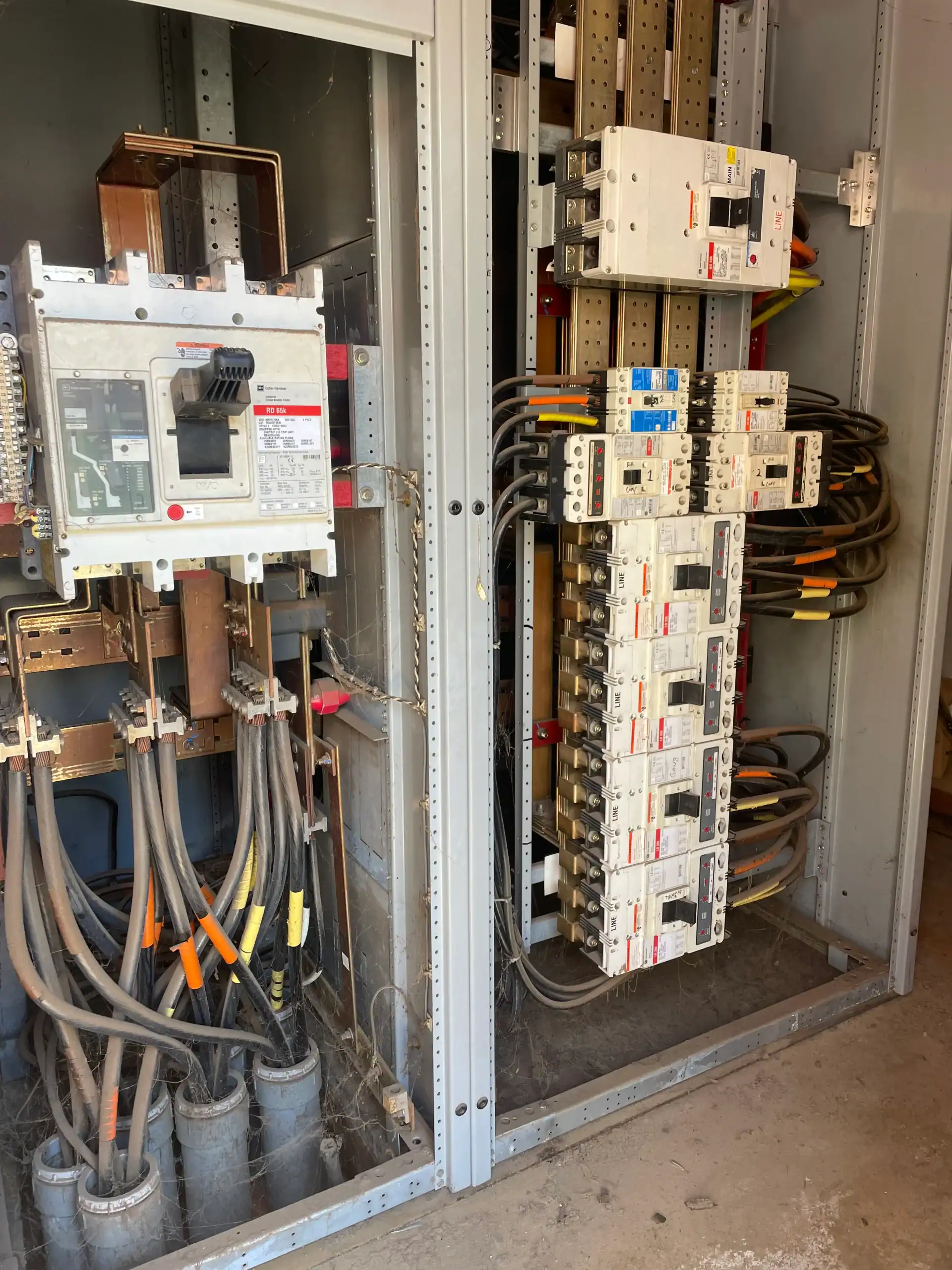
Monthly checks are mostly visual — looking for signs of heat, corrosion, moisture intrusion, or physical damage around panels, disconnects, and distribution equipment. These take relatively little time but catch early-stage problems that are cheap to fix now and expensive to ignore.
Quarterly tasks go a step further. This is where you’re testing GFCI outlets and breakers, checking that emergency lighting systems actually function, and verifying that panel schedules still match the actual circuits in the building. That last one is more commonly out of date than most facility managers realize. Equipment gets added, circuits get modified, and the panel schedule that was accurate five years ago may no longer reflect what’s actually installed.
Annual tasks are the most involved and the most important. This is where infrared thermography comes in — a thermal imaging scan of your energized electrical equipment that identifies hotspots invisible to the naked eye. Overheating connections, imbalanced loads, and failing components all show up as heat signatures before they show up as failures. Annual inspections should also include a review of arc flash labeling, a check on generator performance under load, and a closer look at motor controls and any variable frequency drives (VFDs) in the facility.
Every five years or so, it’s worth doing a more comprehensive system study — looking at whether your electrical infrastructure still matches your operational loads, whether your protection settings are still appropriate, and whether any major changes in equipment or usage have created gaps in your system’s design.
The reason most small facilities don’t do this isn’t that they don’t care. It’s that they don’t have a maintenance team dedicated to electrical systems, and they’ve never had someone lay out what a program should actually look like. Once you see it mapped out, it’s not as overwhelming as it sounds.
This is the part that catches a lot of facility managers off guard. For decades, NFPA 70B — the standard governing electrical equipment maintenance — was a set of recommendations. Good practice, but optional. That changed in January 2023.
The 2023 edition of NFPA 70B shifted from a recommended practice to a mandatory standard. That means facilities covered by the standard are now required to develop, implement, and operate a formal Electrical Maintenance Program — not just encouraged to. The language changed from “should” to “shall,” and that distinction matters when an inspector or insurance auditor comes through.
One of the most significant specific requirements is annual infrared thermography. Under the 2023 standard, all electrical equipment must be inspected using thermal imaging at intervals not exceeding 12 months. If equipment is in worse physical condition, those intervals need to be shorter. Previously, this was a recommendation. Now it’s a requirement.
For small facilities throughout Alamance County — particularly those operating in older buildings, some of which have been in industrial use for decades — this is worth paying attention to. A building that’s been running the same electrical infrastructure since it was a textile mill, or that’s had equipment added incrementally over the years without a full system review, is exactly the kind of environment where thermal imaging tends to find things.
The other piece of NFPA 70B worth knowing is the documentation requirement. It’s not enough to do the maintenance — you need records showing it was done, when, and what was found. Missing documentation is one of the most common compliance failures during inspections, and it’s entirely preventable.
If you’re not sure whether your facility falls under NFPA 70B, the answer for most industrial and commercial operations is yes. If you have manufacturing equipment, a motor control center, a significant electrical distribution system, or standby power infrastructure, the standard applies to you.
Want live answers?
Connect with a Electrical Service Providers expert for fast, friendly support.
The logic behind reactive maintenance — waiting until something breaks to call an electrician — feels reasonable on the surface. You’re not spending money on something that isn’t broken yet. But the math doesn’t actually work out that way.
Facilities that rely on reactive repairs consistently pay three to five times more over time than those running structured preventive programs. The emergency service premium alone is significant. Add in production downtime, potential equipment replacement, and the possibility of an OSHA or insurance finding tied to the failure, and the cost of skipping maintenance starts to look very different.
The other issue is that reactive maintenance doesn’t give you control. You’re not deciding when the work happens — the failure is deciding for you, usually at the least convenient time possible.
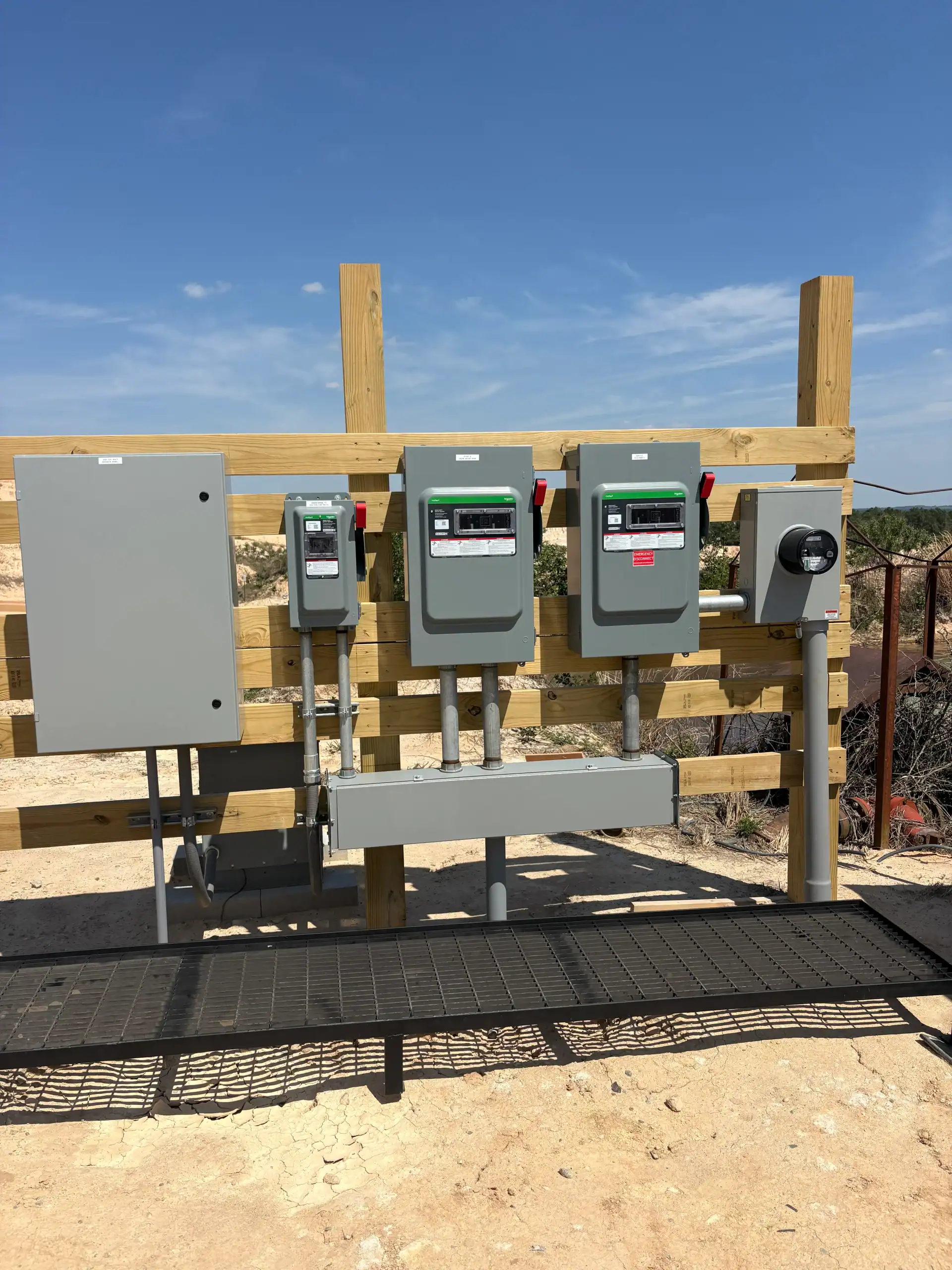
It depends on the facility, but the costs add up faster than most people expect. There’s the direct cost of the repair itself, which is almost always higher when it’s an emergency — parts sourced quickly, after-hours labor, and the kind of diagnostic work that takes longer when you’re working under pressure with no maintenance history to reference.
Then there’s the production impact. Even a few hours of downtime in a manufacturing or distribution environment can translate into thousands of dollars in lost output, missed shipments, or idle labor. For facilities running tight margins or operating under customer delivery commitments, an unplanned electrical failure isn’t just an inconvenience — it’s a business problem.
There’s also the equipment side. Electrical failures don’t always just stop a machine — they can damage it. A motor that fails because of a power quality issue, a control panel that goes down because of an overheating connection that was never caught, a piece of production equipment that gets damaged by a voltage event — these aren’t just repair costs, they’re replacement costs. And they’re often costs that a preventive maintenance program would have avoided.
What tends to surprise facility managers most is the compliance exposure. If an OSHA inspector walks through after an electrical incident and finds that your facility had no documented maintenance program, no arc flash labels, and no thermal imaging records, the conversation gets expensive quickly. OSHA 1910 Subpart S governs electrical safety in industrial workplaces, and violations — especially if the inspector determines they were willful — carry significant financial penalties. A maintenance program isn’t just about keeping equipment running. It’s also documentation that you took your obligations seriously.
The point isn’t to create alarm. It’s to make the math visible. Preventive maintenance has a cost. Reactive maintenance has a cost too — it’s just less predictable, usually higher, and tends to arrive at the worst possible time.
This is a question worth asking directly, and a lot of small facility managers haven’t thought to ask it. The assumption is that a licensed electrician is a licensed electrician. In practice, there’s a significant difference between someone who primarily does residential and light commercial work and someone who has real experience with industrial electrical systems.
Industrial facilities run on three-phase power. They have motor control centers, variable frequency drives, automated production equipment, and electrical distribution systems that behave differently from anything in a house or a strip mall. Power quality issues in an industrial environment — voltage sags when heavy machinery starts up, harmonic distortion from VFDs, power factor problems — require specific diagnostic tools and specific experience to identify correctly. A commercial electrician without that background may look at the same system and tell you everything looks fine, because to them, it does.
This isn’t a knock on commercial electricians. It’s a scope-of-experience issue. A facility with a motor control center and a production line is a different environment than a restaurant or an office building, and the person doing your electrical maintenance should have worked in environments like yours.
What to look for: someone who can name the specific services your facility needs — thermal imaging, motor control troubleshooting, three-phase system maintenance, arc flash compliance review — not just someone who describes themselves as “commercial and industrial.” Ask whether they’ve worked on facilities similar to yours. Ask what diagnostic tools they use. The answers will tell you a lot.
For facilities in Alamance County, NC, the industrial mix is real and varied — distribution warehouses along the I-40/I-85 corridor in Mebane, light manufacturing throughout Burlington, older industrial buildings that have been in continuous use for decades. The electrical challenges in those environments aren’t the same as what you’d find in a new construction project, and they’re not the same as what a residential electrician handles day to day. Experience with existing facilities — the kind that have been added to, modified, and run hard over the years — is what actually matters here.
If you’ve read this far, you probably already have a sense of where your facility stands. Maybe you’ve been running on reactive maintenance and know it’s not ideal. Maybe you weren’t aware that NFPA 70B changed in 2023 and you’re now wondering whether your current program is compliant. Maybe you’ve had an electrician look at something and come away with more questions than answers.
The good news is that none of this is complicated to address once you have the right person involved. A solid industrial electrical maintenance program doesn’t require a massive budget or a dedicated facilities team — it requires an electrician who understands industrial systems, shows up when they say they will, and gives you a straight answer about what they find.
We’ve been doing this work in Alamance County since 2002. If you’re in the Burlington area or anywhere else in the county and want to talk through what your facility actually needs, give us a call — a real person will answer.
Article details:
Share:
Continue learning: