If your Burlington or Graham home was built in the 1960s or early '70s, aluminum wiring may be inside your walls — and most homeowners have no idea what that means.
Share:

Summary:
You didn’t think much about the wiring inside your walls — until a home inspector flagged it, your insurance company sent a letter, or a neighbor mentioned something at the right moment. Now you’re trying to figure out whether you have a real problem or whether this is the kind of thing inspectors note just to cover themselves.
It’s a fair question. And the honest answer is: it depends on what you have, where it is, and whether anyone has touched it since the house was built. What follows is a straightforward breakdown of what aluminum wiring actually is, why it matters in older Alamance County homes specifically, and what your real options look like.
During the mid-1960s, copper prices spiked sharply. Builders and electrical contractors needed an alternative, and aluminum fit the bill — it was cheaper, widely available, and conducted electricity well enough. For roughly a decade, from about 1965 to 1972, aluminum became the standard material for branch circuit wiring in millions of new homes across the country.
Branch circuit wiring is the network of smaller wires running from your electrical panel to individual outlets, switches, and light fixtures throughout the house. This is distinct from the large-gauge aluminum conductors that run from the utility line to your panel — those are still commonly used today and are not the same concern. The hazard is specifically with the smaller-gauge aluminum wiring used at outlets and switches.
The practice largely stopped by the mid-1970s as the electrical industry recognized the problems it was creating. But the homes built during that window are still standing — and in Burlington, Graham, Mebane, and across Alamance County, there are a lot of them.
Aluminum wiring isn’t dangerous the day it’s installed. The risk builds over time, and understanding why helps explain why a house that’s been “fine for 50 years” can still have a real problem.
The first issue is oxidation. When aluminum is exposed to air, it forms an oxide layer on its surface. That layer acts as an insulator — which is the opposite of what you want at an electrical connection point. As resistance increases at the connection, heat builds. Over years and decades, that heat accumulates in ways that aren’t visible from the outside.
The second issue is thermal expansion and contraction. Every time a circuit carries a load, the wire heats up slightly and expands. When the load stops, it cools and contracts. Aluminum does this at a higher rate than copper, and over thousands of heating and cooling cycles, connections loosen. A loose connection is a connection that arcs. Arcing inside a wall is how house fires start.
The third issue is galvanic corrosion. Standard outlets, switches, and fixtures weren’t designed for aluminum wire — most are made with copper or brass components. When aluminum contacts those dissimilar metals, a chemical reaction accelerates corrosion at the connection point, making an already vulnerable joint worse over time.
None of this happens overnight. But the U.S. Consumer Product Safety Commission commissioned a national study through the Franklin Research Institute that found homes built before 1972 with aluminum branch circuit wiring are 55 times more likely to have one or more wire connections at outlets reach what the CPSC defines as “Fire Hazard Conditions” — meaning hot receptacles, sparks, and charred materials — compared to homes wired with copper.
The warning signs homeowners sometimes notice include outlet or switch cover plates that feel warm to the touch, lights that flicker without an obvious cause, circuits that stop working intermittently, a faint smell of burning plastic near outlets, or visible discoloration around a receptacle. If you’ve noticed any of these in an older Alamance County home, they’re worth taking seriously.
About a third of Burlington’s housing stock was built between 1940 and 1969, according to neighborhood-level real estate data. The 27215 ZIP code in particular has a meaningful concentration of homes built in the 1960s — right in the middle of the period when aluminum branch circuit wiring was standard practice. The same is true for established neighborhoods in Graham and the mid-century sections of Mebane.
Burlington’s history as a textile manufacturing hub shaped the city’s residential geography. The neighborhoods that grew up around the old mill districts — the Company Shops area, blocks near former Burlington Industries facilities — contain homes built from the 1920s through the 1960s. These are the houses with the most character and, frequently, the least updated systems. Aluminum wiring is one of several aging electrical conditions we encounter regularly in that housing stock, often alongside undersized panels and other issues that have accumulated over decades of minimal updates.
The smaller Alamance County communities — Gibsonville, Haw River, Green Level, Ossipee, and Swepsonville — have similar housing vintage in their older sections. The county’s median construction year is 1988, which means roughly half of all homes in Alamance County predate 1988. A substantial portion of those were built during or just before the aluminum wiring era.
One thing worth clarifying: not every older home has aluminum branch circuit wiring. Homes built before 1965 are unlikely to have it. Homes built after the mid-1970s are also unlikely, as the industry had largely returned to copper by then. If your home was built between 1965 and 1972, the probability is high enough to warrant a look. An electrician can identify aluminum wiring by its markings and its characteristic silvery-white color — it doesn’t require tearing open walls to determine whether it’s present.
Want live answers?
Connect with a Electrical Service Providers expert for fast, friendly support.
This is where a lot of homeowners get confused — or get steered in the wrong direction. The good news is that full rewiring of the entire house is not the only option, and for most homes, it’s not necessary. The CPSC recognizes two methods as complete and permanent repairs for aluminum branch circuit wiring, and both are significantly less disruptive than pulling new wire through every wall.
What matters is that the repair method used is actually CPSC-approved. Not every approach that gets marketed as a fix meets that standard, and some of the most common DIY “solutions” create a false sense of security while leaving the underlying hazard intact.
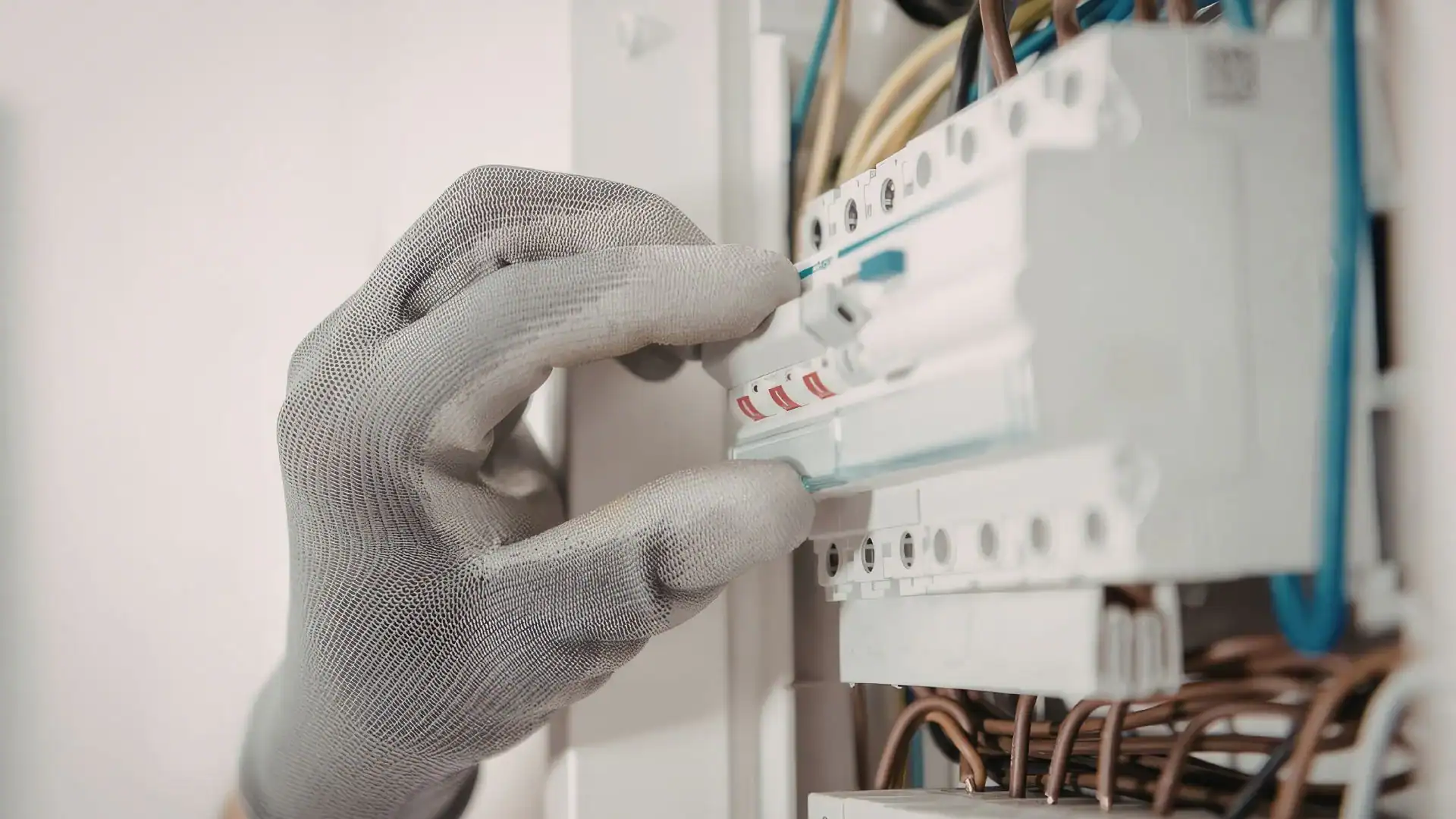
The CPSC has formally evaluated repair methods for aluminum wiring and identified two that qualify as complete and permanent solutions. Understanding what each involves helps you have a more informed conversation with any electrician you’re considering.
The first is COPALUM crimp connectors. This method involves attaching a short copper wire — called a pigtail — to the existing aluminum wire using a specialized crimp connector and a power crimping tool. The crimp creates what’s essentially a cold weld between the two metals, eliminating the galvanic corrosion problem at the connection point. The copper pigtail then connects to the outlet, switch, or fixture as it normally would. The CPSC describes COPALUM as the only method it designates as a complete and permanent repair. The limitation is practical: the crimping tool costs over $10,000 and is only available to electricians who receive manufacturer training. Not every licensed electrician has access to it.
The second is AlumiConn connectors. These are lever-operated connectors that join aluminum and copper wire in a way that isolates each metal from the other, preventing the galvanic corrosion that causes connection failure. The CPSC also recognizes AlumiConn as a permanent repair when properly installed. It’s more widely accessible than COPALUM and is the method used in most residential aluminum wiring remediation today.
Both methods address the problem at every connection point in the home — outlets, switches, light fixtures, and junction boxes. A thorough repair isn’t limited to the outlets you can see. It covers every point where aluminum wire terminates.
One thing worth saying plainly: purple wire nuts — the ones sometimes labeled “AL/CU” — are not a safe or CPSC-approved solution. They are not UL-listed for permanent aluminum wiring repair, and they have been connected to fire investigations. If a previous owner or contractor used them as a fix, that is not a completed repair. It’s a problem that still needs to be addressed.
Most homes with aluminum branch circuit wiring don’t need to be fully rewired. Pigtailing with COPALUM or AlumiConn addresses the hazard at every connection point without requiring new wire to be run through the walls — and it’s recognized by the CPSC as a permanent solution. For the majority of Alamance County homeowners dealing with this issue, that’s the path that makes the most sense.
Full rewiring — replacing all the aluminum branch circuit wiring with copper — becomes more relevant in specific situations. If a home is already undergoing a major renovation that opens up the walls anyway, running new copper wire at the same time is a logical choice. If the aluminum wiring has been compromised by improper past repairs, significant damage, or deteriorated insulation, a more comprehensive approach may be warranted. And in some cases, a homeowner simply prefers the clean-slate certainty of all-copper wiring, particularly if they’re planning to sell and want to remove the issue entirely from future disclosures.
The insurance angle is worth addressing directly. Some insurers will charge higher premiums for homes with aluminum wiring, and some will decline to write a policy altogether until the homeowner can provide documentation of CPSC-approved remediation. In those cases, what matters to the insurer is that the work was done correctly and that there’s documentation to prove it. Whether that’s pigtailing or full rewiring is secondary to the quality and completeness of the work.
For homeowners in the middle of a real estate transaction — where a buyer’s inspector has flagged aluminum wiring and the deal timeline is pressing — the practical question is often: what can be done correctly, completely, and quickly? That’s a conversation worth having with a licensed electrician who knows what they’re looking at, not one who will do a partial fix to get the job done fast and move on.
We’ve worked in Burlington’s older neighborhoods, Graham’s ranch-home stock, and the mid-century sections of Mebane long enough to know what these homes typically look like inside. We know what a proper assessment involves, what the repair options actually cost, and what documentation insurance companies and inspectors need to see. When you call ESP Electrical Service Providers, you talk to a real person — not a voicemail system — and we give you the exact cost before any work begins. The price doesn’t change once we start, even if the job turns out to be more involved than it looked from the outside.
If you’ve been living in an older home in Burlington, Graham, Mebane, or elsewhere in Alamance County and haven’t had the wiring assessed, the honest answer is: it’s worth knowing. Not because every older home is a fire waiting to happen, but because aluminum branch circuit wiring is one of those conditions that gets worse quietly, over time, in places you can’t see.
If a home inspector flagged it, your insurance company raised a concern, or you’ve noticed any of the warning signs — warm outlets, flickering lights, a faint burning smell — don’t put it off. The fix exists, it’s well-defined, and for most homes it doesn’t require tearing out every wall.
ESP Electrical Service Providers has been working specifically in Alamance County’s existing homes and businesses since 2002. If you want a straight answer about what you’re dealing with and what it will take to address it, we’re a good place to start.
Article details:
Share:
Continue learning: