Older homes in Alamance County have quirks. Some are charming. Others are fire hazards in disguise. Here's how to tell the difference.
Share:
Summary:
Most homeowners in Alamance County don’t ignore electrical problems because they don’t care. They ignore them because they’re not sure if what they’re seeing is actually a problem — or just an older home being an older home. That flicker in the living room has been there for two years. The breaker in the kitchen trips maybe once a month. It always resets. So far, so good.
Here’s the thing: electrical systems don’t usually fail all at once. They give you signals first. This page is about learning to read those signals before a small fix quietly becomes something much more serious.
Alamance County has a lot of older homes — and that’s not a bad thing. Burlington’s historic neighborhoods, the mid-century ranches scattered across Graham and Gibsonville, the 1970s-era houses in Haw River — they were built well. But their electrical systems were built for a different era. A 1960s home was wired for a household that used maybe 30 amps on a busy day. Today, between the HVAC system, the refrigerator, the washer and dryer, the home office, and whatever’s plugged into the garage, that same panel is doing a job it was never designed to do.
That gap between what the system was built for and what it’s being asked to handle is where most problems start. It doesn’t mean your home is dangerous. It means it’s worth paying attention to.
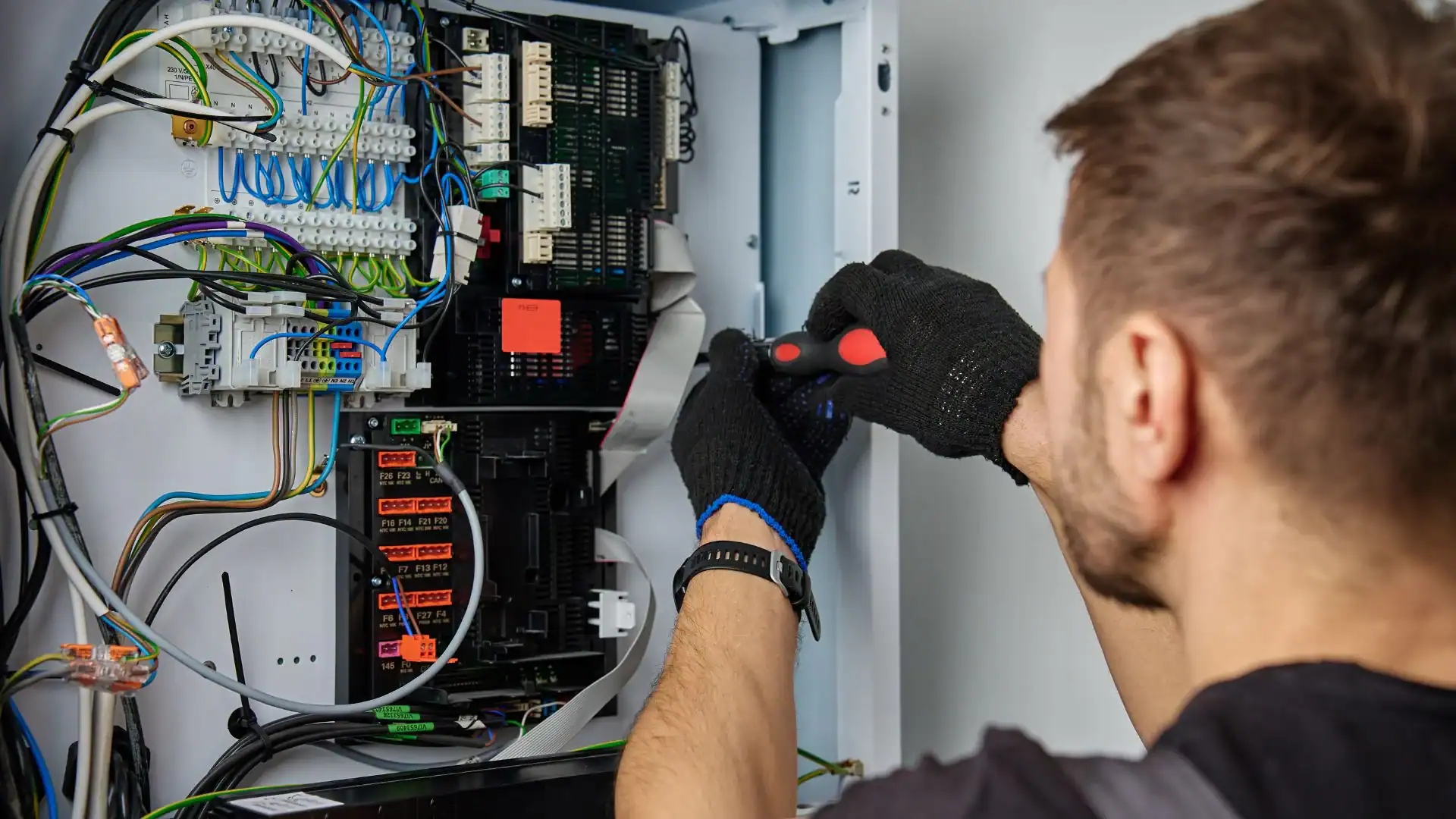
Flickering lights are probably the most normalized electrical symptom in older Alamance County homes. Homeowners assume it’s just the house. It’s always done that. But flickering is almost never random — it’s a symptom, and it usually points to one of a few specific causes.
The most common is a loose connection somewhere in the circuit. Wiring connections loosen over time, especially in homes where the wiring has been disturbed by renovations, pest activity, or just decades of thermal expansion and contraction. A loose connection creates resistance, and resistance creates heat. That heat is what causes the flicker — and, in enough quantity, it’s what causes fires.
Flickering can also point to an overloaded circuit, a failing breaker, or in older homes, a panel that’s simply struggling to keep up. If the flickering gets worse when you run a large appliance — the microwave, the dryer, the air conditioner — that’s a sign the circuit is being pushed past what it can handle comfortably.
Tripping breakers follow a similar logic. A breaker that trips once might just be a fluke — a momentary surge, a device drawing more power than usual. A breaker that trips regularly on the same circuit is telling you something specific: that circuit is consistently being asked to carry more current than it’s rated for, or there’s a fault somewhere in the wiring that’s causing the breaker to do exactly what it’s supposed to do and shut things down.
The mistake most homeowners make is treating a tripping breaker as an inconvenience to manage rather than a signal to investigate. Resetting the breaker doesn’t fix the underlying problem — it just resets the clock.
Homes built between 1965 and 1973 have an additional layer of complexity worth knowing about. That era saw widespread use of aluminum wiring as a substitute for copper, and aluminum behaves differently under load. It expands and contracts more than copper, which causes connections to loosen faster. According to the Consumer Product Safety Commission, homes with aluminum wiring are approximately 55 times more likely to have wire connections reach fire hazard conditions than homes wired with copper. If your home is from that period and hasn’t had its wiring evaluated, that’s worth putting on your list.
The panel is the heart of your home’s electrical system, and it’s the part that homeowners think about least — until something goes wrong. In Alamance County’s older housing stock, there are two panel types that come up repeatedly during inspections and troubleshooting calls, and both have documented histories of failure.
Federal Pacific Electric panels — often called Stab-Lok panels — were installed in millions of American homes between the 1950s and the 1980s. The core problem with these panels is that their breakers have a documented tendency to fail to trip during an overload. A breaker that doesn’t trip when it’s supposed to allows dangerous levels of heat to build up in the wiring. That heat has nowhere to go. If you have a Federal Pacific panel in your home, it doesn’t mean your house is about to burn down — but it does mean the panel is not performing the safety function it exists to perform, and that’s a conversation worth having with a licensed electrician.
Zinsco panels, installed heavily in the 1960s and 1970s, have a similar issue. The breakers in Zinsco panels can fuse to the bus bar over time, which means they physically can’t trip even when they should. Again — not an immediate emergency in every case, but not something to leave indefinitely unaddressed either.
Beyond specific panel brands, there’s the broader issue of capacity. The National Electrical Code has required a minimum 100-amp service for new homes since 1978. Many older homes in Burlington, Graham, and throughout Alamance County still have 60-amp panels — some even have 30-amp service. That was adequate when the home was built. It is not adequate for a modern household. Signs that your panel may be undersized include breakers that trip frequently, lights that dim when appliances kick on, and a general sense that the house can’t handle everything running at once.
If your home still has a fuse box rather than a circuit breaker panel, that’s another conversation worth having. Fuses work — they do their job — but they’re more prone to being improperly replaced with the wrong amperage fuse, which defeats the protection they’re supposed to provide.
Want live answers?
Connect with a Electrical Service Providers expert for fast, friendly support.
Some warning signs are dramatic — a burning smell, a sparking outlet, a sudden loss of power. Those tend to get addressed quickly. But a lot of electrical problems in older homes are quiet. They don’t announce themselves. They just sit there, getting incrementally worse, until something forces the issue.
Two-prong outlets are a good example. In homes built before the mid-1960s, two-prong ungrounded outlets were the standard. They’re an inconvenience when you’re trying to plug in a laptop or a modern appliance, but the real issue is what their presence tells you about the broader system — specifically, that the home’s circuits were never grounded, which creates both shock and surge risks that a simple plug adapter doesn’t fix.
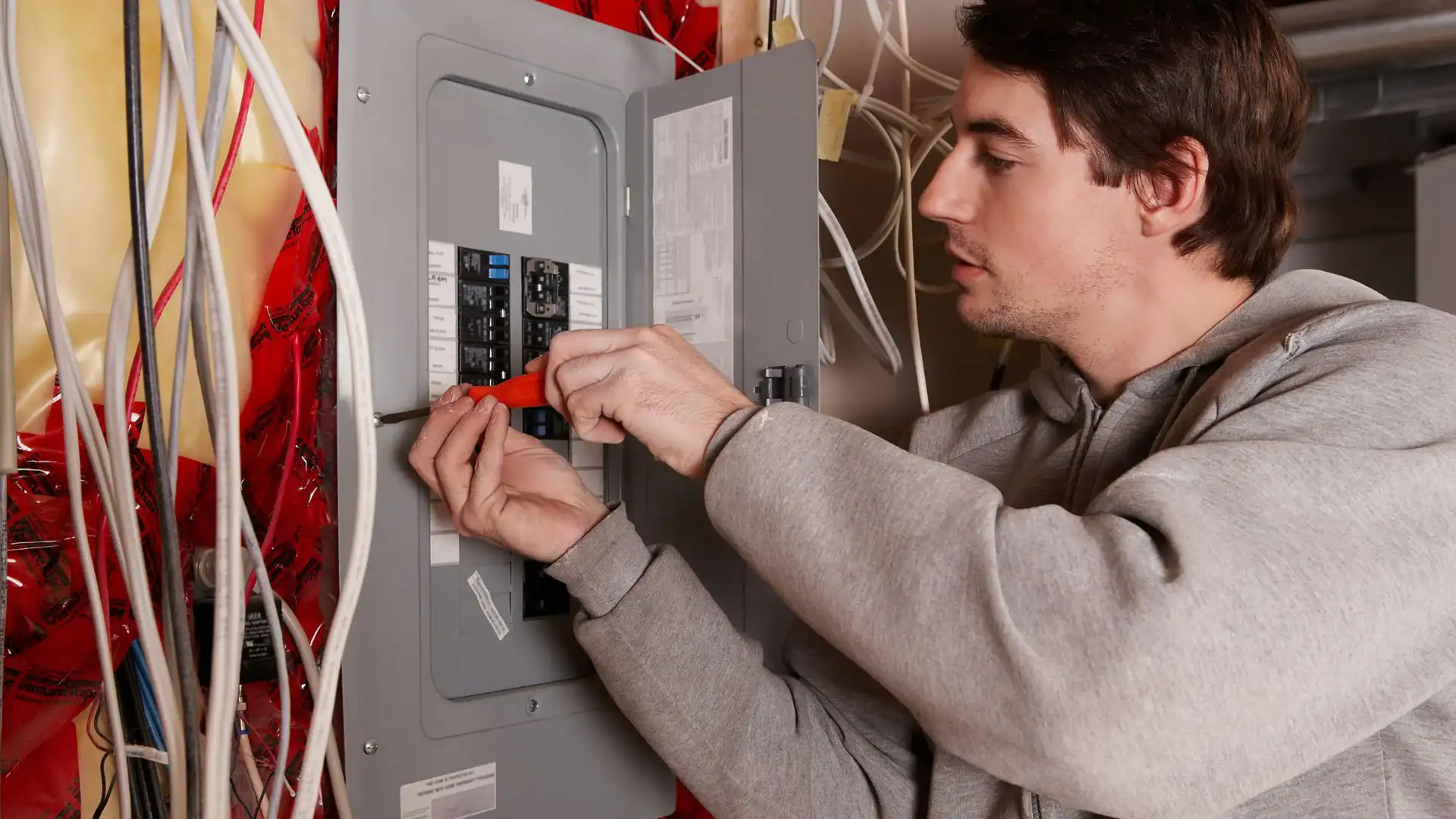
A burning smell near an outlet or switch is one of the clearest signals that something is actively wrong. It’s easy to dismiss if it’s intermittent — it was there, then it wasn’t, so maybe it was nothing. But intermittent burning smells are often more concerning than persistent ones, because they suggest a connection that’s arcing or overheating under certain load conditions and cooling down when the load drops.
An outlet or switch plate that feels warm to the touch is in the same category. Some warmth on a dimmer switch is normal. Warmth on a standard outlet or switch is not. It points to a loose connection, an overloaded circuit, or wiring that’s deteriorating behind the wall.
Outlets that have stopped working entirely are worth investigating rather than simply abandoning. Sometimes a dead outlet is on a GFCI circuit that tripped and just needs to be reset — there may be a GFCI outlet elsewhere in the room or in a bathroom that controls it. But sometimes a dead outlet means a connection has failed, a wire has come loose, or something upstream in the circuit has gone wrong. The only way to know is to look.
Homes in Alamance County that were built before 1975 frequently lack GFCI protection in bathrooms, and homes built before 1987 often lack it in kitchens. GFCI outlets — the ones with the test and reset buttons — exist specifically to cut power when they detect a ground fault, which is the kind of fault that causes electric shock. Their absence in wet areas of the home is a code deficiency and a real safety gap.
If you’ve recently purchased an older home in Burlington, Graham, Mebane, or anywhere else in Alamance County, and the inspection report said “recommend evaluation by a licensed electrician,” these are the kinds of things that phrase is pointing toward. It’s not necessarily a catastrophe. It’s a list of things that need to be looked at by someone who knows what they’re looking at.
One of the main reasons homeowners in Alamance County put off calling an electrician is the fear of what they’ll be told. They’re worried that a diagnostic call will turn into a recommendation for a full rewire, a new panel, and a bill that wipes out the savings account. That fear is understandable — and it’s worth addressing directly.
Most electrical problems in older homes are not whole-house emergencies. A flickering light is often a loose connection at a single junction. A tripping breaker is often a circuit that needs to be redistributed or a breaker that’s worn out and needs to be replaced. A dead outlet is often a failed connection that takes thirty minutes to fix. The problems that require significant work — panel replacements, rewiring, service upgrades — are real, and they do come up, but they’re not the answer to every symptom.
When we come out for electrical troubleshooting, the goal is to find out what’s actually wrong — not to find the most expensive version of the problem. Andy Helton, our Master Electrician, has been diagnosing electrical issues in existing homes since 1989. That’s 35 years of seeing what problems actually look like versus what they might look like if you’re inclined to overstate them.
We built ESP Electrical Service Providers in 2002 specifically to serve homeowners with existing properties in Alamance County and the surrounding area — because most electrical contractors at the time were focused on new construction, and the people who already owned homes were getting left behind.
We use flat-rate pricing, which means the cost is agreed upon before any work starts. There’s no hourly clock running while we diagnose, no “it took longer than expected” charge at the end. Our trucks are fully stocked, so most jobs get done the same day without a return trip. And when you call, you get a real person — not an automated system routing your request somewhere.
North Carolina’s summers are hard on older electrical systems. When the air conditioner is running continuously through a July heat wave and you’re also running the refrigerator, the washer, and everything else, an undersized or aging panel feels it. We see a predictable spike in troubleshooting calls every summer in Alamance County, and a lot of those calls are from homeowners who’ve been watching a symptom for months and finally decided to act when the heat made it worse. The better move is to get it looked at before the system is under that kind of stress — but whenever you’re ready, we’re here.
If you’ve been living with a symptom — flickering lights, a breaker that trips, an outlet that stopped working, a faint smell you can’t quite place — the honest answer is: sooner than you’re probably planning to. Electrical problems in older homes don’t tend to resolve on their own. They tend to get incrementally worse, and the gap between “minor fix” and “significant repair” usually comes down to how long the underlying issue was left unaddressed.
You don’t need to be certain something is wrong before you call. Uncertainty is exactly the right reason to call. A diagnostic visit from a licensed electrician gives you real information — what’s actually happening, what it means, and what your options are. That’s worth more than months of wondering.
If your Alamance County home is showing any of the signs described here, ESP Electrical Service Providers is a straightforward call to make.
Article details:
Share:
Continue learning: