Thinking about a whole-house generator but not sure what it really costs? Here's the honest breakdown — from the unit to the transfer switch to the permit.
Share:
Summary:
You’ve probably already looked up generator prices. Maybe you saw a unit advertised at $4,000 and thought, okay, that’s manageable. Then you got a quote and the number was closer to $12,000. That gap isn’t a contractor marking things up — it’s the difference between buying a generator and actually having one installed, permitted, and ready to run your home when the power goes out.
Alamance County homeowners deal with ice storms that can knock out power for days and tropical remnants that Duke Energy takes time to clear, especially on rural roads through Burlington, Mebane, and Graham. If you’re serious about backup power, here’s what the full cost picture actually looks like.
The generator unit is just the starting point. For a whole-house standby system, most homeowners in Alamance County spend between $7,000 and $15,000 fully installed. That range accounts for the generator itself, the automatic transfer switch, a concrete pad, labor, permits, and the fuel line connection — all of which are required for a legal, functional installation.
The generator unit alone — a natural gas or propane model sized for a typical home — generally runs $3,000 to $6,000 depending on output and brand. Installation labor, separate from the unit, averages $5,000 to $10,000 according to Generac’s own published guidance. Add in the transfer switch ($600 to $2,500 installed), a concrete pad (roughly $1,000 for a standard size), and permit fees, and the total picture becomes clear fast.
None of those line items are optional. They’re what make the difference between a generator that’s ready when you need it and one that’s sitting in your yard unconnected.
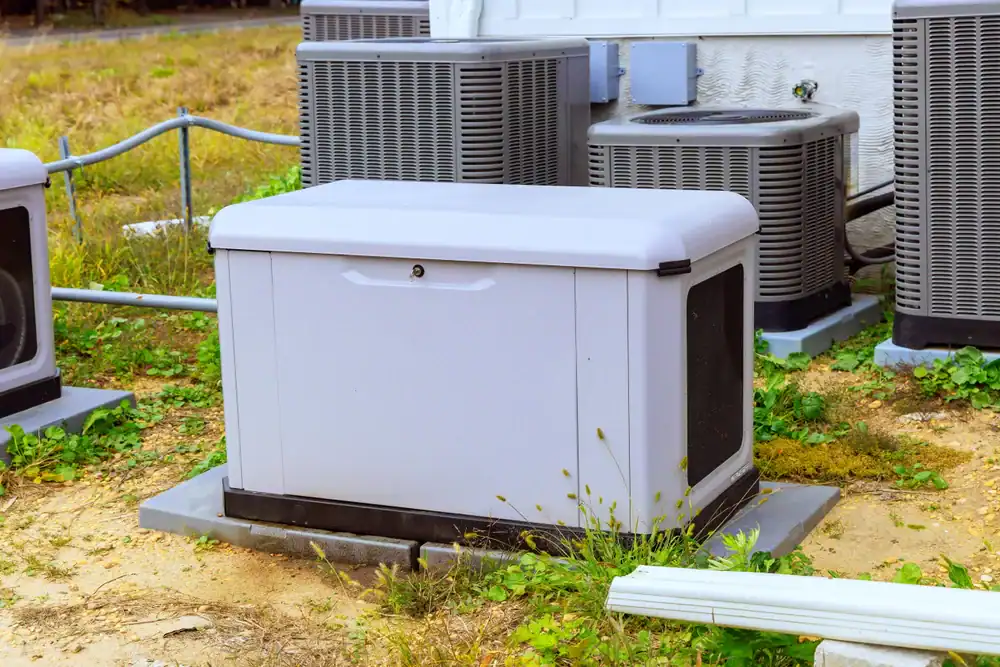
Before comparing costs, it helps to understand what type of generator you’re actually pricing. There are two broad categories: portable generators and standby generators. They are not interchangeable, and the difference matters more than most people realize.
A portable generator runs on gasoline, requires you to drag it out manually during a storm, needs to be operated outside to avoid carbon monoxide buildup, and can’t be legally connected to your home’s wiring without a proper transfer switch. For a short outage, it’s workable. For a three-day ice storm in January — the kind that hits the Alamance County Piedmont regularly — it’s a miserable solution. You’re refueling in the dark, in the cold, hoping you stored enough gas.
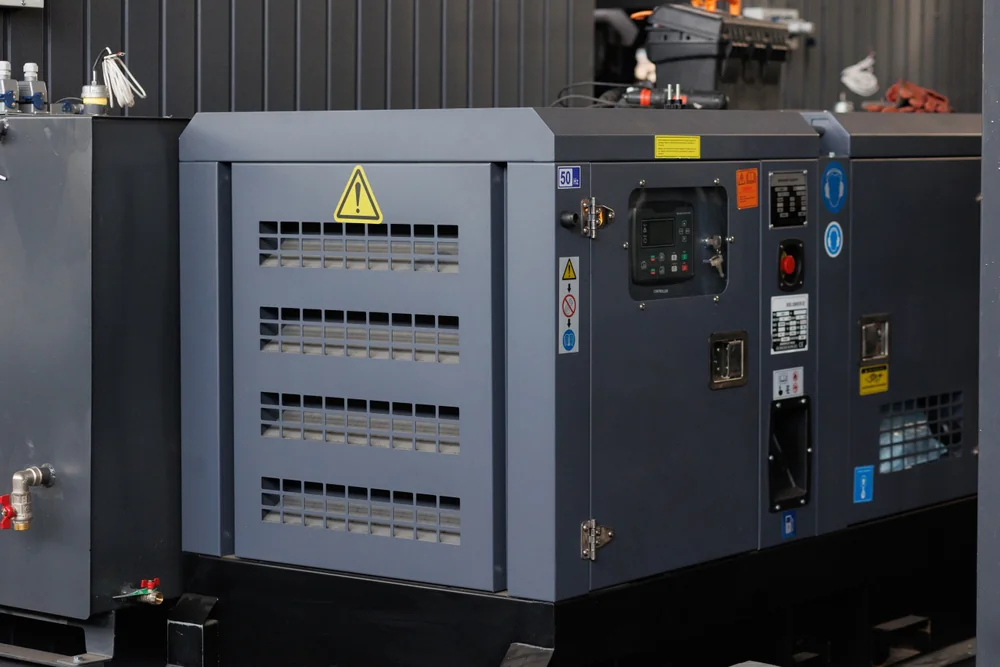
A standby generator is permanently installed outside your home, connected to your electrical panel through an automatic transfer switch, and fueled by natural gas or propane. When the power goes out, it detects the outage and starts on its own — typically within ten seconds. You don’t touch anything. It just runs.
For fuel source, natural gas is the most convenient option for homes with a gas line already in place. No storage, no refueling, no running out at the wrong moment. Propane is the standard choice for rural Alamance County properties that don’t have natural gas service — it requires a storage tank on your property, but it’s reliable and widely used. Sizing the tank correctly is part of a proper installation.
The output size — measured in kilowatts — determines how much of your home the generator can power. A smaller unit might cover essential circuits like your HVAC, refrigerator, and lights. A larger unit can power the whole house without any load shedding. The right size depends on a load calculation specific to your home, not a one-size-fits-all recommendation. Getting that calculation right at the start is one of the more important parts of the process.
Several factors push the final number higher or lower, and knowing them helps you evaluate any quote you receive.
The condition of your electrical panel is one of the bigger variables. Older homes in Alamance County — and there are plenty of them, particularly in Burlington’s established neighborhoods — may have panels that need upgrading before a transfer switch can be properly installed. That’s additional work, and it adds to the cost. It’s also work that needs to happen regardless of who installs your generator, so it’s not a contractor adding unnecessary scope.
Fuel line access is another factor. If your home already has a natural gas line running to the generator location, connecting it is straightforward. If you’re running a new line from the meter, or sizing and placing a propane tank on a rural Alamance County property, that adds both time and cost. Rural properties in the area often involve longer runs and more complex site prep than homes in town.
Site accessibility matters too. A generator placed close to your electrical panel and an existing fuel source is simpler and less expensive to install than one that requires trenching across a large yard or navigating tight access around the house.
Finally, the permit and inspection process is a real cost component that some contractors quietly skip — which is a problem, not a savings. In North Carolina, a standby generator installation requires a permit and must pass inspection. Work performed without a permit isn’t just a technicality; it’s a liability. If something goes wrong, your homeowner’s insurance may not cover it. A contractor who skips permits is cutting a corner that you’ll eventually pay for.
When you’re comparing quotes, the most important question isn’t which number is lowest. It’s what each number actually includes.
Want live answers?
Connect with a Electrical Service Providers expert for fast, friendly support.
The automatic transfer switch is the piece of the system that most buyers don’t fully understand until they’re looking at a quote line item they weren’t expecting. It’s also the component that makes a standby generator actually work the way you picture it working.
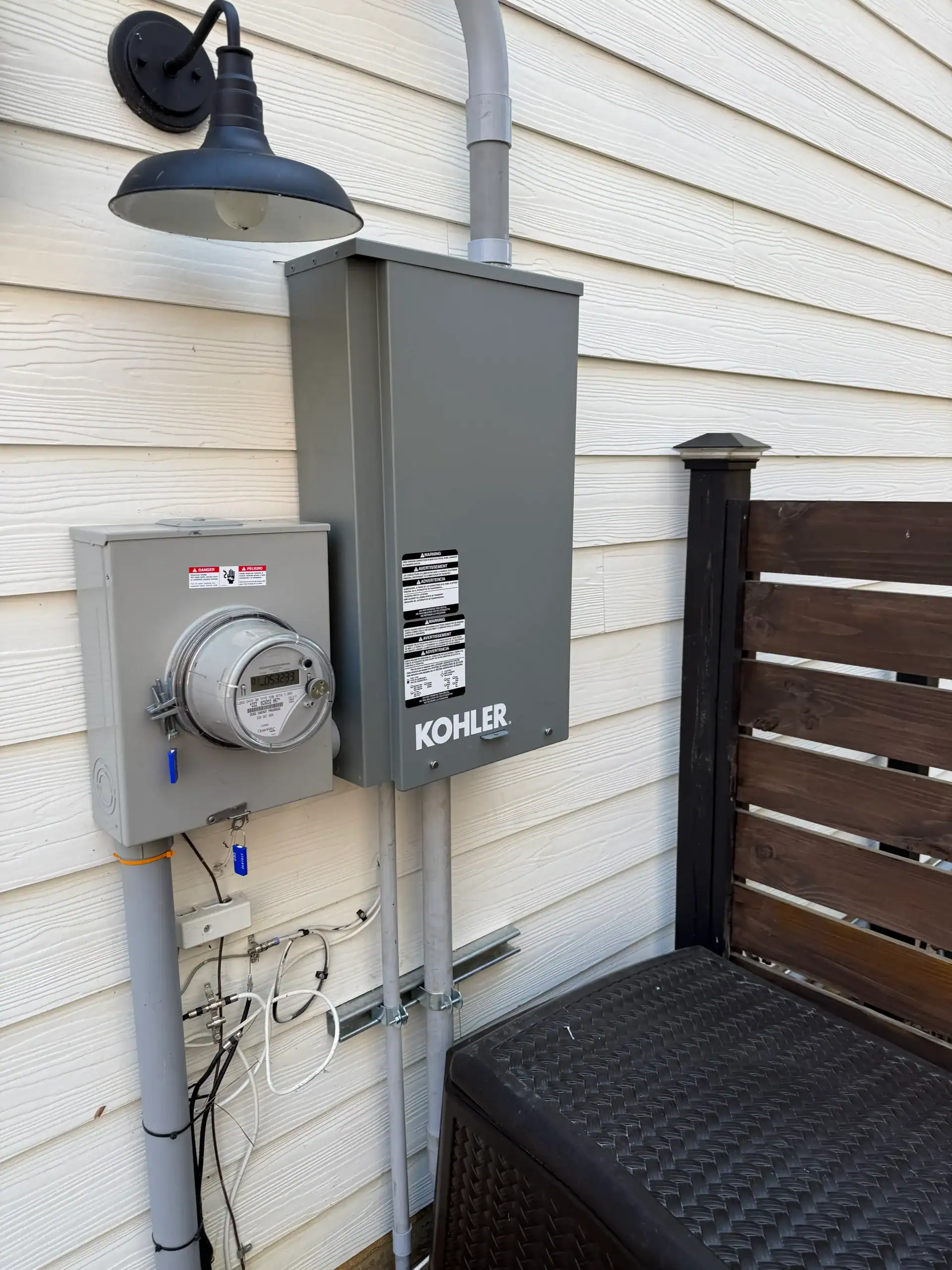
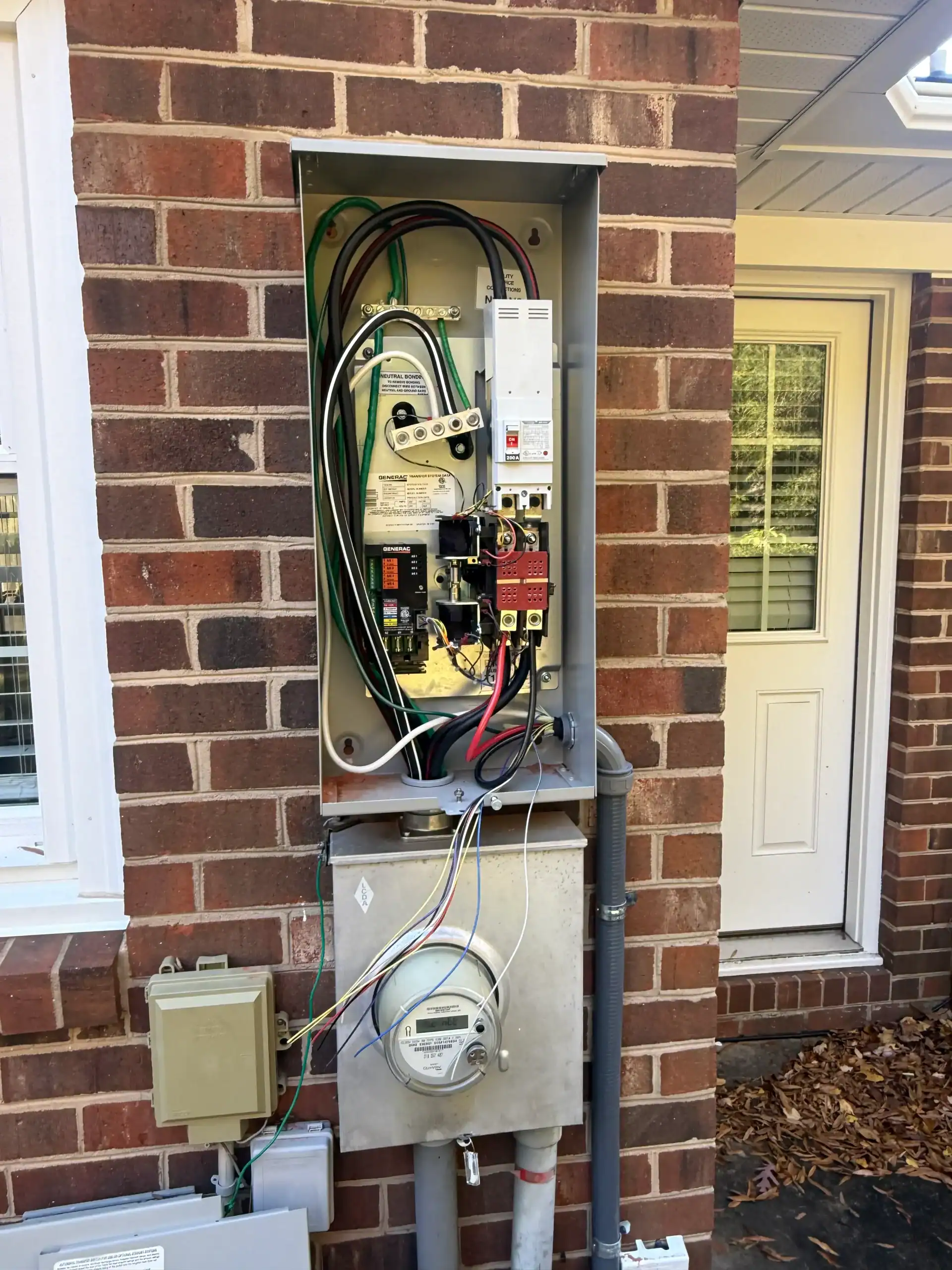
The transfer switch monitors your utility power continuously. The moment it detects an outage, it signals the generator to start and switches your home’s electrical load from the utility grid to the generator — automatically, within seconds. When utility power is restored, it switches back and shuts the generator down. You don’t flip anything. You don’t go outside. It handles it.
Installed cost for an automatic transfer switch runs $600 to $2,500, with most homeowners landing in the $1,200 to $1,600 range. The variation depends on the size of your electrical panel and whether you’re covering essential circuits only or the full home.
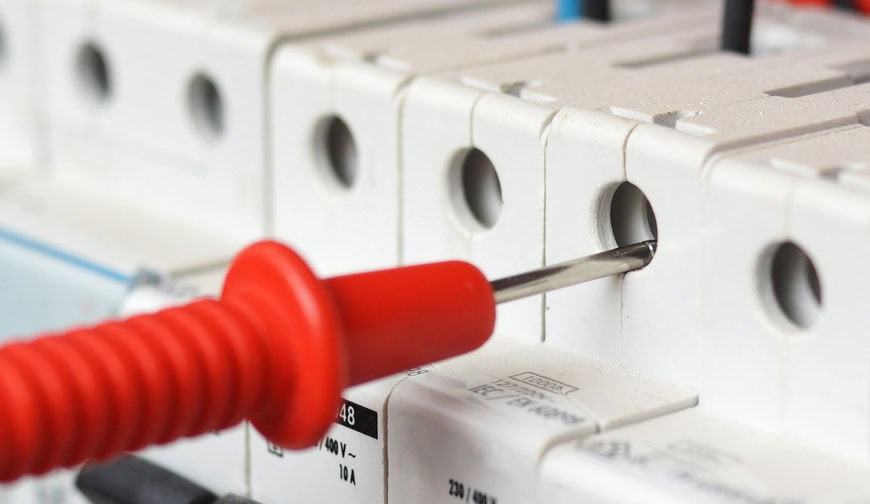
This comes up often enough that it’s worth addressing directly. Some homeowners assume the transfer switch is an add-on they can skip, or that there’s a cheaper workaround. There isn’t — not a legal one.
Connecting a generator to your home without a proper transfer switch creates what’s called backfeed. That’s when power from your generator travels back through the utility line and into the grid. For utility workers trying to restore power after a storm, backfeed is a serious electrocution hazard. It’s also illegal. The National Electrical Code requires a transfer switch for any permanently connected generator, and NC building inspectors enforce it. A generator installation without one will not pass inspection.
Beyond legality, the transfer switch is what makes the system safe and automatic. Without it, you’d need to manually disconnect from the grid before starting your generator every single time — assuming you even knew how to do that safely. The whole point of a standby system is that it works without you doing anything. The transfer switch is what makes that possible.
For Alamance County homeowners on well water — a significant portion of rural properties in the county — this matters even more. When the power goes out, so does the well pump. An automatic transfer switch means your water comes back on within seconds of an outage, not after you’ve gone outside in an ice storm to start something manually.
The transfer switch also needs to be properly sized to match your electrical panel. A 200-amp panel requires a 200-amp transfer switch. Installing an undersized switch is both a code violation and a fire risk. This is another reason why generator installation isn’t a job for a general handyman — it requires a licensed electrician who understands load calculations and panel configurations.
We’ve been doing this work in Alamance County since 2002. Our owner, Andy Helton, has held a Master Electrician license since 1989 — that’s over 35 years of licensed electrical experience, not a general contractor who added generators to the service list. We’re a factory-authorized Generac installer and dealer, which means we receive factory training, have access to factory-direct parts, and can support the manufacturer’s warranty on your system. We were also one of the first Level III service providers for Eaton/Cutler-Hammer generators in North Carolina.
Every installation we do is turnkey. That means we handle the generator, the automatic transfer switch, the concrete pad, the permit, the inspection, the fuel line connection, and the panel integration. You don’t coordinate multiple contractors. You don’t wonder who’s responsible for pulling the permit. We take care of it, and the work passes inspection the first time.
Our pricing is flat-rate. Before anyone picks up a tool, you know the exact cost. There’s no hourly billing that balloons as the job goes longer than estimated, and no line items added after the fact. For a purchase in the $7,000 to $15,000 range, knowing the number upfront is how a trustworthy contractor operates.
Our trucks are fully stocked, which means most installations are completed the same day without waiting on parts. We also offer 24-hour emergency service, including holidays. If your generator needs attention after a storm, you reach a real person — not a voicemail system — and we come out. Our customers in Burlington, Mebane, Graham, and across Alamance County have experienced this level of service for more than two decades.
If you’re considering a generator before hurricane season or ahead of the next ice storm, the time to schedule is before the rush. Post-storm demand creates installation backlogs that can stretch weeks. Getting ahead of it means the system is ready when the weather isn’t.
The cost of a home standby generator installation isn’t a mystery — it’s a unit, a transfer switch, a pad, a permit, and labor. Once you understand what each component does and why it’s there, a complete quote stops feeling like a surprise and starts making sense.
What matters most is working with someone who sizes the system correctly, pulls the permit, passes the inspection, and stands behind the work after the job is done. Those aren’t extras. They’re the baseline for a generator installation that actually protects your home.
If you’re ready to find out what a turnkey installation would cost for your specific property, reach out to ESP Electrical Service Providers. We’ll assess your power needs, recommend the right system, and give you a flat-rate quote — no obligation, no guesswork, no hourly billing surprises.
Article details:
Share:
Continue learning: