Confused about when you actually need an electrical permit in Alamance County? Here's a straightforward breakdown of what North Carolina requires — and what's at stake if you skip it.
Share:
Summary:
Most homeowners don’t think about electrical permits until something forces the question — a contractor mentions it, a home inspector flags it, or a neighbor’s horror story makes the rounds. And when you do start looking for answers, what you find is usually written for some generic version of “North Carolina” that doesn’t tell you anything about how things actually work here in Alamance County.
This page is different. We’re going to walk through exactly which projects require an electrical permit in Alamance County, what the process looks like from application to inspection, and what’s genuinely at risk when work gets done without one. By the end, you’ll know where you stand — and what to do about it.
There’s a simple way to think about this. If you’re adding something new to your electrical system — a new circuit, new wiring, a new panel, a new connection to the grid — you almost certainly need a permit. If you’re swapping out something that already exists with an identical replacement, you probably don’t.
The line gets drawn at the point where the work changes your system rather than maintains it. Replacing an outlet or light switch on an existing circuit is like-for-like work — no permit required in North Carolina when performed by a licensed electrician. But the moment you’re running a new circuit, upgrading your panel, adding a subpanel, or connecting a generator or EV charger, the permit requirement kicks in.
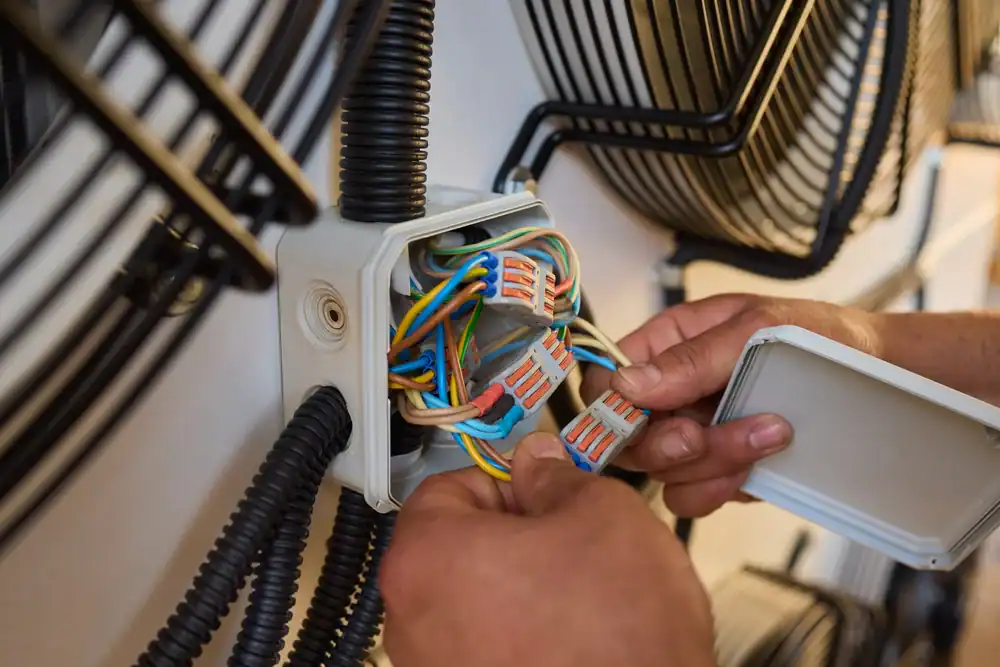
The projects that require an electrical permit in Alamance County track closely with what North Carolina requires statewide, because the county operates under the same National Electrical Code framework administered by the NC Department of Insurance.
Panel replacements and service upgrades always require a permit. This is one of the most common jobs we see in older Burlington and Graham neighborhoods, where mid-century homes are still running on 100-amp service panels that weren’t designed for today’s electrical loads — heat pumps, induction cooktops, and EV chargers all push those older panels past their limits. Upgrading from 100 amps to 200 amps is a significant change to your electrical service, and it requires both a permit and an inspection before the work is considered complete.
Adding any new circuit requires a permit. This covers a wide range of projects: a dedicated 240-volt circuit for an EV charger, a circuit for a new hot tub, a circuit for a workshop or garage, or additional kitchen circuits for a remodel. If a new wire is being run from your panel to serve a new load, a permit is required. In eastern Alamance County — particularly in the Mebane growth corridor — we’ve seen a sharp increase in EV charger installations as more households add electric vehicles. Every one of those installations requires a permitted 240-volt circuit.
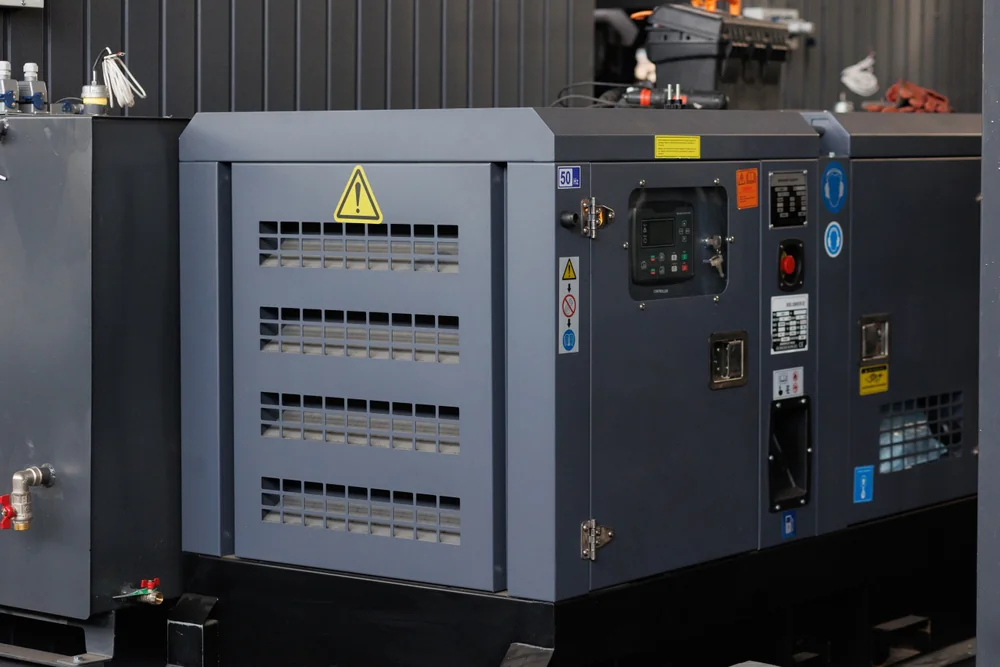
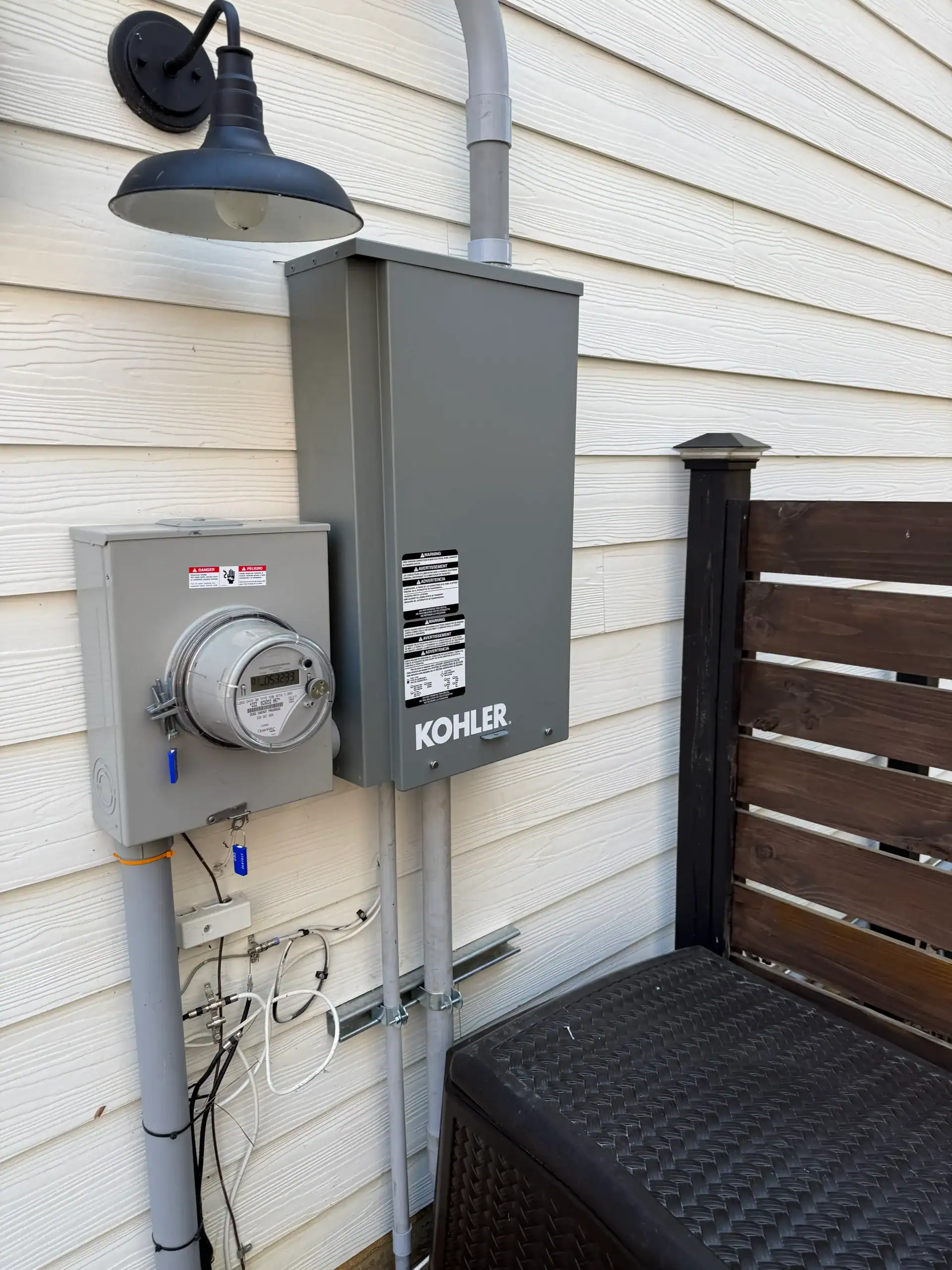
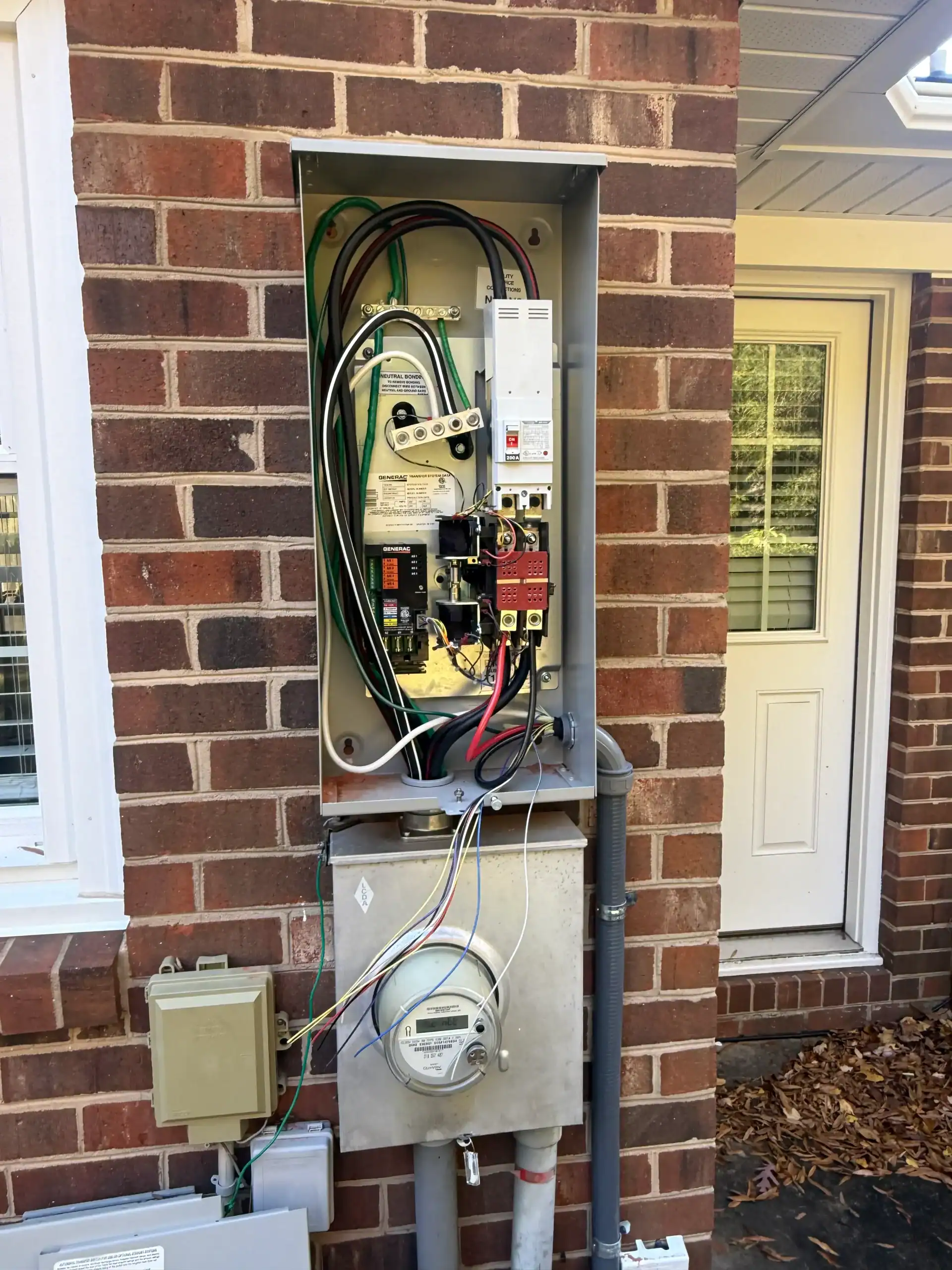
Generator installation, specifically a standby generator with a transfer switch, requires a permit. The transfer switch is the critical component here — it’s what prevents your generator from backfeeding power into Duke Energy’s lines, which is a serious safety issue for utility workers. The inspection process verifies that the transfer switch is correctly installed and that the connection is safe.
Whole-home rewiring, wiring additions, and any work involving the main service entrance all require permits. So does the electrical connection for a pool or hot tub. Essentially, if the work involves your panel, adds new wiring, or connects a major appliance or system, plan on a permit being part of the process.
What doesn’t require a permit is narrower than most people expect: replacing outlets, switches, and light fixtures with identical devices on circuits that already exist. That’s the practical boundary. Everything else — anything that changes what your system can do or how it’s configured — falls on the permit side of the line.
This is one of the most common questions we hear, and the honest answer is: yes, under specific conditions. North Carolina law allows homeowners to pull electrical permits for work on their primary residence. You don’t have to be a licensed electrician to apply for the permit — but the work still has to pass inspection, and the standards don’t change based on who pulled the permit.
The important caveat is the one-year rule. If you pull a homeowner permit and do the work yourself, you cannot sell or rent the property within one year of completing the work. If you do, the homeowner exemption no longer applies, and you’ve essentially done unlicensed electrical work on a property you’re transferring to someone else. That’s a real legal and liability exposure, not a technicality.
The other thing worth understanding is that pulling the permit is the easy part. The work still has to meet North Carolina electrical code standards, and a county inspector will verify that it does. If it doesn’t pass, you’re looking at corrections and a re-inspection — which costs an additional $50 per occurrence under the NCDOI fee schedule. For homeowners who aren’t familiar with current NEC requirements, that re-inspection scenario is more common than you’d think.
For most homeowners, the practical question isn’t whether they’re legally allowed to pull a permit — it’s whether doing the work themselves, navigating the inspection process alone, and accepting the liability for the outcome is actually worth it compared to having a licensed electrician handle it from start to finish. That’s a calculation only you can make, but it’s worth making it with clear eyes.
Want live answers?
Connect with a Electrical Service Providers expert for fast, friendly support.
North Carolina’s electrical code is based on the National Electrical Code, administered at the state level by the NC Department of Insurance Engineering and Building Codes Division. In Alamance County, the Authority Having Jurisdiction — the local body responsible for issuing permits and conducting inspections — is the Alamance County Inspections Department, located at 201 West Elm Street in Graham.
Their phone number is 336-290-0404, and they’re open Monday through Friday, 8:00 a.m. to 5:00 p.m., with permits issued until 4:30 p.m. You can submit permit applications electronically to pl********@*********nc.com or in person at Central Permitting at that same address. Processing time for residential electrical permits in Alamance County typically runs one to three weeks.
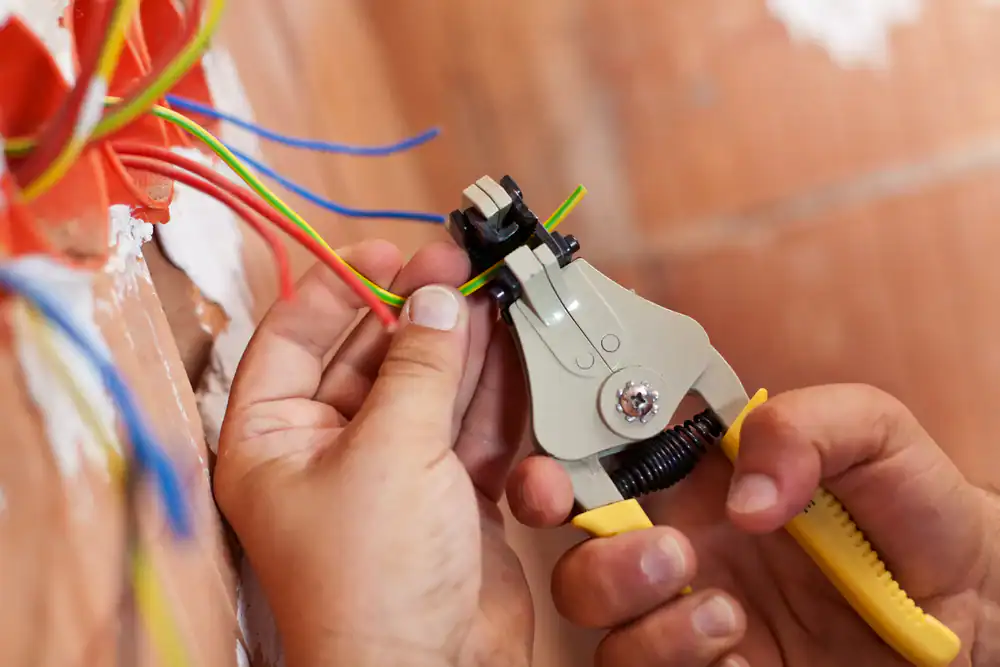
Residential electrical permit fees in North Carolina typically run between $50 and $200 for most projects, depending on the scope of work. That fee covers the permit itself and the required inspection — the county inspector comes out to verify that the work meets North Carolina electrical code before the job is considered officially complete.
Where homeowners sometimes get surprised is the re-inspection fee. If work doesn’t pass the initial inspection, each additional inspection visit costs $50 under the NCDOI fee schedule. That’s not a catastrophic number on its own, but it adds up when combined with the delay, the corrections, and the disruption of having an open project that can’t be closed out. For permitted work involving a panel upgrade or new wiring that’s been partially covered, a failed inspection can mean opening walls back up — which is a much bigger problem than the $50 fee.
There’s also a penalty structure worth knowing about. In North Carolina, starting permitted work before the permit is actually issued can result in a fee equal to twice the normal permit amount. It’s a common enough mistake — a contractor starts work, the permit application is in process but not yet approved — and the county has the authority to charge double. This isn’t unique to Alamance County; it’s a standard enforcement mechanism across North Carolina counties.
The real cost of skipping the permit altogether, though, isn’t a county fee — it’s what happens downstream. Permit databases are public records, and buyers’ agents and home inspectors routinely check them. Unpermitted electrical work discovered during a home sale becomes a negotiating point at best and a deal-breaker at worst. More seriously, if a fire or electrical failure occurs in a home where work was done without permits, insurance companies can deny the claim on the grounds that the work wasn’t properly inspected. That’s not a hypothetical — it’s a documented outcome that real homeowners have faced.
The permit fee is genuinely small relative to the protection it provides. What it buys you is an independent verification that the work was done correctly, a paper trail that protects your home’s value, and documentation that your insurance company can point to if they ever need to.
A failed inspection isn’t the end of the world, but it’s a setback that costs real time and money. The inspector identifies what doesn’t meet code, the contractor or homeowner makes the corrections, and then a re-inspection is scheduled and paid for. Depending on the nature of the deficiency and how far along the project is, corrections can range from straightforward adjustments to significant rework.
The most common reasons electrical work fails inspection come down to a few recurring issues: improper wire sizing for the circuit load, missing or incorrect GFCI or AFCI protection where the code requires it, improper panel connections, and clearance violations around electrical equipment. These aren’t obscure technicalities — they’re exactly the things a licensed electrician with current code knowledge handles as a matter of course. But they’re also the things that an unlicensed contractor or a well-intentioned DIYer is most likely to get wrong, because the NEC requirements in these areas have been updated repeatedly over the past two decades and the specifics matter.
For homeowners in Alamance County specifically, this is where working with a contractor who knows the local inspection process pays off in a concrete way. The Alamance County Inspections Department has its own inspectors, its own scheduling process, and its own rhythm. A contractor who has worked in this county, pulled permits here, and had work inspected here knows what those inspectors look for and how to schedule efficiently. That familiarity is what produces a first-pass result — and a first-pass result means no re-inspection fee, no project delay, and no anxiety about what the inspector is going to find.
The permit process in Alamance County is genuinely manageable when you’re working with someone who knows it. The fees are reasonable, the processing times are workable, and the inspection itself is a straightforward verification — not an obstacle — when the work is done correctly from the start.
What creates problems isn’t the permit process. It’s skipping it, or working with someone who doesn’t know what they’re doing and leaves you holding the liability when it surfaces later.
If you have a project coming up — a panel upgrade in Burlington, an EV charger circuit in Mebane, a generator installation, or anything else that touches your electrical system — we’ve been handling permitted electrical work in Alamance County since 2002. We pull the permit, coordinate the inspection, and do the work to a standard that passes. If you want to talk through what your project requires, give us a call. A real person will answer.
Article details:
Share:
Continue learning: