Think your power strips are protecting your home? Most of what's actually at risk has no plug at all. Here's what you need to know.
Share:
Summary:
If you’ve got power strips in most rooms, you’re not alone — and you’re not wrong for thinking they help. They do, to a point. But there’s a version of this story that most homeowners in Alamance County never hear until something expensive stops working: the appliances that cost the most to replace can’t be protected by a power strip at all.
They’re hardwired. And the surges most likely to damage them don’t come from lightning — they come from inside your own home, dozens of times a day, completely silently. This guide is about that gap. Not to sell you something, but to show you exactly what’s covered, what isn’t, and how to think about it.
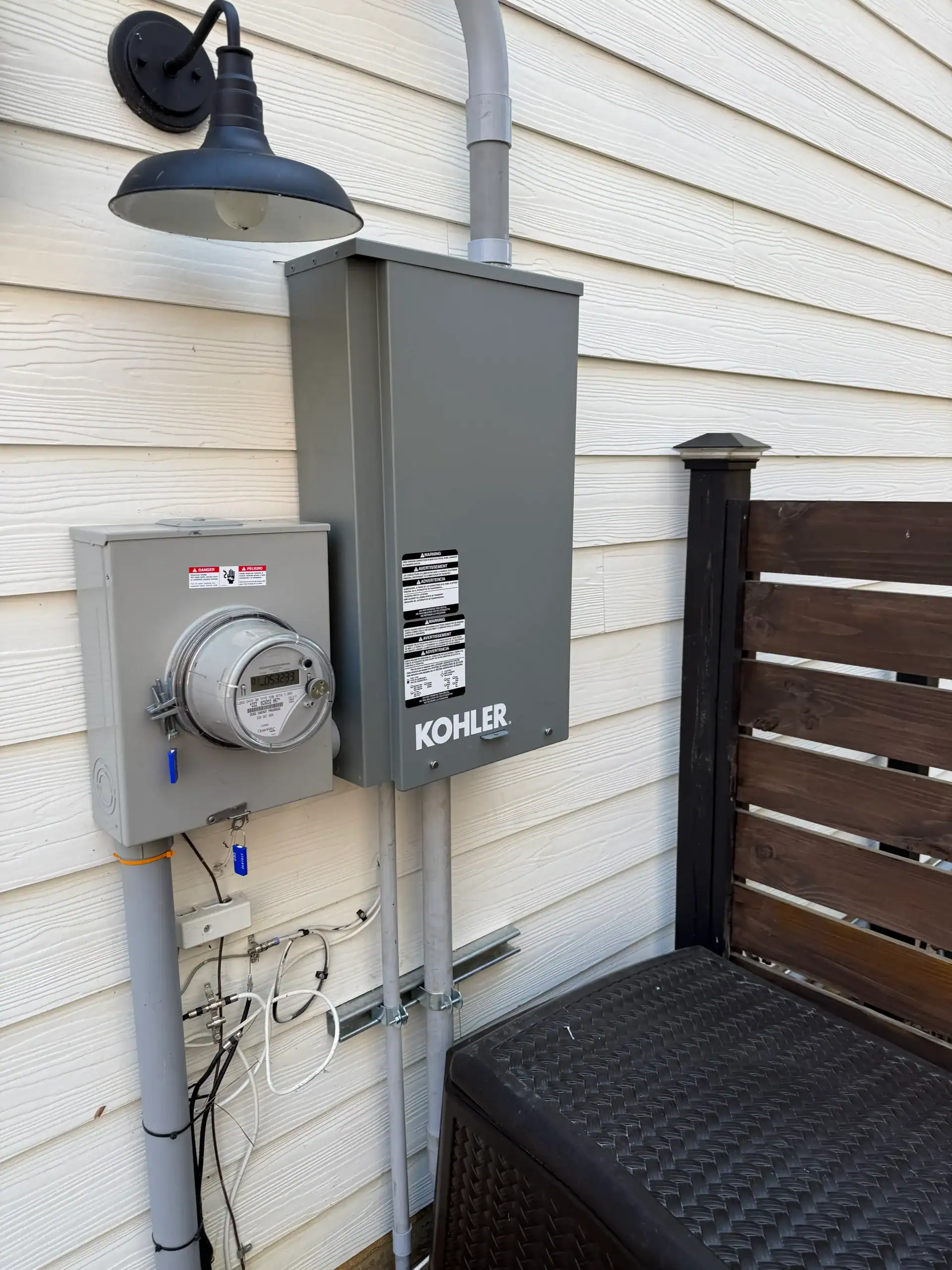
A whole home surge protector — installed directly at your main electrical panel — intercepts voltage spikes before they travel through your home’s wiring. When a surge enters your system, the device clamps the voltage down to a safe level and redirects the excess energy to ground. It happens in microseconds, and it happens for every circuit in your home simultaneously.
That last part is what matters. A panel-level device doesn’t protect six outlets. It protects everything connected to your electrical system — including the appliances that have no outlet to plug into. Your HVAC system, water heater, garage door opener, and any hardwired EV charger in the garage are all downstream of your panel. A whole home surge protector is the only thing standing between those devices and a surge event.

When most people hear “surge protection,” they picture a lightning strike. That’s the dramatic version — the one that makes the news. And yes, a whole home surge protector handles lightning-related surges far better than any power strip ever could. But here’s what the lightning framing misses: approximately 80% of damaging power surges originate inside your home, not outside it.
Every time your central air conditioner kicks on, it draws a significant amount of current. When the compressor cycles off, that energy has to go somewhere — and it often travels back through your wiring as a small but real voltage spike. The same thing happens with your refrigerator, washing machine, and any other large motor-driven appliance. These internal surges happen constantly, often dozens of times a day, and they cause cumulative damage that shortens the lifespan of electronics and appliances over time.
You won’t notice it the day it starts. You’ll notice it when a device fails years too early and you can’t figure out why.
North Carolina averages 45 thunderstorm days per year — nearly double the national average. Alamance County sits squarely in the Piedmont, where Gulf moisture and afternoon convective heating produce some of the most frequent summer storm activity in the state. Add hurricane season, which runs June through November and regularly pushes remnant tropical systems through the interior, and the external surge risk here is genuinely elevated.
But even if you lived somewhere with zero thunderstorms, the internal surge problem would still exist. A panel-level surge protector addresses both. It catches external surges at the service entrance before they reach your wiring, and it provides a discharge path for internal surges that originate from your own appliances. That’s a fundamentally different level of protection than a strip sitting at the end of a circuit.
Power strips with surge protection use components called metal oxide varistors — MOVs — to absorb excess voltage. The problem is that MOVs have a finite capacity. After one significant surge event, or years of smaller ones, those components are depleted. The strip keeps providing power normally. The indicator light may still be green. There’s no alarm, no error message, nothing to suggest anything has changed.
You have no protection left, and no way to know it without testing the strip directly. This is the part that catches most homeowners off guard. They bought the strip, they plugged everything in, and they haven’t thought about it since. That’s completely reasonable — it’s how most people use them. But it means there’s a real chance that the strip you’re currently trusting has already exhausted its protective capacity, possibly during a storm last summer that you barely noticed.
There’s also the coverage gap to think about. Even a brand-new, fully functional power strip only protects the devices plugged directly into it. Your television, your laptop, your gaming console — those are covered, assuming the strip is still working. But your HVAC system, which might cost anywhere from $3,000 to $8,000 to replace, has no plug. Neither does your water heater, your well pump if you have one, or a hardwired EV charger. These are the highest-value items in your home’s electrical system, and a power strip cannot reach any of them regardless of its joule rating.
In older homes — and Burlington, Graham, and the surrounding communities in Alamance County have a significant number of homes built between the 1950s and 1980s — the combination of aging wiring, original panels, and decades of accumulated surge exposure makes this even more relevant. Older electrical systems weren’t designed for the load modern households put on them, and they tend to be more vulnerable to the kind of cumulative damage that internal surges cause over time.
Want live answers?
Connect with a Electrical Service Providers expert for fast, friendly support.
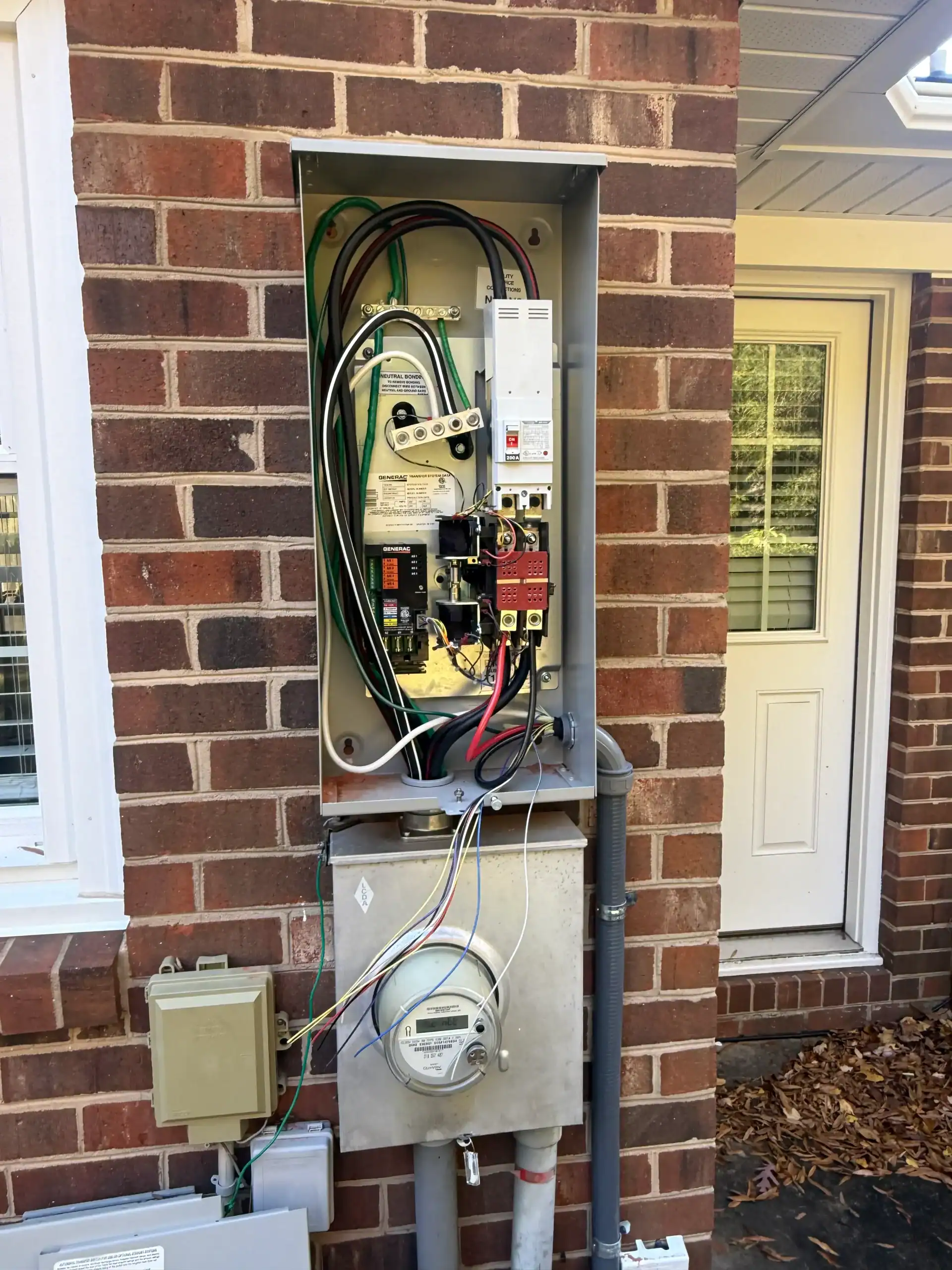
Installing a whole home surge protector isn’t a weekend DIY project. It involves opening the main electrical panel, working with live voltage, and making connections that need to be done correctly to function at all. In North Carolina, this work requires a licensed electrician — and since the 2020 National Electrical Code update, Article 230.67 now requires a surge protective device for all services supplying dwelling units, including when service equipment is replaced. If you’ve had a panel upgrade recently, this may already apply to your home.
The installation itself is straightforward for a qualified electrician. What matters is that it’s done right — which means checking the grounding system before anything else. A surge protector is only as effective as the ground path it discharges into. A weak or improper ground doesn’t just reduce protection; it can render the device nearly useless.
Honestly, yes — and this is where a lot of the confusion comes from. Whole home surge protection and point-of-use power strips aren’t competing products. They work at different points in your electrical system and address different parts of the problem.
A panel-level surge protector handles the big stuff: utility-side surges from Duke Energy’s grid, switching events, post-outage power restoration spikes, nearby lightning strikes, and the internal surges generated by your HVAC and other large appliances. It protects every circuit in your home, including hardwired devices that have no outlet.
A quality power strip with surge protection adds a second layer of defense for sensitive electronics at the outlet level — computers, televisions, home theater equipment, smart home hubs. Even after a panel-level device absorbs the bulk of a surge, a small residual voltage can still make it to the outlet. A point-of-use strip catches that remainder.
The layered approach is what electricians and the NEC both recommend. Neither one alone gives you complete coverage. Together, they cover the full range of surge sources and protect both your hardwired systems and your plugged-in electronics. If you currently have power strips and nothing at the panel level, adding whole home protection fills the larger gap first — and then your existing strips continue doing their part for the devices they can reach.
One thing worth knowing: if your current strips are several years old or have been through significant storms, it’s worth replacing them when you install panel-level protection. There’s no way to know from the outside whether the MOV components are still functional, and running old strips as your second layer of defense undermines the whole strategy.
One of the most common questions we hear is whether homeowner’s insurance covers surge damage. The short answer is: often not, or not fully. Many standard policies exclude or heavily limit surge damage coverage, and even when coverage exists, the deductible alone can exceed the cost of a whole home surge protector installation. It’s worth reading your policy carefully, but it’s not a reason to skip protection.
Another question that comes up frequently is whether this is worth it for older homes. In Alamance County, where a large portion of the housing stock in Burlington, Graham, Mebane, and the surrounding communities dates back to the mid-20th century, this is a particularly relevant question. Older homes with original 100-amp panels and aging wiring are actually more vulnerable to surge damage, not less — the wiring and equipment have less tolerance for voltage spikes, and the grounding systems in these homes are sometimes inadequate. Before we install a whole home surge protector in an older home, we inspect the panel and grounding system to make sure everything is in order. If something needs attention first, we’ll tell you exactly what it is and why — no pressure, no guesswork.
People also ask whether a whole home surge protector will protect against a direct lightning strike. The honest answer is: it helps significantly, but a direct strike to your home produces energy levels that can exceed what any surge protective device is rated to handle. What panel-level protection does extremely well is defend against nearby strikes, utility-side surges, and the far more common internal and grid-related events that make up the vast majority of surge damage. Combined with quality point-of-use strips, you’re giving your home and appliances the best realistic protection available.
Finally, some homeowners wonder whether this is something they can install themselves. In North Carolina, electrical panel work requires a licensed electrician. Beyond the legal requirement, the safety case is straightforward: working inside a live panel without the right training and tools is genuinely dangerous. It’s one of the few home improvement projects where the professional-or-nothing line is both a legal requirement and the right call on the merits.
If your home has central air conditioning, a refrigerator, a water heater, or any hardwired appliance — and virtually every home in Alamance County does — then the honest answer is yes. The surges most likely to damage those systems don’t announce themselves. They happen quietly, repeatedly, and they add up over time.
Power strips do their job for the devices plugged into them, as long as the MOV components are still functional. But they were never designed to protect your entire home, and they can’t reach the hardwired systems that are often the most expensive to replace. Whole home surge protection fills that gap at the panel level, where it can actually intercept a surge before it reaches anything.
If you’re in Burlington, Graham, Mebane, or anywhere else in Alamance County and you want a straight answer about what your home actually needs, ESP Electrical Service Providers is a call away. We’ll take a look at your panel, check your grounding system, and give you a flat-rate price before any work begins — no surprises, no pressure.
Article details:
Share:
Continue learning: