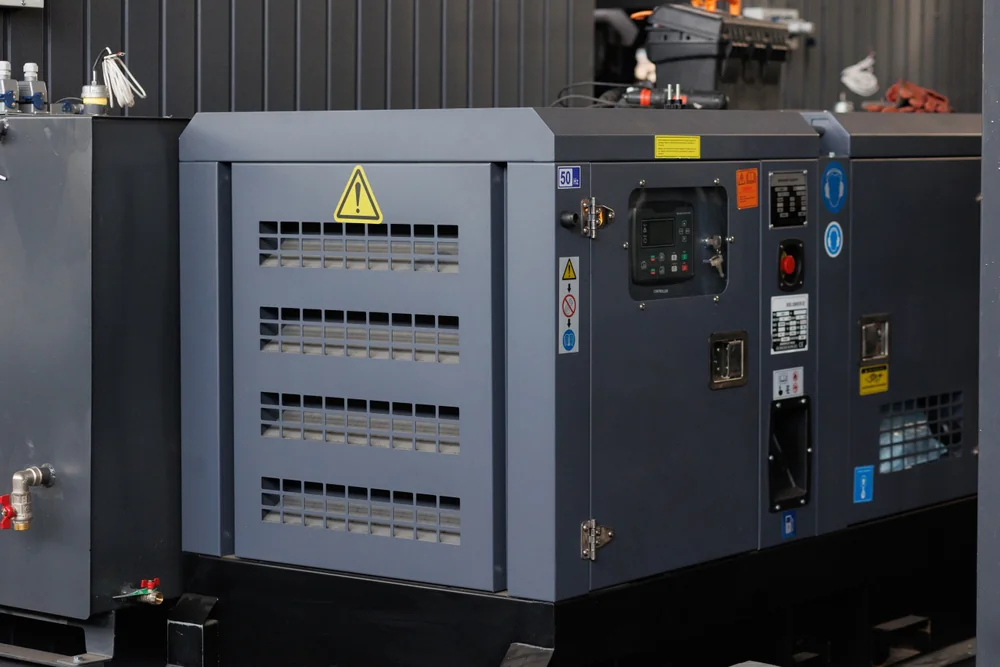
Researching whole house generator cost and getting wildly different numbers? Here's what's actually included — and what isn't — for Alamance County homeowners.
Share:

Summary:
You’ve probably seen generator prices all over the place — $4,799 on one site, $18,000 on another, and no clear explanation for why. That kind of range doesn’t help anyone trying to make a real decision.
The truth is, whole house generator cost depends on several factors that most online guides either gloss over or bury at the bottom. Equipment is just the starting point. By the time you add the transfer switch, labor, permits, and fuel line work, the number looks very different from what you saw on the product page.
Here’s a clear breakdown of what goes into the cost — and what to watch for so you’re not caught off guard.
The number that trips most people up is the difference between the unit price and the installed price. A Generac generator might be listed at $4,799 for the unit itself — and that number is real. But it’s also incomplete.
A whole house standby generator requires an automatic transfer switch, which can add $600 to $2,500 on its own if it’s not bundled with the equipment. Then there’s labor, permits, site preparation, and in many cases, gas line work. Once all of that is factored in, most whole-home generator installations in Alamance County run between $6,000 and $15,000 total.
Natural gas systems, when you already have gas service at the home, typically land between $10,000 and $13,000 installed. That’s not a bait-and-switch — it’s just the full picture that most product listings don’t show you upfront.
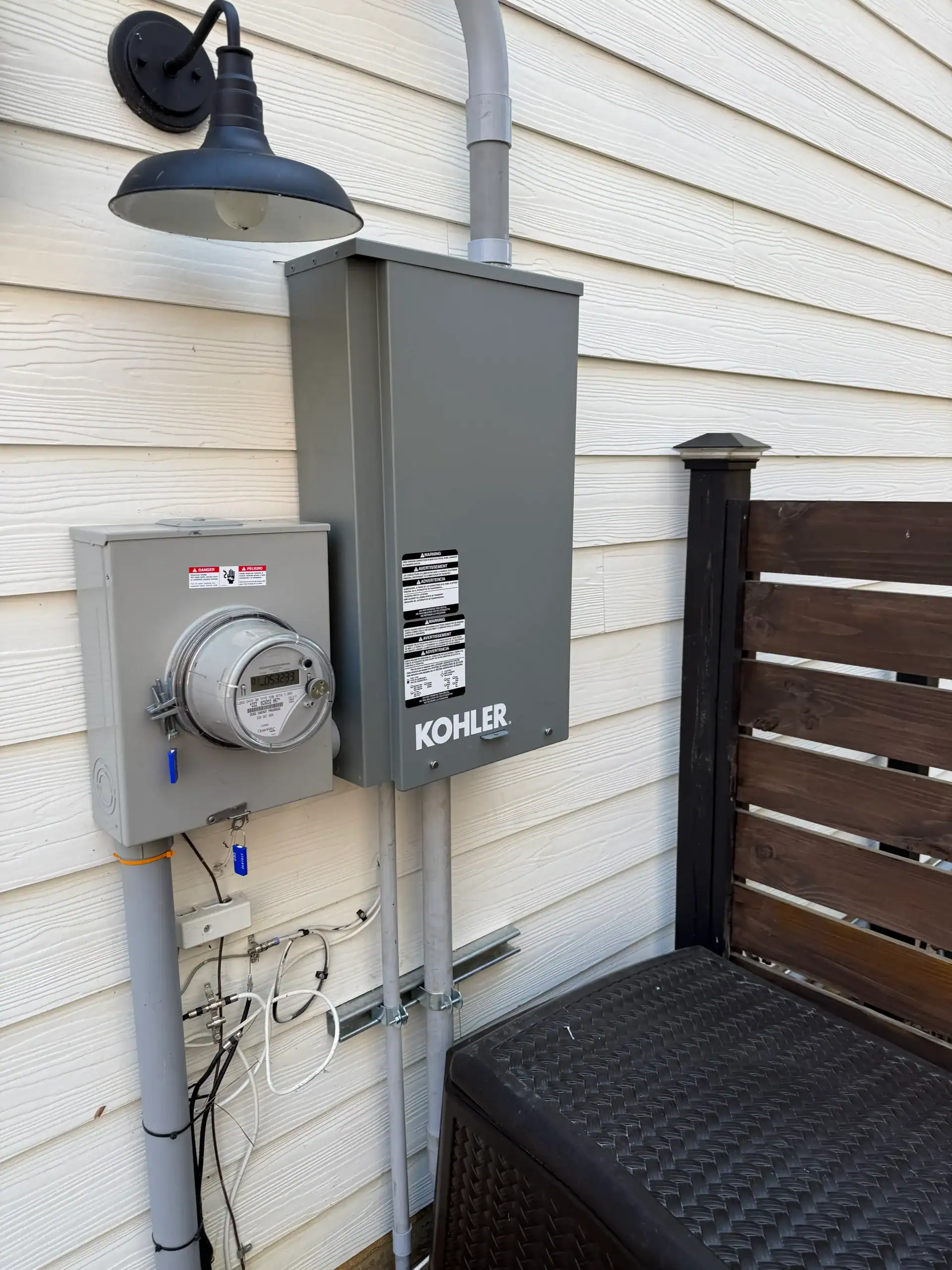
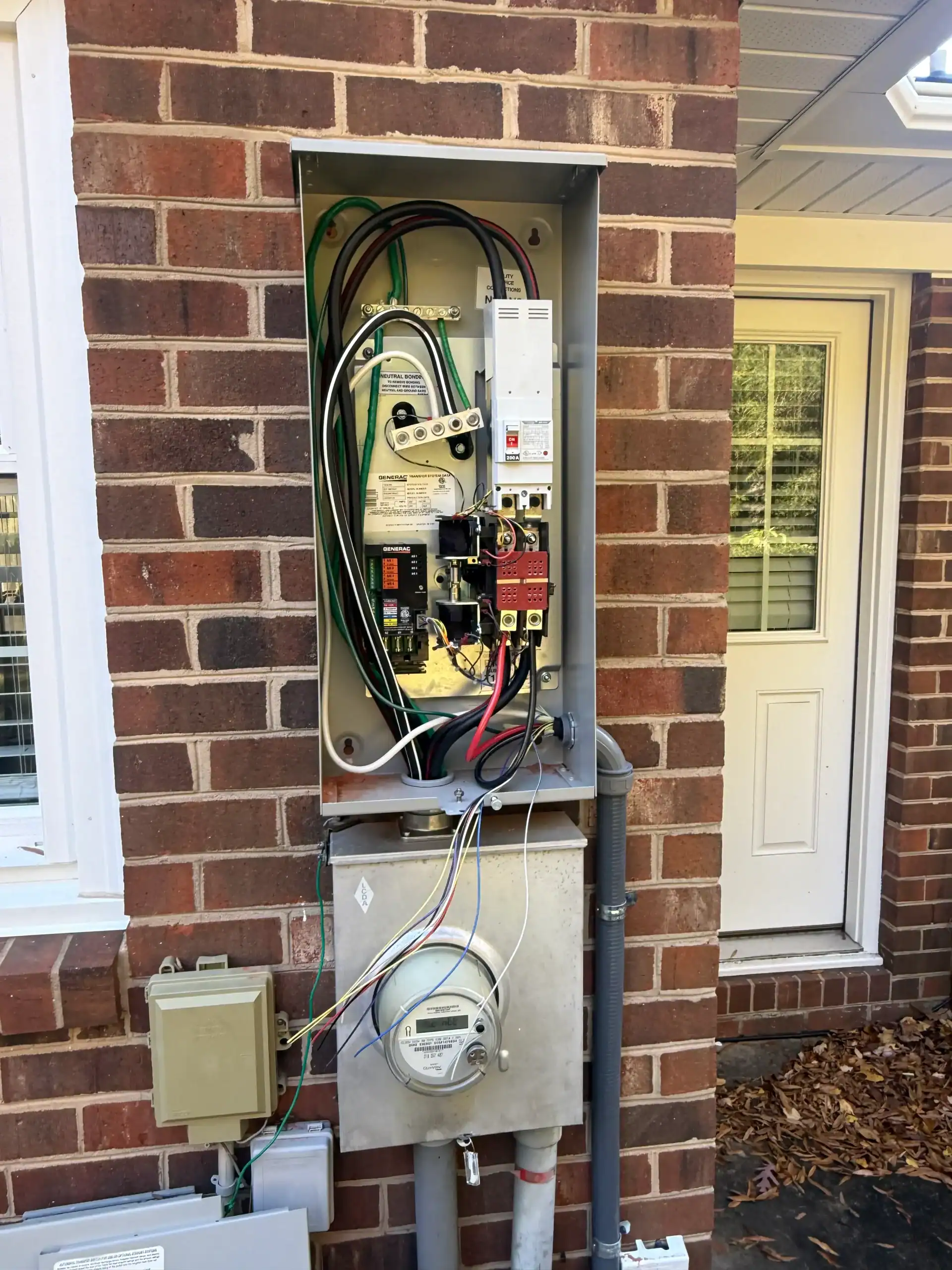
The automatic transfer switch, or ATS, is the component that makes a standby generator actually automatic. When Duke Energy’s grid goes down — whether it’s an ice storm shutting Burlington down for four days or a summer thunderstorm taking out lines along a rural stretch of Alamance County — the ATS detects the outage and signals the generator to start. Within about ten seconds, your power is back on. You don’t have to be home. You don’t have to do anything.
Without an ATS, you have a manual transfer process, which means someone has to physically connect the generator, manage the load, and disconnect it when utility power returns. That’s manageable for a portable unit in a pinch, but it’s not what most homeowners picture when they think about a whole-home backup system.
The reason the ATS often shows up as a surprise cost is that big-box stores and online retailers typically price the generator unit alone. The ATS is a separate line item — and a necessary one. In North Carolina, the National Electrical Code requires listed transfer equipment specifically to prevent backfeeding power onto utility lines, which is a genuine safety hazard for line workers making repairs during an outage. This isn’t optional, and any installer who suggests skipping it to save money is not someone you want working on your electrical system.
When we quote a generator installation, the transfer switch is part of the number we give you — not something that surfaces later. That’s the only way to give you a price you can actually plan around.
Once you understand that the unit price is just the starting point, it helps to know what the rest of the installed cost actually covers. Labor to install a whole-home standby generator typically runs $3,000 to $5,000, depending on the complexity of the job, the condition of your existing electrical panel, and how much site preparation the location requires.
Generators need to be placed outside, at a safe distance from windows and doors, and in some cases that means concrete pad work or additional site prep before the unit goes in. Permits are required for standby generator installations in virtually every North Carolina jurisdiction. This isn’t a technicality — it’s a legal requirement, and skipping it creates real problems. An unpermitted installation can void your homeowner’s insurance, create liability if something goes wrong, and cause headaches when you go to sell the home. The permit process involves an inspection to confirm the work meets code, which is exactly what you want when you’re talking about a system connected to both your electrical panel and your gas supply.
If you’re on natural gas, a licensed plumber or gas fitter handles the fuel line connection — that’s a separate trade from the electrical work, and it’s another component that needs to be accounted for in the total cost. Homes in rural parts of Alamance County that don’t have natural gas service typically use propane, which may require a new tank installation if one isn’t already in place. That can add to the upfront cost, though propane systems are a practical and reliable option for areas outside Burlington and Graham where gas lines don’t reach.
The other factor that catches people off guard is the electrical panel. Older homes sometimes don’t have the panel capacity to support a standby generator without an upgrade. We’ll tell you upfront whether that’s a factor — before any work begins, not after.
Want live answers?
Connect with a Electrical Service Providers expert for fast, friendly support.
One of the most common and expensive mistakes homeowners make is buying the wrong size generator. Too small, and it can’t handle the load — your HVAC doesn’t run, circuits trip, and the system you spent thousands on doesn’t do what you needed it to do. Too large, and you’ve paid significantly more than necessary for capacity you’ll never use.
Generator sizing isn’t a guess. It requires a load calculation — a real assessment of which circuits and appliances you need the generator to power, and how much electrical demand those loads create. The answer is different for every home, which is why a sizing recommendation that doesn’t start with your specific situation isn’t worth much.
The most useful starting point is thinking about what you can’t afford to lose during an outage. For most Alamance County homeowners, that list includes central heat or air conditioning, the refrigerator and freezer, lights in key areas of the house, and — increasingly — home internet and a workspace setup.
If you have a sump pump, medical equipment like a CPAP or oxygen concentrator, or a well pump, those go on the list too. Central HVAC is the big variable. It draws significantly more power than most other appliances, and it’s often the deciding factor between a smaller, less expensive unit and a larger one.
A 13kW generator might handle essential circuits and a smaller HVAC system in a modest home. A 20kW or larger unit is typically what whole-home coverage with central air requires. The unit cost difference between those two options — roughly $4,000 versus $5,500 for the equipment alone, before transfer switch, labor, permits, and site preparation — is real, and it’s worth getting right the first time rather than discovering the problem during a storm.
The only way to confirm the right size is to look at your actual home — your panel, your loads, your square footage, and your priorities. That’s the conversation we have before we give you a number, because a quote that’s based on a load calculation is a quote you can trust.
This is the question most people are really asking when they start researching generator costs. The math looks different depending on how you frame it.
A $10,000 to $13,000 installed generator sounds like a significant expense until you start adding up what a major outage actually costs. A week without power means food loss, hotel stays if the house gets too cold or too hot, lost work for anyone who works from home, and in some cases, real medical risk for household members who depend on powered equipment.
Duke Energy outages affect more than 484,000 North Carolina residents on average every year, and Alamance County’s mix of overhead lines, wooded corridors, and exposure to both ice storms and tropical weather systems means extended outages are a genuine recurring reality here — not a hypothetical. There’s also the long-term value side. A properly maintained standby generator lasts 15 to 30 years. Annual maintenance typically runs $171 to $395. Over the life of the system, that’s a relatively modest ongoing cost for something that’s working automatically in the background every time the grid goes down.
Because Alamance County has grown significantly as a commuter corridor for both the Triad and the Triangle, more households have remote workers who genuinely can’t afford a multi-day outage without power and internet. A standby generator also adds measurable value to the home itself — it signals to buyers that the property is equipped for the realities of North Carolina weather, which is not a minor consideration in this market. Whether you’re thinking about it as protection for your family, continuity for your work, or an investment in the home, the cost-benefit case is stronger than it looks at first glance.
The reason generator prices seem so inconsistent online is that most of what you’re seeing is incomplete. Unit prices don’t include the transfer switch, labor, permits, or fuel line work. National averages don’t reflect Alamance County labor rates or local permit costs. And sizing recommendations that aren’t based on your actual home can send you in the wrong direction before you’ve spent a dollar.
What you actually need is a real conversation with someone who installs generators in this area, knows the permit process, and will give you a number that covers the whole project — not just the part that looks good in a search result.
If you’re in Burlington, Mebane, Graham, or anywhere else in Alamance County and want a clear, upfront cost for a whole-home generator installation, ESP Electrical Service Providers is the team to call. We’ve been doing this work here since 2002, and we give you the price before we start — not after.
Article details:
Share:
Continue learning: