Most cost articles give you national averages that don't mean much locally. Here's what whole house surge protection actually costs in Alamance County, NC.
Share:
Summary:
Most of what you’ll find online about whole house surge protector costs is written for a national audience. The ranges are wide — sometimes $70, sometimes $700 — and none of it tells you what a licensed electrician in Alamance County is actually going to charge when they show up at your door.
That ambiguity is frustrating, especially when you’re trying to make a real decision. So here’s what we’ve seen in the field, what factors move the price in either direction, and what you should actually expect from a professional installation in central North Carolina.
In Alamance County, most whole house surge protector installations run between $400 and $700, including the device and professional installation. That’s the honest local number — not a national average padded with outliers from markets that don’t look anything like Burlington or Graham.
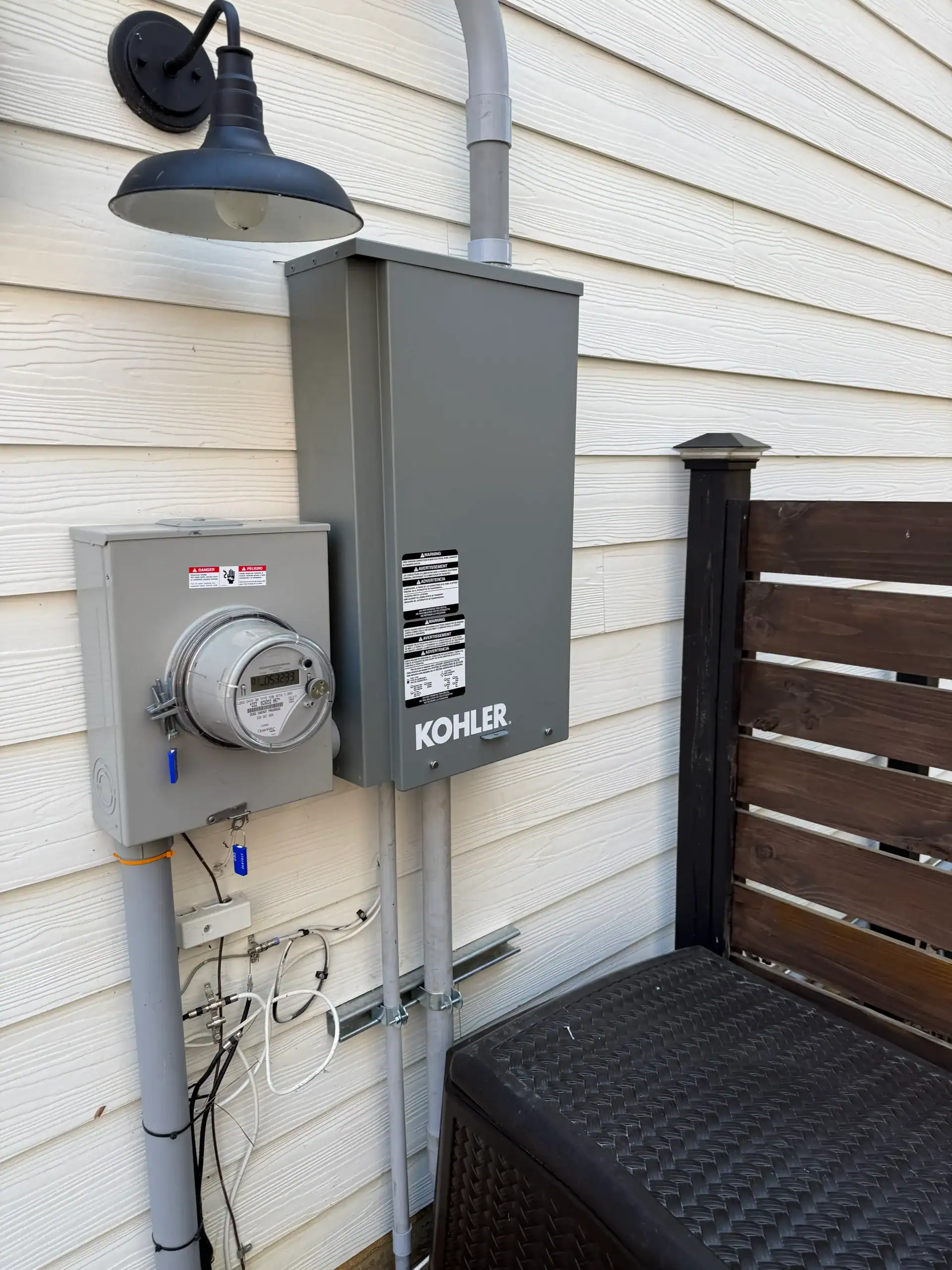
The device itself accounts for a portion of that cost, and labor covers the rest. A straightforward panel-mount installation typically takes one to two hours. When the truck is stocked and the panel is in good shape, there’s no reason it can’t be done the same day you call for whole house surge protection.

A few things influence where your installation lands within that $400–$700 range, and it helps to understand them before you get a quote.
The type of device matters most. There are three categories of surge protective devices, and they’re not interchangeable. Type 1 devices are installed at the service entrance — before the main panel — and offer the highest level of protection against surges coming in from the utility grid. Type 2 devices mount directly at the main panel and are the most common choice for residential installations. Type 3 devices are the plug-in power strips you probably already have. They’re not a substitute for either of the first two, and we’ll come back to that.
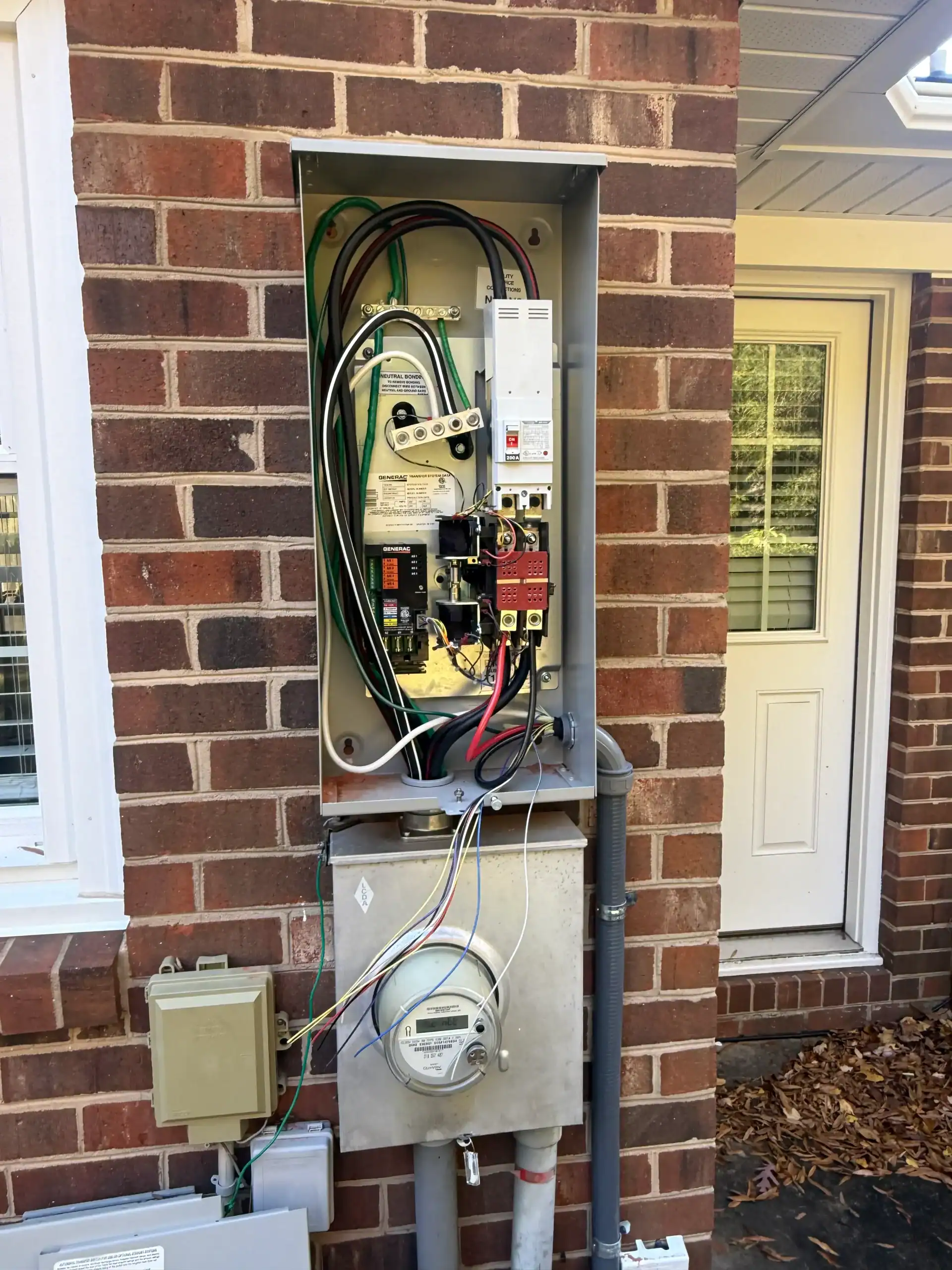
The condition of your existing panel plays a role too. Before any surge protector goes in, the panel needs to be evaluated — available breaker space, grounding integrity, conductor sizing. A surge protector that’s installed without verifying the grounding system is largely ineffective, because the device relies on a solid ground path to divert surge energy safely. If the panel needs attention before installation can proceed correctly, that affects the overall cost.
Permit requirements also factor in. Many jurisdictions in Alamance County require a permit and inspection for this type of work. That’s not a bad thing — it means the installation is done to code and documented — but it does add to the total. We pull the permits, coordinate the inspection, and make sure the work passes the first time.
Finally, there’s the question of amperage. Homes with 200-amp service may require a different device than those with 100-amp or 150-amp service. The device has to match the panel’s capacity to function correctly.
None of these are surprises if you’re working with someone who does this regularly. With flat-rate pricing, you’ll know the exact number before any work starts — not after.
This is the part most people don’t find out until it’s too late. Many homeowners insurance policies either exclude surge damage entirely or severely limit what they’ll pay out for it. If a power surge fries your HVAC system, your refrigerator, your washer and dryer, and a handful of smart home devices in one event, you may be looking at a significant out-of-pocket loss with no recourse.
The average home today contains well over $15,000 in electronics and appliances. That number climbs fast when you add an EV charger, a smart thermostat, a security system, and the kind of connected devices that are now standard in most households. A $400–$700 installation starts to look very different when you’re measuring it against what it’s protecting.
Some insurance providers do offer premium discounts to homeowners who install whole house surge protectors, recognizing the reduced risk of damage claims. It’s worth asking your provider directly. But even if yours doesn’t offer a discount, the protection itself is the point.
One more thing worth knowing: the 2020 National Electrical Code — Article 230.67 — now requires a Type 1 or Type 2 surge protective device for all residential services, including when service equipment is replaced. If you’re planning a panel upgrade in Alamance County, surge protection isn’t optional anymore. It’s part of the job. Most electricians won’t bring this up proactively, but it’s something you should know going in.
Want live answers?
Connect with a Electrical Service Providers expert for fast, friendly support.
The most common misconception we run into is the belief that power strips with surge protection built in are doing the same job as a whole house device. They’re not, and the difference matters.
Plug-in strips are Type 3 devices. They protect what’s plugged directly into them, and only up to their rated capacity. A major surge — from a lightning strike, a utility fault, or a power restoration event — can overwhelm a Type 3 device entirely. And they do nothing for hardwired equipment: your HVAC system, your refrigerator, your dishwasher, or your EV charger.

Here’s something that surprises most people: roughly 80% of power surges don’t come from lightning. They originate inside your own home, from appliances cycling on and off. Every time your HVAC compressor kicks on, your refrigerator motor starts up, or certain LED lighting circuits switch, there’s a small voltage spike on the line. Individually, they’re minor. Cumulatively — and homes can experience up to 100 surges per month — they degrade sensitive electronics over time.
This matters for Alamance County homeowners specifically because of the older housing stock in Burlington, Graham, Mebane, and surrounding communities. Homes built during the textile-era boom of the mid-20th century often have electrical systems that weren’t designed with today’s appliance loads in mind. The wiring handles the current, but the system has no mechanism for absorbing these repeated low-level surges. Over months and years, that adds up.
Lightning and utility events are the dramatic version of the problem. A storm tracking through the Piedmont, a Duke Energy grid fault, or the surge that follows when power comes back on after an outage — those are the events people remember. But the slow accumulation of internal surges is what quietly shortens the lifespan of your appliances and electronics. A whole house surge protector addresses both.
The layered approach — a whole house device at the panel plus quality plug-in protection at sensitive equipment like computers and home theater setups — is the most complete solution. But the panel-level device is the foundation. Without it, the plug-in strips are working without a net.
Whole house surge protectors typically last three to five years under normal conditions. After a major surge event — a nearby lightning strike, a significant grid fault, a large restoration surge — the device may be depleted even if it shows no visible signs of failure. That’s the nature of how they work: they absorb the surge energy so your equipment doesn’t have to, and that absorption has a cumulative limit.
Most quality devices include a status indicator that shows whether the protection is still active. If that indicator goes dark or changes, the device needs to be replaced regardless of how recently it was installed. Some homeowners don’t realize this and assume they’re still protected years after a device has been exhausted.
This is also why installation quality matters. A device that’s properly grounded, correctly sized for the panel’s amperage, and installed with appropriately short conductor runs will function as designed when a surge event occurs. A device that was installed as an afterthought — long wire runs, questionable grounding, no panel inspection — may not activate correctly even when it’s brand new. The installation is as important as the device itself.
For Alamance County homeowners who already have a whole house surge protector in place, it’s worth knowing when it was installed and whether it’s ever been tested or evaluated since. If it’s been more than five years, or if you’ve had a significant storm event in that time, it may be time for a replacement. We can assess what’s in place and let you know whether it’s still doing its job — before you find out the hard way that it isn’t.
The short version: in Alamance County, a professionally installed whole house surge protector runs $400 to $700, the work can typically be done the same day, and you’ll know the exact price before anything starts. No hourly billing, no open-ended estimates, no surprises on the invoice.
The longer version is that the cost is almost always worth it when you factor in what’s at stake — the appliances, the electronics, the hardwired equipment that your insurance policy may not cover if a surge takes it out.
If you’re in Burlington, Graham, Mebane, Elon, or anywhere else in Alamance County and you want a straight answer on what this costs for your specific home, ESP Electrical Service Providers is ready to talk. A real person will answer the phone, and we’ll give you a flat-rate price before we touch anything.
Article details:
Share:
Continue learning: