Winter puts real stress on home electrical systems. Here's what to check before the cold sets in — and when to call a licensed electrician.
Share:
Summary:
Most electrical problems don’t announce themselves. They build quietly — a breaker that trips a little more often, a light that flickers when the heater kicks on, an outlet that feels slightly warm to the touch. In winter, those small signs get amplified. Heating loads go up, the days get shorter, and electrical systems that were just barely keeping up start showing the strain.
If your home is in Burlington, Graham, Mebane, or anywhere else across Alamance County, there’s a good chance it was built during an era when nobody imagined a household running two space heaters, a home office setup, and a full entertainment system at the same time. This checklist is for you.
Space heaters are the most common winter electrical hazard in residential homes — and the most misunderstood. According to NFPA data, space heaters are involved in roughly 29% of home heating fires but account for 77% of heating fire deaths. That gap between “how often they cause fires” and “how deadly those fires are” tells you something important: space heater fires tend to be fast and severe.
The most dangerous mistake isn’t leaving a heater unattended near curtains. It’s where you plug it in. A single space heater can draw close to the full capacity of a standard 15- or 20-amp household circuit. When you add anything else to that circuit — a lamp, a phone charger, a TV — you’re pushing it past what it was designed to handle.
No — and this is one of the most common mistakes we see. The U.S. Consumer Product Safety Commission is explicit about it: always plug electric space heaters directly into a wall outlet, never into an extension cord or power strip. The reason isn’t just about the cord overheating. It’s about what happens upstream.
Power strips are not built to handle the sustained, high-draw load that a space heater pulls. Even a heavy-duty extension cord isn’t designed for that kind of continuous demand. Over time — sometimes over the course of a single evening — that load generates heat at the connection points. You may not see it. You may not smell it right away. But the heat is there, building inside the cord or inside the wall cavity, and that’s how electrical fires start in places you can’t see.
The same logic applies to “daisy-chaining” power strips — plugging one strip into another to create more outlets. It’s a common workaround in older Alamance County homes where outlets are scarce, but it compounds the problem significantly. Each additional load added to that chain increases the current demand on a single circuit that was never designed to carry it.
If you find yourself routinely needing an extension cord to reach a usable outlet, that’s actually useful diagnostic information. It usually means your home doesn’t have enough outlets in the right places for the way you’re living in it now — and that’s something we can fix properly, rather than something you should work around indefinitely.
One more thing worth knowing: if your space heater has a damaged cord, a cracked plug, or any sign of discoloration near the heating element, don’t use it. Don’t tape the cord. Don’t tell yourself it’s fine. The CPSC warns that damaged heating equipment is one of the leading contributors to winter heating fires, and no amount of careful placement compensates for a heater that’s already compromised.
A breaker that trips when you turn on a space heater isn’t just an inconvenience — it’s your electrical system telling you something specific. The breaker did exactly what it was designed to do: it detected a load the circuit couldn’t safely carry and cut the power before anything overheated. That’s the good news. The concerning part is what happens next.
Most people reset the breaker and move on. If it doesn’t trip again immediately, they assume the problem is solved. It isn’t. A breaker that trips repeatedly under the same conditions is signaling that the circuit is consistently being pushed to or past its limit. Over time, repeated tripping can weaken the breaker itself, meaning it may eventually fail to trip when it should — which removes the protection it was providing.
There are a few different reasons this happens. The circuit may simply be overloaded: too many devices drawing power from the same line. The breaker may be undersized for the actual load in that room. In older Alamance County homes — particularly those built in the 1950s through 1970s — the original panel may not have been designed with today’s electrical demands in mind. What was adequate for a household in 1965 is often not adequate for a household in 2025.
Flickering lights when the heater kicks on are a related symptom. That flicker is a visible sign of voltage drop — the circuit is struggling to maintain consistent power when the heater draws its startup load. It’s easy to dismiss as “just the way the house is,” but it’s worth paying attention to, especially in combination with a breaker that trips.
If you’re seeing either of these signs, the right move is to have a licensed electrician look at the circuit and the panel — not to find a bigger extension cord or a different outlet to plug into.
Want live answers?
Connect with a Electrical Service Providers expert for fast, friendly support.
Winter electrical load is genuinely different from summer load. You’re running heating equipment, using more lighting because the days are shorter, and — if you work from home — adding office equipment to circuits that were already carrying a full residential load. All of that compounds.
For homes across Alamance County, there’s an additional layer. A significant portion of the area’s housing stock was built during the textile manufacturing era — homes from the 1940s through the 1970s that were wired to the standards of that time. Those standards didn’t account for space heaters, multiple refrigerators, EV chargers, or home offices. The wiring itself may be fine, but the panel capacity and circuit layout often weren’t designed for what modern households actually need.
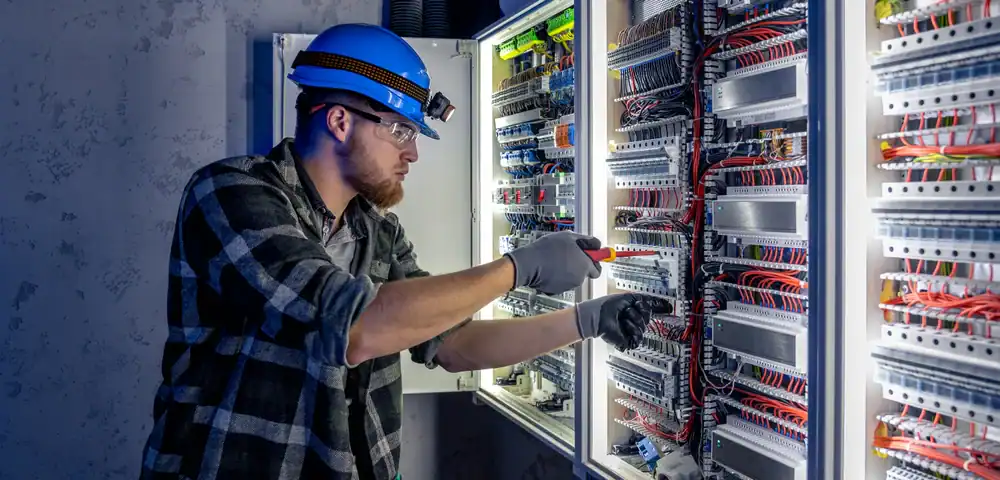
Your electrical panel is the hub of your home’s electrical system. When it’s working well, you don’t think about it. When it’s struggling, the signs tend to be subtle at first — and then suddenly not subtle at all.
The most obvious indicator is a breaker that trips frequently, especially under predictable conditions like running the heat, the dryer, and the microwave at the same time. But there are other signs worth knowing. If your lights dim noticeably when a large appliance starts up, that’s a sign the panel is working hard to distribute power. If you notice a burning smell near the panel — even faintly, even occasionally — that’s a more urgent warning and warrants an immediate call to a licensed electrician. A panel that’s warm or hot to the touch is another red flag.
Older panels present specific concerns. Panels with fewer circuits than a modern home needs are often “doubled up” — meaning multiple circuits are connected to a single breaker that was never rated for that combined load. Some older panel brands have documented reliability issues with their breakers. If your home still has a fuse box rather than a circuit breaker panel, that’s worth discussing with an electrician, particularly before winter increases your electrical demand.
One diagnostic tool that goes beyond what a visual inspection can catch is thermal imaging. We use thermal imaging cameras to detect heat signatures inside panels and behind walls — hot spots that indicate a connection under stress or a component that’s beginning to fail. It’s the kind of early warning that can prevent a problem from becoming a fire. Most homeowners have never heard of this option, but it’s one of the more useful tools available for assessing an older home’s electrical system before winter.
An electrical safety inspection isn’t a pass/fail test of whether your lights turn on. It’s a systematic review of the components that determine whether your home’s electrical system is safe to operate under the loads you’re actually putting on it — which in winter, are higher than any other time of year.
A thorough inspection looks at your panel: the breaker sizing, the condition of the connections, whether there’s evidence of heat damage or corrosion, and whether the panel’s capacity matches the home’s actual electrical demand. It covers your outlets and switches — checking for proper grounding, testing GFCI protection in kitchens, bathrooms, and outdoor locations, and identifying any outlets that are warm, discolored, or showing signs of wear. It includes a review of visible wiring for damage, improper splicing, or any conditions that don’t meet current code.
For Alamance County homeowners in older homes, an inspection often surfaces things that were never caught because they were never looked for. A home inspection at the time of purchase checks whether the lights work — it doesn’t assess whether the panel is adequately sized, whether the wiring has degraded, or whether AFCI protection (arc fault circuit interrupter breakers, required by modern code for bedrooms and living areas) is present. Many older homes don’t have it.
We’re licensed by the NC State Board of Examiners of Electrical Contractors, and every inspection we perform is conducted to current National Electrical Code standards — including all North Carolina amendments. That matters because NC has specific code requirements that go beyond the base NEC, and a contractor who isn’t current on those amendments may miss things that a licensed NC electrician would catch. When we find something, we tell you exactly what it is, what it means, and what your options are — before any work begins, with a flat-rate price, so there are no surprises when the job is done.
The best time to find out your electrical system has a problem is before you need it most. Fall is a narrow window — temperatures are still mild, schedules are more flexible, and a licensed electrician can assess your panel, your circuits, and your wiring without the urgency of a January ice storm driving the timeline.
If your home is older, if your breakers trip under winter loads, if you rely on space heaters to supplement your heating, or if you’ve never had a professional look at your panel — those are all good reasons to schedule an inspection before the cold sets in. It’s not about finding reasons to spend money. It’s about knowing what you actually have.
ESP Electrical Service Providers has been serving Alamance County’s existing homes since 2002. If you have questions about your home’s electrical system or want to schedule a pre-winter inspection, give us a call — a real person will answer.
Article details:
Share:
Continue learning: