Power strips can't protect your HVAC or hardwired appliances. Here's what whole-home surge protection actually does — and why it matters in Alamance County, NC.
Share:
Summary:
Here’s something most homeowners don’t find out until it’s too late: the surge protectors plugged into your walls can’t protect your HVAC system, your electric range, your washer, or your dryer. Those appliances are hardwired directly to your electrical panel — and a power strip will never reach them.
If you live in Alamance County, you’re dealing with one of the more surge-prone electrical environments in the state. Duke Energy grid fluctuations, NC Piedmont thunderstorms, and post-outage power restoration spikes are real, recurring events here. Older homes throughout Burlington, Graham, Haw River, and Mebane carry their own set of electrical vulnerabilities that make whole-home surge protection more than just a nice-to-have.
Let’s walk through what whole-home surge protection actually does, what it doesn’t do, and what your home in Alamance County specifically needs to think about.
A power surge is a sudden, brief spike in voltage that travels through your home’s wiring. It can come from outside — a nearby lightning strike, a utility switching event, or a voltage spike when the grid restores power after an outage. But here’s the part most people miss: roughly 80% of damaging surges originate inside your own home. Every time your HVAC compressor kicks on, your refrigerator cycles, or your washing machine starts, it creates a small voltage spike that travels through your wiring.
Over time, those internal surges degrade electronics and shorten appliance life — quietly, invisibly, and without any obvious triggering event like a storm.
A whole-home surge protector (technically called a surge protective device, or SPD) installs at or near your main electrical panel. When a surge is detected, the device diverts the excess voltage away from your home’s circuits and into the grounding system — before it reaches your appliances. That’s the job. It’s not glamorous, but it works.
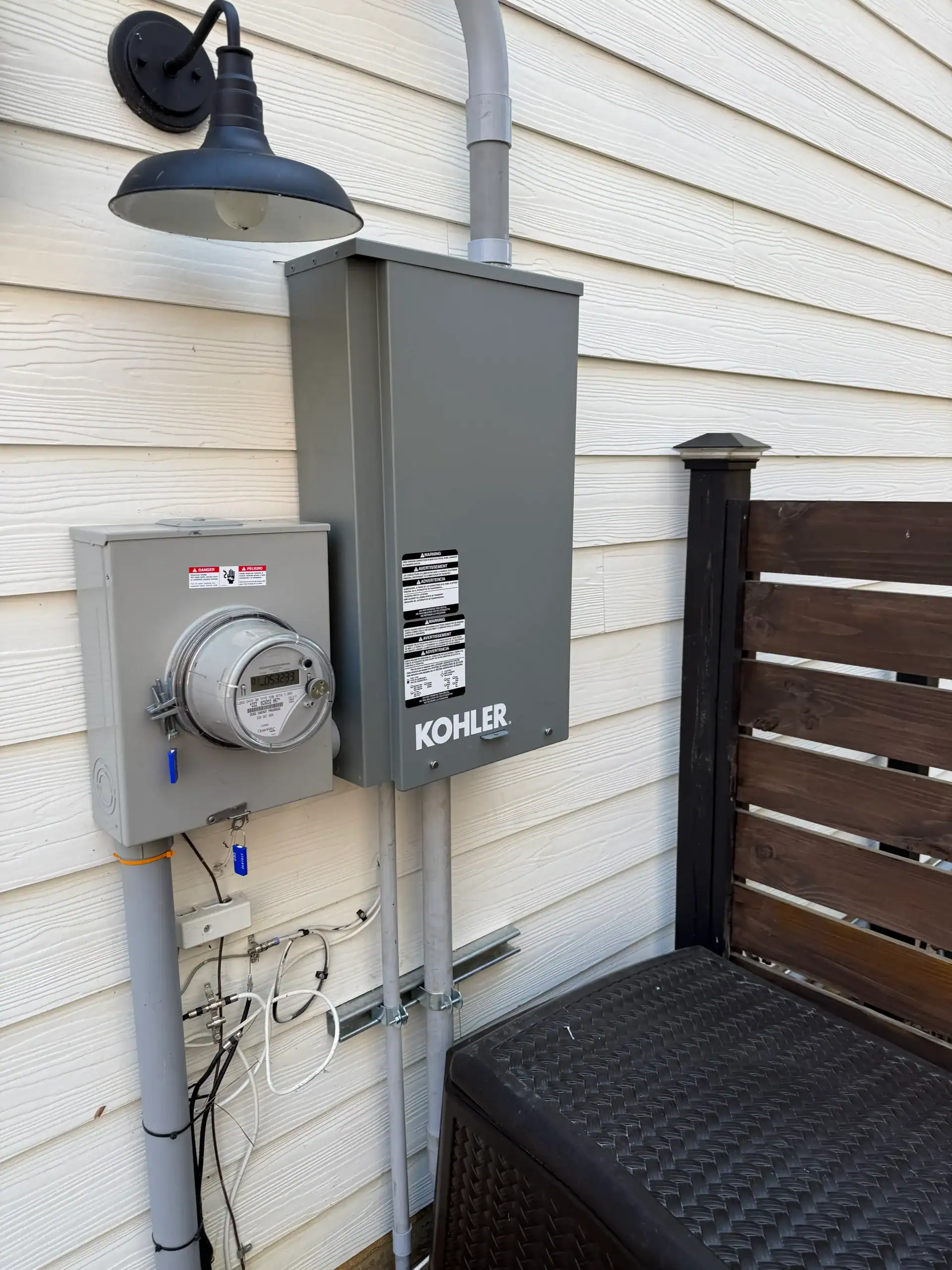
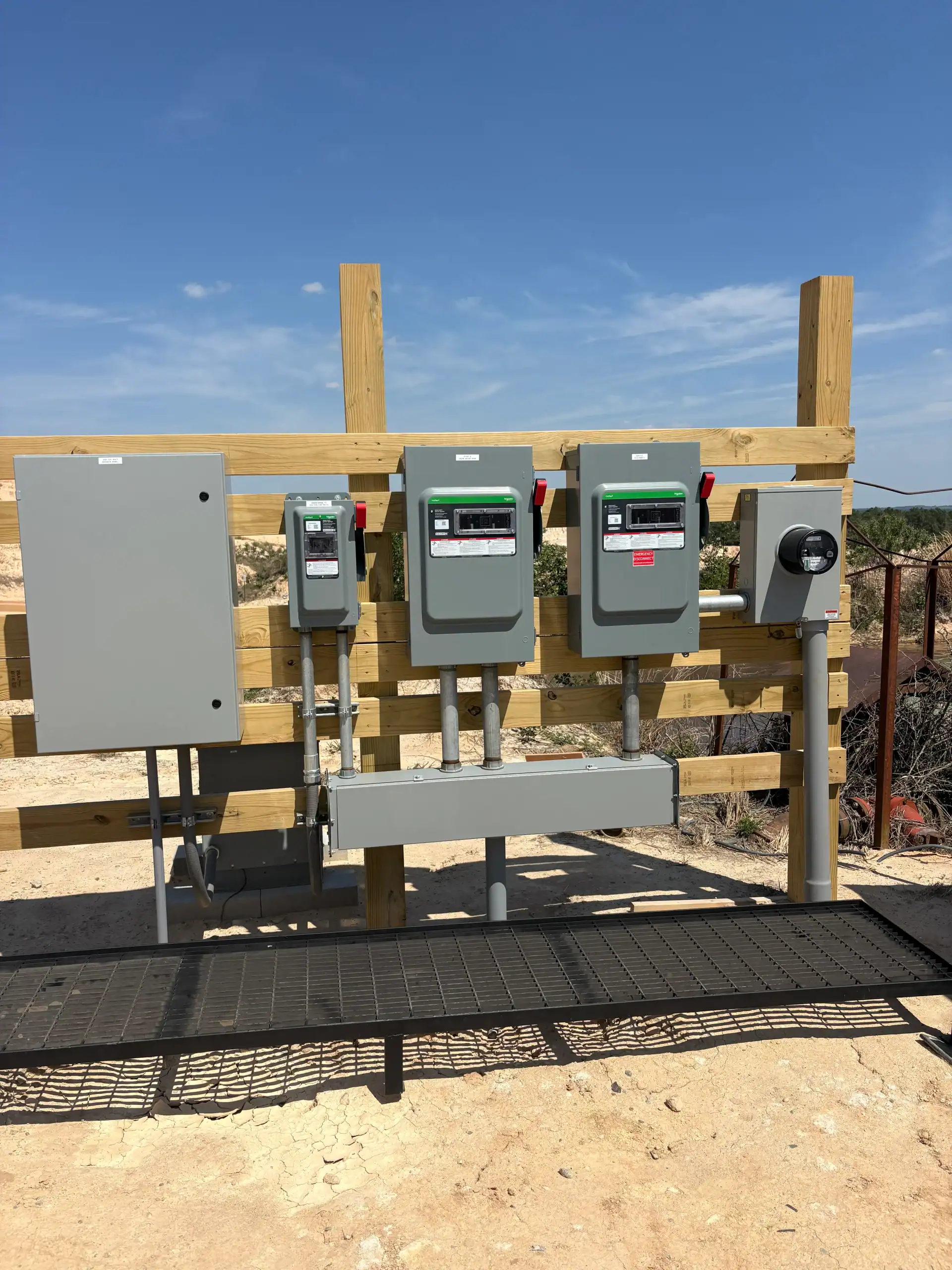
Your electric meter box is where power from Duke Energy’s lines enters your home. It sits between the utility and your main electrical panel, and it’s the first point where surge protection can be applied.
A Type 1 surge protective device installs at the service entrance — right at or before the meter box — and is designed to catch the largest external surges before they even reach your panel. These are the surges that come from the utility grid: switching events, transformer issues, and the voltage spike that follows a multi-day outage when power is suddenly restored across the grid.
A Type 2 device installs inside your main electrical panel and is the most common residential installation. It handles both external surges that pass through the meter and the internal surges your own appliances generate. For most homes in Alamance County, a properly specified Type 2 device installed at the panel is the practical starting point — and for many homes, it’s all they need.
The important distinction is that neither type protects against a direct lightning strike to your home or the line feeding it. A direct strike generates a surge that exceeds what any residential SPD is rated to handle. What these devices do protect against is the far more common category of transient voltage events — the kind that happen dozens of times a year in a typical Alamance County home without anyone noticing until an appliance fails or a circuit board burns out.
One more thing worth knowing: the best whole-home protection is layered. A panel-level SPD handles the heavy lifting, while quality point-of-use protectors at your most sensitive electronics — computers, home theater equipment, smart home hubs — add a second line of defense for the devices that matter most.
Single circuit surge protection protects one dedicated circuit rather than the entire home. It’s sometimes used for specific high-value loads — a dedicated home office circuit, an EV charger circuit, or a circuit feeding a home theater. The device installs in the panel and monitors only that circuit’s voltage.
It sounds appealing as a lower-cost option, and in some cases it makes sense as a supplement to whole-home protection. But as a standalone solution, single circuit protection leaves everything else in your home exposed — including every hardwired appliance on every other circuit.
Here’s the practical problem with going circuit-by-circuit: your HVAC system, electric range, washer, dryer, and water heater are all on separate circuits. Protecting them individually would require multiple devices and multiple installations, and the total cost would likely exceed what a whole-home SPD costs to begin with. More importantly, the internal surges that your HVAC compressor generates don’t stay on one circuit — they travel through your panel’s bus bars and affect other circuits in the home. A single circuit protector doesn’t stop that.
For most Alamance County homeowners, whole-home protection at the panel is the more practical and cost-effective answer. Single circuit devices make the most sense when you’re adding protection for a newly installed EV charger or a dedicated circuit for sensitive equipment — and you already have a panel-level SPD in place as the foundation.
Want live answers?
Connect with a Electrical Service Providers expert for fast, friendly support.
A lot of homeowners in Alamance County already pay for Duke Energy’s surge protection subscription and assume they’re covered. It’s worth understanding exactly what that program does — and where it stops.
Duke Energy’s meter-based surge protection works at the meter. It’s designed to catch external surges coming in from the utility grid before they pass through the meter into your home. For that specific category of surge event, it provides a layer of protection.
What it doesn’t address is the 80% of surges that originate inside your home from your own appliances. Your HVAC compressor, refrigerator, and washing machine generate voltage spikes every time they cycle — and Duke’s meter program has no visibility into those events. That’s where a whole-home surge protector at your electrical panel picks up where Duke’s protection ends.
If your home was built between the 1960s and the early 1980s — which describes a significant portion of Burlington’s, Graham’s, and Haw River’s residential housing stock — there’s a reasonable chance your service entrance conductors are aluminum rather than copper. Specifically, 1/0 aluminum wire and 2/0 aluminum wire are the most common gauges used for service entrance conductors in homes of that era, sized for 100-amp and 200-amp services respectively.
Aluminum service entrance wiring is not inherently dangerous, and it’s not the same issue as the aluminum branch circuit wiring that caused problems in homes of that period. But it does matter when you’re installing a whole-home surge protector, for a few reasons.
First, the connections at the panel need to be evaluated. Aluminum conductors expand and contract with temperature changes more than copper does, and over decades, connections can loosen. A loose connection at the service entrance is a fire risk on its own — and it also affects the grounding integrity that a surge protective device depends on to function correctly. If the grounding path isn’t solid, the SPD has nowhere to divert surge energy, and it can’t do its job.
Second, the panel itself needs to be in good enough condition to support the installation. Older panels — particularly certain brands common in homes of that era — may have known reliability issues that should be addressed before adding any new device to the system.
This is exactly why we use thermal imaging as a diagnostic step before surge protection installations on older Alamance County homes. Thermal imaging can detect hot spots at connections, overloaded breakers, and other panel-level issues that aren’t visible to the naked eye. It’s not a standard step in the industry — most electricians skip it — but it’s the kind of thing that prevents a surge protector installation from going on top of a problem that was already there.
An electrician’s pre-installation inspection is different from a code inspection that happens after permitted work is completed. It’s a diagnostic look at the current state of your electrical system — what’s working, what’s marginal, and what needs to be addressed before you add anything new.
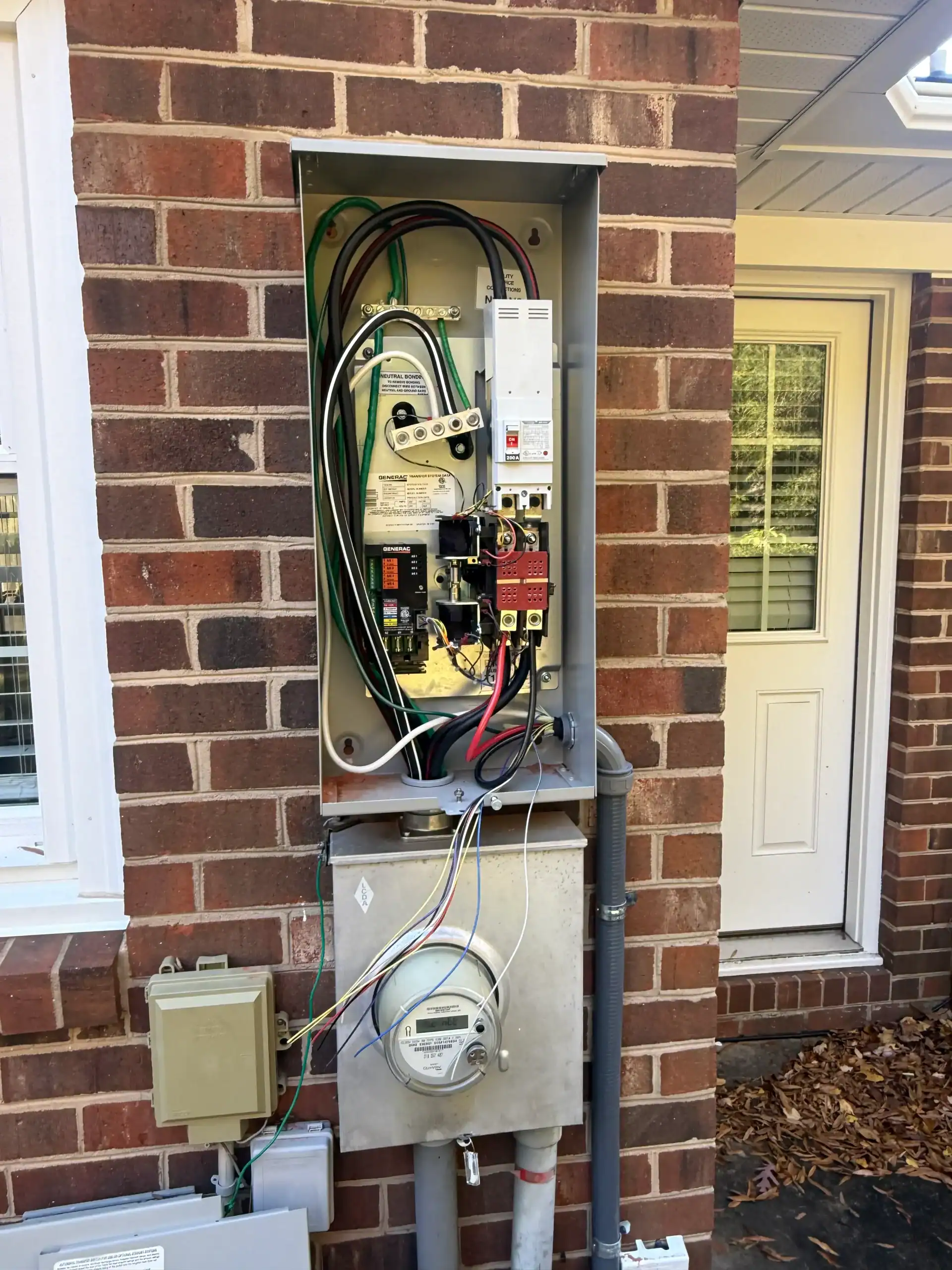
For homes in Burlington, Graham, Haw River, and Mebane, this kind of inspection tends to surface a few recurring issues. Panel condition is the first thing — specifically whether the breakers are functioning correctly, whether connections are tight, and whether the panel brand has any known reliability concerns. Grounding system integrity is the second, because a surge protector that can’t divert energy to a solid ground is essentially decorative. And service entrance conductor condition is the third, particularly in homes with aluminum service entrance wiring where decades of thermal cycling can loosen connections at the weatherhead or at the meter socket.
When we do an inspection ahead of a surge protection installation, we’re not looking for reasons to add to the scope. We’re making sure that what we install actually works the way it’s supposed to. If the panel is in good shape and the grounding system is solid, we install the device and test it before we leave. If we find something that needs attention first, we tell you what it is and what it costs to fix — before any work begins. That’s what flat-rate pricing looks like in practice: no surprises, no mid-job additions, no “we found something while we were in there” conversations.
For newer homes in Mebane and the growing communities along the I-40 and I-85 corridors, the inspection step is often simpler — newer panels, copper conductors, better grounding systems. But even in those homes, it’s worth confirming that the panel has available breaker space and that the grounding electrode system is properly bonded before specifying a device.
When you’re choosing among residential electrical companies for this kind of work, a few things actually matter. Licensing is the floor — in North Carolina, panel work requires a licensed electrical contractor, and a Master Electrician designation means the person overseeing the work has passed the highest tier of licensing the state issues.
Local licensed electricians who have been working in Alamance County for years know the housing stock, know the Duke Energy service territory, and know what local permit inspectors look for. That’s not a small thing. We’ve been serving Alamance County’s existing homes and businesses since 2002 — not new construction, but existing properties with all the quirks and history that comes with them.
Beyond licensing, ask about pricing structure before anyone shows up at your door. Hourly billing on panel work can spiral quickly. Flat-rate pricing means you know the number before the work starts — and it doesn’t change based on how long the job takes.
If you want to know whether your home is a good candidate for whole-home surge protection, or if you want someone to look at your panel before recommending a device, give us a call. A real person will answer. We’ll tell you what we find and what it costs before we touch anything. That’s how ESP Electrical Service Providers has worked for over two decades, and it’s not changing.
Article details:
Share:
Continue learning: