A whole house generator does more than keep the lights on. Here's what it actually is, how it works, and what Alamance County homeowners need to know before buying one.
Share:
Summary:
If you’ve been thinking about a whole house generator — especially after watching what Hurricane Helene did to western North Carolina in 2024 — you’re not alone. A lot of Alamance County homeowners are asking the same questions right now: What exactly is a standby generator? How does it know when to turn on? What size do I need? And is it actually worth it?
Those are fair questions. This page answers all of them plainly, without the sales pitch. By the time you finish reading, you’ll have a clear picture of how these systems work and what to look for when you’re ready to take the next step.
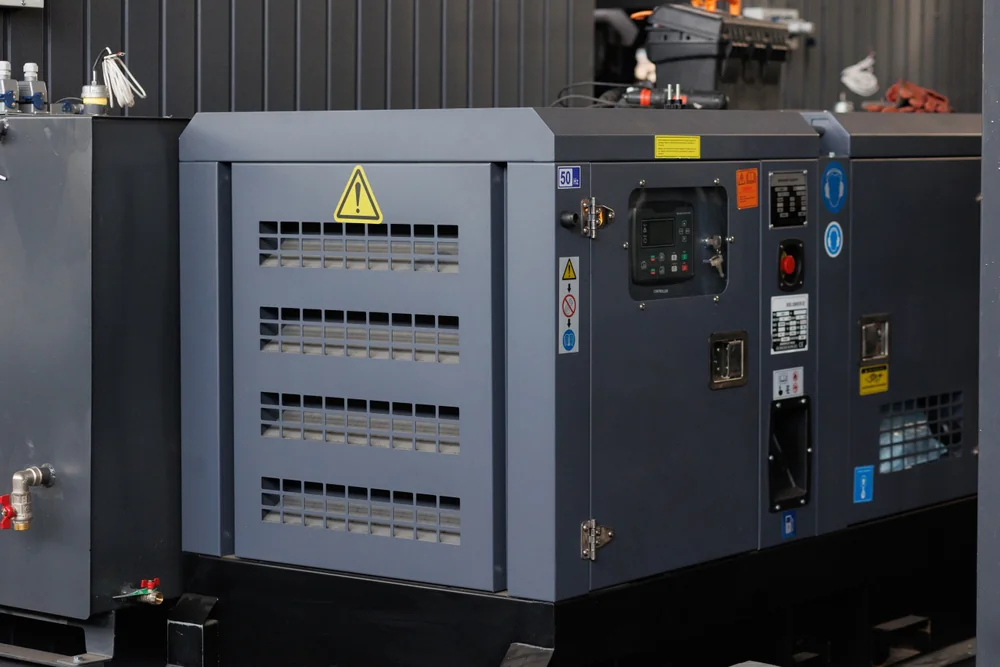
A whole house generator — sometimes called a home standby generator — is a permanently installed backup power system connected directly to your home’s electrical panel. When the grid goes down, it detects the outage automatically and starts itself, typically within 10 seconds. You don’t have to be home. You don’t have to flip a switch. It just runs.
That distinction matters for Alamance County residents who work outside the county. Many of you commute to Greensboro, Durham, or the Research Triangle for work. If a storm rolls through on a Tuesday afternoon while you’re 45 minutes away, a portable generator sitting in your garage does nothing for you. A standby generator already installed and connected to your home’s systems? That’s a different story entirely.

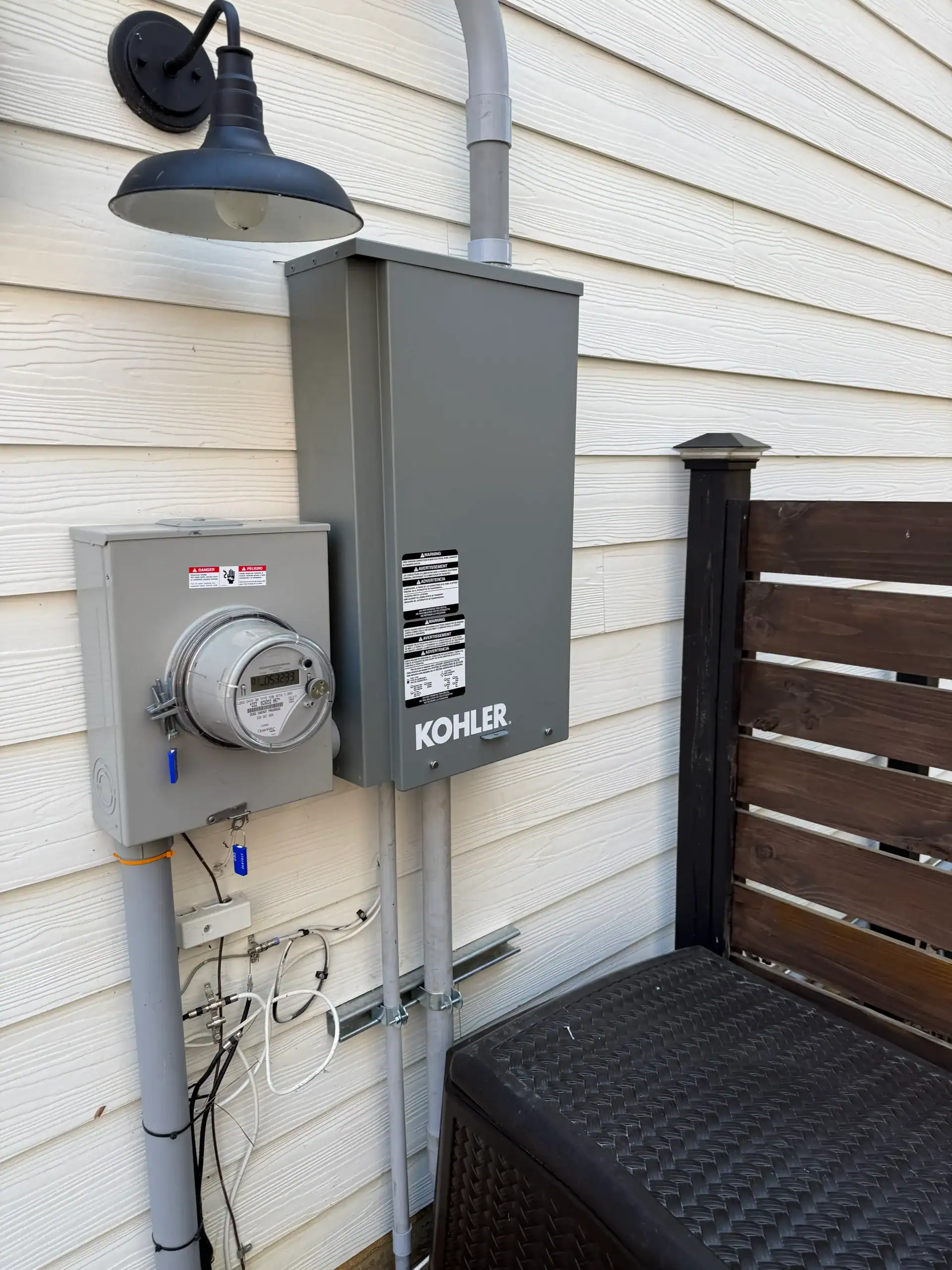
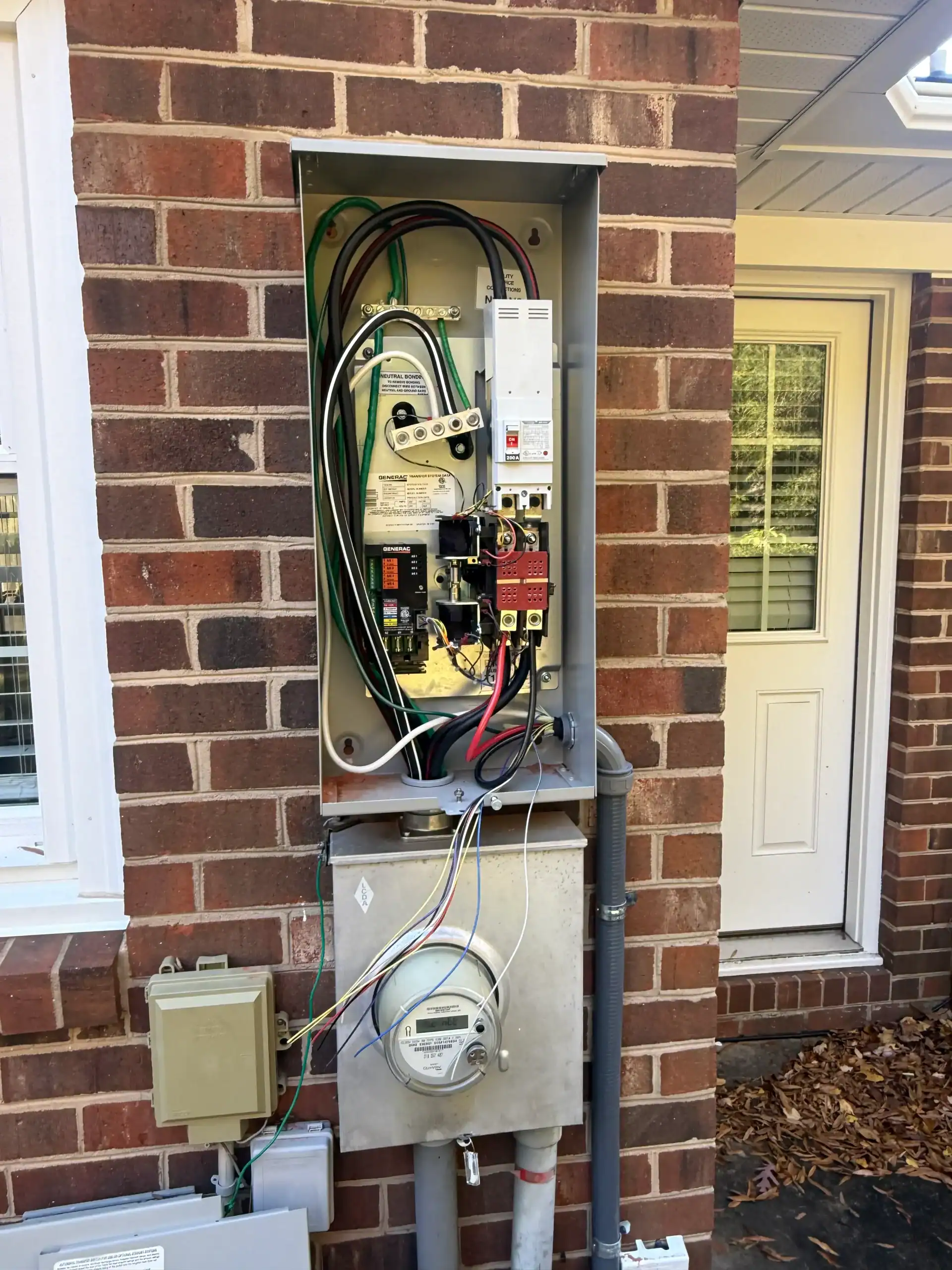
The piece that makes a whole house generator truly automatic is the automatic transfer switch, or ATS. We install it between your home’s electrical panel and the utility line, and it monitors incoming power continuously. The moment it detects that grid power has dropped, it signals the generator to start and simultaneously disconnects your home from the utility line. Once the generator is up to speed and producing stable power, the ATS transfers your home’s load to it. The whole process takes about 10 seconds.
When utility power is restored, the ATS handles that transition too — switching your home back to grid power and signaling the generator to shut down. You don’t manage any of it manually. The system takes care of itself.
This matters for more than just convenience. The ATS also prevents a dangerous condition called back-feeding, where generator power flows back into utility lines. That’s a real hazard for utility workers trying to restore power after a storm. A properly installed ATS eliminates that risk entirely, which is one of the reasons we require a licensed electrician — not a handyman or a DIY project — for this work.
The generator itself runs on either natural gas or propane. In Burlington and the denser parts of Alamance County, most homes have natural gas service, so the generator connects directly to the existing gas line and can run as long as gas is available. In more rural areas — places like Snow Camp, Ossipee, or Swepsonville — propane is the more common option, supplied by an on-site tank. Either fuel source works well. The right choice depends on what’s available at your property.
Modern standby generators also include a built-in controller that runs a self-test cycle automatically, usually once a week. The generator starts, runs for a few minutes, checks its own systems, and shuts back down. This keeps the engine lubricated, circulates fuel through the system, and verifies that everything is functioning correctly. It’s the difference between a generator that works when you need it and one that’s been sitting idle for two years and fails the moment a storm hits.
The comparison comes up constantly, so it’s worth being direct about it. A full house generator and a portable generator are not the same product at different price points. They solve fundamentally different problems.
A portable generator is a temporary solution. You drag it out of the garage, fill it with gasoline, run extension cords to whatever you want to power, and hope you remembered to test it recently. It requires someone to be home and physically present to set it up. It can’t power hardwired systems like your HVAC, well pump, or sump pump. It burns through gasoline quickly — typically 12 to 20 gallons per day — which means you’re making fuel runs during a storm. And it has to be operated outdoors, away from windows and doors, because of carbon monoxide risk.
A whole house generator eliminates every one of those problems. It’s already installed. It starts itself. It connects directly to your electrical panel and can power your entire home — heating, cooling, refrigerator, lights, security system, medical equipment, home office, all of it — simultaneously, as long as the system is properly sized. There’s no gasoline to store, no extension cords, no manual intervention required.
For Alamance County homeowners with a sump pump, that distinction matters a lot. The county’s mix of older housing stock and low-lying areas near the Haw River means flooding is a real risk during heavy rain events. A sump pump that can’t run during an outage isn’t protecting anyone. Neither is a portable generator that requires someone to be home and awake to start it at 2 in the morning.
The honest answer to “should I get a portable or a standby?” is this: if you want true whole-home protection that works whether you’re home or not, a standby generator is the only option that actually delivers it.
Want live answers?
Connect with a Electrical Service Providers expert for fast, friendly support.
One of the most common questions we hear is some version of “how do I know what size I need?” It’s a reasonable concern. Buying an undersized system means it can’t carry your home’s full electrical load. Buying an oversized one means spending more than necessary. Neither outcome is good.
The answer starts with a load analysis — a calculation of your home’s total electrical demand based on what you actually have and use. It accounts for your HVAC system, major appliances, lighting, and anything else drawing power. For most homes in Alamance County, a 22 kW unit covers everything. Homes with heat pumps often need 24 kW or more, because heat pumps draw significant power on startup.
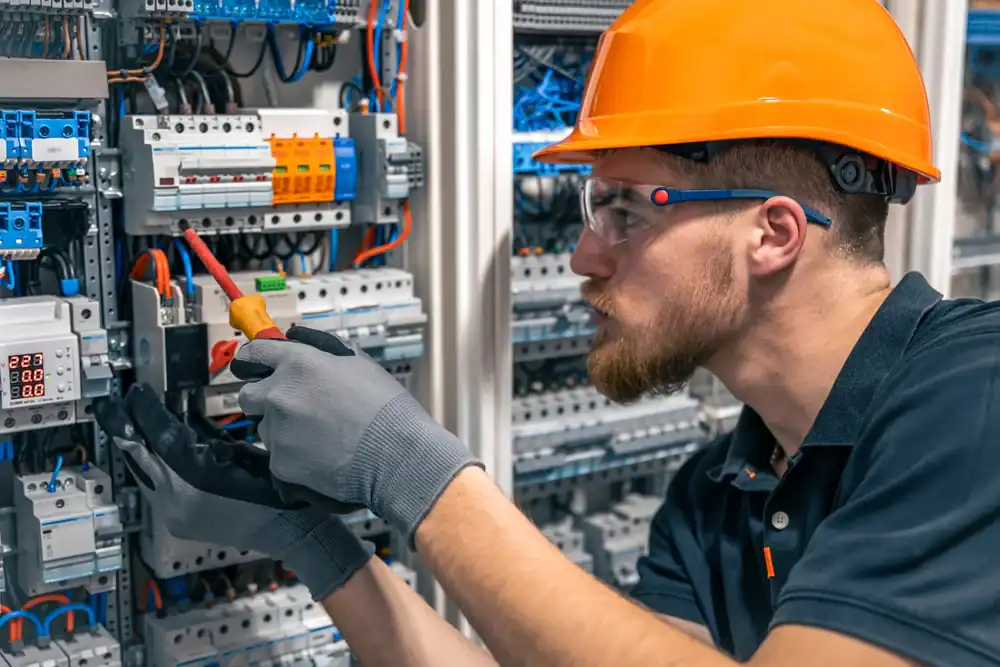
Yes — and this is not a technicality worth skipping. Installing a whole house generator involves high-voltage electrical work and, in most cases, gas line work as well. In Alamance County, that means pulling permits through the Alamance County Inspections Department for unincorporated areas, or through the relevant municipal department if you’re in Burlington, Graham, Mebane, or another incorporated town. The work has to pass inspection before the installation is considered complete.
This matters for a few reasons beyond just legal compliance. Unpermitted electrical work can create real problems when you go to sell your home or file a homeowners insurance claim. If an unpermitted generator installation is discovered during a home sale inspection, it can delay or derail the transaction. If a claim arises from an electrical issue tied to unpermitted work, your insurer may deny it. Neither scenario is hypothetical — both happen.
We handle all of this for you. Permit filing, inspection scheduling, and code compliance are part of the job, not extras. When we install a generator for a homeowner in Burlington, Graham, Mebane, or anywhere else in Alamance County, we pull the permits, coordinate the inspection, and make sure the work passes the first time. That’s not a selling point — it’s just how the job is supposed to be done.
The permit process in most North Carolina counties takes roughly one to two weeks, so if you’re thinking about getting a system installed before hurricane season, earlier is better. The spring installation window fills up quickly, and lead times on equipment can add additional time to the schedule.
From the first conversation to a fully operational system, most whole house generator installations in Alamance County take anywhere from a few days to a few weeks, depending on equipment availability, permitting timelines, and whether any additional work is needed — like a panel evaluation or gas line upgrade.
The installation process itself typically unfolds in stages. It starts with a site visit and load analysis to confirm sizing and determine the best location for the unit. Standby generators are installed outdoors on a concrete pad, positioned near both the electrical panel and the gas meter (or propane tank). Placement matters — the unit needs adequate clearance from windows, doors, and combustible materials, and it needs to be accessible for future service.
Once the site is evaluated and the equipment is ordered, the installation day involves setting the concrete pad, placing the generator, running the electrical connection from the generator to the panel through the automatic transfer switch, and connecting the fuel supply. If natural gas is the fuel source, the gas line may need to be extended or upsized to handle the generator’s demand — that coordination happens before installation day. For propane systems, the tank size is calculated based on expected run time and usage patterns.
After everything is connected, we test the system to confirm it starts correctly, transfers power cleanly, and shuts down properly when utility power is restored. The automatic exercise cycle is configured, and you’re walked through what to expect — what it sounds like when it runs its weekly self-test, what the controller display shows, and who to call if something looks off.
For Alamance County homeowners in older neighborhoods in Burlington or Graham — where electrical panels sometimes haven’t been updated since the home was built — a panel evaluation before installation is worth doing. Not because there’s necessarily a problem, but because a generator installation is a good moment to confirm the panel can handle the added load cleanly and safely.
After Hurricane Helene knocked out power to nearly five million customers across the Southeast in 2024 — leaving some western North Carolina communities without electricity for two weeks or more — that question has a sharper edge to it than it used to. Alamance County wasn’t in the direct path of the worst damage, but the event made clear that extended outages aren’t just a coastal problem. They can happen here too.
A properly sized, properly installed standby generator means your home keeps running when the grid doesn’t. Your HVAC runs. Your sump pump runs. Your food doesn’t spoil. And if you’re not home when the storm hits — which is a real possibility for anyone commuting out of the county on a weekday — none of that requires you to be there to make it happen.
If you have questions about sizing, fuel options, the installation process, or whether your home’s current electrical setup is ready for a standby generator, we’re based in Burlington and have been doing this work in Alamance County since 2002. Reach out and talk to a real person — no automated systems, no voicemail loops, just a straight answer about what makes sense for your home.
Article details:
Share:
Continue learning: