Your generator sits quietly until you need it most. Here's how to make sure it actually works when that moment comes.
Share:
Summary:
Most people don’t think about their generator until the power goes out. Then they flip the switch, hold their breath, and hope for the best. If maintenance has been skipped, that hope is doing a lot of heavy lifting.
A standby generator is a significant investment — and like any mechanical system, it needs regular attention to perform when it counts. This page covers what a proper generator maintenance schedule looks like, what separates a reliable service company from a mediocre one, and why staying ahead of the problem is so much cheaper than dealing with the aftermath. If you’ve been putting this off, now’s a good time to stop.
A generator maintenance schedule isn’t complicated, but it does require consistency. Most manufacturers recommend professional service at least once a year — more frequently if your system runs often or operates in a demanding climate. The goal is to catch small problems before they become expensive ones, and to make sure every component is ready to carry a real load when the power actually fails.
Think of it like an oil change for your car. You wouldn’t skip it for three years and assume everything’s fine. The same logic applies here, and the consequences of skipping are just as predictable.
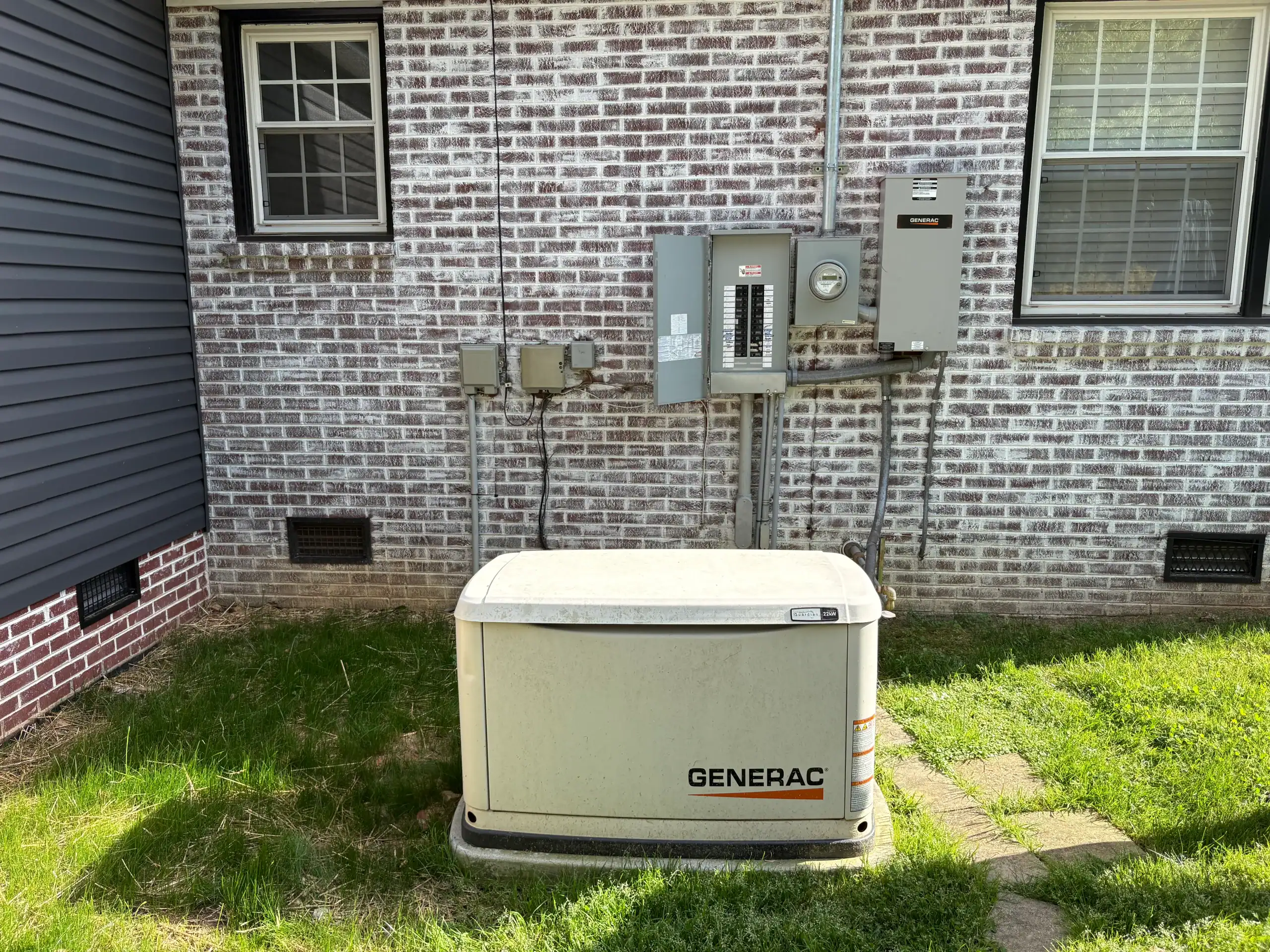
A thorough annual service visit covers more ground than most homeowners expect. It’s not just checking that the engine turns over — it’s a systematic inspection of every component that could fail under sustained load during a real outage.
Oil and filter changes are the obvious starting point. Most manufacturers recommend changing the oil every 100 hours of operation or once a year, whichever comes first. Old oil loses its protective properties and puts unnecessary wear on internal components. The filter goes with it — there’s no point putting clean oil through a dirty filter.
Battery testing is where a lot of generators quietly fail. The battery is responsible for starting the engine, and it degrades gradually — which means it can pass the weekly self-test for months before it finally gives out under real conditions. Battery voltage should stay between 12.4V and 12.7V. Most batteries need replacement every two to three years, and bi-annual voltage testing is the only way to know where yours stands before it becomes a problem.
Beyond that, a complete service visit includes spark plug inspection, coolant level and concentration checks, fuel system inspection, transfer switch testing, and a full load test. That last one matters more than people realize. Your generator’s weekly self-test confirms the engine starts — it does not confirm the system can handle actual household load for an extended period. A load test does. It’s the difference between knowing your generator starts and knowing it works.
Every one of these checks serves a purpose. Skipping any of them leaves a gap in the picture, and gaps have a way of showing up at the worst possible time.
Timing matters, especially in Alamance County. For most of the country, “once a year” is sufficient guidance. For homeowners here, the timing of that annual service makes a real difference.
Alamance County sits in an interesting position geographically. You’re far enough inland to be out of the direct path of Atlantic hurricanes, but close enough that tropical systems routinely push through the Triad as they weaken — bringing sustained winds, heavy rainfall, and multi-day power outages. At the same time, the Piedmont’s position in the ice storm belt means winter is its own kind of threat. Freezing rain accumulates on power lines and trees, and the restoration work that follows can take days. Sometimes longer.
That dual exposure — hurricane remnants in late summer and fall, ice storms in winter — means your generator needs to be ready on two fronts. The best window for annual maintenance in this region is late spring, ideally May or early June. That puts you ahead of peak hurricane season and gives you enough runway to address anything that needs repair before the first serious storm of the year.
What you want to avoid is scheduling maintenance after a storm has already passed through. By then, every generator service provider in Alamance County is backlogged with emergency calls. Customers who already have an established service relationship get prioritized. First-time callers wait. It’s not personal — it’s just how the math works when the whole region needs help at once.
Getting on a regular schedule now, before the rush, is the simplest way to make sure you’re not left waiting when it counts most.
Want live answers?
Connect with a Electrical Service Providers expert for fast, friendly support.
Not every electrician who says they service generators is actually qualified to do it well. Generator maintenance requires brand-specific training, the right diagnostic equipment, and enough experience to recognize problems that aren’t obvious on the surface. Choosing the wrong provider doesn’t just mean mediocre service — it can mean a voided warranty and a repair bill you weren’t expecting.
The questions worth asking before you hire anyone: Are they factory-authorized for your brand? Do they stock parts, or will they need to order them and come back? Can they document the service in a way that satisfies your manufacturer’s warranty requirements? Those aren’t unreasonable things to ask. A provider who can’t answer them clearly probably isn’t the right fit.
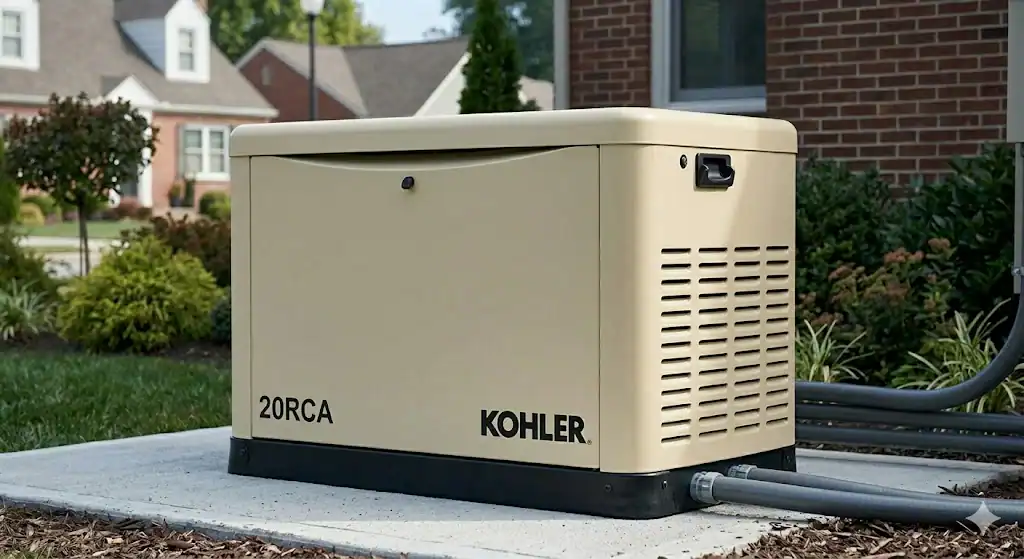
Generac is the most widely installed residential standby generator brand in the country, and that’s true in Alamance County as well. If you have a Generac system, working with a Generac Authorized Service Dealer isn’t just a preference — it’s the only way to ensure your warranty stays intact.
Factory authorization means the technicians servicing your system have completed Generac’s own training program. They’re not applying general mechanical knowledge to a brand they’ve never been specifically trained on. We use genuine Generac parts, follow Generac’s service protocols, and produce the documentation that Generac requires for warranty claims. A lack of documented service, or service performed by an unauthorized provider, can void your warranty — which on a system that cost $10,000 to $20,000 to install is not a small thing.
We’re a Generac Authorized Dealer, and our technicians are factory-trained on both Generac and Briggs & Stratton systems — the two brands most commonly found in homes across Burlington, Mebane, Graham, and the surrounding communities in Alamance County. That’s not a general claim about electrical experience. It’s specific, verifiable authorization from the manufacturers themselves.
We also stock the parts that fail most often. That means when a technician arrives at your home, they’re not leaving to order something and scheduling a second visit. The work gets done. For homeowners trying to get their system ready before storm season, that efficiency isn’t a minor convenience — it’s the difference between being prepared and being caught short.
A service contract takes the guesswork out of generator ownership. Instead of trying to remember when your last oil change was or whether the battery was tested this year, you have a scheduled annual visit with a technician who already knows your system and keeps the records on your behalf.
For most homeowners, a maintenance contract runs around $395 per year. That covers your annual service visit — oil and filter change, battery test, spark plug inspection, coolant check, fuel system review, transfer switch test, and full load test. You know the cost upfront, the work gets done on a schedule, and your warranty documentation stays current. It’s a straightforward arrangement.
What a good service contract also gives you is a relationship with a provider who knows your specific system. When something does go wrong — and eventually, something always does — you’re not starting from scratch with a company that’s never seen your setup before. You’re calling someone who has the service history, knows what was replaced and when, and can diagnose the problem faster because of it.
Response time is worth asking about directly. After major storm events in Alamance County, thousands of customers can lose power simultaneously. When demand spikes like that, providers with existing customer relationships respond first. If you’re calling a company for the first time in the middle of a regional outage, you may be waiting a long time. A maintenance contract is one of the more practical ways to make sure that’s not your situation.
We answer the phone around the clock — not an answering machine, not a callback queue. When you call 336-228-3300, you reach a real person who can help. That matters most at 2 a.m. during an ice storm when your generator isn’t running and the temperature is dropping.
The pattern is predictable: a homeowner invests in a standby generator, feels good about the decision, and then lets maintenance slide because the generator seems fine. The weekly self-test runs, nothing sounds wrong, and the years pass. Then a storm comes through Burlington or Mebane, the power goes out, and the generator that was supposed to handle exactly this situation doesn’t start.
Poorly maintained generators fail at a significantly higher rate than those that receive regular care. That’s a mechanical reality, not a scare tactic. Batteries degrade. Fuel goes stale. Components wear. None of it announces itself before it fails.
A proper generator maintenance schedule, carried out annually by certified technicians with the right training and the right parts, is the straightforward fix. If your system is overdue — or if you’ve never had it professionally serviced — we’ve been taking care of generators across Alamance County since 2002. Reach out before the next storm season gives you a reason to wish you had.
Article details:
Share:
Continue learning: