What does an electrician actually cost in Alamance County? Here's the real breakdown — by job type, with local context baked in.
Share:
Summary:
If you’ve ever searched “how much does an electrician cost” and landed on a page that told you the national average is $348, you already know how useless that number is when you’re actually trying to budget a job. National averages don’t account for the age of your home, your local market, or the fact that Alamance County communities like Burlington, Graham, and Mebane have a housing stock that can make even a “simple” electrical job more involved than it looks. We’ve been working on homes throughout this area since 2002, and we’ve learned that real pricing depends on what you’re actually fixing — not on what some national database says. This guide gives you real costs by job type, explains what actually drives electrician prices in Alamance County, and tells you what to watch out for before you sign anything.
Here’s what most homeowners in Alamance County want to know before they call anyone: is this job going to cost $200 or $2,000? The honest answer is that it depends on the job — but not in a vague, dodge-the-question way. There are real ranges, and they hold up pretty consistently across our service area.
For most residential electrical repairs — a tripped breaker that won’t reset, a dead outlet, a light switch that stopped working — you’re typically looking at $150 to $500. That covers the service call, the diagnosis, and the fix. Panel upgrades are a different story. Depending on the amperage and how complicated the existing setup is, panel work in Alamance County runs $500 to $4,500. The lower end applies to straightforward upgrades in homes with accessible panels and clean wiring. The higher end comes into play when there’s decades of modifications to untangle first.
Those are the only published local price ranges you’ll find from any licensed electrician operating in Alamance County — because most local contractors simply don’t publish pricing at all.
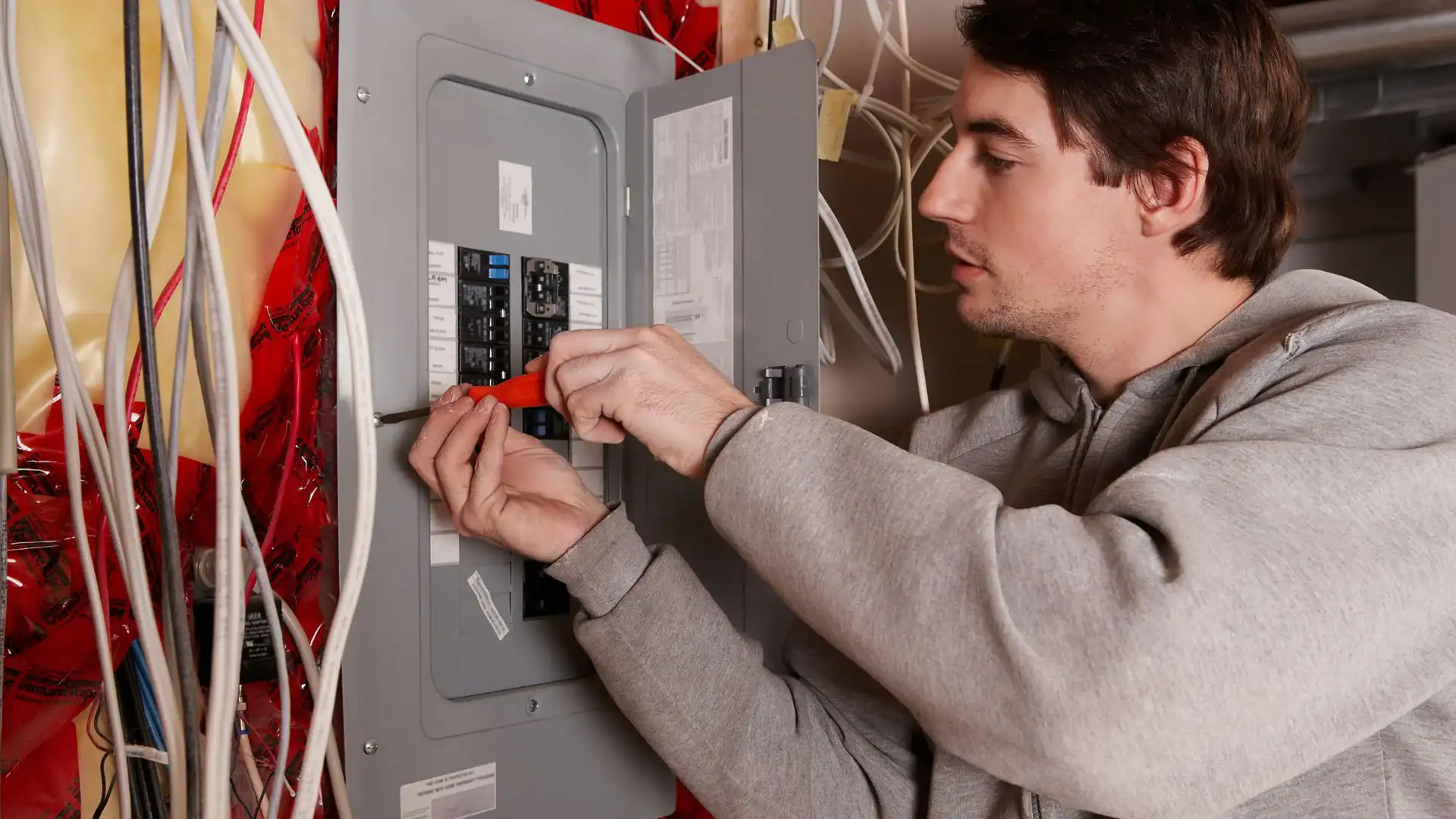
The single biggest factor in what you pay isn’t the electrician’s hourly rate — it’s what we find once we start looking. That’s especially true in Alamance County, where homes built in the early-to-mid 20th century can have wiring that’s been patched, extended, and modified by multiple owners over multiple decades. A job that looks like a simple outlet replacement on the surface can turn into a wiring diagnosis the moment someone opens the wall.
Labor is typically 60 to 70 percent of the total cost of any electrical project. Materials make up the rest, and we mark those up 20 to 50 percent, which is standard and reasonable — we’re sourcing, stocking, and warrantying those parts. What matters more than the markup is whether you know the total cost before work begins, not after.
The billing model matters here more than most homeowners realize. Hourly billing means the clock runs from the moment the truck pulls up. If the job takes longer than expected — because of what’s behind the wall, or because the panel has been modified three times since 1974 — that’s your bill going up. Flat-rate pricing, by contrast, sets the cost upfront. The price is the price, regardless of how long the job takes. For homeowners in Alamance County, where median household income runs about 13 percent below the national average, that distinction isn’t just a convenience — it’s real financial protection.
Emergency work costs more, and that’s true everywhere. After-hours calls, weekend work, and holiday service typically carry a premium over standard rates. If you’re calling at 2 a.m. because your panel is sparking, you’re not in a position to shop around — which is exactly why it’s worth knowing who you’d call before that moment arrives.
Nationally, licensed electricians charge between $50 and $130 per hour for standard residential work, with master electricians and specialists running $100 to $200 per hour. In Alamance County specifically, the average hourly rate sits around $75, with a range of $45 to $120 depending on the complexity of the job. Those numbers are a useful reference point, but they don’t tell the whole story.
Here’s the part that gets homeowners into trouble with hourly billing: most electricians charge a minimum of one to four hours even if the actual work takes less time. Add a service call fee — typically $100 to $200 for the first hour — and a job you assumed would be quick can hit $300 before a single wire is touched. Then if the job runs long, you’re watching the meter.
Flat-rate pricing works differently. We assess the job, give you a number, and that number is what you pay. If it takes us longer than expected, that’s our problem to manage, not yours. A homeowner in Alamance County who recently had two separate 240V jobs done — one for an induction cooker and one for an 80-amp EV charger circuit — noted that the work came in at a noticeably lower cost than what competitors had quoted, despite the jobs being priced flat-rate upfront. That’s not a coincidence. When we know our trucks are stocked and our team is efficient, flat-rate pricing is something we can actually stand behind.
The misconception worth clearing up: flat-rate doesn’t mean premium pricing. It means predictable pricing. Those are different things, and the difference matters when you’re trying to decide whether a job fits your budget before anyone shows up at your door.
Want live answers?
Connect with a Electrical Service Providers expert for fast, friendly support.
Breaking it down by job type gives you a much more useful picture than any single average. A panel upgrade and an outlet installation are completely different in scope, skill, and time — and the pricing reflects that. Here’s how the most common residential electrical jobs shake out across Alamance County.
Outlet and switch work — replacing an existing outlet, adding a GFCI, swapping a standard switch — generally falls in the $80 to $350 range depending on what’s involved. Installing a new outlet where there isn’t one already requires running a circuit, which pushes that number to $150 to $350 or more. Anything involving 240V — a dryer outlet, a range circuit, or a home EV charger — runs higher, typically $300 to $600 for the circuit work alone, not counting the equipment.
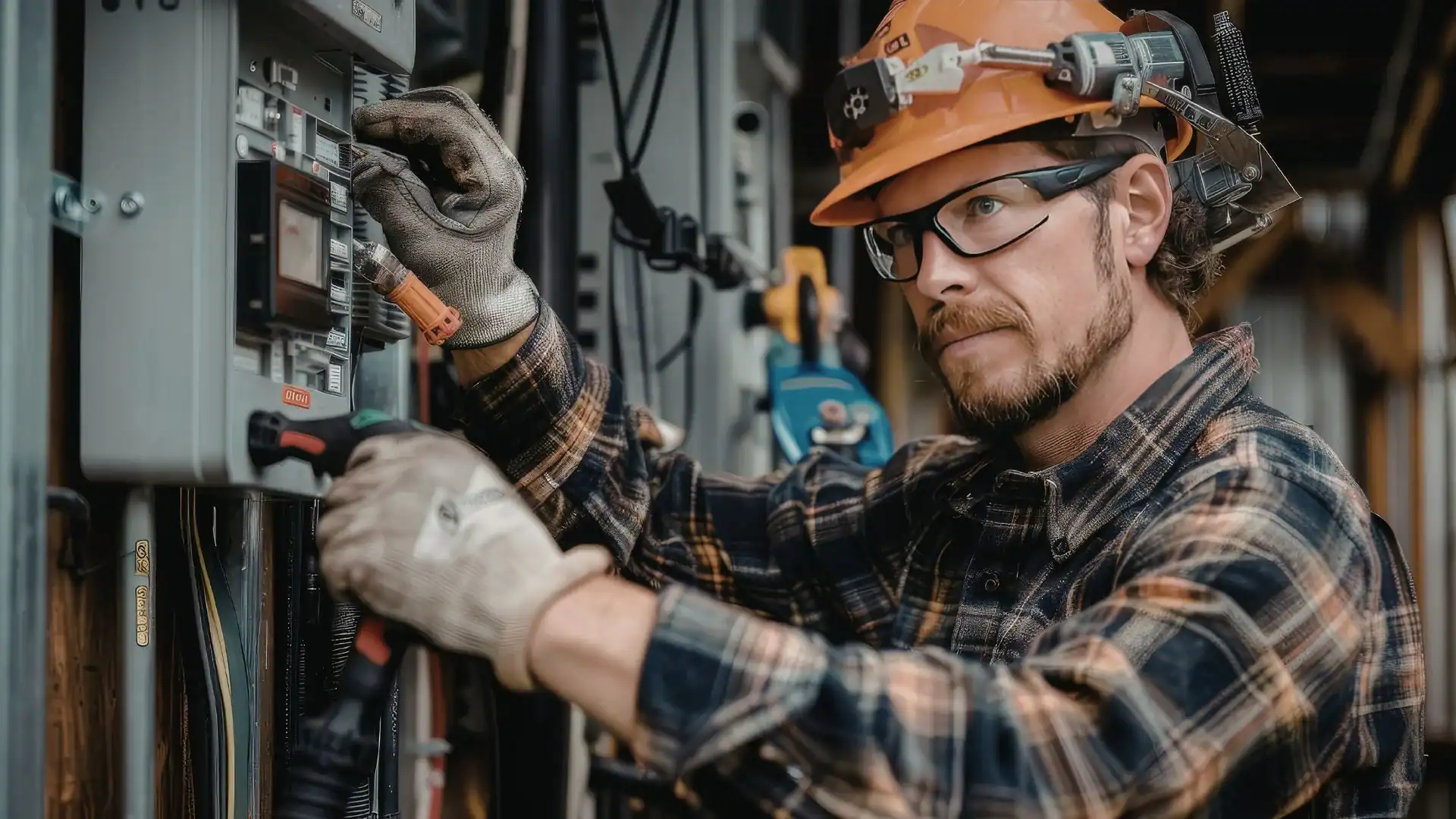
Panel upgrades are one of the most common jobs we handle throughout Alamance County, and for good reason. A lot of the housing stock here — particularly in Burlington’s older neighborhoods and the mill-era communities in Graham — was built when 60-amp service was considered adequate. Modern homes with central air, electric ranges, EV chargers, and a full complement of electronics need at least 200 amps to run safely and reliably. When the panel can’t keep up, you get nuisance trips, overloads, and in older homes with fuse boxes, a system that simply can’t be patched anymore and needs to go.
The cost of a panel upgrade in Alamance County ranges from $500 to $4,500, depending on the amperage you’re moving to, the condition of the existing wiring, and how much work is involved in bringing everything up to current code. A straightforward 100-amp to 200-amp upgrade in a home with clean, accessible wiring and a panel that’s just old — not damaged — sits toward the lower end of that range. A home that’s had multiple owners, multiple additions, and wiring that’s been modified without permits over the years is a more involved job, and the price reflects that honestly.
Permits are part of this cost and aren’t optional. North Carolina requires permits for panel work, and we pull them — full stop. If someone quotes you a panel upgrade and mentions skipping the permit to “save you money,” that’s a red flag worth taking seriously. Unpermitted panel work can void your homeowner’s insurance, create problems when you sell, and leave you personally liable if something goes wrong afterward. The permit fee itself is typically $75 to $200 for panel work — a small fraction of the total job cost and worth every dollar.
What we bring to a panel upgrade in an older Alamance County home isn’t just the hardware. It’s the diagnostic work — understanding what the existing system has been through, identifying anything that needs to be corrected before the new panel goes in, and delivering work that passes inspection the first time. That last part matters more than most homeowners realize until they’re sitting across from a real estate agent explaining why the sale just got complicated.
Whole-house rewiring is the job most homeowners hope they don’t need — and the one that’s easy to put off until something forces the issue. Nationally, rewiring a home runs $6,000 to $30,000, with a 1,500-square-foot home averaging $10,000 to $18,000. The range is wide because the variables are significant: the size of the home, the type of existing wiring, how accessible the walls are, and whether the job requires opening drywall or can be done with minimal disruption.
In Alamance County, the homes most likely to need full rewiring are the ones built before the 1970s — particularly those with original knob-and-tube wiring or early aluminum wiring that was common in certain construction eras. Knob-and-tube isn’t inherently dangerous if it’s in good condition and hasn’t been modified, but it’s also not compatible with modern loads, can’t be covered with insulation safely, and is increasingly difficult to insure. Aluminum wiring from the late 1960s and early 1970s has its own set of concerns around connection points and heat buildup.
The honest answer to “do I need a full rewire?” is: not always. Sometimes a targeted repair or a panel upgrade resolves the immediate problem. Sometimes a home inspection or an electrical safety assessment reveals that the wiring is actually in better shape than expected, and a few specific repairs are all that’s needed. The only way to know is to have someone who actually understands existing-home electrical systems take a look — not someone whose primary experience is wiring new construction on fresh framing, where everything is accessible and nothing has a history.
That distinction matters more in Alamance County than it does in markets with newer housing stock. Diagnosing a system that’s been lived in, added onto, and partially updated over 60 years requires a different skill set than pulling wire through open studs. It’s not a harder job in every case — but it’s a different one, and experience with existing homes is what determines whether the diagnosis is accurate and the fix actually holds.
The most frustrating part of researching electrician costs isn’t the pricing itself — it’s that almost no one will tell you what things actually cost until you’ve already committed to a service call. Every local electrician sends you to a “call for a free estimate” page, and national pricing guides give you averages that don’t reflect what it costs to work on a 1958 Burlington home with a panel that’s been touched four times since it was installed.
What you’re actually looking for is an electrician who will give you a real number before work starts, show up with the parts to finish the job the same day, and deliver work that passes inspection without a return visit. In Alamance County, that’s a shorter list than it should be.
We’ve been doing this work throughout Alamance County since 2002 — specifically for existing homes and businesses, not new construction. If you want to know what your job will cost before anyone picks up a tool, that’s exactly the conversation we’re set up to have.
Article details:
Share:
Continue learning: