Got an inspection report flagging aluminum wiring? Here's what remediation actually costs in Alamance County — and why most homeowners don't need to rewire the whole house.
Share:
Summary:
If a home inspector just handed you a report with “aluminum wiring” flagged in red, or your insurance carrier sent a letter you weren’t expecting, you’re probably searching for one thing — a real number. Not a range so wide it’s useless, not a lecture on electrical history. Just: what is this going to cost me, and what exactly needs to happen?
That’s what this page is for. We’ve been remediating aluminum wiring in Alamance County homes since 2002, and we’ll walk you through the actual cost, the actual process, and the actual options — so you can stop guessing and start making a plan.
The first thing most homeowners assume when they hear “aluminum wiring problem” is that they need to rewire the entire house. That assumption is understandable — and expensive. Full aluminum wiring replacement means pulling new copper wire through every wall, ceiling, and floor of the home. It’s disruptive, it takes days, and it typically costs between $15,000 and $30,000 or more depending on the size of the home.
Here’s what most people don’t know until they talk to an electrician who specializes in this: full rewiring is rarely necessary. The Consumer Product Safety Commission recognizes a method called pigtailing as a permanent, approved repair — and it achieves the same safety outcome at a fraction of the cost. For most homes in Alamance County, pigtailing runs between $3,500 and $10,000. That’s not a temporary fix or a workaround. It’s the method the CPSC itself recommends.
For the vast majority of homes in Burlington, Graham, Gibsonville, and Mebane — the older neighborhoods built during the post-war boom and the mill-era growth of the 1960s and early 1970s — the answer is no. Full rewiring is the nuclear option. It makes sense in very specific situations, like when a home is already being gutted for a major renovation and the walls are already open. Outside of that, it’s an enormous expense that pigtailing makes unnecessary.
The aluminum wiring era in residential construction ran roughly from 1965 to 1978. That lines up almost perfectly with some of Alamance County’s most established neighborhoods — the homes that were built quickly to house workers in the textile and hosiery industries that defined Burlington’s economy for decades. Those homes are solid. They’ve been lived in for fifty years. But their wiring connections were never designed to last that long without attention, and that’s where the problem lives.
Aluminum expands and contracts more than copper does when temperatures change. Over time, that movement causes connections at outlets, switches, and fixtures to loosen. Aluminum also oxidizes at connection points, which increases electrical resistance and generates heat. The CPSC found that homes wired with aluminum before 1972 are 55 times more likely to have wire connections reach fire hazard conditions than copper-wired homes. That statistic comes from a national survey the CPSC commissioned — and it applies to homes that had no prior incidents.
The wiring doesn’t warn you before it becomes a problem. That’s why the fix matters. But the fix doesn’t have to mean tearing your house apart. Pigtailing addresses every connection point in the home — outlets, switches, light fixtures, junction boxes — without opening walls. The work is done at the connection itself, not inside the cavity behind it. Most homes in Alamance County can be remediated in a single day.
If your home was built between 1965 and 1978 and you’re in Burlington, Mebane, Graham, or anywhere else in Alamance County, there’s a reasonable chance it was wired with aluminum — especially if it hasn’t been fully updated since original construction. The easiest place to check is the wiring itself inside your electrical panel or at an outlet box. Aluminum wiring has a dull silver color, distinctly different from the orange-copper tone of copper wire. The plastic sheathing on aluminum wiring is also typically printed with “AL” or “ALUMINUM” every few feet along its length.
You can also check your panel for labeling, or look at the original building permits if you have them. But honestly, if you’re asking the question, the most reliable approach is to have a licensed electrician take a look. A quick panel inspection will tell you what you’re dealing with in minutes.
One thing worth knowing: not all aluminum wiring in a home is the problem type. Large-gauge aluminum wiring used for dryer circuits, air conditioning units, and service entrance cables is still used today and isn’t the concern. The issue is branch circuit wiring — the smaller-gauge wiring that runs to your outlets, switches, and light fixtures throughout the home. That’s what the CPSC data addresses, and that’s what remediation targets.
If you’ve already had a home inspection and aluminum wiring was flagged in the report, you don’t need to do the detective work yourself. The inspector’s report will typically specify whether it’s branch circuit wiring and which areas of the home were identified. From there, the next step is getting a licensed electrician to assess the full scope — including the panel — before any remediation work begins.
Want live answers?
Connect with a Electrical Service Providers expert for fast, friendly support.
When it comes to pigtailing aluminum wiring, the CPSC recognizes exactly two methods as permanent repairs: COPALUM connectors and AlumiConn connectors. Both are safe, both satisfy most insurance carriers when properly installed, and both eliminate the fire risk that comes from unaddressed aluminum connections. What they differ in is how they’re applied and who can install them.
This distinction matters when you’re vetting electricians. Any contractor who suggests using standard wire nuts to pigtail aluminum wiring is not following CPSC guidance — and that approach can actually make things worse by creating an unstable connection that generates heat. If an electrician can’t speak specifically to COPALUM and AlumiConn, that’s worth knowing before you hire them.
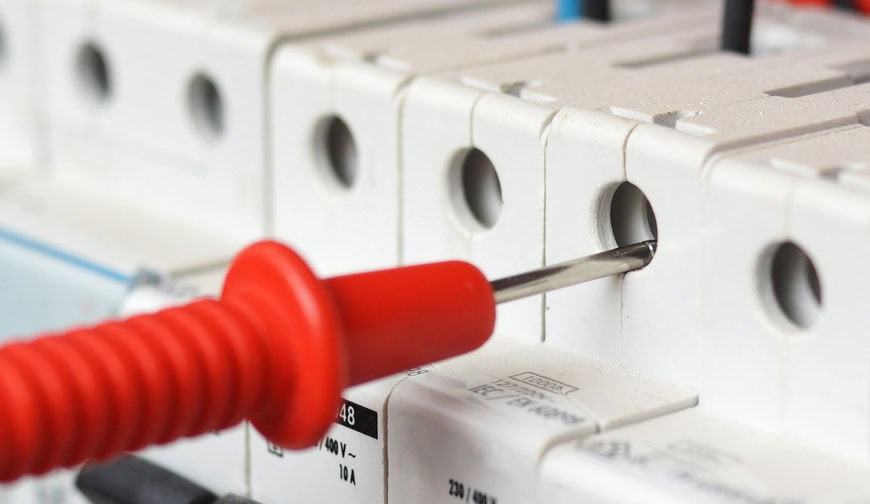
COPALUM connectors use a specialized crimping system that creates what’s essentially a cold weld between the aluminum wire and a short copper pigtail. The result is a permanent, gas-tight connection that doesn’t loosen over time and doesn’t oxidize at the joint. It’s widely considered the gold standard for aluminum wiring remediation, and it’s the method we use when conditions call for it. The trade-off is that COPALUM requires specialized crimping tools — it’s not something any electrician can do with equipment from a supply house.
AlumiConn connectors are lug-style connectors that achieve the same CPSC-recognized safety outcome through a different mechanism. They’re accessible to any licensed electrician with proper training and the right torque specifications, which makes them a practical and fully approved option for most residential remediation jobs. When installed correctly — with the appropriate antioxidant compound applied at connection points and torqued to spec — AlumiConn connectors are a permanent fix, not a compromise.
Both methods require that any outlet or switch being replaced in the process is rated CO/ALR, which stands for Copper-Aluminum Revised. Standard copper-only outlets and switches are not rated for aluminum connections, and installing them creates the exact overheating risk that remediation is supposed to eliminate. This is one of the most common mistakes made by electricians who don’t specialize in this type of work — and it’s one of the reasons why who you hire matters as much as what method they use.
A complete remediation also includes a panel inspection. Aluminum wiring problems don’t stop at the outlets — the panel itself needs to be checked for mixed aluminum and copper connections, double-tapped lugs, and burnt terminals. Skipping the panel inspection means leaving potential failure points unaddressed, which undermines the whole job.
This is one of the most common questions we hear from Alamance County homeowners, and it’s usually the most urgent one — because the person asking often just received a non-renewal notice or a premium increase tied specifically to their aluminum wiring. The short answer is yes: in most cases, CPSC-approved pigtailing with COPALUM or AlumiConn connectors satisfies insurance carrier requirements. But the details matter.
Insurance carriers that flag aluminum wiring typically want documentation. They want to see that the work was done by a licensed electrician, that CPSC-approved methods were used, and ideally that the work passed inspection. That documentation is something we provide after every remediation job — not because it’s a nice extra, but because it’s what actually closes the loop with your carrier. A verbal assurance from an electrician that “it’s been fixed” isn’t going to satisfy an underwriter. A written record of the methods used, the connector types installed, and the license number of the electrician who performed the work will.
If you’re in the middle of a real estate transaction — which is increasingly common as buyers from the Research Triangle move west along I-85 and I-40 into Alamance County and purchase older Burlington and Mebane homes — the timeline pressure is real. Home inspectors are flagging aluminum wiring in these transactions regularly, and buyers or sellers are left scrambling for a fast quote, a fast job, and paperwork they can hand to the other party before closing. Our trucks are fully stocked for aluminum wiring remediation, which means most jobs don’t require a second visit. We give you the exact cost before we start — no hourly billing, no estimate that turns into something bigger once we’re in the walls — and the work passes inspection the first time.
If you’ve been living with aluminum wiring for decades without an incident, that’s not a sign the wiring is safe. It’s a sign you’ve been fortunate. The 55x fire risk the CPSC documented applies to homes with no prior history of problems. The connections loosen gradually, the oxidation builds up slowly, and the failure — when it happens — happens without warning.
If you’ve made it this far, you probably already know what you need to do. The question is just finding someone local who will give you a straight answer on cost, use the right methods, and get it done without turning your house into a construction zone for a week.
That’s exactly what we do. ESP Electrical Service Providers has been working in Alamance County homes since 2002 — the older neighborhoods in Burlington, Graham, Gibsonville, Mebane, and surrounding communities. Andy Helton has held a Master Electrician license since 1989, and aluminum wiring remediation in NC’s older housing stock is work we know inside and out.
You’ll get a flat-rate quote before anything starts. No surprises, no hourly billing that balloons once we’re on the job. If you’re ready to find out exactly what remediation will cost for your home, give us a call — a real person will pick up.
Article details:
Share:
Continue learning: