Flickering lights, tripping breakers, and a panel from 1978 — here's how to tell if your Alamance County home is overdue for an electrical panel replacement.
Share:
Summary:
If your breakers trip more than they used to, or your lights dim every time the air conditioner kicks on, it’s easy to chalk it up to an older house being an older house. But those aren’t quirks — they’re your electrical system telling you something. Alamance County has a lot of housing stock from the 1950s through the 1980s, and many of those homes are still running on panels that were never designed to handle what a modern household demands. Understanding what’s actually happening inside that panel box — and when it crosses the line from “aging” to “needs replacing” — can save you a serious headache later.
The most common sign is one most people ignore for too long: breakers that trip repeatedly, even when you’re not running anything unusual. A breaker that trips once in a while is doing its job. A breaker that trips every time you run the microwave and the coffee maker at the same time is telling you the panel is undersized for your actual load.
Other signs are subtler. Lights that flicker or dim when a large appliance starts up, outlets that feel warm to the touch, a faint burning smell near the panel, or a buzzing sound coming from the breaker box — these all point to a panel that’s either failing or simply not capable of handling the demand being placed on it. None of these are things to sit on.
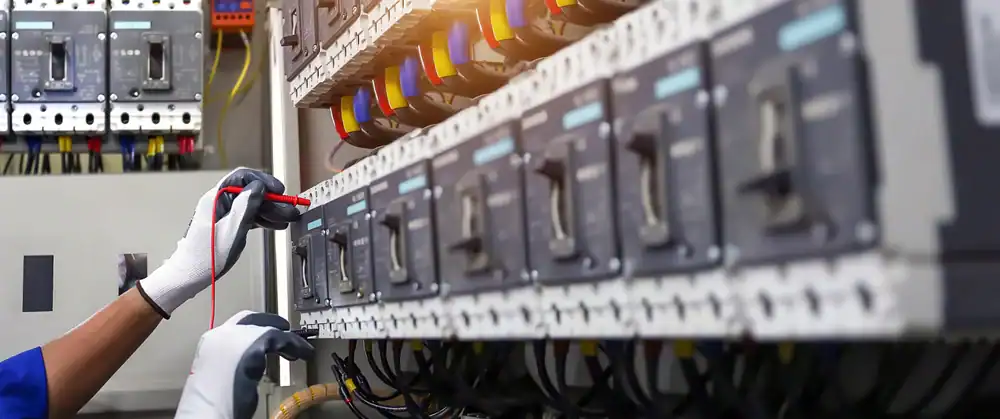
For a lot of Alamance County homeowners, especially in homes built between the 1950s and 1980s, the brand of panel matters quite a bit. Two brands in particular — Federal Pacific Electric (FPE) and Zinsco — have well-documented failure problems that most homeowners don’t know about until an insurance company or home inspector flags them.
Federal Pacific panels, which were widely installed from the 1950s through the 1980s, have a documented breaker failure rate of 25 to 60 percent. That means the breaker may not trip during an overload or short circuit — which is the one thing a breaker is supposed to do. Estimates put FPE-related electrical fires at roughly 2,800 per year nationwide, causing around $40 million in property damage annually.
Zinsco panels have a different but equally serious problem. Their design allows breakers to overheat and actually fuse to the internal bus bar, which means the breaker can appear to be in the off position while the circuit is still energized. That’s not a quirk — it’s a fire hazard that looks completely normal from the outside.
This is exactly why a visual check by a homeowner isn’t enough. Both of these panels look perfectly ordinary. You’d have no way of knowing there’s a problem without opening the panel and knowing what to look for. If your Alamance County home was built before 1990 and you’ve never had an electrician look at your panel, it’s worth finding out what you have.
Insurance companies have started paying attention to this too. Carriers are increasingly refusing to write or renew policies on homes with FPE or Zinsco panels — or requiring replacement as a condition of coverage. If your insurer has sent you a letter about your electrical panel, that’s not a sales tactic. It’s a real underwriting concern.
The general industry answer is 25 to 40 years, but that range depends heavily on the panel brand, the quality of the original installation, and how much the home’s electrical load has grown over time. A panel that was correctly sized for a 1970s household — one TV, a window A/C unit, and a few appliances — was never designed for central air conditioning, a home office, multiple refrigerators, and a Level 2 EV charger running overnight.
Panels don’t always fail dramatically. More often, they just become inadequate. A 100-amp panel that kept up fine in 1985 may be struggling now because the home’s load has doubled or tripled. The breakers still work, technically — they just trip constantly because the panel is perpetually at or near capacity. That’s not a breaker problem. That’s a capacity problem.
There’s also the matter of code compliance. North Carolina adopted the 2023 National Electrical Code effective February 2024, and older panels frequently lack the GFCI and AFCI protection now required in kitchens, bathrooms, garages, and bedrooms. When a panel is replaced, bringing those circuits into compliance is part of the job — which means a replacement isn’t just about capacity, it’s also about safety and code.
One thing worth knowing: a panel replacement in North Carolina requires a permit and must be inspected by the local Authority Having Jurisdiction — in this case, Alamance County. That’s not a bureaucratic inconvenience. It’s the mechanism that confirms the work was done correctly. Any contractor who suggests skipping the permit is not someone you want working on your electrical system.
Want live answers?
Connect with a Electrical Service Providers expert for fast, friendly support.
A growing number of Alamance County homeowners are running into panel limitations for a reason that didn’t exist ten years ago: they want to charge an electric vehicle at home. The I-40 and I-85 corridors run directly through the county, and a lot of the people commuting through Burlington, Mebane, and Graham are either driving EVs now or seriously considering them.
A Level 2 home charger — the kind that actually charges your car overnight rather than adding a few miles per hour — runs on 240 volts and requires a dedicated 40 to 60-amp circuit. If your home has a 60-amp or 100-amp panel, that charger isn’t going in without an upgrade first. There’s simply no room in the panel, and even if there were, the total load would exceed what the service can safely deliver.
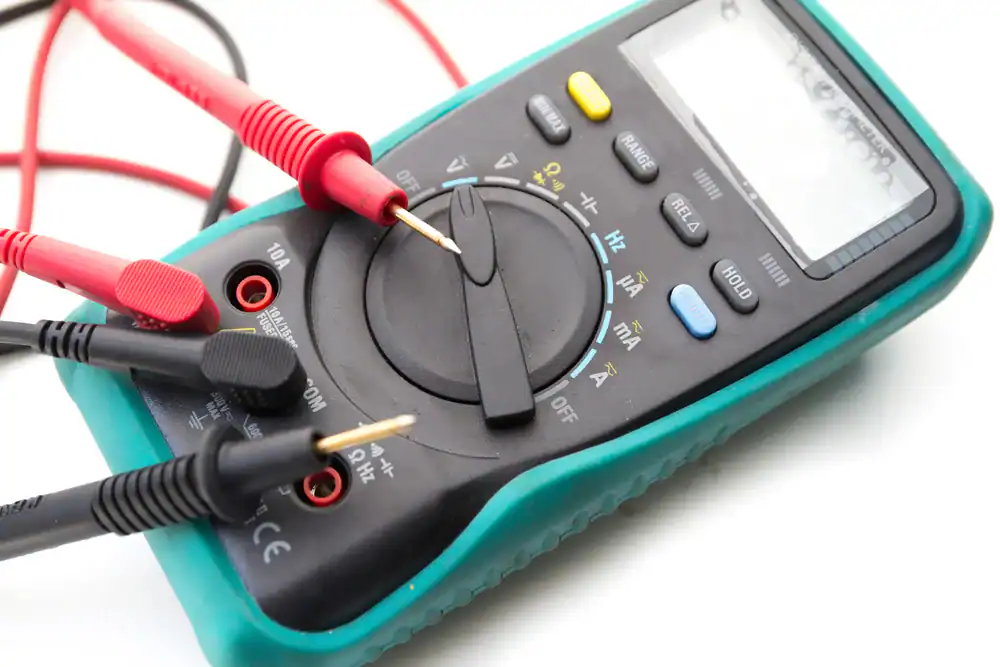
When a homeowner calls us about installing an EV charger, one of the first things we do is evaluate the existing panel — its capacity, the available circuits, and the current wiring. That assessment tells us whether the panel can support a charger as-is, or whether an upgrade needs to happen first.
For homes with a 200-amp panel in good condition and available capacity, the path to a Level 2 charger is usually straightforward. We add a dedicated 240-volt circuit, pull the permit, and the job is done. For homes with a 100-amp panel — which describes a lot of Alamance County houses built before the 1990s — the panel upgrade has to come first.
The reason isn’t arbitrary. A Level 2 charger pulling 40 to 50 amps on a 100-amp panel that’s already running central air, a water heater, kitchen appliances, and everything else in the house is asking more than the system can give. The result is either constant tripping or, worse, a panel that’s running hot without tripping because it’s already compromised.
We’ve seen residential growth across Alamance County in recent years, and many of those newer homes have 200-amp panels that can handle EV charging without an upgrade. But for older homes throughout the county, the panel conversation is almost always part of the EV charger conversation. It’s not an upsell — it’s a prerequisite. We explain exactly what the load assessment shows and give you a written price before any work begins, so you know what you’re looking at before you commit to anything.
Duke Energy, which serves Alamance County, also offers rebates for qualifying Level 2 EV charger installations. We can walk you through what qualifies and how the utility coordination works, since panel upgrades that involve the service entrance require coordination with Duke Energy in addition to the county permit process.
For most single-EV households, a 200-amp panel is sufficient — assuming the rest of the home’s load is reasonable. But the question of whether to go to 400-amp service is coming up more often, and it’s worth understanding when it actually makes sense.
A 400-amp service upgrade is appropriate when a home has multiple electric vehicles charging simultaneously, a large HVAC system, significant kitchen or workshop loads, and a home office with heavy equipment all running at the same time. It’s also a legitimate future-proofing decision if you’re planning to add a second EV in the next few years or if you’re replacing other systems — a heat pump, for example — that will increase your total electrical demand.
The way to determine whether 400-amp service is warranted is through a load calculation. Under the 2023 NEC, specifically Article 220, a proper load calculation accounts for all of the home’s electrical demands — not just what’s running right now, but what the system needs to handle safely under peak conditions. That calculation tells you whether a 200-amp upgrade is the right call or whether 400-amp service makes more sense for where the home is headed.
We’ve done this work on homes across Alamance County — from older mill-era houses that are getting their first real electrical overhaul in decades, to newer construction where the homeowner is adding a second EV and wants to make sure the panel is sized for what’s coming. The answer isn’t always the same, and it shouldn’t be. The right panel size depends on your actual load, not a one-size-fits-all recommendation.
What we don’t do is recommend more panel than you need. A load calculation is an honest accounting of what your home requires. If 200 amps covers it, that’s what we’ll tell you. If the numbers point to 400, we’ll explain exactly why.
If your panel is more than 25 years old, you’ve never had it inspected, your breakers trip regularly, or you’re planning to add an EV charger — any one of those is a good reason to have someone take a look. You don’t need to wait for a burning smell or a failed inspection to make a call.
What you should expect from that call is a straight answer. A licensed electrician should be able to assess your panel, explain what they find, and give you a written price before any work starts. No hourly billing, no vague estimates, no surprises on the invoice.
We’ve been doing this work in Alamance County since 2002, and Andy Helton has held his Master Electrician license since 1989. If you’re in Alamance County and you’re not sure what’s going on with your panel, ESP Electrical Service Providers is a straightforward call — and a real person will pick up.
Article details:
Share:
Continue learning: