Not every electrical problem announces itself. This checklist helps you spot the warning signs that matter — before something goes wrong.
Share:
Summary:
Most people don’t think about their electrical system until something goes wrong. And by then, it’s usually not a minor inconvenience — it’s a tripped breaker at the worst possible time, an outlet that stopped working, or something that smells faintly like burning and you can’t figure out where it’s coming from. If any of that sounds familiar, you’re in the right place. This guide walks you through a practical electrical safety checklist — broken into residential, panel-specific, and commercial sections — so you can do a real assessment of what you’re working with before you ever pick up the phone.
A home electrical inspection doesn’t start with the panel. It starts with what you can see and feel every day — the outlets, the switches, the lights, the cords. Most homeowners walk past warning signs for months without realizing that’s what they are.
Start by walking through each room with fresh eyes. You’re looking for anything that doesn’t behave the way it should: outlets that spark when you plug something in, switches that feel warm or make a faint clicking sound, lights that flicker or dim when another appliance kicks on. These aren’t quirks. They’re symptoms.
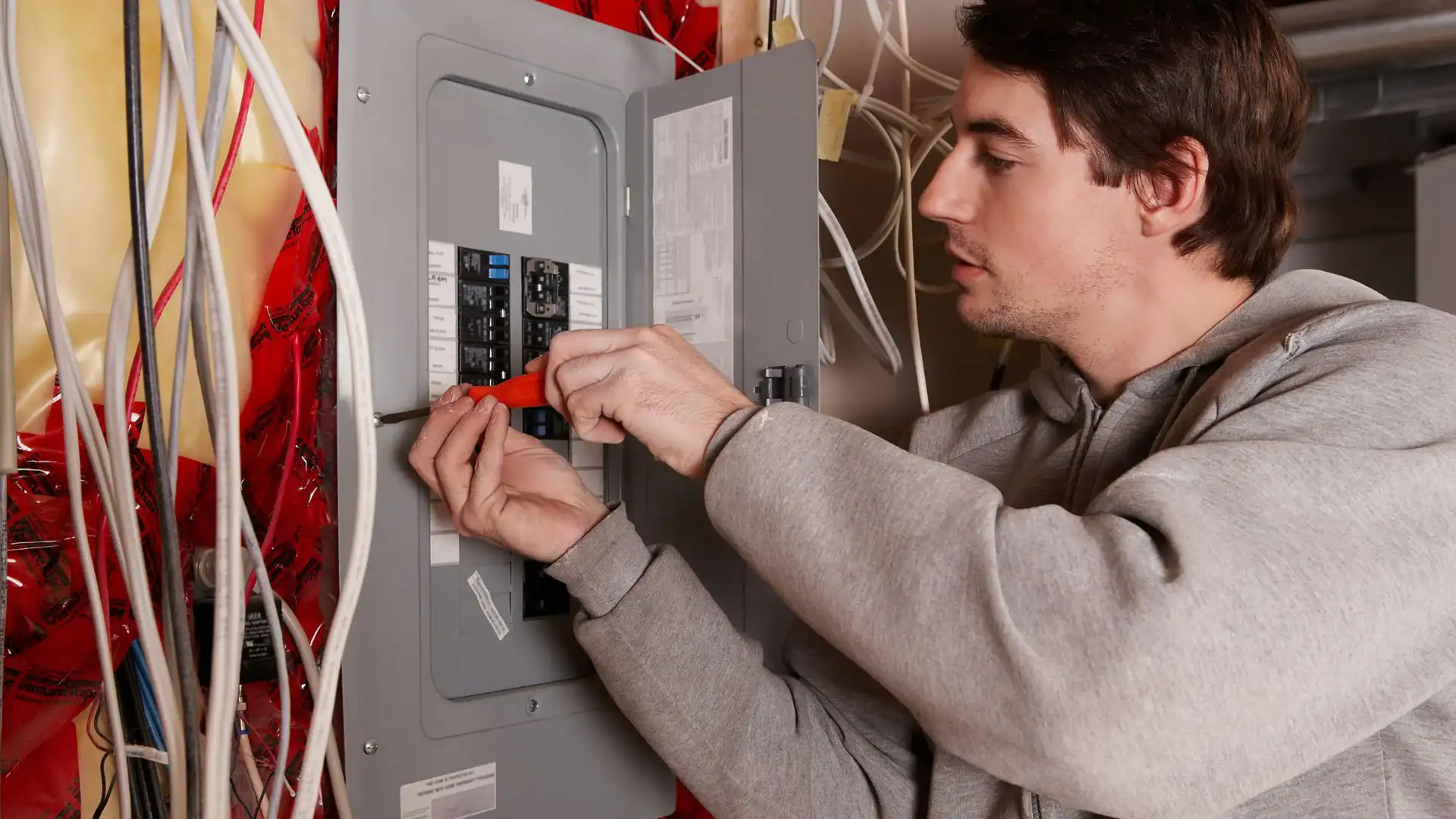
Here’s one that catches a lot of people off guard: a three-prong outlet doesn’t necessarily mean the outlet is grounded. In older homes — and there are a lot of them throughout Alamance County — three-prong outlets were sometimes retrofitted without running an actual ground wire. The outlet looks modern. It accepts a three-prong plug. But it isn’t doing what you think it’s doing.
The only way to know for sure is to test it with the right equipment. A standard outlet tester from a hardware store can tell you if something’s wrong, but it can’t always tell you exactly what. If you’re in a home built before the mid-1980s and you’ve never had an electrical inspection, this is worth checking.
While you’re looking at outlets, pay attention to any that feel warm to the touch, have discoloration around the face plate, or make a slight buzzing sound when something is plugged in. Any of those is a reason to stop using that outlet and have it looked at.
GFCI protection is the other thing to check. Ground fault circuit interrupters — the outlets with the test and reset buttons — are required by current code in kitchens, bathrooms, garages, outdoor areas, basements, and anywhere within six feet of a water source. The U.S. Consumer Product Safety Commission estimates that GFCI protection could prevent the majority of home electrocution deaths that occur each year. If you don’t have them in those locations, that’s not a minor gap.
Smoke detectors and carbon monoxide detectors round out the room-by-room check. Test them. Replace batteries annually. If any detector is more than ten years old, replace the unit entirely — the sensors degrade over time regardless of whether the alarm still sounds when you press the test button.
Extension cords and power strips are not permanent wiring solutions. If you’re running an extension cord to cover for an outlet that’s in the wrong place, or if a power strip is the only thing standing between your home office and an overloaded circuit, that’s a conversation worth having with a licensed electrician.
A significant portion of the housing stock in Burlington, Graham, Haw River, and Gibsonville was built between the 1950s and the 1980s. That era of construction predates GFCI requirements, AFCI requirements, and in many cases, the load demands of modern households. The electrical systems in those homes were designed for a different way of living — fewer appliances, no EV chargers, no home offices drawing continuous power.
When those homes change hands — and many of them in Alamance County have changed hands more than once without a full electrical review — the new owners inherit whatever decisions previous owners made. Some of those decisions were fine. Others were not.
Aluminum wiring is one of the bigger concerns in homes from the 1960s and 1970s. It was widely used during that period because copper prices spiked, and it’s not inherently dangerous on its own — but it expands and contracts differently than copper, and connections made with aluminum wiring can loosen over time, creating heat at the connection point. That heat, if left unchecked, becomes a fire risk. You can’t identify aluminum wiring by looking at an outlet, but an electrician can identify it quickly during an inspection.
Knob-and-tube wiring is another one to know about if you’re in a home built before 1950. It was the standard of its time, but it has no ground wire, it doesn’t belong inside insulation, and it was never designed for the electrical loads modern homes put on it. If you have knob-and-tube in your home, you need a professional evaluation — not because it’s automatically dangerous, but because the risk profile depends heavily on its current condition and how it’s been modified over the decades.
AFCI protection — arc fault circuit interrupters — is now required by the National Electrical Code in most rooms of new construction. Many older homes have none at all. Arc faults happen when electricity jumps across a gap in damaged or deteriorating wiring, and they’re one of the leading causes of electrical fires. The wiring can be arcing inside a wall right now with no visible or audible warning sign. AFCI breakers detect that and shut the circuit down before it becomes a fire.
If your home is more than 30 years old and you’ve never had an electrical inspection, the odds are good that at least a few items on this checklist apply to you.
Want live answers?
Connect with a Electrical Service Providers expert for fast, friendly support.
The electrical panel is where most homeowners stop looking, because it feels like a place they’re not supposed to be. And for the most part, that instinct is correct — there’s real work inside a panel that only a licensed electrician should touch. But there’s still a lot you can observe from the outside, and what you observe matters.
Open the panel door — not the inner cover, just the outer door — and take a look. You’re not diagnosing anything. You’re just looking for things that seem off.
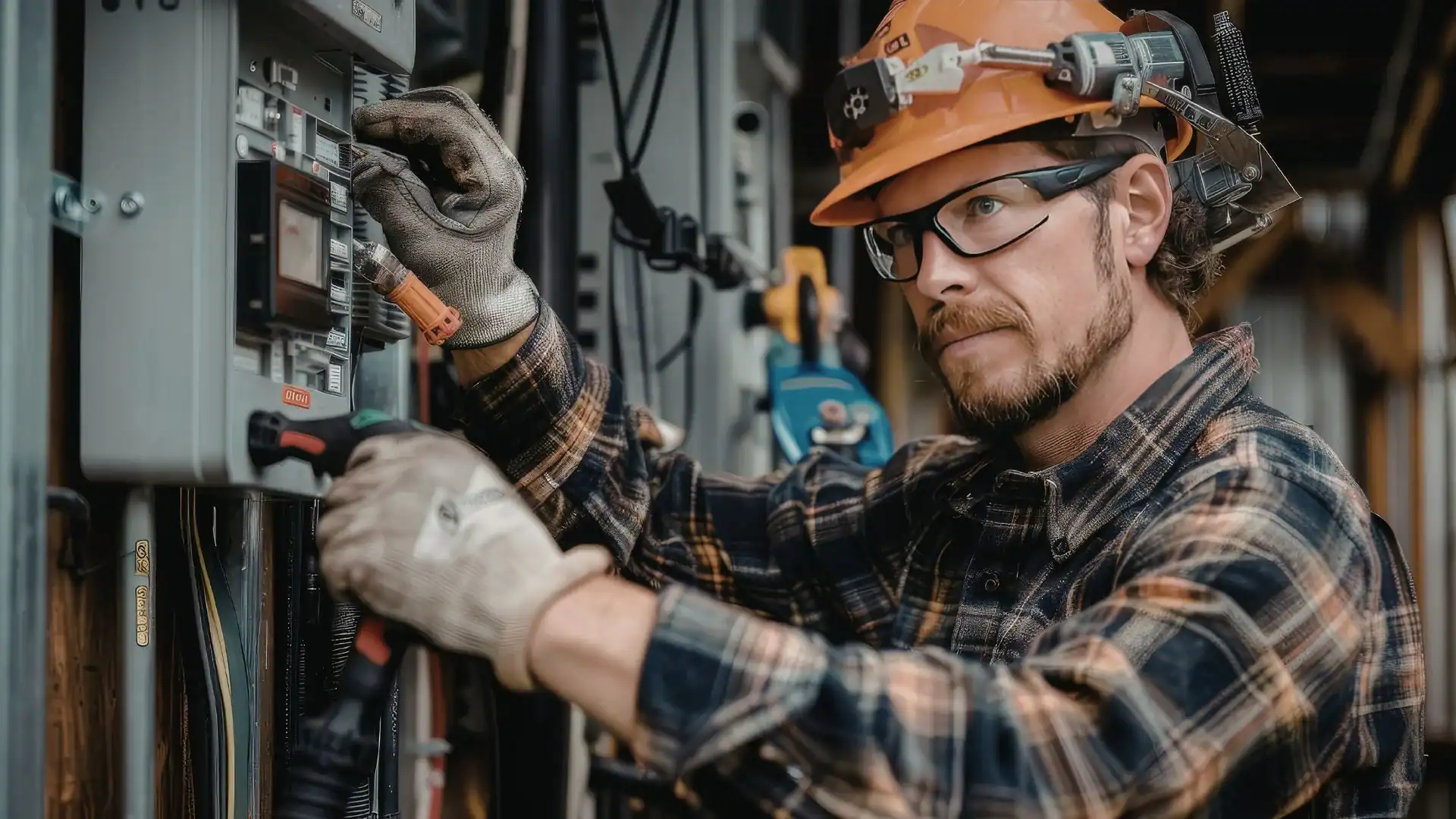
Start with the basics. Is the panel labeled? Every breaker should have a clear, legible label identifying what circuit it controls. If the labels are missing, illegible, or obviously wrong (the breaker labeled “kitchen” keeps tripping when you use the living room), that’s a problem — not just an inconvenience, but a safety issue in an emergency when you need to cut power quickly.
Look for rust, corrosion, or scorch marks anywhere on or around the panel. These are not cosmetic issues. Rust and corrosion indicate moisture has been getting in, which creates risk at every connection inside. Scorch marks mean heat was generated somewhere it shouldn’t have been. Either one warrants a call.
Check the clearance in front of the panel. The National Electrical Code requires at least 36 inches of depth, 30 inches of width, and 78 inches of headroom in front of any electrical panel. If your panel is blocked by shelving, stored boxes, or a water heater that was installed too close, that’s a code violation — and it’s a practical hazard if you or a first responder ever needs to reach it quickly.
Double-tapped breakers are worth knowing about even if you can’t see them without removing the inner cover. A double-tapped breaker is when two wires are connected to a single breaker terminal that was designed for one. It’s one of the most common code violations found during inspections, and it’s a fire risk because the breaker can’t properly protect both circuits. If you’re having an inspection done, ask specifically about this.
Two panel brands deserve special mention: Federal Pacific Electric (FPE) and Zinsco. Both were widely installed in homes built from the 1950s through the 1980s — which means they show up regularly in Alamance County homes. Both have documented histories of breaker failures, meaning breakers that don’t trip when they should. If your home has either of these panels, a professional evaluation isn’t optional. It’s overdue.
Finally, think about capacity. A 60- or 100-amp service panel was adequate for the home it was installed in decades ago. If you’ve added a home office, a second HVAC unit, an electric vehicle charger, or any combination of modern appliances, that panel may be running at or near its limit. Panels don’t always fail dramatically — they just run hot, trip more often, and eventually become a problem that’s more expensive to deal with than it would have been earlier.
There’s a limit to what you can learn by looking. And it’s an important limit, because some of the most serious electrical hazards produce no visible symptoms at all — no scorch marks, no smell, no flickering lights — until they’ve already become dangerous.
Thermal imaging uses an infrared camera to detect heat at electrical connections. A loose connection, an overloaded circuit, or a failing breaker will generate heat before it generates any visible sign. The camera finds that heat signature and shows exactly where the problem is. It’s the difference between catching a problem early and finding out about it after the fact.
We use thermal imaging as part of our inspection process because it’s simply more accurate than a visual check alone. This matters especially in older homes where wiring has been modified over the years, connections have aged, and the original installation may not have been done to current standards. A home in Burlington, Graham, or anywhere in Alamance County that’s had two or three owners and a few rounds of DIY improvements is exactly the kind of property where thermal imaging earns its place.
For commercial properties, the National Fire Protection Association’s NFPA 70B standard recommends annual infrared thermographic inspection of electrical distribution equipment under load as the minimum baseline. That recommendation exists because commercial electrical systems carry higher loads, run longer hours, and have more connection points where heat can develop undetected.
The practical takeaway: if you’re doing a thorough electrical safety review — whether for a home you’ve owned for years or a property you’re considering buying — ask whether thermal imaging is part of the process. A visual inspection tells you what’s visible. Thermal imaging tells you what’s actually happening.
This checklist gives you a real starting point — something more useful than a vague sense that everything is probably fine. But it’s also honest about where the line is. You can observe. You can document. You can decide whether what you’re seeing warrants a call. What you shouldn’t do is open the inner panel cover, work on live wiring, or assume that because nothing has gone wrong yet, nothing will.
In North Carolina, electrical work beyond resetting a breaker or changing a light bulb legally requires a licensed contractor. That’s not a technicality — it’s a reflection of the real risk involved and the training required to manage it safely.
If you’re in Burlington, Graham, Mebane, or anywhere else in Alamance County and something on this checklist gave you pause, we’re straightforward to reach — a real person answers, not a phone tree. ESP Electrical Service Providers has been doing this work in this area since 2002, and we’ll tell you honestly what we find and what it means before any work begins.
Article details:
Share:
Continue learning: