If you've received a Duke Energy surge protection mailer, here's what you actually need to know before signing up—or skipping it entirely.
Share:
Summary:
If you’ve gotten one of those Duke Energy mailers lately, you’re not alone. Plenty of Burlington, Graham, Mebane, and Gibsonville homeowners have—and the first question most people ask is some version of: “Is this actually worth it, or am I just signing up for another monthly charge?” That’s a fair question. The answer isn’t as simple as yes or no, because what Duke Energy is offering and what we install are two genuinely different things. Understanding the difference starts with understanding what your electricity meter actually is—and where it fits into your home’s electrical system. If your meter box is outdated or showing signs of damage, a professional meter box replacement may be part of bringing the electrical system up to current standards.
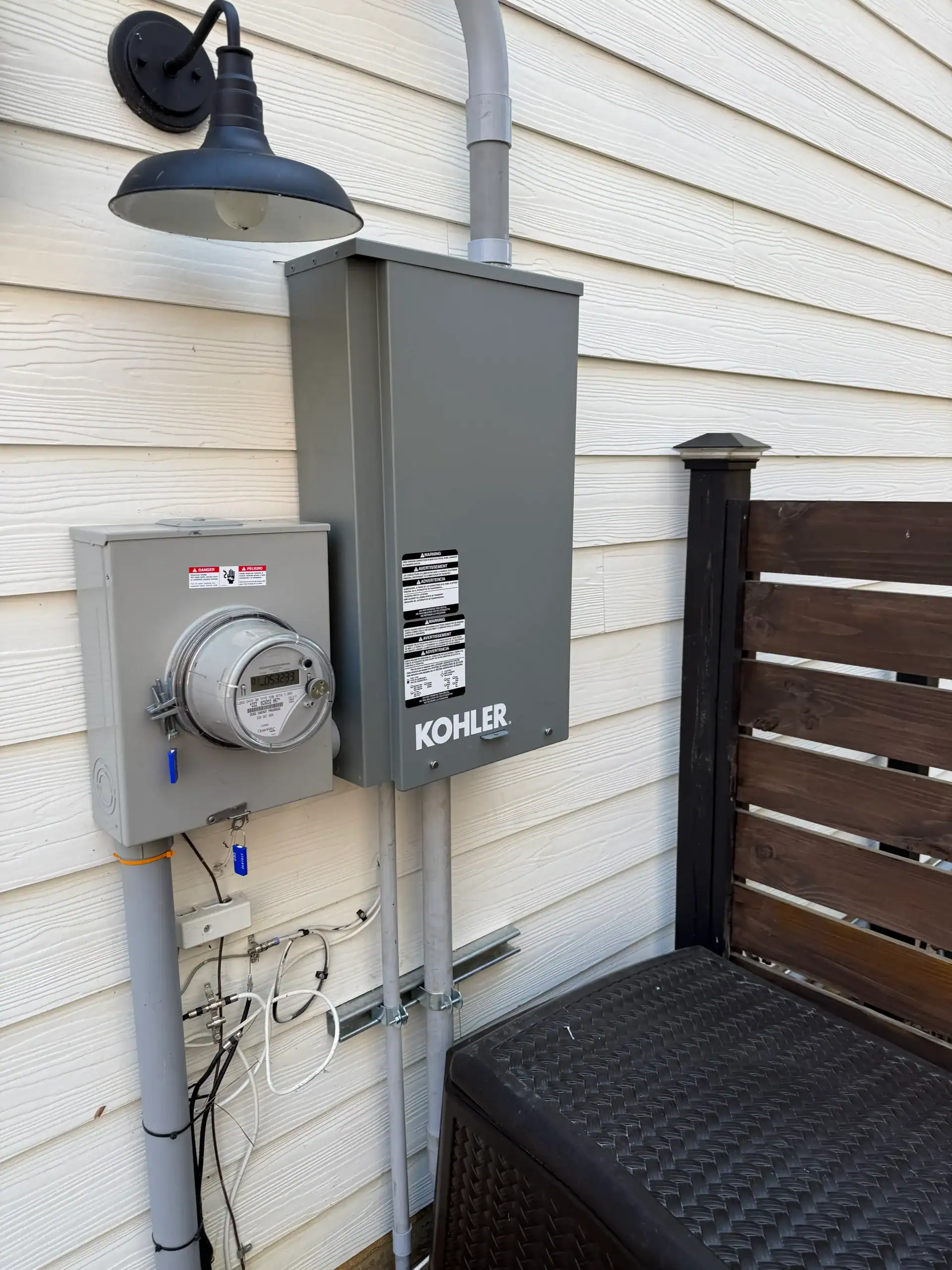
Your electricity meter is the device—usually mounted on the outside of your home—that measures how much power your household uses, recorded in kilowatt-hours. Duke Energy owns the meter itself, the glass or digital unit that spins or displays your usage. What they don’t own is everything around it.
The meter socket, the meter base, and the enclosure housing all of it—that’s the electric meter box, and it belongs to you. If it’s corroded, damaged, or needs to be upgraded because you’re adding a larger service panel, that’s your expense and your responsibility. Duke Energy won’t fix it. We will.
This distinction matters more than most people realize. It affects who you call when something’s wrong, who’s liable when something fails, and—most importantly for this conversation—where surge protection actually lives in your home’s electrical system.
The meter sits at the point where utility power enters your home. Older analog meters use a spinning aluminum disk—the faster it spins, the more electricity you’re using. Newer smart meters, which Duke Energy has been rolling out across its North Carolina service territory, transmit usage data wirelessly, allowing for real-time monitoring and time-of-use billing without a technician ever visiting your property.
Either way, the meter is passive. It measures and records. It doesn’t filter, regulate, or protect. Power flows through it in both directions—from the utility into your home, and in some cases, back out if you have solar. Surges travel through it too, in both directions, without any resistance unless a separate protective device has been installed.
That’s the part the Duke Energy mailer is selling you on—a device installed at or near the meter that’s supposed to block incoming surges before they reach your wiring. In theory, that’s a real thing. The question is what it actually covers, what it doesn’t, and whether it addresses the surges most likely to damage your home.
Most people assume surge damage comes from lightning. The data tells a different story. Research from the electrical industry consistently shows that 60 to 80 percent of power surges originate inside the home—not from storms or the utility grid. Every time your HVAC compressor kicks on, your refrigerator cycles, or your electric dryer starts up, it creates a small voltage spike that travels through your home’s wiring. These aren’t dramatic events. You’ll never notice them. But over months and years, they degrade the sensitive electronics and smart components in your appliances, your HVAC controls, your EV charger, your home office equipment.
A meter-based device, by design, only addresses what’s coming in from the utility line. It does nothing for the surges cycling through your own circuits all day long. That’s not a flaw in Duke Energy’s marketing—it’s just physics. The protection lives at the entry point, not throughout the system.
Since the meter box is the homeowner’s responsibility, it’s worth knowing what can go wrong with it. The most common issues are corrosion, physical damage from weather or impact, and capacity limitations when a home is upgrading from 100-amp to 200-amp service.
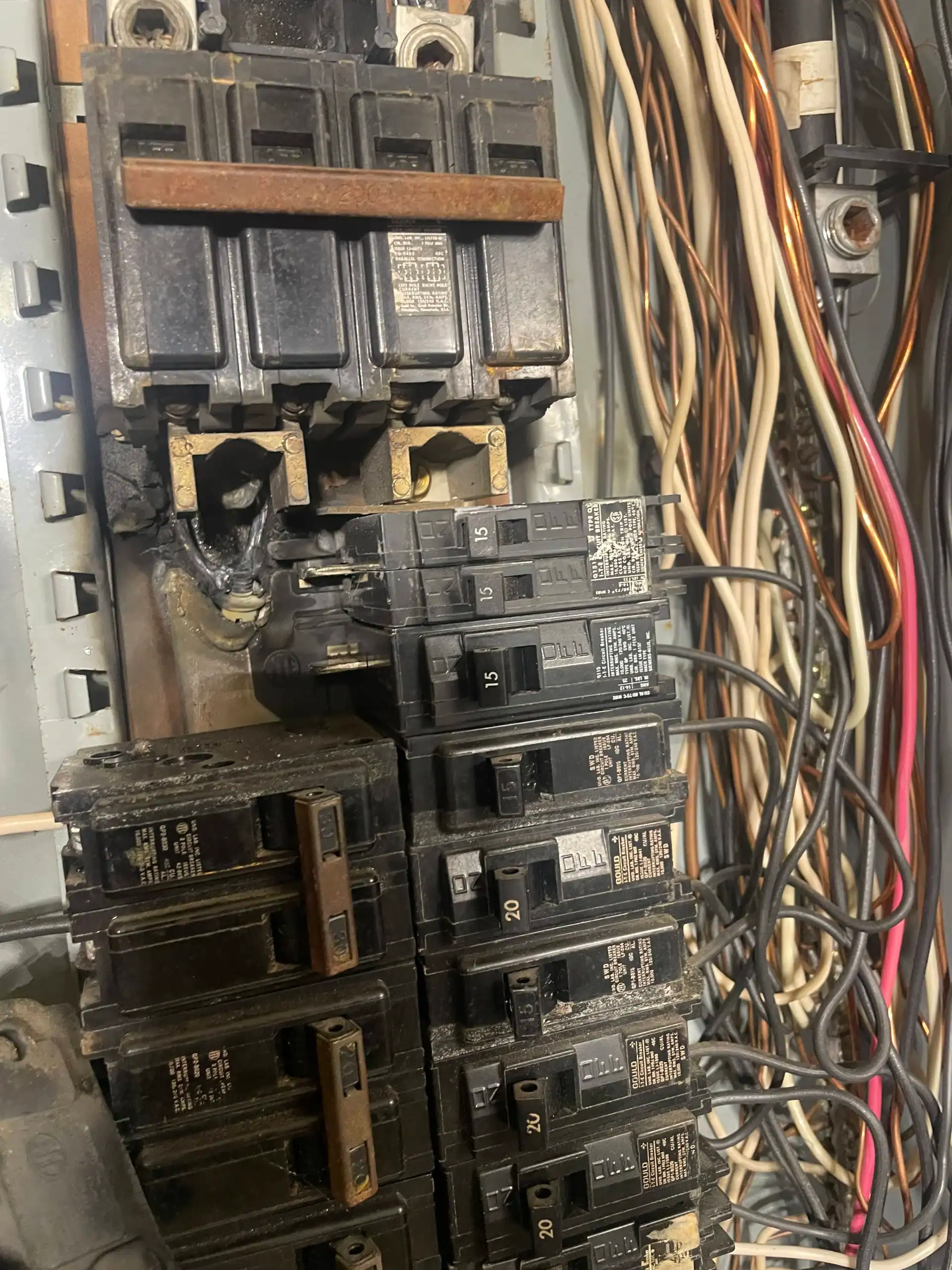
In older Alamance County neighborhoods—homes built in the 1960s through the 1980s—corroded meter sockets are more common than most homeowners expect, especially after years of exposure to humidity and the region’s documented storm activity. Signs that a meter base may need attention include visible rust or burn marks around the socket, a meter that sits loosely or doesn’t seat properly, flickering lights that aren’t explained by anything inside the panel, or a utility company that refuses to re-energize service after an outage until the socket is inspected.
Duke Energy will pull their meter and wait. They won’t repair the socket. We handle that work—and we do it with a permit and coordination with the utility before power is restored. Replacing a meter base requires a licensed electrician, and it’s not something to delay if there are visible signs of damage. A compromised meter socket is a fire risk and a shock hazard.
This is one of the reasons we always assess the full service entrance before recommending or installing any surge protection device. Proper grounding is critical—without it, a surge protector can’t do its job regardless of where it’s installed or how much it costs. Older homes in Alamance County frequently have grounding systems that haven’t been evaluated in decades. That assessment is part of doing the job right.
Want live answers?
Connect with a Electrical Service Providers expert for fast, friendly support.
Duke Energy’s surge protection program installs a device at the meter to block incoming surges from the utility line. The basic installation carries a one-time fee of approximately $44.95. From there, the program offers monthly coverage tiers—$2.99 per month for $1,000 per incident up to $2,000 annually, $7.99 per month for $2,500 per incident up to $5,000 annually, and $9.99 per month for $5,000 per incident up to $10,000 annually.
Before you sign up, there’s a line in Duke Energy’s own program materials worth reading carefully: the surge protection plan “is not part of the regulated utility services offered by Duke Energy Progress, LLC… and is not in any way sanctioned by the North Carolina Utilities Commission.” It’s administered by a third-party warranty company—TWG Home Warranty Services, based in Chicago. That means you’re not dealing with Duke Energy’s licensed electrical workforce when something goes wrong. You’re filing a warranty claim with an out-of-state company.
Before comparing the Duke Energy plan to a panel-mounted whole-home device, it helps to understand the three tiers of surge protection that actually exist.
Single circuit surge protection is what most people already have—the power strip with the surge protector label on it. It protects whatever is plugged directly into it. Nothing else. Your HVAC system, your refrigerator, your electric water heater, your EV charger—none of those are plugged into a power strip. They’re hardwired into your electrical system, and a single circuit device offers them zero protection.
The Duke Energy meter-based plan sits at the other end of the entry point—blocking external surges from the utility line before they enter the home. That’s genuinely useful coverage for what it addresses. The gap is everything else: internal surges from your own appliances, and the fact that whole-house suppressors may still allow up to 15 percent of excess voltage to pass through even when they’re functioning correctly.
A panel-mounted whole-home surge protector—a Type 2 surge protection device installed at your main electrical panel—addresses both angles. It intercepts surges coming in from the utility line and surges originating from within the home before they can travel through the wiring and reach your appliances and electronics. It protects every circuit, every hardwired appliance, everything. And because it’s installed at the panel, it’s working continuously without any claims process, monthly fees, or third-party warranty company involved.
The best approach, if you want real coverage, is layered: a panel-mounted whole-home device as the primary protection, combined with point-of-use strips for your most sensitive electronics. That combination addresses external surges, internal surges, and provides a secondary filter at the device level for equipment like computers and home theater systems that are particularly sensitive to voltage fluctuations.
Here’s the honest comparison most mailers won’t give you.
The Duke Energy plan costs $44.95 to install, then $7.99 to $9.99 per month ongoing. At $9.99 per month, that’s nearly $120 per year, every year, indefinitely—for coverage that only addresses external surges and reimburses depreciated value (not replacement cost) when a claim is approved. Claims must be submitted within 30 days with documentation. Coverage excludes pre-existing conditions and items that can be repaired rather than replaced. The equipment belongs to the program; if you cancel, the protection goes away.
A whole-home surge protector installed by us is a one-time cost. You own the equipment permanently. There’s no monthly fee, no claims process, no depreciation calculation, and no third-party company deciding whether your HVAC qualifies for reimbursement. Most surge protectors last three to five years depending on how many surges they absorb, and we can assess whether yours is still functioning correctly during any routine service visit.
For Alamance County homeowners specifically, the math matters. A recurring monthly charge that compounds over years is a real consideration. Alamance County also has a documented history of storm activity—25 declared natural disasters, including 11 hurricane events—which means surge exposure is a genuine local concern, not a hypothetical one. Older homes in Burlington, Graham, Mebane, and Gibsonville are more likely to have outdated grounding systems that need evaluation before any surge device can work properly.
We’ve been serving Alamance County since 2002. Andy Helton has been a licensed Master Electrician since 1989. When we install whole-home surge protection, we assess the grounding system first, pull the permit, do the work, and make sure it passes inspection. That’s the whole job—not just the device on the wall.
If you’ve read this far, you probably already sense the answer. The Duke Energy plan addresses one piece of the problem—external surges from the utility line—and it does so through a third-party warranty program with monthly fees and coverage limits. A whole-home surge protector installed by a licensed electrician addresses both external and internal surges, costs you once, and belongs to you permanently.
That doesn’t mean the Duke Energy plan is worthless. For some homeowners, the warranty reimbursement component has real appeal. But it’s worth knowing exactly what you’re buying before you sign up—and whether it’s replacing something more comprehensive or just adding a monthly line item to your utility bill.
If you want a straight answer about what your home actually needs, call ESP Electrical Service Providers. We’ll tell you what we find, quote you the job before we start, and do the work right the first time.
Article details:
Share:
Continue learning: