Your home's electrical system wasn't built for today's technology. Learn electrician-backed strategies to future-proof your smart home ecosystem without overspending or emergency upgrades.
Share:
Summary:
Your electrical panel was probably installed when a smartphone meant a cordless phone mounted to the kitchen wall. Now you’re streaming 4K video in three rooms, charging a laptop at every outlet, and considering an electric vehicle that needs the power equivalent of adding another house to your property.
The gap between what your home was built to handle and what you’re asking it to do keeps widening. When that gap gets too wide, you end up with tripped breakers, unreliable smart devices, or an electrician telling you that your dream EV charger requires a $15,000 panel upgrade you didn’t budget for.
Future-proofing your electrical system isn’t about predicting every gadget you’ll own in 2030. It’s about building the right foundation now so you have options later. Let’s talk about what that actually looks like for homeowners in Burlington, Chapel Hill, Durham, and across the Triangle area, including when electrical panel replacement may be necessary.
Your electrical panel is the heart of your entire system. Everything you plug in, turn on, or automate draws power through that metal box in your garage or basement. When it was installed 20 or 30 years ago, it was sized for the loads homes needed back then—not for charging a 60kWh battery overnight while your heat pump runs and your smart home hub coordinates two dozen connected devices.
Most older homes in Alamance County, NC and surrounding areas have 100-amp or 150-amp service. That was plenty when the biggest electrical draws were a window AC unit and an electric dryer. Today’s homes increasingly need 200-amp service minimum. The difference isn’t just about having enough power—it’s about having headroom to add what you’ll want next year without starting from scratch.
You don’t need to be an electrician to spot warning signs that your panel is maxed out. If your breakers trip when you run the microwave and coffee maker simultaneously, that’s a red flag. If lights dim when the AC kicks on, your system is already struggling. The real test is forward-looking—add up what you’re planning to install, not just what you have now.
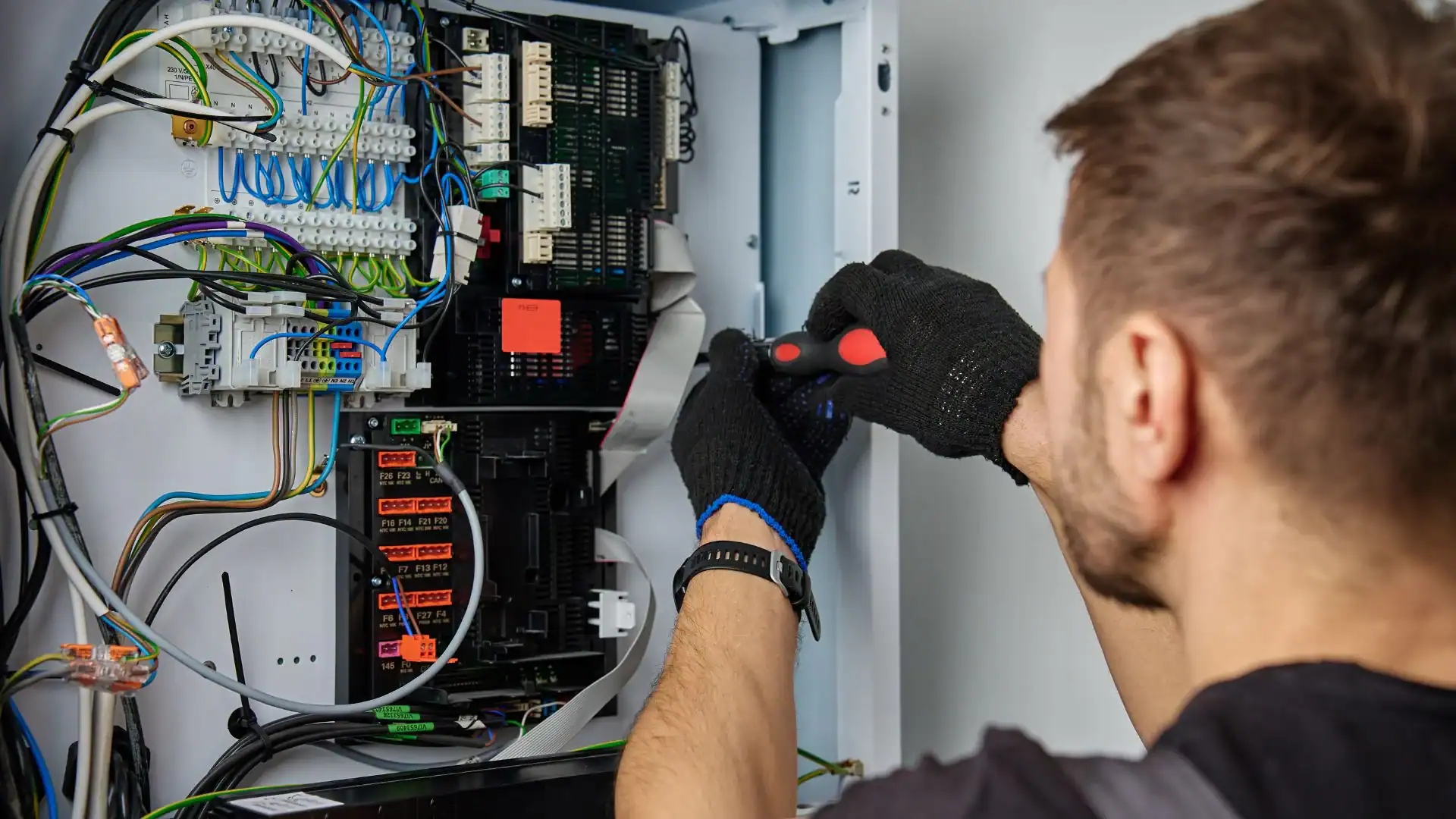
Standard electrical panels are dumb. They distribute power and trip breakers when circuits overload. That’s it. Smart electrical panels do all of that plus give you visibility and control you’ve never had before. A smart panel monitors every circuit in real time, showing exactly how much power your HVAC system is using right now, or how much your EV charged overnight, or which circuit is pulling more power than it should.
But monitoring is just the start. Smart panels can manage loads automatically. Say you’re charging your EV and someone turns on the dryer and the heat pump kicks on. Instead of tripping a breaker, the smart panel can temporarily reduce power to the EV charger—your lowest priority load—so everything else keeps running. When demand drops, it automatically restores full charging speed. You never notice the adjustment, and you never blow a breaker.
This load management capability is huge for homes in Durham County, NC and beyond that want to add high-draw equipment without upgrading their utility service. If your home has 200-amp service but you want to add a 60-amp EV charger, a 40-amp heat pump, and smart devices, you might technically exceed your capacity during peak usage. A smart panel with load management lets you install all of that equipment and ensures it never tries to draw more power than your service can provide.
The other major benefit is troubleshooting. Smart panels alert you to problems early. Unusual power draw on a circuit might indicate a failing appliance or a wiring issue. A circuit that’s consistently near its capacity might need to be split before it becomes a problem. You catch issues before they become failures.
Smart panels aren’t cheap—expect to spend $3,000 to $5,000 or more depending on your home’s size. But in North Carolina, some of that cost may be offset by rebates through programs like Energy Saver NC, which offers up to $4,000 toward electrical panel improvements for qualifying households. The installation requires a licensed electrician who can evaluate your existing service, ensure the installation meets current code requirements, and integrate the smart panel with your home’s circuits. Done right, it’s a one-time investment that serves your home for decades.
A qualified electrician can perform a load calculation—a detailed assessment of your current and planned electrical usage. This calculation factors in everything from your square footage to your appliances to your plans for future additions. It’s the only reliable way to know whether your current setup can handle what you’re planning, or whether you need to upgrade before you install that EV charger or whole-home automation system.
Here’s where it gets tricky. You can’t just look at the number on your main breaker and assume that’s what you have available. Your panel might say 200 amps, but if your utility service is only 100 amps, that’s your ceiling. The service coming into your home from the street determines your actual capacity, and upgrading that involves your utility company, not just an electrician.
The timing matters too. If you’re already planning one major electrical project, that’s often the most cost-effective time to upgrade your panel. Running new circuits for an EV charger or adding dedicated lines for smart home equipment means your electrician is already working in your panel. Adding a panel upgrade to that scope is usually more efficient than doing it as a separate project later.
Don’t wait until you’re forced into an emergency upgrade. When your panel fails or you discover you can’t install something you’ve already purchased, you’re making decisions under pressure with limited options. Planning ahead gives you control over timing and budget. For homeowners in Chatham County, NC or Orange County, NC, working with a local electrician familiar with regional code requirements and utility procedures makes the process smoother.
Want live answers?
Connect with a Electrical Service Providers expert for fast, friendly support.
Buying an electric vehicle is exciting until you realize your home might not be ready for it. Public charging works in a pinch, but the whole point of owning an EV is charging at home overnight. That requires the right electrical infrastructure, and most homes don’t have it out of the box.
There are two types of home EV charging. Level 1 uses a standard 120-volt outlet and is slow, adding only about 4-5 miles of range per hour. For most people, it doesn’t cut it. Level 2 charging uses a 240-volt circuit, like your electric dryer. It’s much faster, typically adding 25-40 miles of range per hour. Most EVs can fully charge overnight on Level 2. This is what most homeowners need, and it’s what requires proper electrical planning.
Installing a Level 2 EV charger requires a dedicated 40-amp or 50-amp circuit. “Dedicated” means nothing else runs on that circuit—it exists solely to power your EV charger. Your electrician will run new wiring from your panel to the charger location, install the appropriate breaker, and mount the charging unit.
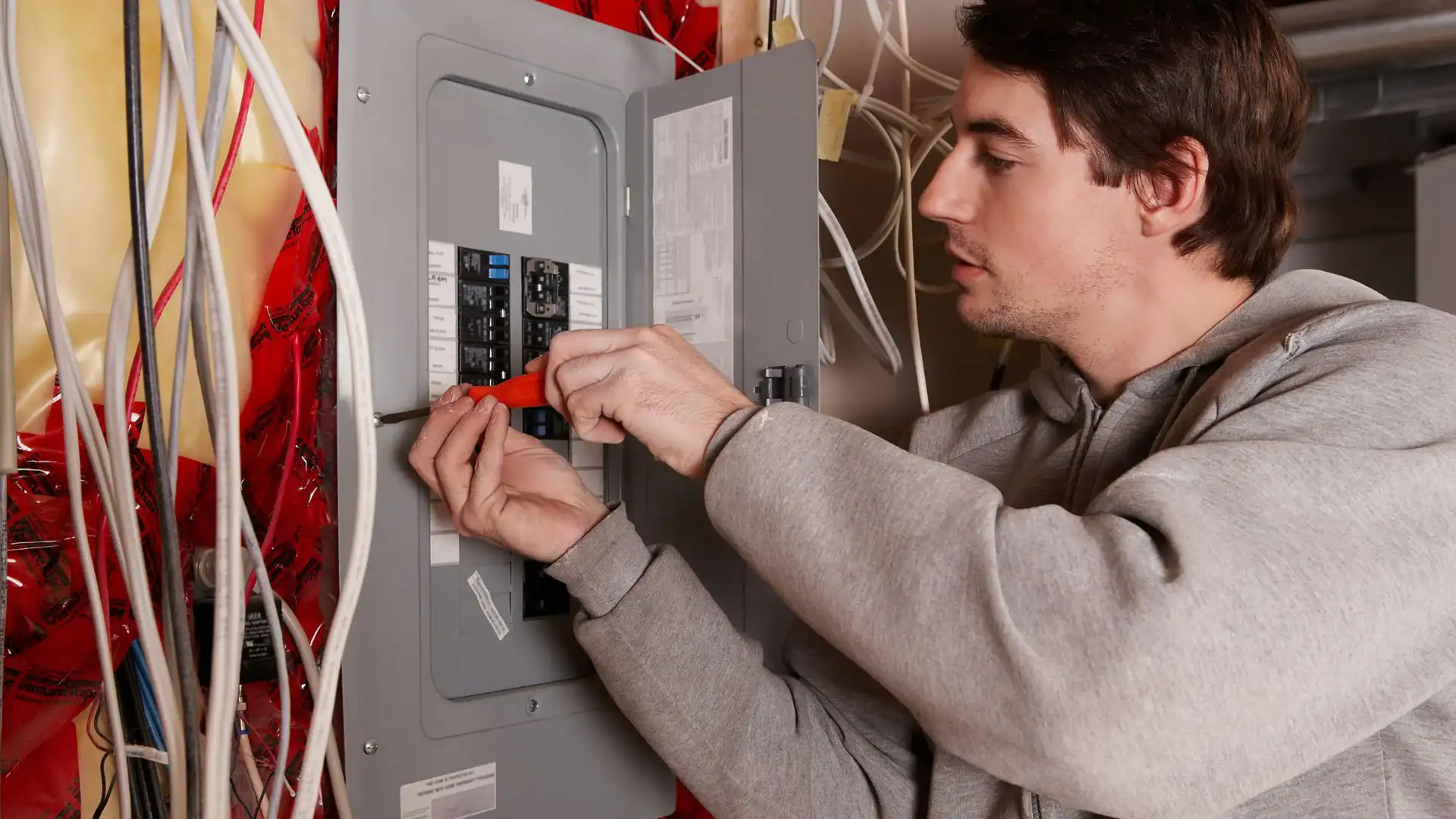
If your home has modern 200-amp service and available capacity in your panel, EV charger installation is relatively straightforward. The electrician runs the new circuit, installs the charger, and you’re done. If your home has older 100-amp or 150-amp service, or if your 200-amp panel is already near capacity, you might need a service upgrade first.
Your electrician will assess your total electrical load and determine whether you have capacity for the additional 40 or 50 amps the EV charger requires. If you don’t, you have options. You can upgrade your electrical service, which involves your utility company and is expensive but gives you capacity for future needs. Or you can install a smart panel with load management, which can often accommodate an EV charger without a service upgrade by intelligently managing when and how much power goes to different loads.
Cost varies widely based on these factors. A simple installation with a short run and available panel capacity might cost $1,000 to $2,000. A complex installation requiring a service upgrade, long conduit runs, and trenching could run $5,000 to $10,000 or more. Get quotes from licensed electricians who specifically mention experience with EV charger installations in Guilford County, NC or your specific area.
Don’t forget about incentives. Federal tax credits may cover up to $1,000 of residential EV charger installation costs. Some utility companies offer additional rebates. Duke Energy, which serves much of the Triangle area, may provide further financial support through their EV charging initiatives.
Right now you might own one EV. In five years, you might own two. If you have space for two vehicles and any possibility you’ll own two EVs in the future, consider running the wiring for a second charger now even if you don’t install the actual charging unit yet. The expensive part is running the circuit from your panel to the garage. Running two circuits at once costs much less than doing it twice. You can cap off the second circuit and leave it ready for when you need it.
WiFi is convenient but unreliable when you’re trying to run a truly smart home. Wireless signals get blocked by walls, interfered with by neighbors’ networks, and bogged down when too many devices compete for bandwidth. For a rock-solid smart home, you need wired network infrastructure through structured cabling—running ethernet cables, typically Cat6 or Cat6a, to key locations throughout your home.
The time to install structured cabling is during construction or major renovation when walls are open. Fishing cables through finished walls is possible but expensive. If you’re building new or doing a gut renovation, this is your opportunity to wire your home properly.
Start with a central location for your networking equipment—typically a utility room, closet, or basement. From this central location, run cables to anywhere you might want a wired connection. Home offices absolutely need hardwired ethernet. Entertainment areas benefit from wired connections to TVs and streaming devices. Plan for ceiling-mounted wireless access points by running ethernet to ceiling locations in central areas of each floor.
Cat6 cable is the current standard and handles speeds up to 10 Gbps over short distances. How many cables should you run? More than you think you need. A common approach is two cables to each location—one for current use, one for future expansion. Cables are cheap compared to the labor of installing them.
Fiber optic readiness means having a path for fiber to enter your home and connect to your networking equipment. This typically involves conduit—a pipe that runs from your home’s exterior to your networking closet. When the fiber provider comes to install service, they run their fiber cable through this conduit rather than drilling holes in your walls. If you’re building new or renovating, ask your electrician or low-voltage contractor to install conduit from an exterior wall to your networking location.
Fiber optic internet is expanding rapidly across North Carolina. When fiber becomes available in your area in Burlington, NC or Chapel Hill, NC, you want your home ready to take advantage of it. Having your home pre-wired or at least conduit-ready means you can take advantage of those faster speeds immediately rather than dealing with installation challenges later.
Future-proofing your smart home ecosystem comes down to planning ahead and building the right foundation. You don’t need to install every possible upgrade today, but you do need infrastructure that gives you options tomorrow.
Focus on capacity first. Make sure your electrical panel and service can handle what you want to do now plus reasonable growth. A panel upgrade is expensive, but it’s more expensive when you’re forced into it as an emergency. Smart panels with load management can extend the life of your current service and give you visibility into your energy usage you’ve never had before.
Don’t overlook the network infrastructure. Structured cabling with Cat6 ethernet and fiber optic readiness ensures your smart devices have the reliable, fast connections they need. Think through your EV charging needs even if you don’t own an electric vehicle yet. Running the circuit during other electrical work costs much less than doing it later as a standalone project. And take advantage of available rebates and incentives through programs like Energy Saver NC—they can offset a significant portion of your upgrade costs.
When you’re ready to move forward with electrical upgrades that truly future-proof your home, working with experienced professionals makes all the difference. We’ve been helping homeowners in Alamance County, NC, Durham County, NC, Chatham County, NC, Orange County, NC, and Guilford County, NC navigate these exact challenges since 2002. From smart panel installations to EV charger circuits to whole-home structured cabling, we bring the expertise to do it right the first time.
Article details:
Share:
Continue learning: