Your generator won't wait for a convenient time to fail. This seasonal maintenance checklist helps you avoid costly generator repair and keeps your backup power ready.
Share:
Summary:
You bought a generator so you’d never be caught off guard during a power outage. But most people don’t think about this until it’s too late: that generator sitting outside your home needs attention throughout the year, not just when the power goes out.
Skipping seasonal maintenance doesn’t just risk a dead battery or clogged fuel line. It means discovering your backup power system won’t start right when your family needs it most. A solid maintenance routine isn’t complicated, and it’s considerably cheaper than emergency generator repair in the middle of a storm. What actually matters when it comes to keeping your standby generator ready?
Most generator owners assume their unit will fire up automatically when needed. That’s what it’s designed to do, right? But generators are mechanical systems with batteries, fuel lines, filters, and oil that all degrade over time.
Your generator might sit idle for months between power outages. During that time, fuel goes stale, batteries lose charge, and small issues you’d never notice turn into failures. When a storm finally hits Alamance County or Durham County and the power cuts out, that’s not the moment to find out your generator won’t start.
Regular seasonal checks catch these issues before they become emergencies. You’re protecting your investment while making sure your family stays comfortable and safe when the grid goes down, your food doesn’t spoil, and your home stays heated or cooled depending on the season.
Skipping maintenance costs you more than you’d expect. It’s not just about the generator itself.
A failed generator during an outage creates cascading problems. No heat in winter means frozen pipes, which cause thousands in water damage. No AC in summer means spoiled food, uncomfortable nights, and potential health risks for anyone with medical needs. If you work from home, you’re also looking at lost income while you wait for power restoration.
Emergency generator repair during storms costs significantly more than routine maintenance ever would. A generator that won’t start might need a new battery, fuel system cleaning, or worse. Repairs that could have been prevented with a simple oil change or filter replacement now run $300 to $1,000 or more, and that’s if you can even get someone out during the storm.
Neglected generators have shorter lifespans too. A well-maintained standby generator lasts 15 to 20 years. Skip the maintenance, and you might replace the entire unit in half that time. That’s a $7,000 to $15,000 replacement you could have avoided with $300 to $600 in annual service.
Most manufacturer warranties require proof of regular maintenance. Skip your annual service, and you void that warranty right when you need it most. When a major component fails, you’re paying out of pocket for something that should have been covered.
The pattern is always the same. Small issues ignored become big problems. A dirty air filter reduces performance. A weak battery won’t start the engine. Old oil causes internal wear. Stale fuel clogs the system. Each problem is cheap and easy to fix during scheduled maintenance. Each becomes expensive and inconvenient when it causes a breakdown during a power outage.
How often is “regular” maintenance? The answer depends on a few factors, but there’s a framework that works for most homeowners.
At minimum, your generator needs professional standby generator service once a year. This isn’t optional. It’s the baseline for keeping your system reliable and your warranty valid. Annual service typically costs between $300 and $600, which is a fraction of what emergency generator repair runs when something fails.
Annual service isn’t the whole story though. Your generator also needs attention after it runs. After a power outage when your generator kicked on, check it over once power returns. Look for visible wear, unusual smells, or fluid level changes. Write down how long it ran, because that counts toward your next oil change interval.
Monthly exercise cycles matter. Most modern generators run automatically for about 10 minutes each month to keep everything lubricated and ready. While it’s running, listen for anything unusual. Odd noises, vibrations, or hesitation signal developing problems. After it shuts off, do a quick walk around. Check for leaks and make sure nothing blocks airflow around the unit.
Every three months, take a closer look. Check your battery voltage with a multimeter. Clean out debris from air intakes. Make sure ventilation panels are clear. If you’re using propane, confirm tank valves are secure and regulator pressure looks normal. These quarterly checks take maybe 15 minutes and catch issues before they become urgent.
Seasonal prep matters for locations like Chatham County, Orange County, and Guilford County where we deal with both humid summers and cold snaps in winter. Before winter hits, winterize your generator with winter-grade oil, fuel line inspections, and battery checks. Before summer, inspect the cooling system and check for corrosion from humid months.
Consistency beats perfection. A generator that gets looked at regularly will tell you when something’s wrong before it fails completely. That’s the difference between a $50 filter replacement during scheduled maintenance and an $800 service call during a storm.
Want live answers?
Connect with a Electrical Service Providers expert for fast, friendly support.
What do you actually need to do? This checklist breaks down by season because different times of year create different challenges for your generator.
The goal isn’t to turn you into a generator technician. Some of this you can handle yourself if you’re comfortable with basic maintenance. Other tasks need a professional. What matters is knowing what should happen and when, so you stay ahead of problems instead of reacting to them.
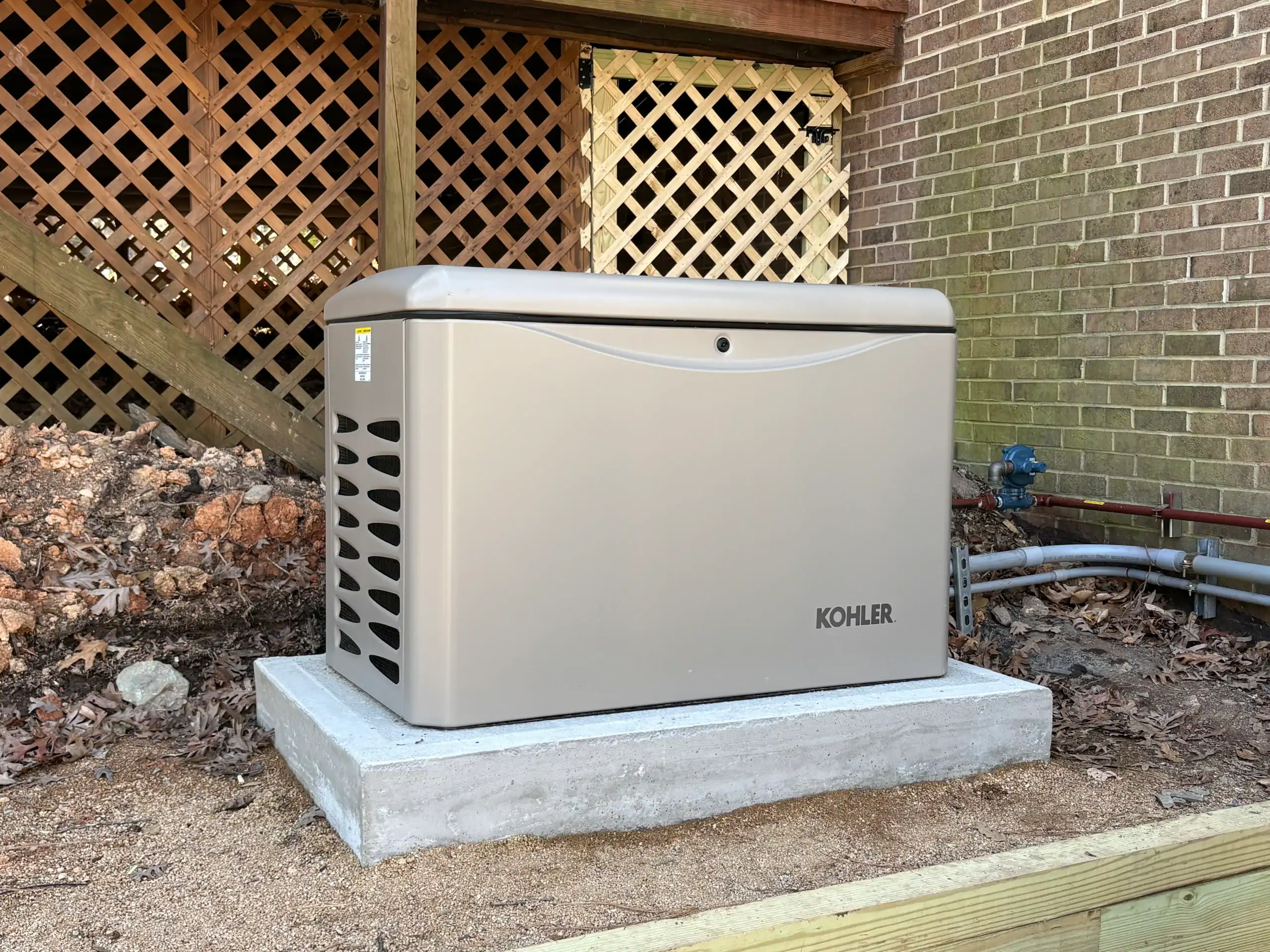
Spring is your reset point. After winter, your generator needs a thorough checkup to make sure everything survived the cold months and is ready for storm season.
Start with a visual inspection of the entire unit. Look for signs of rust, corrosion, or damage to the housing. Check for cracks in hoses or belts. Make sure all wiring looks intact with no fraying or loose connections. If you see fluid pooling underneath, that’s a leak needing immediate attention.
Check your oil level and condition. If the oil looks dark or dirty, or if it’s been close to a year since the last change, schedule that oil change now. Fresh oil is critical for smooth operation, especially as temperatures rise and your generator might need to run for extended periods during summer storms. Replace the oil filter too.
Your air filter needs inspection every six months, and spring is perfect timing. A dirty air filter restricts airflow and makes your generator work harder than it should. Hold the filter up to light. If you can’t see through it clearly, replace it. This is especially important after a winter where dust and debris might have accumulated.
Battery health becomes critical as temperatures warm up. Heat is actually harder on batteries than cold in many ways. Use a multimeter to check voltage. If your battery reads low or if it’s more than three years old, consider replacing it. A weak battery is one of the most common reasons generators fail to start, and it’s one of the easiest things to prevent.
Check your fuel system thoroughly. If you’re running on propane, inspect the tank connections and make sure there are no leaks. For natural gas systems, listen for any hissing that might indicate a leak. If you’re using a fuel stabilizer, now’s the time to add it if you haven’t already. Stale fuel is a major cause of starting problems and poor performance.
Run a test cycle under load. Don’t just let it exercise for 10 minutes. Actually put some demand on it. If you can safely do so, simulate a power outage and let the generator carry your home’s electrical load for 30 minutes to an hour. This tells you if there are any performance issues before you actually need the generator in an emergency.
Clean around the unit. Clear away vegetation, leaves, or debris that accumulated over winter. Your generator needs at least three to five feet of clearance on all sides for proper airflow. Blocked vents cause overheating, which leads to shutdowns or damage.
Summer maintenance is mostly about monitoring. Keep an eye on coolant levels, especially during hot weather. Check that your generator’s cooling system functions properly. Overheating is a real risk when ambient temperatures are high and your generator is working hard. Make sure cooling fans operate and that radiator fins aren’t clogged with dust or pollen.
Fall is when you prepare for winter. North Carolina might not get the brutal cold that northern states see, but we get enough freezing weather, ice storms, and unpredictable temperature swings to cause real problems for an unprepared generator.
Winterizing starts with your fuel system. Cold weather causes fuel to thicken, making it harder for your generator to start. If you’re running diesel, consider adding a cold flow improver to prevent the fuel from gelling when temperatures drop. For all fuel types, make sure you’re using a fuel stabilizer to prevent degradation during periods of non-use.
Oil viscosity changes in cold weather. Regular oil gets thick and doesn’t flow as easily, which means poor lubrication during startup. Switch to a winter-grade oil designed to stay fluid in lower temperatures. Check your owner’s manual for the recommended viscosity for cold weather operation. This simple change can mean the difference between a generator that starts reliably and one that struggles or won’t start at all in freezing conditions.
Your battery faces its biggest challenge in winter. Cold weather reduces battery capacity and makes it harder to crank the engine. Test your battery’s charge and overall health. If it’s showing any signs of weakness, replace it before winter hits. Consider installing a battery tender or trickle charger if your generator will sit unused for extended periods. Some generators have built-in battery chargers, but verify yours is working properly.
Inspect all hoses and belts for signs of cracking or wear. Cold weather makes rubber components more brittle, and a hose that looked fine in summer can split when temperatures drop. Pay special attention to coolant hoses, since a coolant leak in winter can lead to freezing and serious engine damage.
Check your coolant level and concentration. Coolant should be at the proper level and have the right antifreeze mixture to prevent freezing. If you’re not sure about the concentration, have it tested. Frozen coolant can crack engine blocks and cause thousands of dollars in damage.
Make sure your generator is protected from the elements but still has proper ventilation. Snow and ice buildup can block vents and cause operational problems. Keep the area around your generator clear of snow. Never let snow pile up against the unit or cover vents. Some people install covers or enclosures for winter protection, which is fine as long as you maintain proper clearance and ventilation.
Test your automatic start function before winter weather hits. The worst time to discover your automatic transfer switch isn’t working is during an ice storm. Simulate a power outage and verify that your generator starts automatically and takes the load as it should. If there’s any hesitation or failure, get it looked at immediately.
During winter, run your generator under load more frequently than you might in other seasons. Cold starts are hard on engines. Running the generator for 20 to 30 minutes once a month keeps everything lubricated and confirms it’s ready when needed. Let it warm up fully before applying heavy loads.
Keep an eye on your fuel levels throughout winter. If you’re using propane, be aware that tank pressure drops in very cold weather, which can affect performance. Make sure you have adequate fuel supply before any predicted storm. Running out of fuel during an extended winter outage is not a situation you want to find yourself in.
Generator maintenance isn’t complicated, but it is important. The seasonal checklist we’ve covered isn’t about perfection. It’s about consistency and catching small issues before they become big problems.
Your generator is there to protect your home and family when the power goes out. Regular maintenance is how you make sure it’s actually ready to do that job. A few hours of attention each year, spread across the seasons, prevent the frustration and expense of emergency generator repair when you can least afford it.
If you’re in Alamance County, Durham County, Chatham County, Orange County, or Guilford County and you want professional eyes on your generator, we’ve been helping homeowners keep their backup power systems reliable for over 20 years at ESP Providers. Sometimes the peace of mind that comes from having an experienced technician verify everything is working right is worth every penny.
Article details:
Share:
Continue learning: