Is your backup generator actually ready for hurricane season? Discover the five critical warning signs that your system needs professional attention before the next power outage hits.
Share:
Summary:
You bought a generator for one reason: to keep your family safe and comfortable when the power goes out. But here’s the reality most homeowners in Alamance County, Durham County, Chatham County, Orange County, and Guilford County don’t think about until it’s too late—generators don’t sit idle for months and then fire up perfectly when you need them.
Storm season is coming. Hurricane season peaks between mid-August and late September across North Carolina, and power outages can last hours or even days. If your generator has been sitting untouched since last year, there’s a real chance it won’t perform when you actually need it. This isn’t about scaring you. It’s about making sure the investment you made actually works.
Here are the five warning signs that your generator needs professional attention now, before the next storm rolls through.
This is the most obvious red flag, and unfortunately, it’s also the most common problem homeowners discover during a power outage. If your generator hesitates, cranks slowly, or requires several attempts before it fires up, something’s wrong. Period.
A healthy standby generator should start smoothly and automatically within seconds of detecting a power loss. When it doesn’t, you’re looking at potential issues with the battery, fuel system, or ignition components. The problem is that most people only test their generators occasionally—or worse, not at all—which means these issues go undetected until it’s too late.
Battery failure is actually the leading cause of generator failure. Even if your generator ran fine last season, batteries naturally lose capacity over time, especially in North Carolina’s temperature swings between summer heat and winter cold. And here’s what makes this particularly frustrating: a generator that won’t start during a power outage is basically a very expensive lawn ornament.
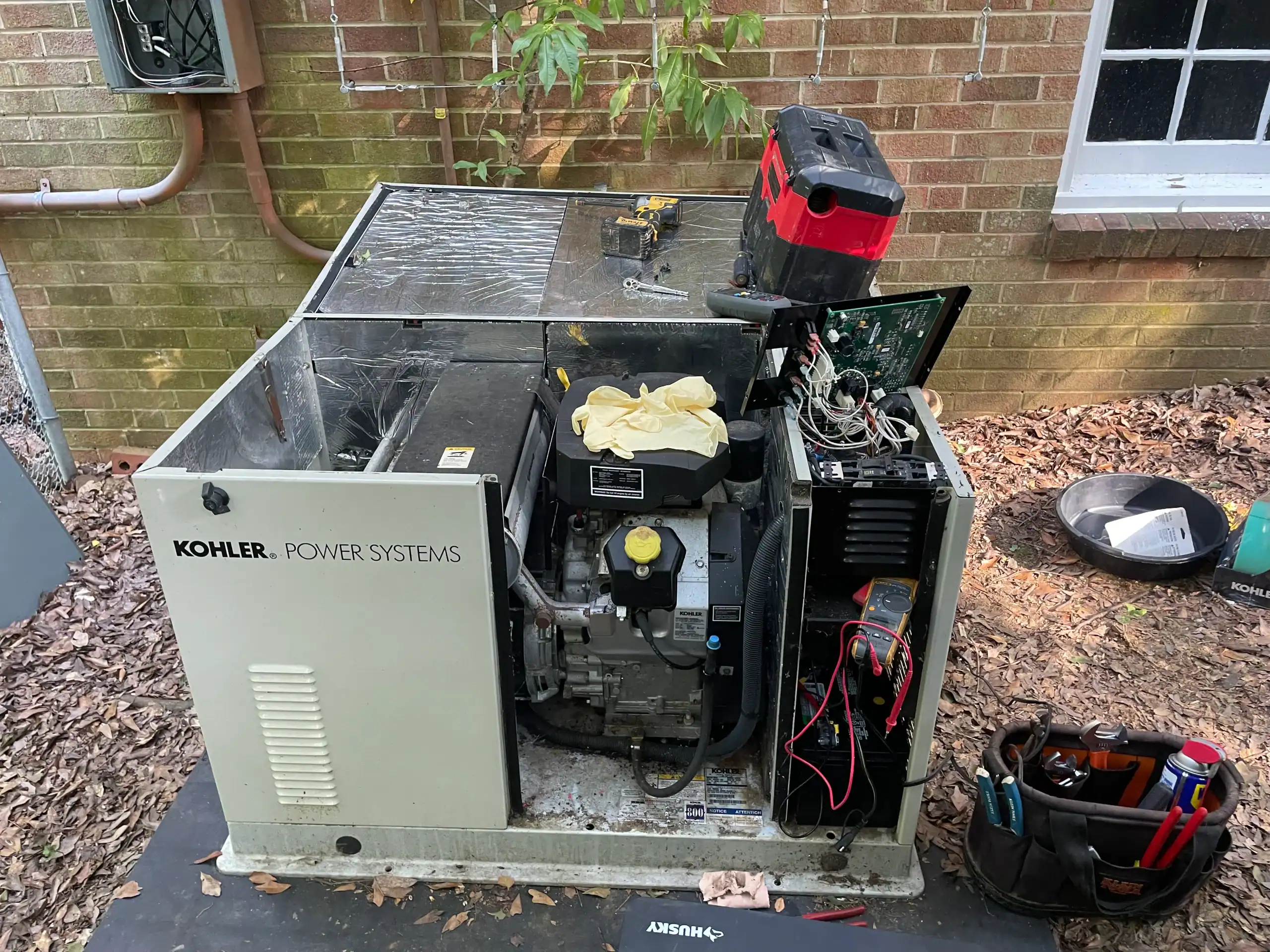
When your generator struggles to start, you’re usually dealing with one of three culprits: a weak or dead battery, fuel system issues, or spark plug problems. Let’s break down what’s actually happening inside your system.
Your generator’s battery powers the electric starter motor. If the battery voltage drops below the required threshold—typically around 12.6 to 12.8 volts—the starter won’t have enough power to turn the engine over. Batteries typically need replacement every three to four years, but extreme temperatures and infrequent use can shorten that lifespan considerably. Corrosion on battery terminals also creates resistance that prevents proper electrical flow. This is basic electrical system diagnostics, but it’s often overlooked.
Fuel problems are equally common but more complex. If your generator sits unused for extended periods, fuel can degrade and form varnish deposits that clog the carburetor or fuel injectors. Water contamination in diesel fuel is another frequent issue in areas like Burlington, Chapel Hill, Durham, and Greensboro—especially in partially filled tanks where condensation accumulates. Old fuel loses its combustibility, meaning even if it reaches the engine, it won’t ignite properly. You might get engine stalling, rough running, or complete failure to start.
Spark plugs are your engine’s ignition source. Over time, they accumulate carbon deposits, wear down, or simply fail from age. A fouled or worn spark plug won’t create the spark needed to ignite the fuel-air mixture in the combustion chamber. This is especially common in generators that run infrequently or have been sitting through multiple seasons without maintenance.
The frustrating part is that these problems often develop gradually. Your generator might start fine one month, take an extra few seconds the next, and then completely fail when you actually need it during a storm. That’s why professional diagnostics catch these issues before they leave you in the dark. Our qualified technicians can test battery voltage, inspect fuel quality, check spark plug condition, and identify problems you wouldn’t notice until it’s too late.
Here’s something most generator owners don’t realize: machines are designed to run, not sit idle. When your standby generator goes months without operation, internal components start to deteriorate in ways that aren’t immediately visible. This is particularly problematic in North Carolina, where your generator might sit unused for eight or nine months between storm seasons.
Seals and gaskets dry out when they’re not regularly exposed to oil and fuel flow. This leads to leaks that can damage your engine and create fire hazards. Fuel sitting in lines and the carburetor breaks down chemically, forming gum and varnish that restrict flow. Battery charge depletes naturally over time, even when not in use. And perhaps most importantly, you have no idea if your automatic transfer switch will actually detect a power outage and signal your generator to start.
This is why manufacturers recommend running your generator under load for at least 30 minutes every month. But here’s the catch—most homeowners either forget to do this or don’t run the generator long enough for it to reach proper operating temperature. A quick five-minute test run doesn’t cut it. The engine needs to warm up fully, circulate oil throughout all components, and burn off any moisture that’s accumulated in the exhaust system.
Professional standby generator maintenance goes several steps further. Our qualified technicians don’t just start your generator and let it run. We perform a comprehensive inspection that includes checking oil levels and condition, testing battery voltage and connections, inspecting air and fuel filters, examining belts and hoses for wear, verifying proper coolant levels, and most critically, running the system under actual load conditions to ensure it can handle your home’s power demands.
The difference between a homeowner test run and professional maintenance is like the difference between checking your car’s oil and getting a full inspection. You might catch obvious problems, but you’re missing the subtle warning signs that indicate impending failure. Our generator service technicians have diagnostic equipment to measure voltage output, identify electrical system irregularities, and spot mechanical issues before they cause breakdowns.
Maintenance isn’t just about preventing failures—it’s about extending your generator’s lifespan and maintaining efficiency. Well-maintained generators can run for decades. Neglected ones often need major repairs or replacement within 10 to 15 years. Given that a standby generator represents a significant investment for homeowners in Alamance County, Durham County, or anywhere across central NC, regular maintenance is actually the most cost-effective approach to protecting that investment and ensuring storm readiness.
Want live answers?
Connect with a Electrical Service Providers expert for fast, friendly support.
Your generator should run with a consistent, steady hum. If you’re hearing knocking, grinding, squealing, rattling, or any other unusual sounds, don’t ignore them. These noises are your generator’s way of telling you something is wrong internally, and waiting to address them only makes the problem worse.
Excessive vibration is equally concerning. A properly functioning generator should run relatively smoothly with minimal vibration. If you notice your unit shaking more than usual or if the vibration has increased over time, you’re likely dealing with worn engine mounts, misaligned components, or internal mechanical problems.
Visible smoke is an immediate red flag. Black smoke usually indicates incomplete fuel combustion. Blue smoke suggests oil is burning where it shouldn’t be. White smoke can mean coolant is leaking into the combustion chamber. None of these are normal, and all of them signal that your generator needs immediate professional attention.
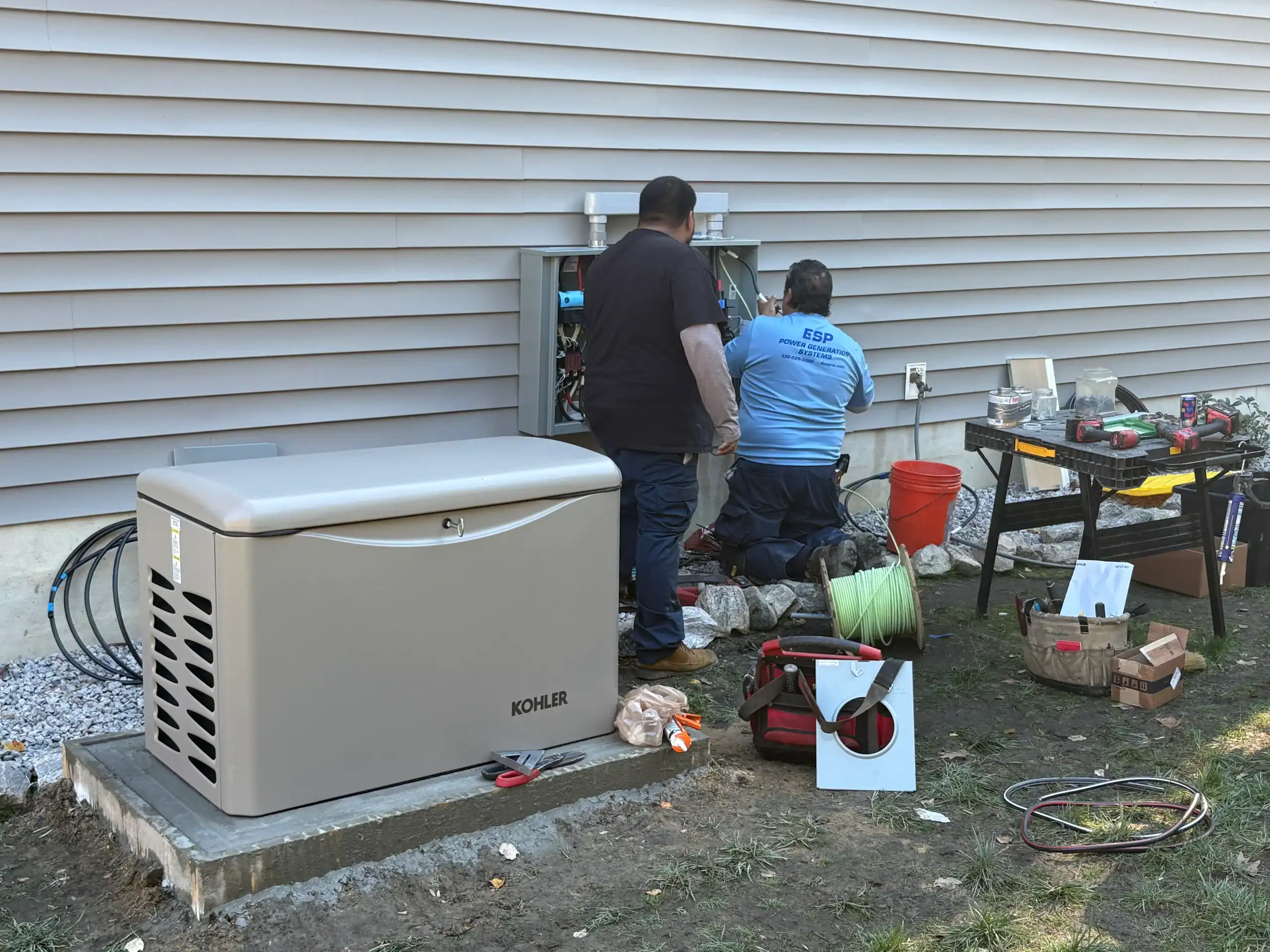
Different sounds point to different problems, and understanding what you’re hearing can help you communicate more effectively with a repair technician. Let’s decode the most common generator noises and what they actually mean for your emergency power system.
Knocking or pinging sounds typically indicate engine problems. This could be detonation—where fuel ignites prematurely in the combustion chamber—or it might signal worn bearings that are allowing excessive play in moving parts. Either way, this sound means internal engine components are under stress and likely wearing rapidly. Left unaddressed, this can lead to catastrophic engine failure that requires complete replacement rather than repair.
Grinding noises usually point to metal-on-metal contact somewhere in the system. This could be failing bearings, a worn alternator, or problems with the cooling fan. The grinding sound means protective lubricant has broken down or components have worn beyond their tolerances. This type of noise is particularly urgent because metal particles from the grinding can contaminate your oil and cause damage throughout the engine.
Squealing or screeching often indicates belt problems. Your generator uses belts to drive the alternator and cooling fan. When these belts wear, crack, or lose proper tension, they slip against the pulleys and create that high-pitched sound. While belt replacement is relatively minor, ignoring the problem can lead to overheating or charging system failure during the next power outage.
Rattling or clattering suggests loose components. This could be as simple as a loose mounting bolt or as serious as a failing valve train. The key is identifying where the rattle is coming from and what’s causing it. Sometimes it’s an easy fix, but other times it indicates wear in critical engine components that affect your generator’s ability to produce stable power.
Excessive vibration is its own warning sign. Generators are designed with engine mounts that absorb vibration and keep the unit stable. When these mounts wear out, or when internal components become unbalanced, vibration increases noticeably. This isn’t just annoying—excessive vibration can damage electrical connections, crack fuel lines, and cause additional wear on already-stressed components. For homeowners in Chapel Hill, NC or Durham, NC relying on backup power during storms, this kind of progressive damage can mean complete failure when you need your generator most.
The important thing to understand is that none of these sounds are normal, and they all indicate problems that will worsen over time. Generators operate in harsh conditions, exposed to weather and temperature extremes across North Carolina. Components wear naturally, but unusual sounds mean that wear has progressed to the point where failure is likely if you don’t address it.
Generator problems rarely appear suddenly. They develop over time, often starting as minor issues that gradually worsen until they cause complete system failure. Understanding this progression helps explain why early intervention through professional generator repair is so much more cost-effective than waiting for a breakdown during storm season.
Consider what happens with bearing wear. Bearings support rotating components and reduce friction. When a bearing starts to fail, it creates slightly more friction and heat. This accelerated wear produces metal particles that contaminate the oil. That contaminated oil then circulates through the engine, causing accelerated wear on other components. Meanwhile, the failing bearing creates vibration that stresses nearby parts. What started as one worn bearing can cascade into multiple problems throughout the system.
The same pattern applies to fuel system issues. A small amount of water in your fuel tank might not cause immediate problems. But over time, that water promotes bacterial growth that creates sludge. The sludge clogs fuel filters and restricts fuel flow. The engine starts running lean—meaning not enough fuel for the amount of air—which causes overheating and potential damage to pistons and valves. A problem that could have been solved by draining the tank and replacing the fuel filter becomes an expensive engine rebuild.
This is why we focus on preventative maintenance and early problem detection. When we inspect your generator, we’re not just looking for current failures—we’re identifying components that are wearing and will likely fail soon. A belt that’s starting to crack can be replaced during a scheduled maintenance visit. If you wait until it breaks, you might be dealing with an overheated engine or a dead battery because the alternator stopped charging.
The cost difference between preventative maintenance and emergency generator repair is substantial. Regular maintenance might run a few hundred dollars annually. Emergency repairs during a power outage—when technicians are overwhelmed and working overtime—can easily cost thousands. And that’s assuming parts are available and the damage hasn’t progressed to the point where you need a complete replacement.
For generators serving critical needs—homes with medical equipment, businesses that can’t afford downtime, or properties in Alamance County, NC, Chatham County, NC, Orange County, NC, or Guilford County, NC prone to extended outages—this preventative approach isn’t optional. It’s the only way to ensure reliability when you actually need backup power. The time to address strange noises and vibration is now, before storm season, not during a hurricane when every generator technician in the region is already booked solid.
The final two warning signs are perhaps the most critical because they directly indicate problems that can cause immediate failure or safety hazards. If you’re experiencing power fluctuations—lights flickering, voltage drops, or inconsistent power output—your generator’s electrical system is struggling. This isn’t just inconvenient; it can damage sensitive electronics and appliances in your home.
Overheating is equally serious. Generators are designed to run for extended periods, but they need proper cooling to do so safely. If your generator is running hotter than normal, shutting down due to high temperature, or showing coolant leaks, you’re dealing with a cooling system problem that needs immediate professional attention.
Visible leaks of any kind—fuel, oil, or coolant—are safety hazards that should never be ignored. These aren’t problems that can wait until it’s convenient to address them.
Article details:
Share:
Continue learning: