What actually happens when you install a whole house generator in North Carolina? Here's the honest, step-by-step breakdown — permits, panels, and all.
Share:
Summary:
You watched the February 2021 ice storms knock out power to tens of thousands of Triad-area homes for days. Maybe yours was one of them. The food spoiled. The heat went out. The CPAP sat useless on the nightstand. You don’t need to be convinced that a whole house generator is worth it. What you need is to understand exactly what the installation process looks like, what it costs, and how to make sure you’re hiring someone who will actually do it right. That’s what this page covers.
Whole home generator installation isn’t a single-day transaction. It’s a sequenced process — and understanding that sequence upfront is what separates homeowners who feel confident through the project from those who feel like they’re constantly waiting for an explanation.
The process starts before anyone touches a wire. We visit your property to assess the site: where the generator will sit, how fuel will be routed to it, and what your home’s electrical panel looks like. That last part matters more than most people expect. Older homes in Burlington, Graham, and Haw River — many of which were built well before modern electrical loads became standard — sometimes need panel upgrades before a standby generator can be properly connected. A thorough site assessment catches that early, before it becomes a mid-project surprise.

Once the site assessment is done and the right generator size is determined through a load calculation, the real work begins. But installation day isn’t actually the first step. Permits come first.
In North Carolina, generator installation requires a permit. That’s not optional, and it’s not a formality. We’re responsible for pulling that permit — not you. If a contractor ever asks you to file the permit application yourself, that’s a red flag worth taking seriously. Unpermitted installations can void your homeowners insurance, fail inspection, and create dangerous backfeed situations on the utility lines that put utility workers at risk.
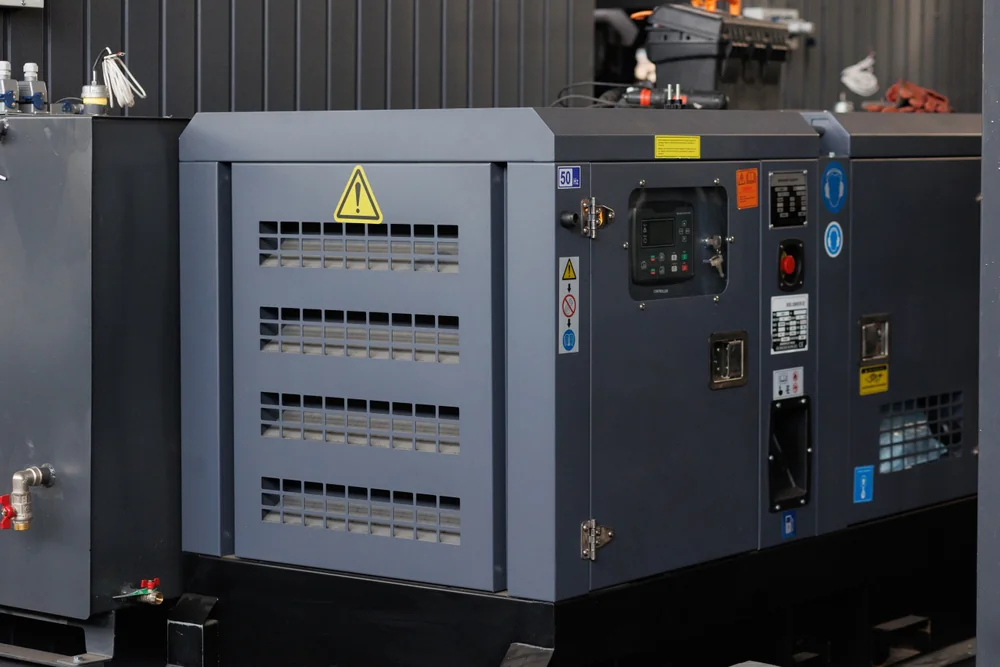
Once permits are in place and the equipment has been delivered, installation day typically unfolds like this: we prepare the site, which usually means pouring a concrete pad to set the generator on — a standard 3×6-foot pad runs around $1,000. The generator unit is placed and anchored, the fuel line is connected (natural gas or propane, depending on what’s available at your property), and then the electrical work begins. The most critical piece of that electrical work is the automatic transfer switch, or ATS.
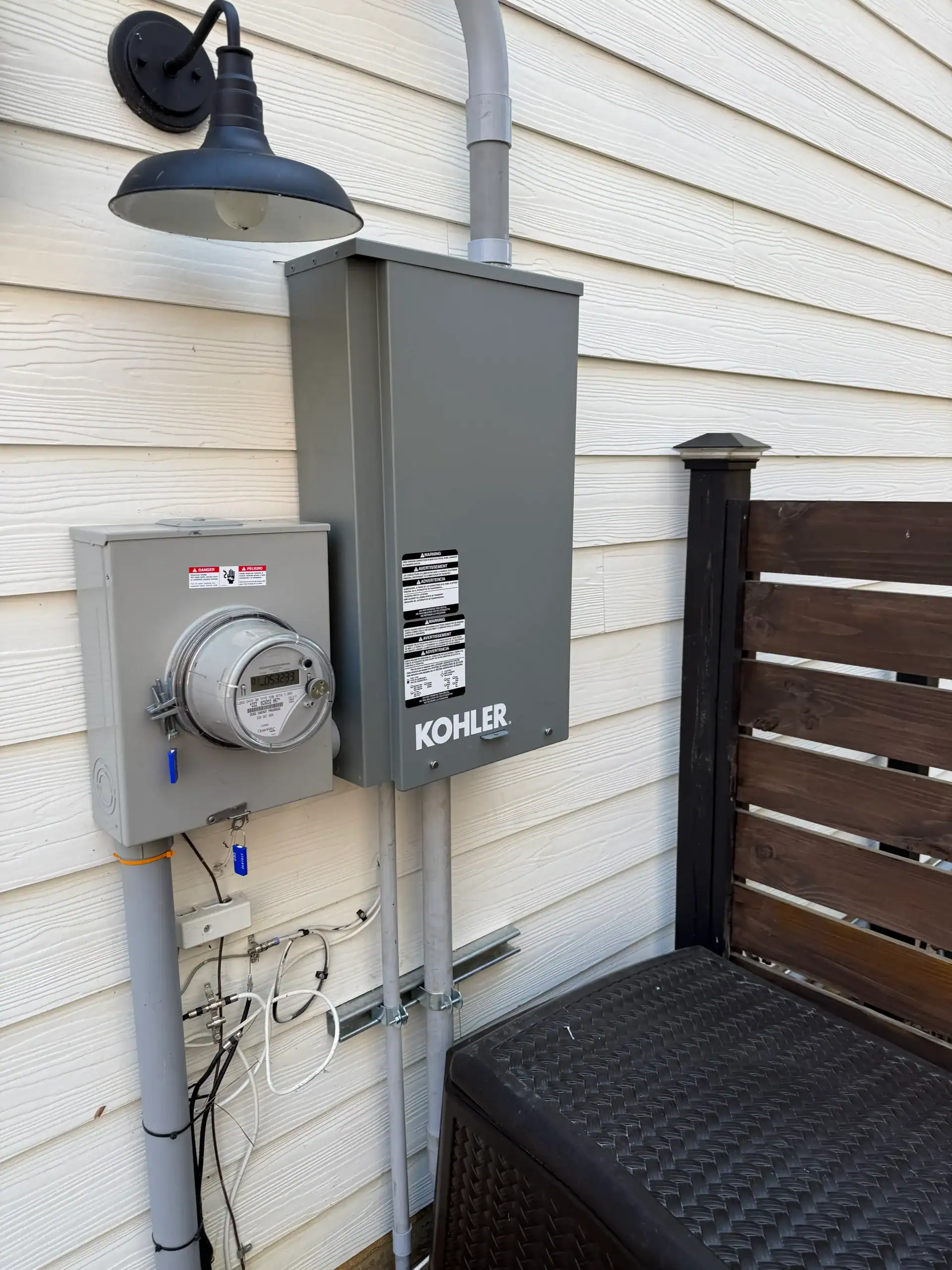
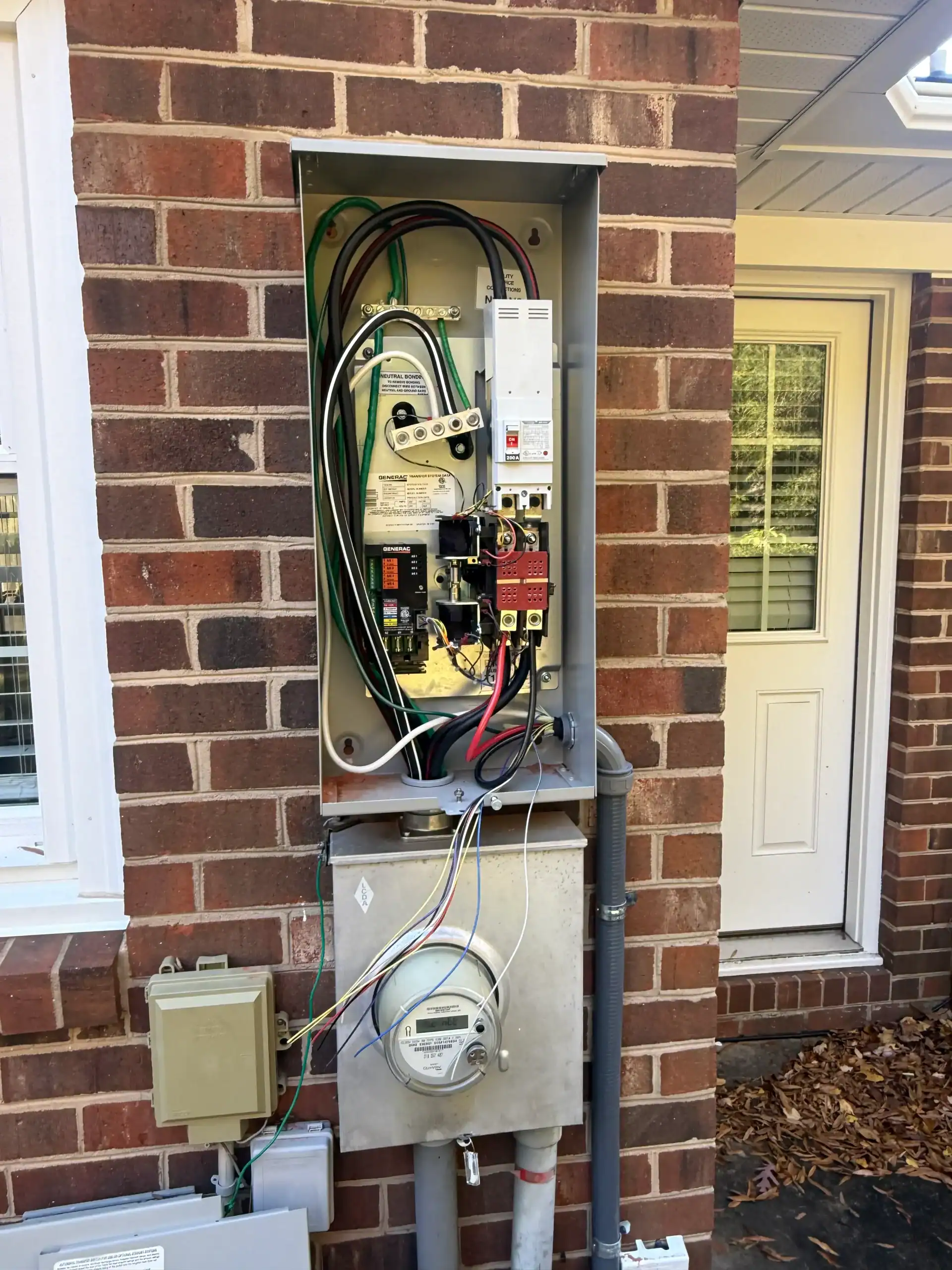
The ATS is the component that monitors your utility power and automatically switches your home over to generator power when an outage occurs — typically within seconds. You don’t flip a switch, you don’t go outside in the rain, you don’t do anything. The system handles it. This is the fundamental difference between a whole home generator installation and a portable generator you’re manually hooking up in a storm.
For homeowners in Alamance County who commute to Durham or Chapel Hill and are away from the house during the day, that automatic activation isn’t just convenient — it’s the whole point. Your CPAP runs. Your refrigerator stays cold. Your heating system keeps the house from freezing.
After the ATS is installed and the generator is wired into your panel, the system goes through load testing before it’s considered commissioned. We don’t just flip it on and call it done. We run the system under load, verify the transfer sequence works correctly, and confirm everything is operating within spec. Then comes the inspection — a required step in North Carolina that we pass on the first attempt.
This is one of the most common questions we hear, and the honest answer is: it depends on your home, and there’s no shortcut to figuring it out correctly. A proper load calculation looks at the square footage of your home, the appliances and systems you want the generator to power, and the total electrical demand those systems place on your panel at any given time.
Bigger isn’t automatically better. An oversized generator costs more upfront, can cause operational inefficiencies, and doesn’t give you anything useful in return for the extra expense. An undersized generator won’t carry the load you need it to — which means the systems you were counting on may not run during an outage. Getting the size right is the job of a licensed electrician doing an actual load calculation, not a rough estimate based on square footage alone.
For most Alamance County homes, the conversation typically centers on which systems are non-negotiable. Heating and cooling, the refrigerator, lighting, and medical equipment like CPAP machines or oxygen concentrators tend to top the list. Some homeowners want whole-house coverage — every circuit, every outlet. Others want a targeted approach that keeps the essential systems running without powering the garage workshop. Either answer is valid, and we’ll help you think through it rather than defaulting to the largest unit on the lot.
The fuel source question is part of this conversation too. Natural gas is the most common choice for homes that already have a gas line — it’s reliable, doesn’t require on-site storage, and won’t run out the way a propane tank can during an extended outage. Propane is a strong option for homes in more rural parts of Alamance County where natural gas service isn’t available. We’ll walk you through both options in the context of your specific property before you make a decision.
Want live answers?
Connect with a Electrical Service Providers expert for fast, friendly support.
North Carolina ranks third nationally for power outages. Between summer thunderstorms, tropical storm remnants tracking inland from the coast, and the kind of winter ice events that turned February 2021 into a multi-day ordeal for Alamance County residents, the threat calendar runs year-round.
A backup generator for home isn’t a luxury purchase in this environment. It’s a practical response to a documented pattern. And beyond the immediate comfort and safety benefits, it’s an investment that holds real financial value — studies consistently show that standby generators return roughly 60 cents on the dollar in added home value, and some insurance carriers offer discounts on the property portion of homeowners insurance for homes with automatic standby systems.
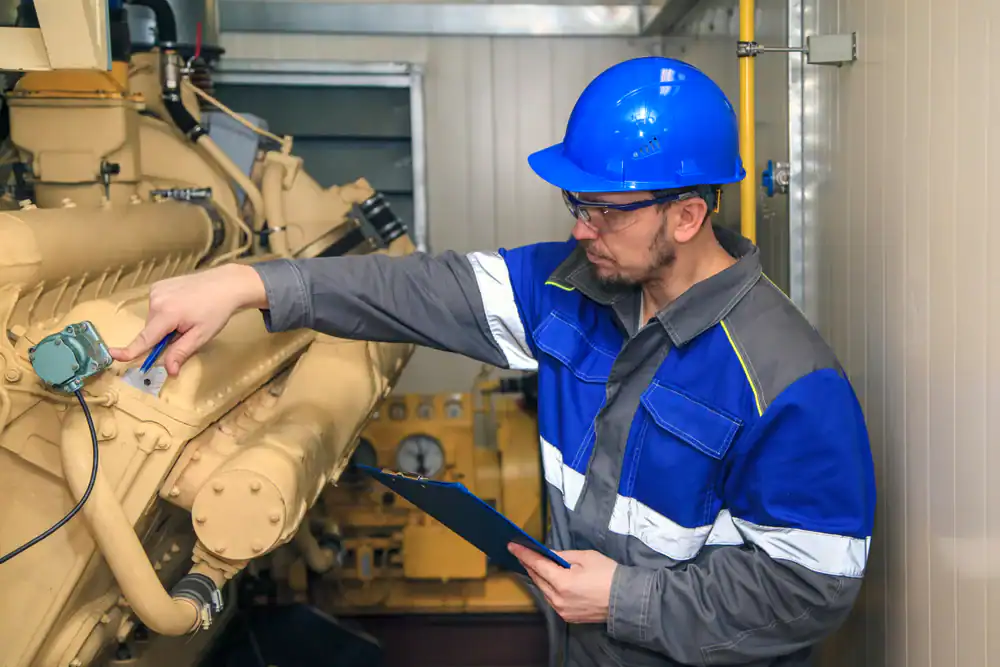
The installation is only as good as the person doing it. That’s the practical reality of a project that involves licensed electrical work, a required permit, a mandatory inspection, and a mechanical system you’re counting on to perform flawlessly during the worst weather of the year.
In North Carolina, electrical contracting is regulated by the NC State Board of Examiners of Electrical Contractors. Any contractor performing generator installation must hold an active license from that board. There are three license tiers — Limited, Intermediate, and Unlimited — and the Unlimited license, which carries no project value or voltage restrictions, requires a minimum of five years of verified experience. Ask to see the license. A legitimate contractor will have it and won’t hesitate to share it.
Beyond the license, look for factory authorization from the generator manufacturer. Being an authorized Generac dealer, for example, means the technicians have been factory-trained, the parts we use are genuine manufacturer components, and warranty support runs through the manufacturer — not just a contractor’s verbal promise. A contractor who installs generators but isn’t an authorized dealer can’t service the unit under warranty, which matters a great deal when the system is five years old and something goes wrong.
Experience with existing homes is another factor worth asking about directly. Installing a generator in new construction is straightforward — everything is designed around it. Retrofitting a generator into an older home in Burlington or Haw River, where the panel may be undersized, the outdoor space may be limited, and the fuel line routing may require creative problem-solving, is a different skill set. A contractor who has been doing this work in these specific Alamance County communities for years will recognize those challenges before they become problems.
Finally, ask how they handle permits and inspections. The right answer is: completely. We pull the permit, we coordinate the inspection, and the work passes the first time. If a contractor is vague about the permit process or suggests you handle any part of it, keep looking.
Cost is the question most homeowners are circling from the moment they start researching. The frustrating reality is that the ranges you’ll find online are genuinely wide — because the variables that drive the final number are genuinely significant.
The generator unit itself typically runs between $3,000 and $6,000 depending on size and brand. The automatic transfer switch adds $600 to $1,200. A concrete pad for the unit runs around $1,000 for a standard installation. Labor for the full installation — site prep, electrical work, fuel line connection, panel connection, commissioning, and inspection coordination — typically runs $3,000 to $5,000. When you add it up, most residential whole home generator installations land in the $6,000 to $11,000 range. Larger homes, more complex electrical situations, or panel upgrades required before installation can push that number higher.
What matters as much as the number is how you get to it. A contractor who gives you a firm price over the phone without seeing your property hasn’t done the work to give you a real number. A site assessment and load calculation are the only legitimate path to an accurate quote. Any estimate given without them should be treated as a rough placeholder, not a commitment.
The pricing model matters too. Hourly billing on a project like this means the final cost is a variable you won’t know until the job is done — and that uncertainty makes it genuinely difficult to plan. Flat-rate pricing, where the full cost is agreed upon before any work begins, eliminates that uncertainty entirely. You know what you’re committing to. There are no surprises at the end of the job, no “we found additional work” conversations, and no pressure to approve scope changes mid-project to keep things moving.
For homeowners in Alamance County weighing the investment, it’s also worth factoring in what an extended outage actually costs: spoiled food, hotel stays if the heat or AC goes out, potential damage from a sump pump that doesn’t run, or the medical and safety implications for anyone in the home who depends on powered equipment. The generator pays for itself faster than the sticker price suggests when those costs are part of the calculation.
The process isn’t complicated once someone explains it honestly. A site assessment, a load calculation, the right permit, a properly installed automatic transfer switch, load testing, and a passed inspection — that’s the sequence. What varies is who’s doing it and whether they have the credentials, the experience, and the local knowledge to do it right the first time.
Alamance County homes have specific characteristics — older panels, rural stretches where Duke Energy restoration takes longer, a weather pattern that doesn’t give you a clean off-season to wait things out. The contractor you hire should understand all of that before they set foot on your property.
We’ve been doing this work in Burlington and across Alamance County since 2002. Real people answer the phone. The price is flat-rate and given before any work begins. And the work passes inspection the first time.
Article details:
Share:
Continue learning: