Everything Alamance County homeowners need to know about whole house generators — sizing, costs, fuel types, and what installation actually looks like.
Share:
Summary:
If you’ve ever sat in a dark house in January waiting for Duke Energy to restore power — space heater dead, food spoiling, no idea when the lights are coming back — you already know why people buy whole house generators. You don’t need to be convinced the problem is real. What you probably need is a straight answer on what these systems actually cost, how to pick the right size, and whether the installation process is as complicated as it sounds. That’s what this guide covers. We’ve been installing generators in Alamance County and the surrounding area since 2002, and the questions we hear most often are the same ones we’ll answer here.
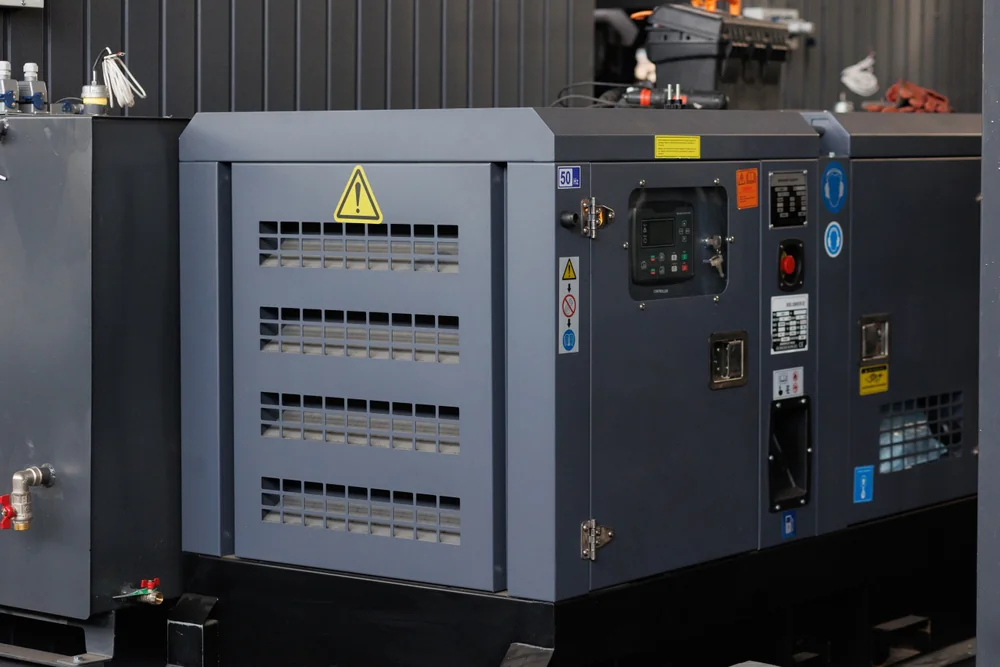
A whole house standby generator is a permanently installed unit — mounted on a concrete pad outside your home, connected to your electrical panel through an automatic transfer switch, and fueled by natural gas or propane. When the power goes out, it detects the outage and starts itself within seconds. You don’t flip a switch, drag anything out of the garage, or run extension cords. It just runs.
That’s the core difference between a standby generator and a portable one. Portables are cheaper upfront, but they max out around 12 kilowatts, require manual setup every time, and can’t power central air conditioning in most homes. A standby unit is infrastructure — more like a second electrical panel than a piece of equipment you borrow from the shed. For homeowners considering a permanent backup power solution, professional generator installation ensures the system is properly connected and integrated with the home’s electrical system.

The honest answer is that it depends on what you’re trying to protect. If your goal is to keep the refrigerator running and charge your phones during a short outage, a portable generator can do that. But if you want your heat or air conditioning to run, your well pump to keep working, and your household to function normally while the rest of the neighborhood is dark — a standby generator is the only option that delivers that.
Portable generators also come with real inconveniences that people underestimate until they’ve lived through a multi-day outage. You have to store gasoline, which degrades over time. You have to go outside in whatever weather is happening — often the same storm that knocked out the power — to start it. You have to refuel it every several hours. And if you run it in or near the garage to stay out of the rain, you’re creating a carbon monoxide hazard that kills people every year.
We install standby generators that run on natural gas or propane. Piedmont Natural Gas serves most of the Burlington area, which means many homeowners can connect a standby unit directly to the utility line — unlimited fuel supply, underground and unaffected by surface storm damage. For rural areas of western Alamance County served by electric cooperatives, propane is a reliable alternative, and many homeowners already have tanks on-site.
The other thing worth understanding is what generators for home use are actually designed to power. A 22-kilowatt standby unit — the most common size for a medium-to-large home — can run your HVAC system, refrigerator, lights, outlets, well pump, and most major appliances simultaneously. That’s not “roughing it with backup power.” That’s your home running normally while your neighbors are in the dark.
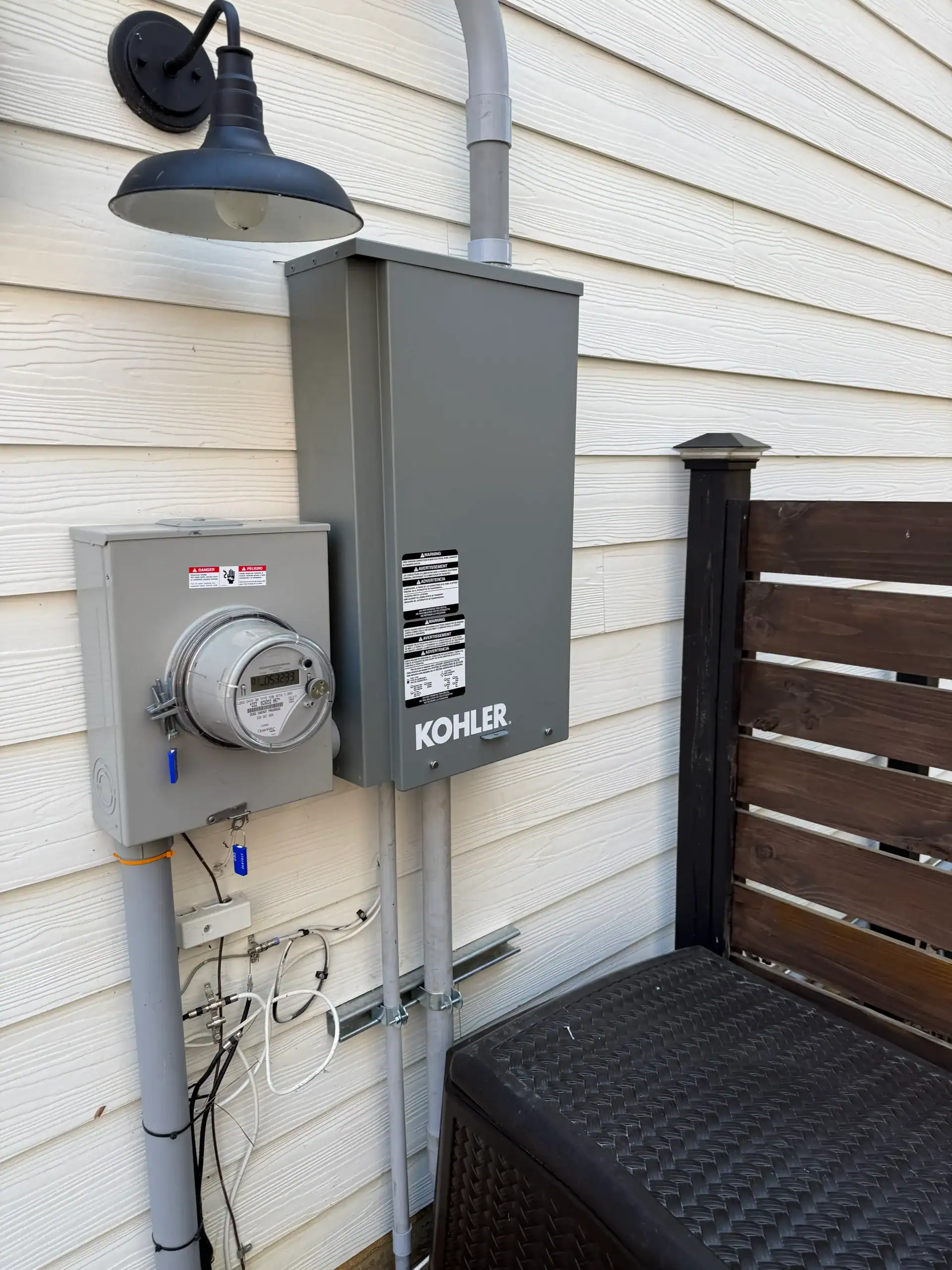
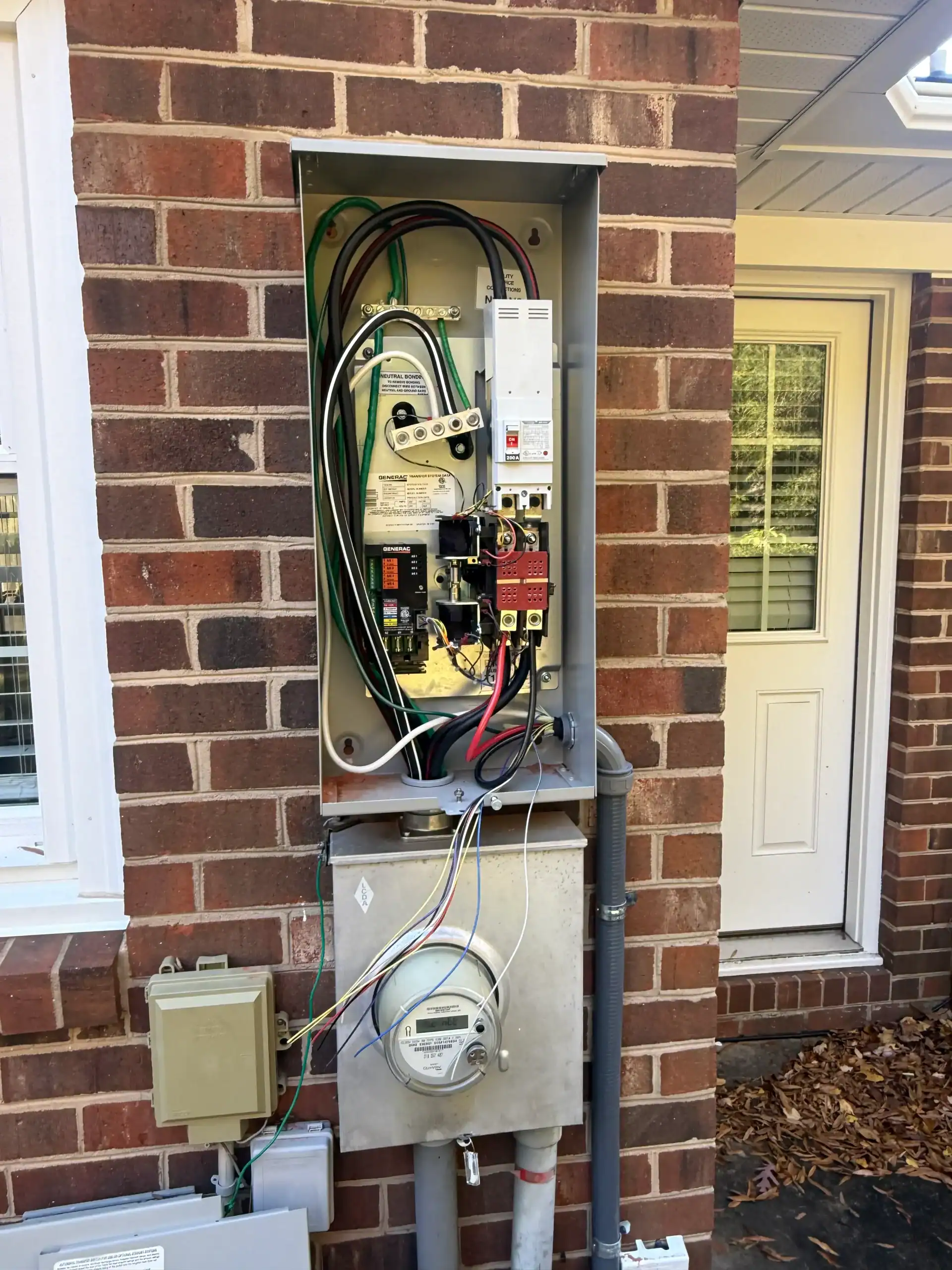
The automatic transfer switch — usually called an ATS — is the component that makes a standby generator actually automatic. It monitors the power coming from the utility line, and the moment it detects an outage, it disconnects your home from the grid and signals the generator to start. Once the generator reaches operating speed and voltage, the ATS transfers your home’s electrical load to the generator. The whole process typically takes 10 to 60 seconds.
This matters for a few reasons beyond convenience. First, the ATS isolates your home’s electrical system from the utility grid during generator operation. That isolation is a safety requirement — without it, electricity from your generator can backfeed onto the utility lines, creating a potentially fatal hazard for the lineworkers trying to restore power in your neighborhood. A properly installed ATS prevents that entirely.
Second, the ATS is what separates a legal, permitted installation from a dangerous workaround. Some homeowners try to use a generator with a manual interlock or — worse — a double-male extension cord plugged directly into a dryer outlet. These approaches are illegal in North Carolina, fail inspections, and create real risks. Any permanent generator installation in NC requires a permit, an inspection, and a properly rated ATS. We handle all of that as part of every installation we do, from the permit application through the final inspection sign-off.
The quality and rating of the ATS also matters for your specific electrical panel. Older homes in Burlington and Graham — many built in the 1950s through 1980s — sometimes have 100-amp panels that need evaluation before a generator is connected. We use thermal imaging during our pre-installation assessment to check for hot spots, overloaded circuits, or loose connections that could cause problems after the generator goes in. It’s a step most installers skip, and it’s caught real issues before they became expensive ones.
Want live answers?
Connect with a Electrical Service Providers expert for fast, friendly support.
Natural gas, propane, and diesel are the three main fuel options for standby generators, and each one has a real use case. Natural gas is the most convenient for homeowners in Burlington, Graham, and Mebane who already have a gas line — no storage, no delivery, no worrying about running dry during a long outage. Propane works well for homes in rural areas of Alamance County where natural gas isn’t available. Diesel is more common in commercial and industrial applications because of its efficiency under heavy load, but fuel storage and degradation make it less practical for most residential setups.

Diesel generators are genuinely excellent machines — fuel-efficient under load, durable, and capable of producing very high output. They’re the standard choice for hospitals, data centers, and large industrial facilities that need serious power and can manage fuel logistics professionally. For most Alamance County homeowners, though, diesel creates more headaches than it solves.
The core issue is fuel storage and degradation. Diesel begins to break down after about 12 months in storage, and untreated diesel can cause injector problems and starting failures — exactly what you don’t want when the power goes out. Managing a diesel tank also requires more attention than most homeowners want to give a backup system that ideally runs itself.
There’s also the cost factor. Diesel units tend to run higher in price than comparable natural gas or propane generators, and the infrastructure for proper fuel storage adds to that. For residential use, the math rarely works in diesel’s favor unless you have a specific reason — an off-grid property, a very high power demand, or an existing diesel infrastructure from another use.
For most homes in Alamance County, a natural gas or propane standby generator is the right answer. Natural gas is almost always the first choice when the utility line is accessible — it’s the most convenient, most cost-effective over time, and requires zero fuel management on your part. Propane is a strong second option for homes in Gibsonville, Snow Camp, Swepsonville, and other areas where natural gas service isn’t available. We’ll walk through the options specific to your property during the initial assessment, because the right fuel type depends on what’s already at your home and what makes sense for your situation.
Load management is the practice of controlling which circuits run simultaneously so your generator isn’t asked to power more than it was sized to handle. On a properly sized whole-house system, this isn’t usually an issue — the generator has enough capacity to run everything at once. But on systems where the homeowner chose a smaller unit to save money, or where the home’s electrical load increased after installation (a new HVAC system, an EV charger, a hot tub), load management becomes important.
Most modern standby generators — including the Generac units we install — have built-in load management capabilities. The system can be programmed to prioritize certain circuits and shed lower-priority loads automatically if the generator approaches its capacity limit. In practice, this means the generator might temporarily cut power to the electric water heater while the air conditioner cycles on, then restore it once the starting surge has passed. The homeowner usually doesn’t notice.
The better solution is proper sizing from the beginning. A generator that’s correctly sized for your home’s actual load doesn’t need to manage or shed circuits — it just runs. That’s why we don’t size generators based on square footage alone. We do a real load calculation: we look at every major appliance in your home, note whether it’s gas or electric, calculate the running wattage and starting wattage for each one, add them up, and apply a 20 to 25 percent safety margin. That number tells us the minimum generator capacity your home needs. For a typical 2,500-square-foot home in Alamance County with a 3-ton central air conditioner, electric appliances, and a well pump, that usually lands somewhere between 16 and 22 kilowatts.
Newer homes in Mebane — which has been growing fast along the I-40 corridor — often have higher electrical loads than older Burlington neighborhoods. EV chargers, larger HVAC systems, and smart home technology all add to the demand. We factor all of that in before recommending a size, because the last thing you want is a generator that can’t keep up on the hottest day of the summer or the coldest night of the winter.
Installation starts with an assessment — your electrical panel, your fuel source, your load, and where the generator will sit on your property. From there, we handle the permit application with the county, order the equipment, and schedule the installation once approvals come through. On installation day, we set the generator on a concrete pad, connect the automatic transfer switch, run the gas line, and wire everything to code. Before we leave, we test the system through multiple automatic transfer cycles to confirm it’s working correctly.
We won’t ask for final payment until your generator has completed its weekly test cycles and you’re satisfied with how it’s running. That’s not a marketing line — it’s how we’ve operated since we opened in Burlington in 2002.
If you’re in Burlington, Graham, Mebane, Elon, or anywhere else in Alamance County and you’re ready to stop gambling on the next ice storm or tropical system, reach out to us at (336) 228-3300. We’ll give you a straight answer on what your home needs and what it’s going to cost.
—
**Frequently Asked Questions**
**Generator Sizing Chart: What Size Generator Do I Need for My Home?**
As a general starting point: a 14–17 kW generator covers essential circuits for most homes under 2,000 square feet. A 20–22 kW unit is the right range for most 2,000–3,000 square foot homes with central air conditioning. Homes over 3,000 square feet, or those with high electrical loads like EV chargers or large HVAC systems, often need 26 kW or more. In Alamance County, we also factor in local conditions — whether your home is in an older Burlington neighborhood with a 100-amp panel that may need evaluation, or a newer Mebane build with higher baseline electrical loads. These are starting points; the actual number comes from a load calculation specific to your home.
**How to Size a Generator: Can I Figure This Out Myself?**
You can get close using published wattage data for your appliances, but a professional load calculation is the only way to get it right. We also factor in local considerations specific to Alamance County — whether your home is served by Piedmont Natural Gas or a propane supplier, whether you’re in a rural area with a well pump, and what your electrical panel can handle. Getting the size wrong in either direction has real consequences: too small and it can’t power your home, too large and you’re paying for capacity you’ll never use.
**How to Calculate Generator Size for Home: What’s the Formula?**
Add up the running wattage of every appliance you want to power during an outage. Then identify the single appliance with the highest starting wattage — usually the central air conditioner or well pump — and add that starting wattage on top. Multiply the total by 1.25 to build in a safety margin. That’s your minimum generator capacity in watts; divide by 1,000 to get kilowatts.
**Do I Need a Permit to Install a Whole House Generator in NC?**
Yes — always. In North Carolina, any permanently installed generator connected to your home’s electrical system requires a permit and a final inspection. There’s no legal workaround. Unpermitted installations can void your homeowner’s insurance and create problems when you sell the home. We pull all required permits in Alamance County as part of every installation.
**What Does a Standby Generator Maintenance Checklist Look Like?**
Your generator exercises itself automatically once a week — a 20- to 30-minute test run that keeps the engine conditioned and the battery charged. Beyond that, it needs a professional service visit once a year: oil and filter change, spark plug inspection, battery test, air filter check, and a full load test to confirm it can handle real demand. The most common reason generators fail during an outage is a dead battery — entirely preventable with routine maintenance. We offer scheduled maintenance programs so you don’t have to remember to book it.
Article details:
Share:
Continue learning: