Thinking about energy efficiency upgrades for your facility? Here's why working with a licensed electrical contractor isn't just smart—it's essential for your bottom line and your safety.
Share:
Summary:
You’re looking at your utility bills and wondering where all that money goes every month. Your facility manager mentions energy efficiency upgrades. Someone quotes you a price that seems too good to be true. Then someone else—maybe a friend, maybe an online forum—suggests you could save even more by going with an unlicensed contractor.
Here’s what that conversation usually leaves out: the insurance claim that gets denied, the failed inspection, the rework that costs triple, or the liability you didn’t know you were taking on. Energy efficiency upgrades aren’t just about swapping out old lights or rewiring a panel. When done right, they cut your operating costs, improve safety, and add real value to your property. When done wrong, they create problems that follow you for years. Professional LED lighting upgrades can be one part of a properly planned commercial energy-efficiency strategy.
Let’s talk about what actually matters when you’re making these decisions.
A licensed electrical contractor isn’t just someone who knows how to wire a building. We’ve passed exams, met experience requirements, and proven we understand current electrical codes. More importantly, we’re accountable to a licensing board that can investigate complaints and enforce standards.
That license also means we carry the proper insurance. If something goes wrong during a project—equipment damage, worker injury, fire—our insurance handles it. You’re not left holding the bill or facing a lawsuit because an uninsured worker got hurt on your property.
When you hire a licensed contractor, you’re hiring someone who has something to lose. Our reputation, our license, and our livelihood depend on doing quality work. That changes how we approach every job.
Energy efficiency upgrades aren’t one-size-fits-all. A commercial lighting retrofit for a 50,000-square-foot warehouse looks nothing like energy-efficient wiring for a manufacturing facility. We start by understanding what you actually need.
We’ll assess your current systems, identify where you’re wasting energy, and recommend upgrades that make financial sense. That might mean LED retrofits that can cut your lighting energy use by 40-60%. It could involve power consumption audits that reveal which equipment is driving up your bills. Sometimes it’s about upgrading panels and wiring to handle more efficient equipment.
The difference between a good contractor and everyone else shows up in how we calculate ROI. We don’t just tell you what things cost. We show you payback periods, annual savings, and how upgrades affect your operating budget over time. Most commercial lighting retrofits pay for themselves in under three years through energy savings alone. But you need accurate numbers to make that decision, not guesses.
Licensed contractors also know which utility rebates and incentive programs you qualify for. In North Carolina, C-PACE financing lets you fund energy upgrades through your property taxes with no money down. Duke Energy and other utilities offer rebates for efficiency improvements. A contractor who’s done this before knows how to navigate those programs so you’re not leaving money on the table.
Then there’s code compliance. North Carolina follows the 2018 Energy Conservation Code, and local jurisdictions add their own requirements. We know what applies to your project and make sure the work passes inspection the first time. No surprises. No rework. No delays when you’re trying to sell or refinance down the road because someone cut corners five years ago.
If your business is pursuing LEED certification, the electrical work becomes even more critical. LEED isn’t just about using less energy—it’s about documenting every decision, meeting specific performance benchmarks, and proving your building operates more efficiently than standard construction.
The electrical contractor you choose is responsible for up to 28 of the 69 total LEED points. That includes lighting efficiency, energy consumption, and how your electrical systems integrate with HVAC and building controls. You need occupancy sensors that actually work. Daylighting controls that dim fixtures near windows. VFD controllers on motors. Photometric analysis to prove your lighting design meets LEED standards.
An unlicensed contractor can’t deliver that level of documentation. They don’t have the engineering expertise to run energy models or the software to generate photometric reports. They can’t coordinate with mechanical engineers to optimize whole-building energy performance. And when the LEED review team asks for proof that your electrical systems meet ASHRAE 90.1 standards, “trust me” doesn’t cut it.
LEED projects also require commissioning—third-party verification that systems are installed correctly and operating as designed. That means every piece of equipment, every control system, every lighting circuit gets tested and documented. We know what commissioning agents will look for and make sure the work passes.
The financial upside matters too. LEED-certified buildings command higher rents, have lower vacancy rates, and sell for more than comparable non-certified properties. But only if the certification is legitimate. Cutting corners on electrical work to save a few thousand dollars can cost you the certification entirely, along with all the market advantages that come with it.
Want live answers?
Connect with a Electrical Service Providers expert for fast, friendly support.
Unlicensed contractors usually charge less. That’s the appeal. But here’s what that lower price doesn’t include: liability insurance, workers’ comp coverage, proper permits, or any recourse if the work is faulty.
If an unlicensed worker gets injured on your property, your insurance might not cover it. In many states, unlicensed contractors and their employees are legally considered your employees. That means you’re potentially liable for medical bills, lost wages, and legal fees. One injury can wipe out any savings you thought you were getting.
Then there’s the insurance issue with the work itself. Most commercial property insurance policies require that electrical work be performed by licensed professionals. If you file a claim for fire damage or electrical failure caused by unlicensed work, your insurer can deny the claim. You’re stuck paying for repairs out of pocket, plus any business interruption losses.
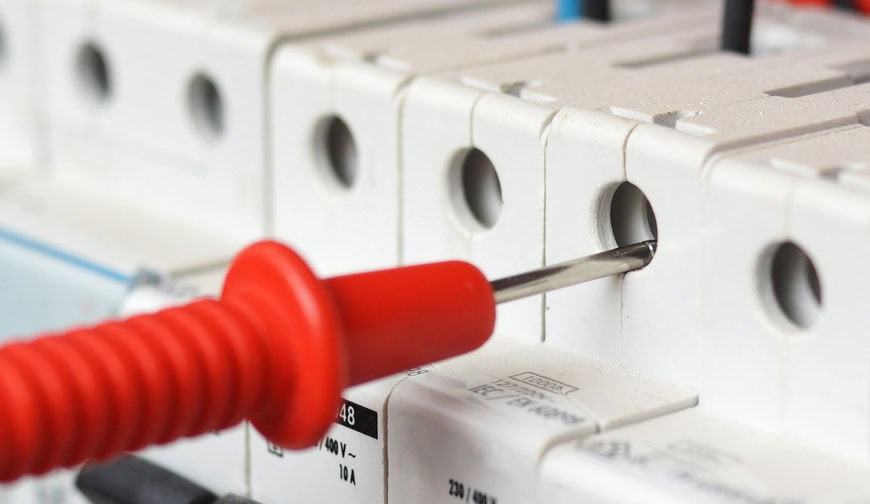
A power consumption audit is supposed to identify where you’re wasting energy so you can make smart upgrades. But sometimes it reveals a bigger problem: previous electrical work that wasn’t done to code.
Maybe someone installed new lighting without permits. Or rewired part of your facility using substandard materials. Or bypassed safety systems to save money. When an energy auditor or inspector finds that work, everything stops.
You can’t get permits for new upgrades until the old violations are fixed. You can’t sell or refinance the property until it’s brought up to code. And you’re paying twice—once for the original unlicensed work, and again to have a licensed contractor redo it properly.
This happens more often than you’d think, especially in older commercial and industrial buildings that have changed hands a few times. Each owner made “improvements” without proper oversight. Eventually, someone orders an energy audit or applies for LEED certification, and all those shortcuts come to light.
The cost to fix unpermitted electrical work usually runs 2-3 times what it would have cost to do it right initially. You’re paying for demolition, disposal, new materials, new labor, permits, and inspections. Plus any lost revenue if you have to shut down parts of your operation while the work gets corrected.
A licensed electrical contractor documents everything. We pull permits. We schedule inspections. We provide warranties on our work. When you sell the building or bring in an energy consultant five years later, there’s a paper trail proving the work was done correctly. That’s not just peace of mind—it’s protecting your investment.
Industrial facilities face a different set of challenges. You’re running heavy machinery, automated production lines, and equipment that can’t just be turned off without impacting output. When you’re upgrading electrical systems or installing energy-efficient wiring, downtime costs you money.
We understand how to minimize disruption. We coordinate with your production schedule. We prefabricate components off-site so installation happens faster. We bring backup systems online before taking primary systems offline. We know how to work around your operation instead of shutting it down.
Unlicensed contractors don’t have that experience. They might tell you a job will take a weekend, then run into problems that stretch it to a week. They don’t have relationships with equipment suppliers to get parts quickly. They don’t carry the insurance required to work in high-voltage industrial environments. And if something goes wrong—a blown transformer, damaged equipment, a safety incident—you’re exposed.
Industrial electrical work also involves specialized knowledge. You’re dealing with three-phase power, motor controls, PLCs, and electrical systems that operate at voltages most residential or light commercial electricians never touch. The stakes are higher. A mistake doesn’t just mean a tripped breaker—it can mean damaged equipment worth tens of thousands of dollars, or worse, injured workers.
Licensed contractors who specialize in industrial electrical services bring that expertise. We’ve worked in manufacturing facilities, distribution centers, and processing plants. We understand redundancy requirements, backup power systems, and how to integrate energy-efficient upgrades without compromising reliability. When we quote a project, we’re accounting for the complexity and risk, not just the materials and labor.
The ROI calculation for industrial energy efficiency upgrades is different too. Manufacturing facilities use more than 1,000 times as much energy as other industries. Even small percentage improvements in efficiency translate to significant cost savings. A 10% reduction in energy consumption might save a mid-sized plant $50,000 or more annually. Over the life of the equipment, that’s real money—but only if the upgrades are installed correctly and perform as expected.
Energy efficiency upgrades deliver real results when they’re done right. Lower utility bills. Safer facilities. Better equipment performance. Higher property values. But those benefits only show up if the work meets code, passes inspection, and actually performs the way it’s supposed to.
A licensed electrical contractor gives you that assurance. We bring the training, insurance, and accountability that protect your investment and keep your project on track. You’re not gambling on whether the work will hold up or hoping your insurance will cover problems down the road.
If you’re ready to move forward with a commercial lighting retrofit, industrial electrical services, or a power consumption audit in Alamance County, Durham County, Chatham County, Orange County, or Guilford County, NC, we can help. We’ve been serving businesses across the region since 2002, and we know what it takes to deliver energy efficiency projects that actually work.
Article details:
Share:
Continue learning: