Deciding between a whole-home and portable generator depends on your power needs, budget, and how often you face outages. Learn which solution protects your family best.
Share:
Summary:
The lights go out. The refrigerator stops humming. Your sump pump quits. If you’ve lived through a multi-day outage in North Carolina, you know the drill—spoiled food, no A/C in summer, no heat in winter, and the nagging worry about what else might go wrong.
You’ve probably thought about getting a generator. But which kind? The portable unit that sits in your garage until you need it, or the whole-home system that kicks on automatically when the power drops? Professional generator installation can help ensure your backup power system is properly connected and ready when you need it.
The answer isn’t the same for everyone, and it shouldn’t be. Your home, your budget, and how you actually use power during an outage all matter. Let’s break down what you’re really choosing between.
Whole-home generators and portable generators both give you backup power. That’s where the similarities end.
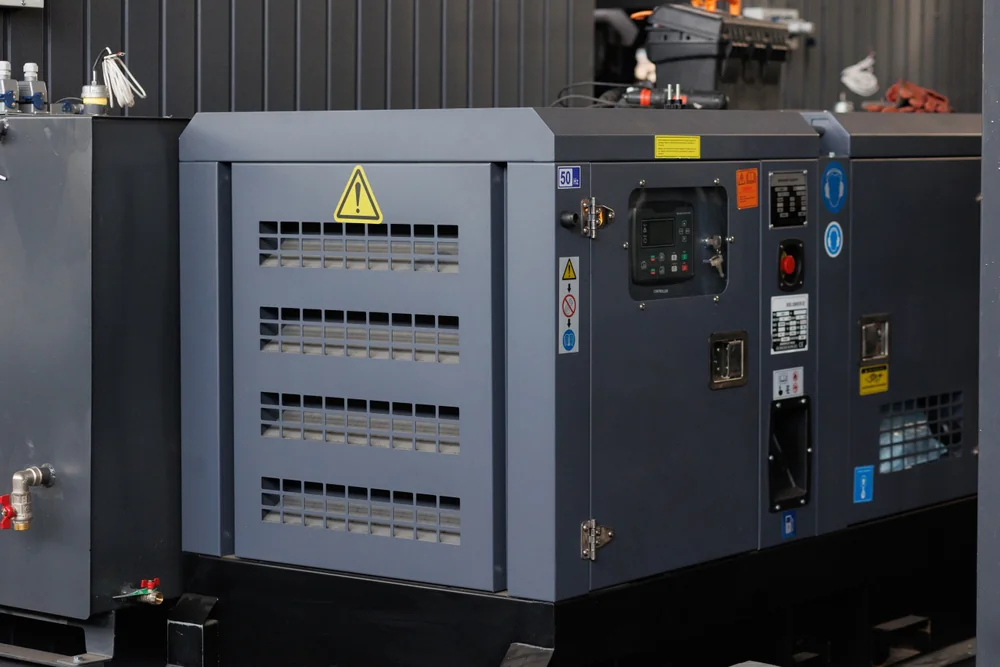
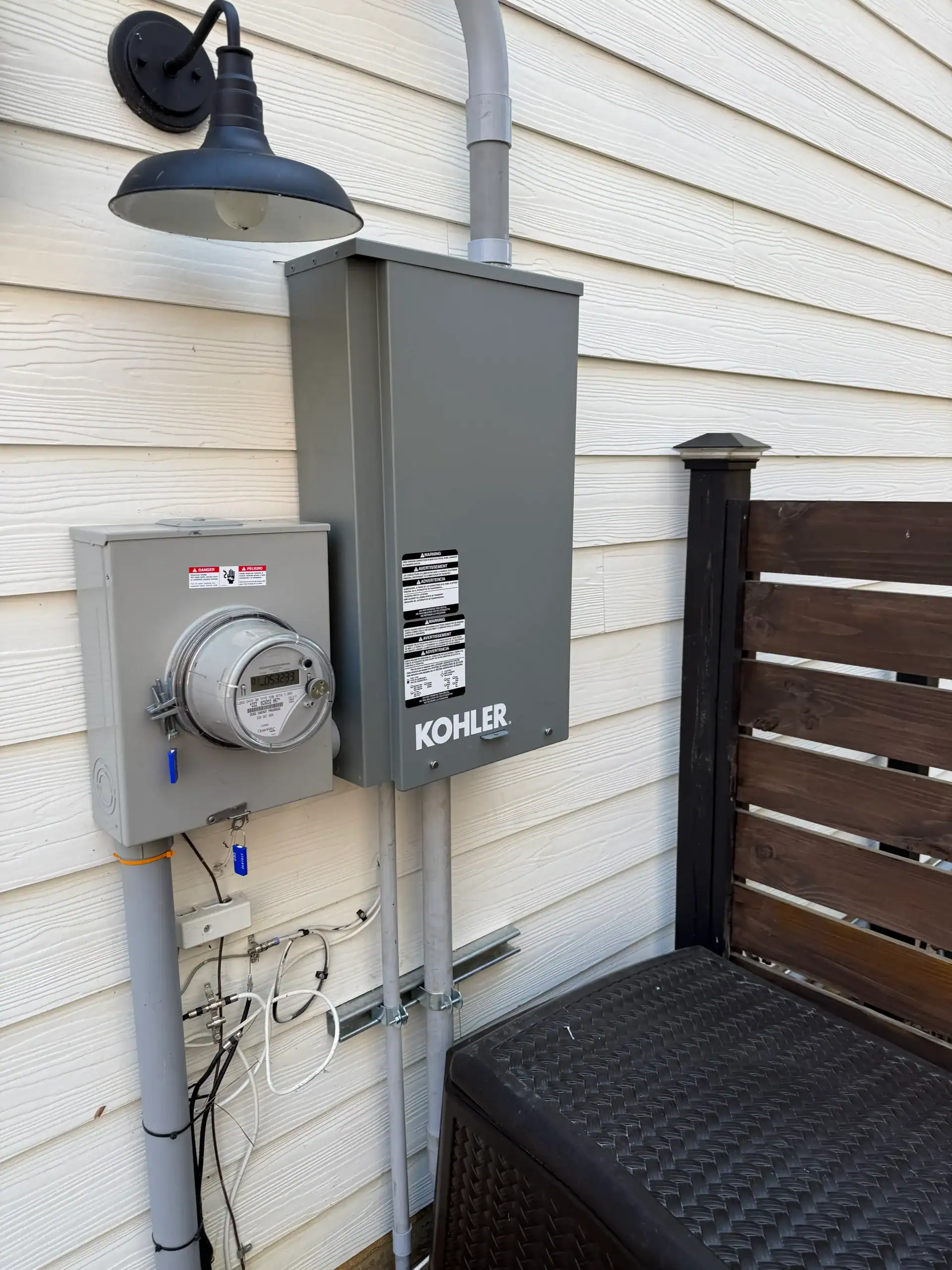
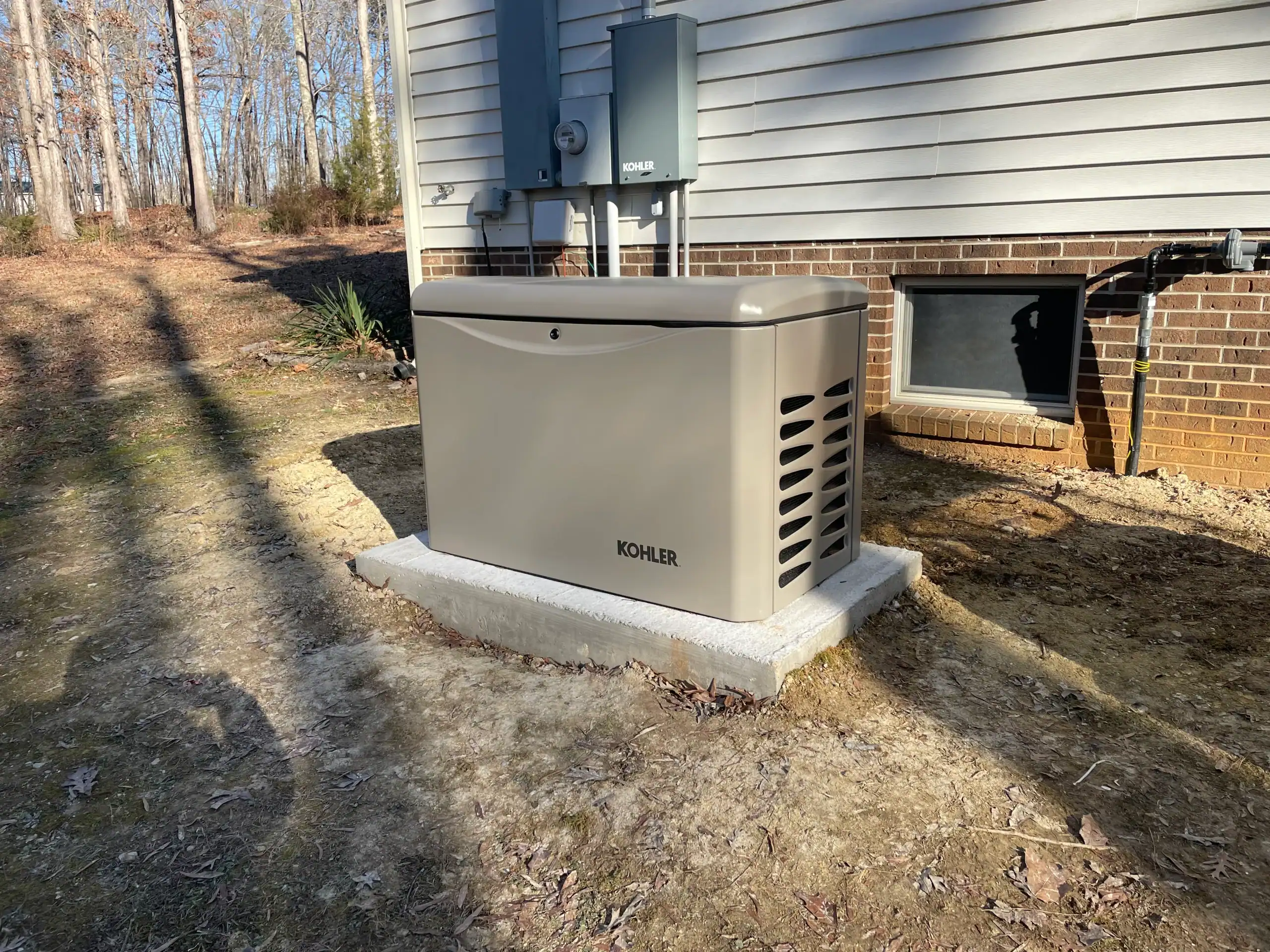
A whole-home generator is a permanent fixture installed outside your home. It’s wired directly into your electrical system through an automatic transfer switch. When the power goes out, it senses the loss and starts up within seconds. You don’t flip a switch or pull a cord. It runs on natural gas or propane from a fuel line or tank, so you’re not making fuel runs during a storm.
Portable generators are exactly what they sound like—movable units you store until you need them. When an outage hits, you wheel the generator outside, fill it with gasoline, start it manually, and connect it to your home using extension cords or a manual transfer switch. They’re smaller, less powerful, and require hands-on operation every time you use them.
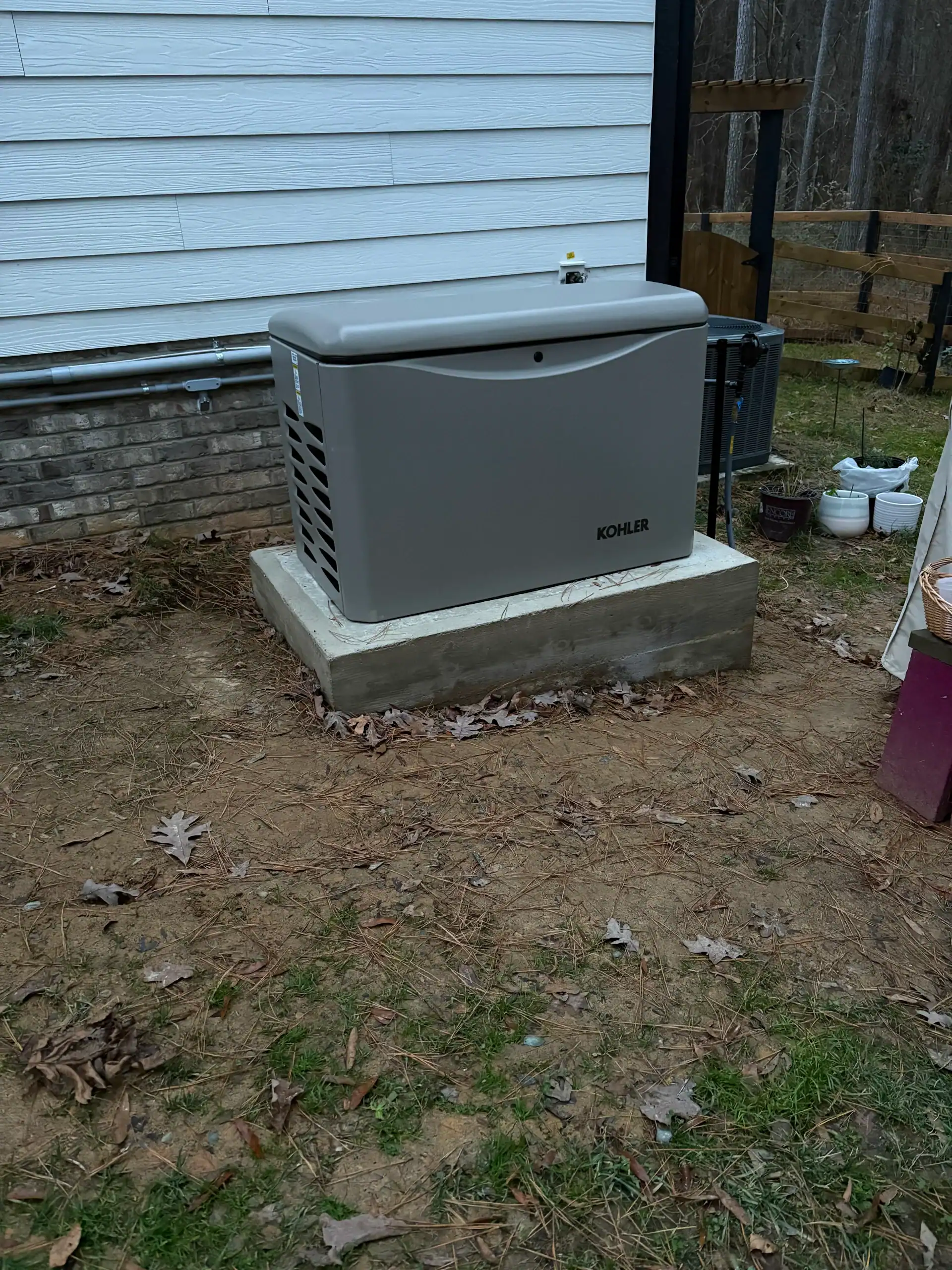
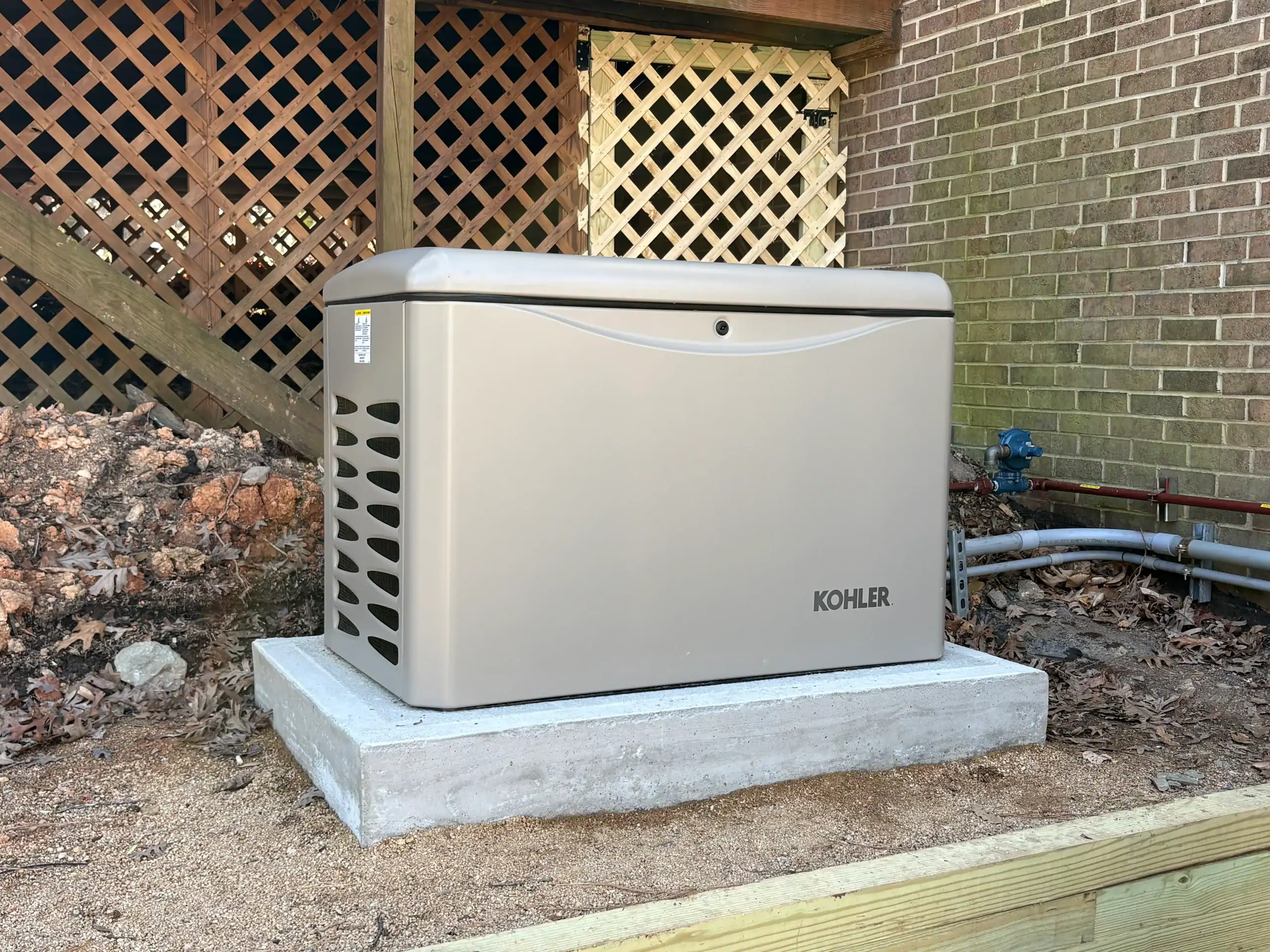
A whole-home generator sits on a concrete pad outside your house, similar to a central air conditioning unit. It’s connected to your home’s electrical panel and fuel source—either your natural gas line or a propane tank.
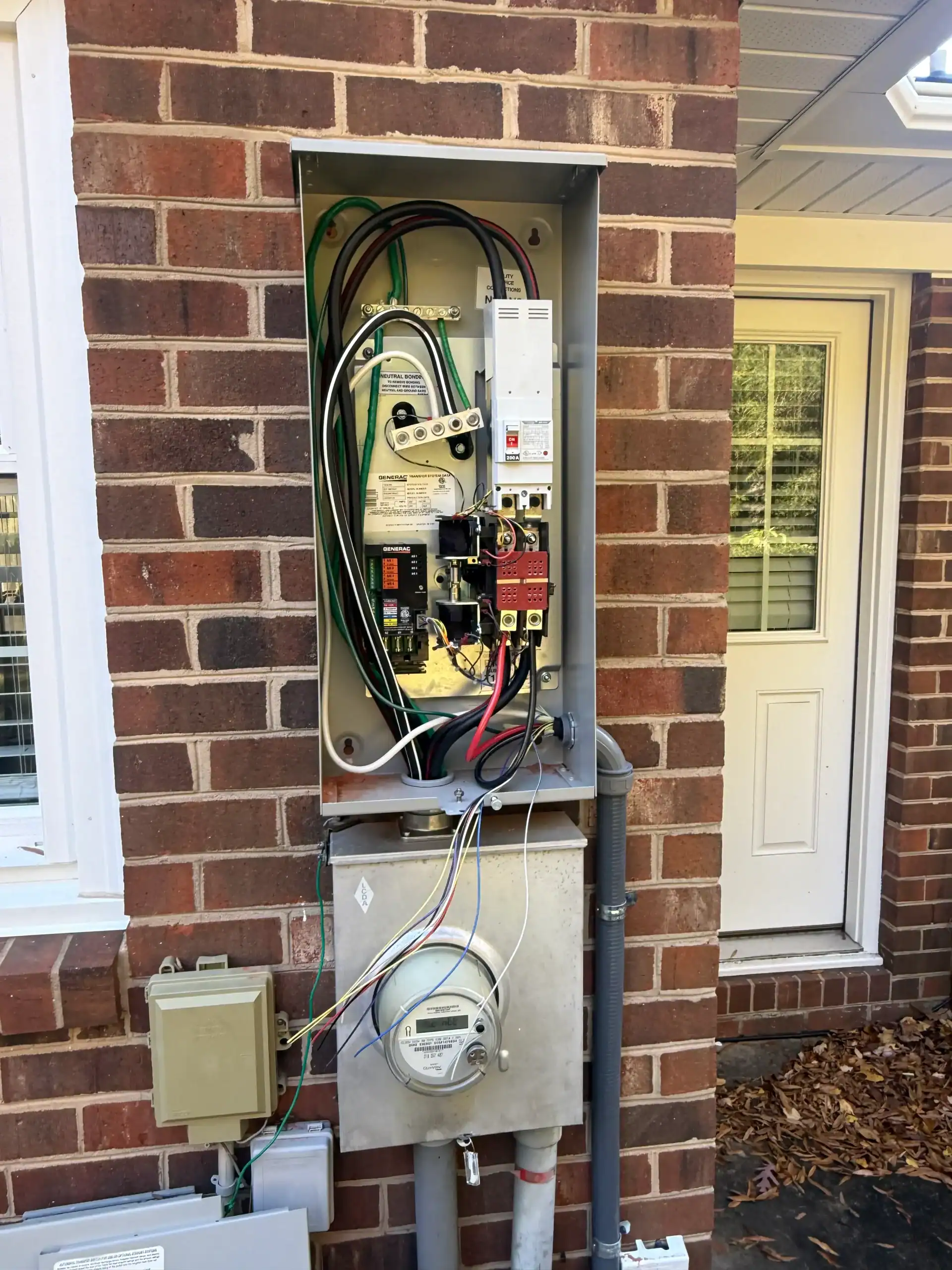
The automatic transfer switch is the brain of the system. It constantly monitors the power coming from your utility. The moment it detects an outage, it signals the generator to start. Within 10 to 20 seconds, your generator is running and power is flowing back into your home.
You don’t have to be home for this to happen. You don’t have to do anything. The system handles it.
Because whole-home generators run on natural gas or propane, they can operate for days or even weeks without refueling. Natural gas comes directly from your utility line, so as long as that service is intact, you have fuel. Propane is stored in a tank on your property, and a typical residential tank holds enough to power your home through extended outages.
These systems are sized to handle your home’s full electrical load or at least the critical circuits you choose to back up. That means your HVAC system, refrigerator, lights, sump pump, well pump, medical equipment, and Wi-Fi all stay on. You’re not picking and choosing what gets power.
Installation requires a licensed electrician and often a gas technician. We’ll pull permits, run gas lines if needed, pour a concrete pad, install the transfer switch, and connect everything to code. The process typically takes one to three days once permits are approved.
Whole-home generators range from about 7 kilowatts for smaller homes up to 48 kilowatts or more for larger properties. Most families in Alamance, Durham, Orange, or Chatham County find that a 14 to 22 kilowatt system covers their needs comfortably.
These units last 15 to 30 years with proper maintenance. You’ll need annual service—oil changes, filter replacements, and system checks—but that’s about it. Many newer models include Wi-Fi monitoring, so you can check on your generator from your phone.
The upfront cost is higher than a portable generator, but you’re paying for convenience, capacity, and long-term reliability. Installed costs typically range from $6,000 to $15,000 depending on the size of the unit, fuel type, and complexity of the installation.
Portable generators are standalone units that you store in a garage, shed, or basement when you’re not using them. Most run on gasoline, though some dual-fuel or tri-fuel models can also run on propane or natural gas.
When the power goes out, you have to physically move the generator outside—at least 20 feet away from your home. This isn’t optional. Portable generators produce carbon monoxide, and running one too close to your house or in an enclosed space can be deadly. About 85 to 100 people die each year in the United States from carbon monoxide poisoning related to portable generators.
Once it’s positioned safely outside, you fill the generator with gasoline, pull the starter cord or press the electric start button, and let it warm up. Then you connect it to your home.
There are two ways to do this. The simpler method is running heavy-duty extension cords from the generator through a window or door to individual appliances—your refrigerator, a few lights, maybe a space heater. This works for powering a handful of items, but it’s limiting and inconvenient.
The better option is installing a manual transfer switch on your electrical panel. This lets you connect the generator directly to your home’s wiring and power specific circuits. You manually switch those circuits from utility power to generator power using the transfer switch. It’s safer than extension cords and gives you more flexibility, but it still requires you to go outside, start the generator, and make the connection.
Portable generators typically produce between 3,000 and 10,000 watts of power. That’s enough to run a few essential appliances—refrigerator, some lights, a sump pump, maybe a window air conditioner—but not your whole home. You’ll be making choices about what stays on and what stays off.
They also need frequent refueling. Depending on the size and load, a portable generator burns through 12 to 20 gallons of gasoline per day. During a multi-day outage, that means repeated trips to refuel, assuming gas stations have power to pump fuel.
Gasoline also has a short shelf life—about three to twelve months—so you can’t just store it indefinitely. If you’re not rotating your fuel supply, there’s a chance your generator won’t start when you need it.
Portable generators are loud. Most produce 65 to 85 decibels, roughly the noise level of a lawnmower or heavy traffic. If you’re running one for hours or days, it’s noticeable.
The big advantage is cost. A quality portable generator costs $500 to $2,500, and if you add a manual transfer switch, you’re looking at another $400 to $1,300 for installation. That’s significantly less than a whole-home system.
Portable generators also offer flexibility. You can take them camping, to a job site, or to a different property. They’re not tied to one location.
But they require effort every time you use them—setup, fueling, monitoring, shutdown. And they come with real safety risks if not used correctly.
Want live answers?
Connect with a Electrical Service Providers expert for fast, friendly support.
Figuring out how much power you need is the most important step in choosing a generator. Buy too small, and you’ll be frustrated during an outage. Buy too big, and you’re spending money on capacity you’ll never use.
The key is understanding wattage—both running watts and starting watts. Running watts are what an appliance uses continuously once it’s on. Starting watts are the surge of power needed to get it going. Motors and compressors—like those in refrigerators, air conditioners, and sump pumps—require two to three times their running wattage to start.
Most homes need between 5,000 and 7,000 watts to cover the essentials during an outage. That includes your refrigerator, a few lights, your sump pump, and maybe a space heater or window air conditioner. A portable generator in the 5,000 to 7,500 watt range handles this.
If you want to power your whole home—including central air conditioning, electric water heater, well pump, and all your lights and outlets—you’re looking at 13 to 20 kilowatts or more. That’s whole-home generator territory.
Start by listing the appliances and systems you can’t live without during an outage. Be realistic. You’re not powering everything at once with a portable generator, so prioritize.
Here’s what common appliances require:
A refrigerator uses 600 to 800 running watts and 1,200 to 2,400 starting watts. A freezer is similar. Your sump pump might need 800 to 1,200 running watts with a starting surge of 1,500 to 3,000 watts. A few LED lights use 10 to 20 watts each. A laptop charger is about 50 watts. A TV might be 100 to 400 watts. A window air conditioner can range from 500 to 1,500 running watts with a starting surge of 1,500 to 4,500 watts.
Add up the running watts of everything you want to power simultaneously. Then add the highest starting wattage from your list—usually your air conditioner, sump pump, or well pump. That gives you a rough idea of the minimum generator capacity you need.
For a more accurate number, multiply your total running watts by 1.2. This adds a 20 percent buffer for surges and ensures you’re not running your generator at maximum capacity all the time, which shortens its lifespan.
If your total comes to around 5,000 watts, a portable generator rated for 5,000 to 7,500 watts should work. If you’re pushing 10,000 watts or more, you’re either looking at a very large portable generator or a whole-home system.
Whole-home generators are sized differently. A 14-kilowatt system can power your essential circuits plus central air conditioning. A 20-kilowatt system can handle most homes’ full electrical load without making compromises. Larger homes or homes with high electrical demands might need 22 to 48 kilowatts.
We can perform a load calculation to determine exactly what size generator your home needs. This takes into account your electrical panel, circuit loads, and which systems you want to back up. It’s worth getting this done before you buy, especially for a whole-home system.
One thing to keep in mind: you don’t have to power everything. Many homeowners choose to back up only their critical circuits—refrigerator, freezer, sump pump, well pump, a few lights, and one heating or cooling zone. This reduces the size and cost of the generator while still keeping your home functional during an outage.
The fuel your generator runs on affects cost, convenience, runtime, and maintenance. Whole-home generators typically run on natural gas or propane. Portable generators usually run on gasoline, though some models offer dual-fuel or tri-fuel options.
Natural gas is the most convenient fuel for whole-home generators. It’s delivered directly to your home through utility lines, so you never have to refuel. As long as the gas line is intact, you have an unlimited supply. About 70 percent of homes in the United States have access to natural gas.
The downside is that natural gas lines can be damaged during severe storms or natural disasters. If that happens, your generator loses its fuel source. Natural gas also produces less energy per cubic foot than propane—about 1,040 BTUs compared to propane’s 2,490 BTUs. That means you’ll burn through more volume of natural gas to produce the same amount of power.
Propane is stored in a tank on your property, which gives you complete control over your fuel supply. A typical residential propane tank holds 250 to 1,000 gallons, enough to run a whole-home generator for days or weeks depending on your usage.
Propane has an indefinite shelf life, so you don’t have to worry about fuel degrading over time. It burns cleaner than gasoline, producing fewer emissions and less engine wear. It also works well in cold weather, unlike gasoline, which can be harder to start in freezing temperatures.
The tradeoff is that you’re responsible for monitoring your propane levels and scheduling refills. During or after a major storm, propane deliveries can be delayed if roads are blocked or suppliers are overwhelmed.
Gasoline is the standard fuel for portable generators. It’s widely available at gas stations, easy to transport in containers, and familiar to most homeowners.
But gasoline comes with significant drawbacks. It has a short shelf life—three to twelve months depending on whether you use fuel stabilizers. If you’re storing gasoline for emergency use, you need to rotate it regularly or risk it degrading and damaging your generator’s engine.
Gasoline is also highly flammable, and most local regulations limit how much you can store at home—typically 25 gallons or less. During a multi-day outage, a portable generator can burn through 12 to 20 gallons per day, which means you’ll need to refuel frequently.
And here’s the catch: during a widespread power outage, gas stations can’t pump fuel if they don’t have backup power. You might not be able to refuel when you need to.
Gasoline generators also produce higher emissions than propane or natural gas, contributing to air pollution and producing more carbon monoxide. That’s one reason why portable generators must be used outdoors and far from your home.
Some portable generators offer dual-fuel or tri-fuel capability, meaning they can run on gasoline, propane, or natural gas. This gives you flexibility and a backup fuel option if one source runs out. These models typically cost more upfront but offer added convenience and peace of mind.
When choosing a fuel type, consider availability, storage, maintenance, and how long you expect to run your generator during an outage. For whole-home systems, natural gas is the most convenient if you have access. Propane is a close second and offers more energy density. For portable generators, gasoline is standard, but dual-fuel models are worth considering if you want more options.
The right generator depends on what you’re trying to protect and how much convenience matters to you. If you want automatic backup power that covers your whole home without lifting a finger, a whole-home generator is the answer. If you’re comfortable with manual operation and only need to power a few essentials, a portable generator gets the job done at a lower upfront cost.
Think about how often you lose power, how long outages typically last, and what’s at stake when the lights go out. Medical equipment, sump pumps, and refrigerated medications aren’t optional. Comfort—air conditioning, heat, hot water—might be.
A portable generator is a solid choice if you face occasional short outages, have a limited budget, and don’t mind the setup and maintenance. A whole-home generator makes sense if outages are frequent, you want seamless operation, or you’re protecting critical systems and investments.
If you’re in Alamance County, Durham County, Orange County, or Chatham County and you’re ready to talk through your options, we can help you figure out what size and type of generator fits your home and your needs.
Article details:
Share:
Continue learning: